
Marc Gisin on Marco Odermatt: “You Always Know Where You Stand”
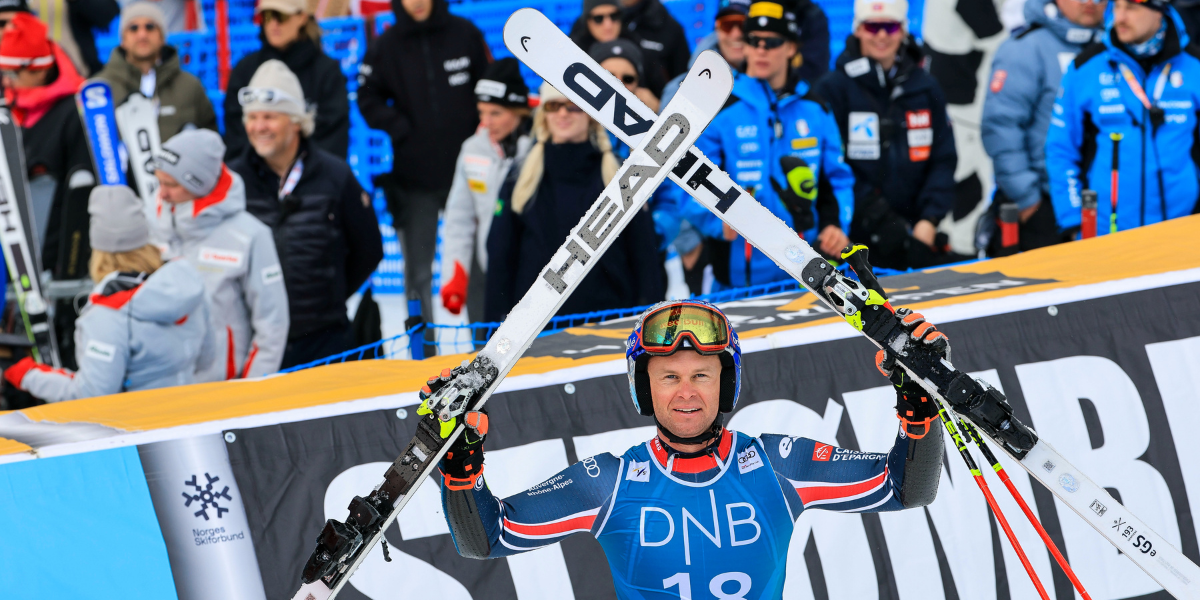
For three years, Marc Gisin had a close-up view of the most dominant skier in the world. Not from the outside—but from inside the team, day after day, race after race.
What he saw wasn’t just victories. It was the mindset, communication, and pressure behind them.
Drawing from insights first reported by Bluewin, Gisin now reflects on what it’s really like working with Marco Odermatt—and why he calls the experience a “dream.”
What is it really like working with Marco Odermatt every day?
In his role as race director for Swiss ski manufacturer Stöckli, Gisin worked directly alongside Odermatt, serving as the link between the athlete, service team, and equipment side.
That position offered a rare, unfiltered look at what it takes to win consistently at the highest level.
The results speak for themselves. Over those three seasons, Odermatt captured 11 crystal globes, including three overall World Cup titles.
Still, what stood out most to Gisin wasn’t the trophies.
“It was extremely professional,” Gisin said. “He is an absolute picture-book athlete.”
How did Gisin and Odermatt build such a strong connection?
Their relationship didn’t start at the top.
Long before the globes and the pressure, Gisin and Odermatt already knew each other. Early in his World Cup career, Odermatt even shared rooms with Gisin while traveling on tour.
That history created something many teams never quite achieve—trust without friction.
Communication, in particular, stood out.
“He says what he needs, he says what he wants,” Gisin explained.
There’s no guessing. No second-guessing.
“You always know where you stand with him.”
What kind of pressure comes with expecting to win every race?
Winning once changes expectations. Winning consistently changes everything.
At Odermatt’s level, the goal isn’t just to compete—it’s to win. Every time.
“For an athlete at this level, when the goal is to win every time and the whole team is disappointed if you don’t win, it puts a certain amount of pressure on you,” Gisin said.
That pressure doesn’t just sit on the athlete. It spreads across the entire team.
Yet Gisin, a former World Cup racer himself, kept a clear perspective on what can actually be controlled.
“You can’t influence how the athletes race,” he said. “They can do a great job, but if Odermatt makes a mistake on the inside ski, it’s not their fault.”
At that level, everything is happening at the limit—and even the smallest mistake decides the result.
What is Marco Odermatt like off the slopes?
Elite performance often comes with complexity. In this case, Gisin saw the opposite.
“He’s uncomplicated in both,” Gisin said, referring to Odermatt’s ability to separate racing and private life. “And he always says exactly what he thinks.”
The same directness that defines him on race day carries into everyday interactions—just with a lighter edge away from competition.
That consistency makes everything easier. Fewer misunderstandings. Faster decisions. Better execution.
Why does Gisin call these three years a career highlight?
This summer, Gisin will step away from his role, handing over responsibilities to Jörg “Yoyo” Roten.
Looking back, he doesn’t hesitate when describing what the experience meant.
“It was a great honor for me to have been a part of it and to be able to support him,” Gisin said. “I gave everything I had with 100 percent and tried to provide him with the greatest possible support from the material side. And that was very successful.”
For Gisin, the takeaway goes beyond medals, globes, or results.
It was about being part of something rare—an athlete pushing the limit further than anyone else, and a team built to support that pursuit.
This article is based on reporting and interview insights originally published by Bluewin.
About the Author: SR Staff Report