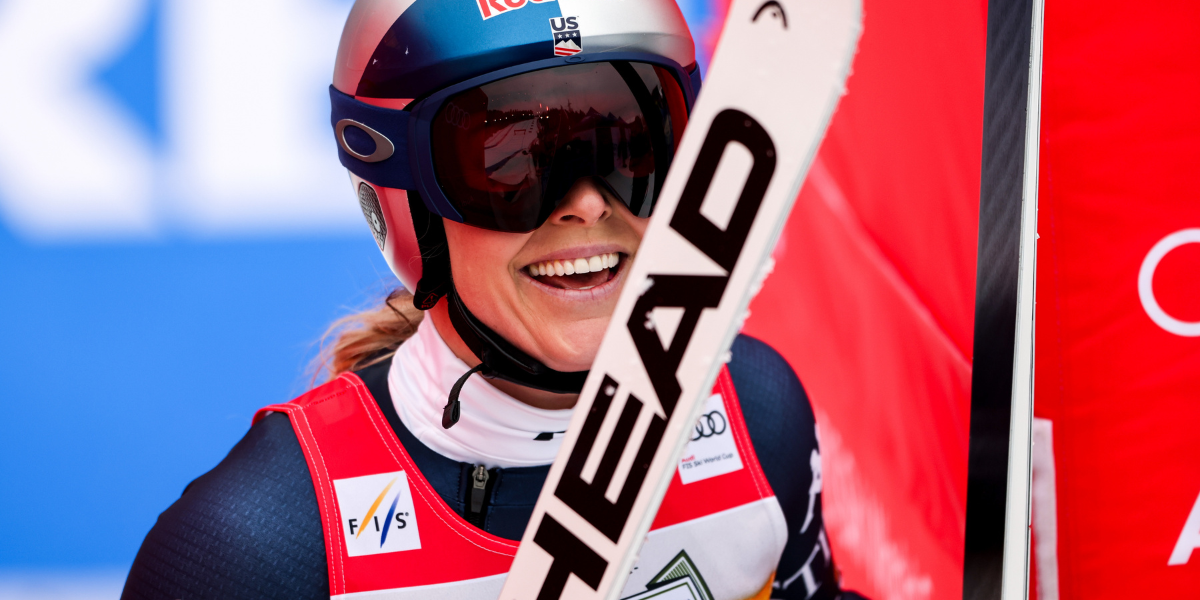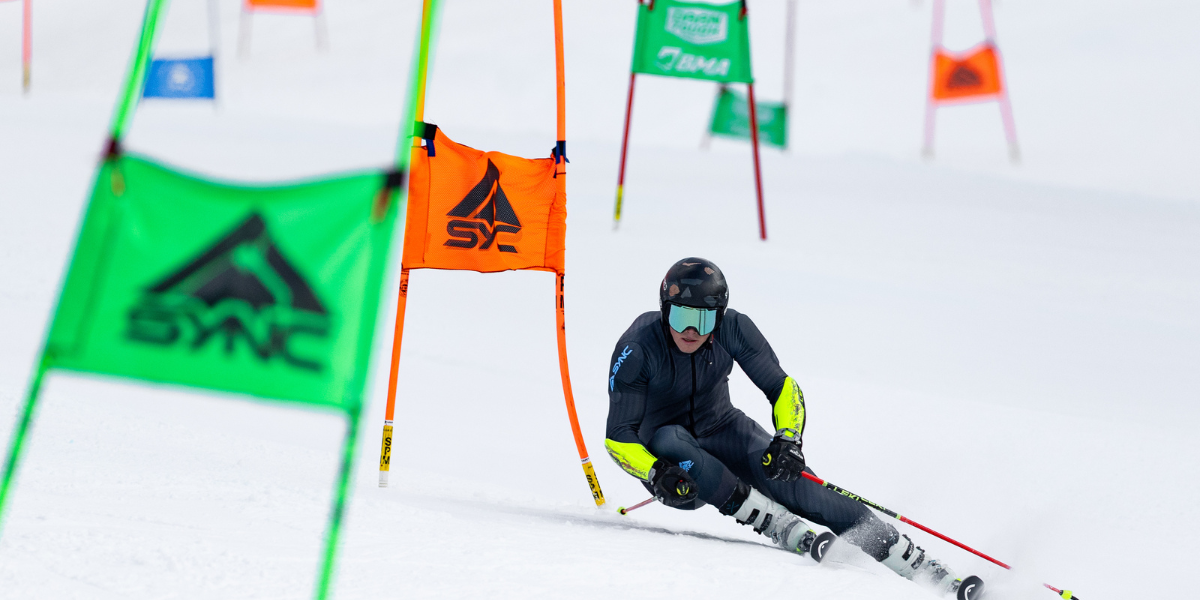
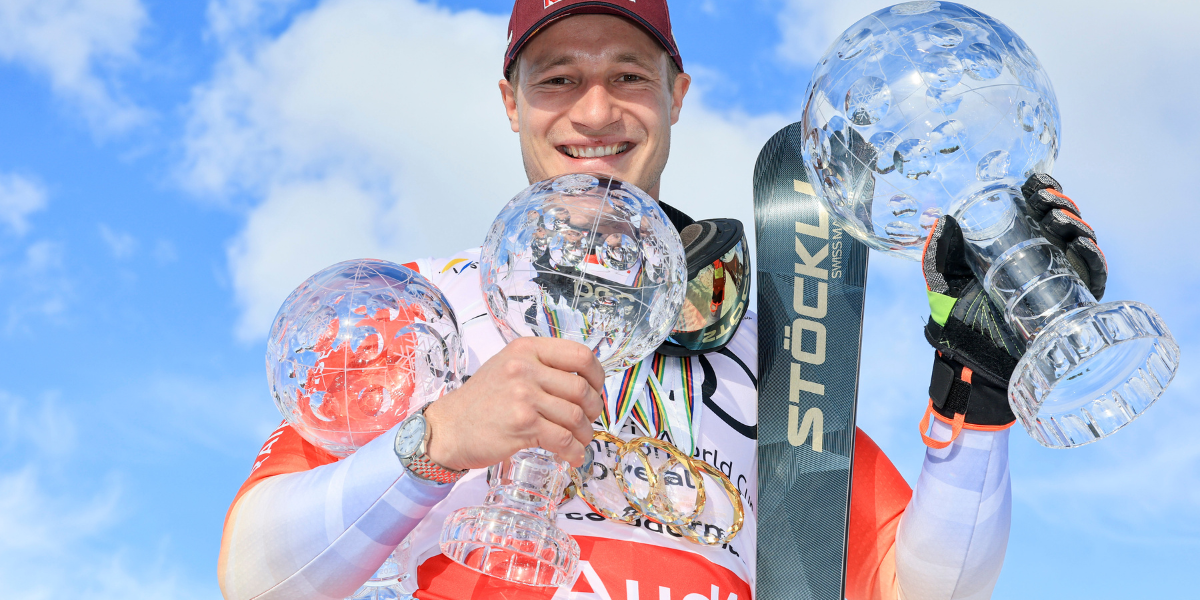
Marco Odermatt 2026 World Cup Finals / GEPA pictures
Stöckli athlete, Marco Odermatt, didn’t just win again — he redefined what winning means in alpine skiing.
After another historic World Cup season, the Swiss star is confronting a different kind of challenge: how to process success when anything less than victory feels like failure.
Speaking at a Stöckli Ski media event, and as reported by Bluewin, Odermatt reflected on a season that, by any measure, was extraordinary — yet still left him searching for more.
A dominant season — but not a perfect one
Nine victories. Seventeen podium finishes. Three Olympic medals. Downhill and super-G crystal globes. A fifth consecutive overall World Cup title.
On paper, Marco Odermatt delivered one of the most dominant seasons in modern ski racing history.
“It was very successful,” he said.
But that wasn’t the full story.
With expectations now set at the highest possible level, even small misses carry weight. Odermatt fell short of two personal goals: winning the Kitzbühel downhill and claiming Olympic gold. The giant slalom globe — once a near certainty — also slipped away in the final race of the season.
“I’ve learned to deal with defeats,” Odermatt said via Bluewin. “There was hardly anything to complain about in the last few years. That’s changed a little now.”
When second place feels like a loss
That shift defines the current reality of the World Cup’s most dominant athlete.
“It’s a brutal situation when second place already feels like a small defeat, and fourth place is almost a disaster,” Odermatt said. “It’s a nice situation — but also a stupid one that I’ve put myself in.”
Nowhere was that more evident than in Kitzbühel.
Odermatt finished second in the downhill, just 0.07 seconds behind Italy’s Giovanni Franzoni. The result would stand as a career highlight for most racers. For Odermatt, it became something else entirely.
“That was the saddest second place of my career,” he admitted.
He had made Kitzbühel his defining goal of the season. Everything aligned — form, confidence, conditions — but the win never came.
“It’s a huge privilege to call something like that a disappointment,” Odermatt said. “But everything had come together. That’s why it hurt even more.”
The mental grind behind sustained dominance
Maintaining that level of performance comes at a cost — not just physically, but mentally.
Late in the season, that strain began to show.
In Kvitfjell, Odermatt experienced something new — a moment where motivation didn’t come naturally.
“For the first time, I thought during a run: I’m actually not enjoying this today,” he said, according to Bluewin.
Difficult conditions, fatigue, and repetition combined to create a rare off stretch. He finished seventh in downhill, 19th in super-G, and failed to finish the giant slalom.
“You try to push yourself at the start, but it’s not the most honest will,” he said.
Still, those moments serve a purpose.
“As bad as those days feel, they’re important,” Odermatt said. “They show me that I can’t take anything for granted.”
Will Marco Odermatt step away from giant slalom?
For the first time, Odermatt is openly considering changes to his race program — including the possibility of reducing his giant slalom schedule.
Late in the season, he recognized a gap between expectation and preparation.
“I realized I didn’t have enough preparation to fight for the win in every race,” he said. “It’s not a good feeling to stand in the start knowing everything isn’t perfect.”
A full departure from giant slalom is not imminent, but the direction is clear. Managing energy, maintaining motivation, and extending his dominance may require a sharper focus on speed disciplines.
“It’s possible I’ll focus more on speed,” Odermatt said. “I have to listen to myself.”
Still the standard in men’s World Cup skiing
Even in a season he views as incomplete, Marco Odermatt remains the benchmark.
He won on the sport’s biggest stages — Adelboden’s Chuenisbärgli and Wengen’s Lauberhorn — while continuing to collect globes and extend one of the most dominant runs in World Cup history.
Yet his takeaway is not satisfaction. It’s adjustment.
Because at this level, the margin between success and disappointment is measured in hundredths of a second — and expectations are measured against perfection.
That’s the standard Odermatt has created.
And it’s the one he continues to chase.
About the Author: SR Staff Report