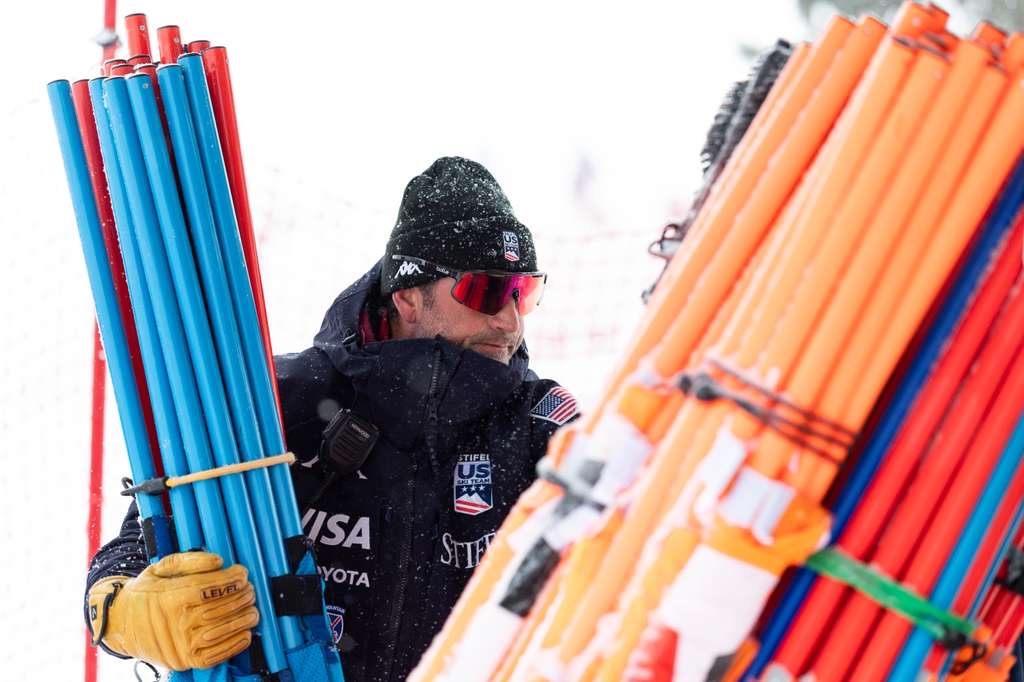
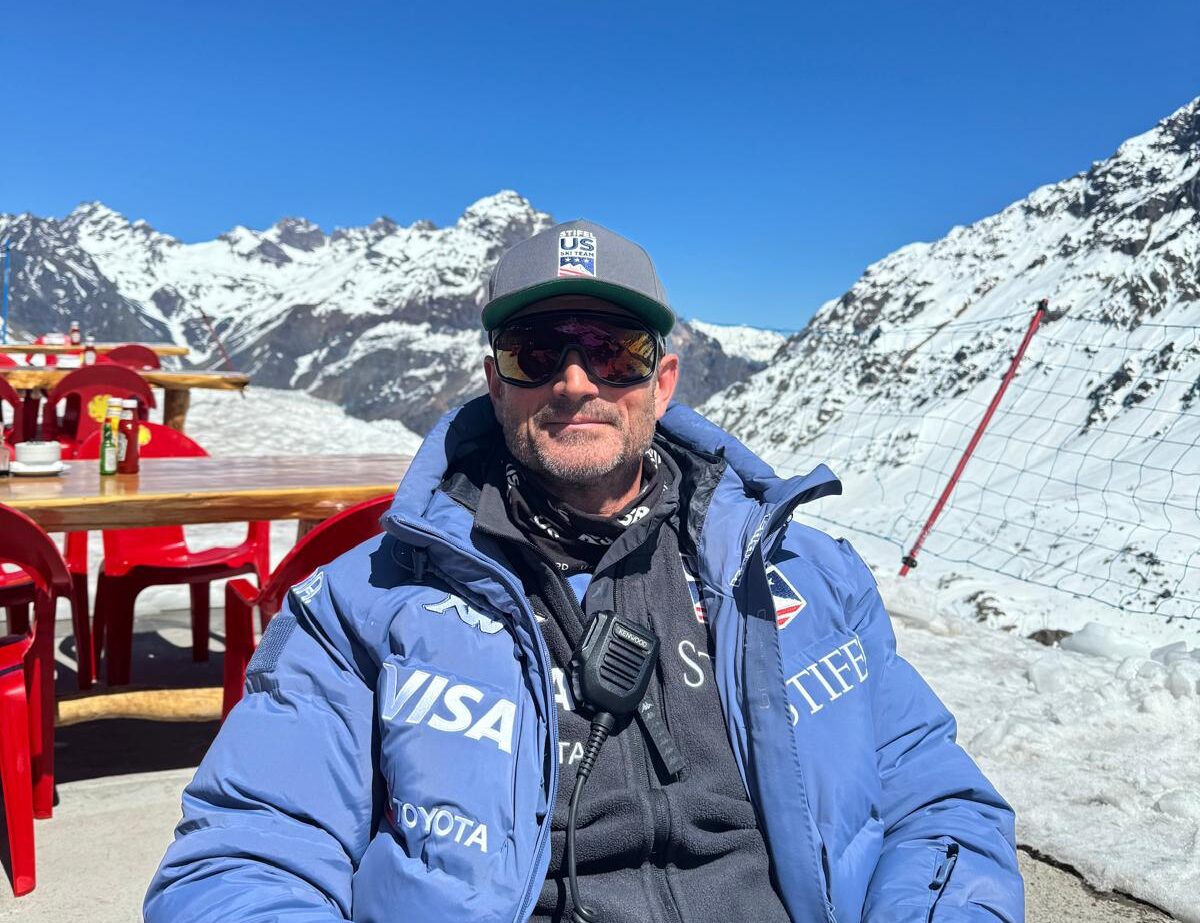
Mark Tilston, who recently departed as head men’s coach of the Stifel U.S. Ski Team, says he leaves disappointed he did not have more time to finish the work he started, yet he emphasized that he holds no bitterness toward the organization and remains grateful for the opportunity.
In a candid phone interview, Tilston reflected on the challenge of building a more connected U.S. men’s alpine program. He spoke about staffing continuity, athlete pathways, and the structural areas he believes still require attention. More importantly, he framed the discussion around what can improve going forward rather than what went wrong.
Throughout the conversation, his tone remained measured. Rather than dwell on frustration, he pointed to athletes, coaches, and system-wide alignment as the key areas that deserve focus.
What stood out most from Tilston’s time with the program?
When asked what stood out, Tilston pointed directly to the athletes rather than his own decisions.
He highlighted Ben Ritchie’s slalom results as a defining moment. In his view, those performances reflected the level Ritchie has always been capable of reaching. Similarly, Erik Arvidsson’s late-season downhill results stood out, particularly given his return from injury.
However, Tilston did not focus solely on race days.
“The moments when you put together a good training session and see the guys working together and producing a productive training day, that for me is the most memorable,” he said.
For Tilston, results matter. At the same time, the daily process carries equal weight. He emphasized training quality, how the group worked together, and producing strong sessions consistently.
Why did Tilston say the job remained unfinished?
Tilston offered a direct and candid assessment. He did not suggest the program reached the level he envisioned but rather focused on what remains incomplete.
In particular, he pointed to building the right staff structure and creating long-term consistency around the athletes.
He acknowledged that staff turnover became a recurring issue. As a result, he does not feel he met the demand of that role of staff retention, yet he believes the program was starting to move in a better direction.
“I felt like we were getting to a better place and starting to see a vision,” he said.
That timing was significant in his view. The structure began to take shape just as his tenure came to an end.
At the same time, Tilston addressed his own role clearly. He acknowledged that he made mistakes and views those as part of the learning process. While he would have liked more time to apply those lessons, he was equally clear he is not arguing for unlimited time. If the organization believes someone else can move the program forward faster, he accepts that decision.

How did the structure of the program shape his work?
Tilston described the program as siloed. Because of that structure, building alignment across groups proved difficult.
In his view, the issue extended beyond men’s alpine. It also affected the connection between high performance, domestic pathways, and other departments within the organization.
He acknowledged that he had been tasked with improving the connection between High Performance and the men’s program and said he did not feel he delivered it as intended.
Although he strove to bring groups together, practical limitations remained. Coaches understandably followed their own training plans, and the season schedules allowed little room for adjustment.
Rather than frame this as personal conflict, Tilston described it as a structural reality.
What difference does an alpine director make?
Tilston explained that the absence of an Alpine Director did not drastically change daily operations. However, it did affect how connected the program felt overall.
As a result, more responsibility fell on the head coach to bridge gaps across groups. Meanwhile, Chief of Sport Anouk Patty oversaw all the snowsport disciplines, which limited her ability to engage in the daily men’s alpine environment.
He made clear this was not criticism. Instead, it reflected the demands of the structure.
In his view, the alpine director role is essential. It provides a sounding board, supports decision-making, and helps maintain long-term alignment across the program.
“It’s just someone to consult with, talk things through with, and make sure that you’re sticking with a long-term plan, that you’re staying strategic and aligning with the development pathway,” he said.
Which coaching decisions helped the program most?
Tilston pointed to several key staffing decisions.
He said Tristan Glasse-Davies had the most immediate impact. He also spoke positively about Johno McBride and remained confident about him despite a challenging speed season.
Clément Tomamichel also stood out. Tilston noted the complexity within that group and said Tomamichel managed those challenges while continuing to support the athletes effectively. With more stability, he believes his impact would grow.
Even after leaving the role, Tilston continues to support the staff. He did not place responsibility on anyone.
Why did he focus on Cooper Puckett’s future?
Tilston used Cooper Puckett as a clear example of a structural challenge.
He said Puckett’s development required a more defined pathway. Instead, the athlete moved between disciplines and circuits without a consistent framework.
For Tilston, this reflects a broader issue in alpine skiing. Too often, athletes are pushed into narrow roles too early. As a result, systems fail to match how athletes actually develop.
Which younger athletes did he highlight?
Tilston emphasized that many athletes are coming through the system, but he also noted that development timelines vary, making early selection difficult.
He referenced Cooper Puckett, Ryder Sarchett, Camden Palmquist and Isaiah Nelson.
Puckett remained the clearest example. He described a season where Puckett was “blown in the wind,” moving across two disciplines and three circuits—NorAm, Europa Cup, and World Cup—without a stable structure.
Meanwhile, Nelson represented a different approach. Tilston chose not to move him into World Cup speed too early, instead aiming to build results at the NorAm level, earn an overall title, secure stable, multi-discipline World Cup access, and then expand his program.
Palmquist highlighted another challenge: Without strong alignment between circuits, athletes can fall between levels.
Sarchett provided a different perspective. Tilston pointed to his strong race performances and emphasized that his breaking through at the World Cup level is extremely difficult. More importantly, he noted that no single development model works for every athlete.
Ritchie, by contrast, represented proven performance rather than development projection.
Why does alignment between World Cup and NorAm levels matter?
Tilston repeatedly returned to this point.
In his view, alignment between levels is essential. However, he acknowledged that the program did not consistently achieve that connection.
He praised coach Mike Bansmer’s under-resourced work with the Europa Cup team while also admitting that his own focus leaned heavily toward World Cup performance.
As a result, gaps emerged.
Without strong alignment, athletes can fall between levels. Tilston pointed to Puckett, Palmquist, and Nelson as examples.
He also emphasized the timeline required for success. While some athletes break through quickly, others take years. Bridger Gile, he noted, reflects how challenging that progression can be.
Why did Tilston emphasize NorAm?
Tilston strongly believes in the NorAm pathway and sees it as a critical step in athlete development.
He argued that athletes should remain at that level longer, build results, and earn their opportunities. In his view, moving too quickly toward the World Cup can create long-term setbacks rather than accelerate progress.
He also emphasized that NorAm should not be treated as a level athletes are trying to escape. Instead, he believes the circuit should be strengthened and valued as an essential part of the development pathway.
For Tilston, raising the level of competition within NorAm is key. When athletes race head-to-head more consistently against deep fields, they push each other, build confidence, and establish a stronger competitive foundation before moving up.
He also pointed to the environment around the circuit. Competing closer to home allows athletes to stay connected to family and friends, which helps manage the emotional demands of the sport—especially before they are established enough to gain positive energy from scoring World Cup results.
As a result, Tilston sees NorAm not just as a stepping stone but as a critical stage in preparing athletes for the highest levels.
“I think we try to accommodate too many people too soon,” he said.
What did he say about depth?
Tilston linked the issue of depth directly to how athletes are developed through that pathway.
In his view, stronger depth comes from athletes arriving at the World Cup level fully prepared, rather than being moved up too early. That preparation is built through consistent racing, confidence, and progression at the levels below.
He emphasized that athletes benefit from building results over time, particularly in competitive environments where they are pushed by their peers. Without that foundation, both performance and long-term progression can suffer.
He also pointed to the human side of development. Travel demands, time away from home, and the pressures of the Europa Cup and World Cup can take a toll on athletes who are not yet ready.
For Tilston, readiness must be viewed holistically. It is not only technical and physical, but also emotional.
Why is he still optimistic?
Despite his departure, Tilston expressed clear optimism.
He believes in both the athletes currently in the system and those coming through the pathway. He also emphasized that development is not always linear.
Athletes can regress before improving again, and progress does not always follow a straight line. He pointed to Luke Winters, Bridger Gile, and Bryce Bennett as examples of how athletes can have inconsistent results or seasons at the World Cup level.
He also made the broader point that athletes who have performed at a high level should not be judged too quickly based on short-term results.
He also suggested that the system could benefit from retaining more athletes through flexible funding models, rather than losing them when they fall short of the criteria.
What comes next for Tilston?
Tilston had planned to stay through the 2034 Salt Lake City Olympics. He viewed the role as a long-term project.
Now, he plans to step back and reflect.
“I don’t think I’m about to jump at the next opportunity,” he said.
The bigger takeaway
Tilston did not claim success. Instead, he described a program that requires time, alignment and continuity.
He takes responsibility for his role and said mistakes are part of learning. He has accepted the organization’s decision.
Ultimately, he returned to three core themes:
- stronger alignment
- better structure
- development at the right pace and level for individual athletes
His tone remained consistent throughout—measured, respectful, and forward-looking.
The interview focused less on blame and more on what it will take for U.S. men’s alpine skiing to move forward.
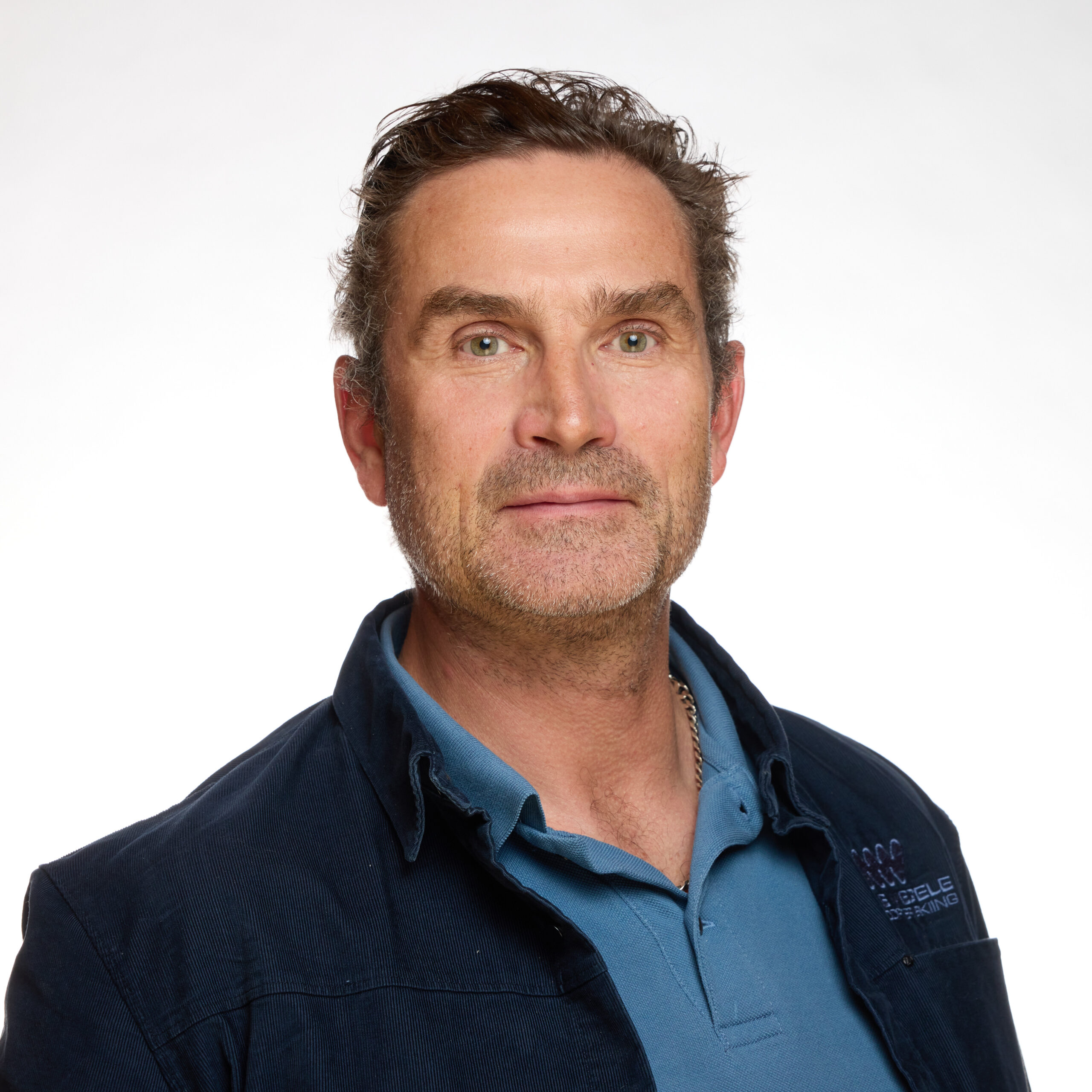
About the Author: Peter Lange