First Run: Electric Atmosphere on the Planai
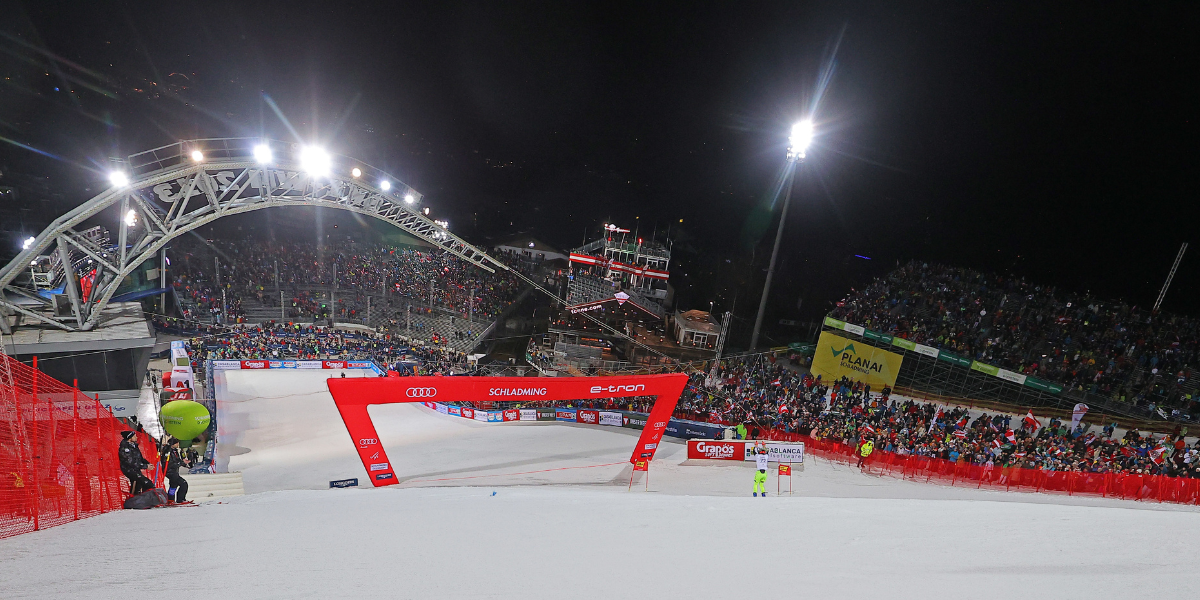
The Schladming Night Giant Slalom delivered its signature energy under the floodlights of the iconic Planai. Tens of thousands of fans packed the stands, creating an electric atmosphere that only this event can offer. Known for its dramatic setting and roaring crowds, the night GS has quickly become a highlight of the Alpine World Cup calendar.
Warm temperatures and light rain softened the ice, but the surface was well-prepared, offering athletes the best track possible. The warm weather also brought light fog at the top of the course, adding slightly to the challenge. Skiers had to make wise tactical decisions to compete for the top of the leaderboard.
With the reverse start order to come, the second run promises plenty of action and dramatic lead changes under the lights.
Elite Seven Deliver Early Drama
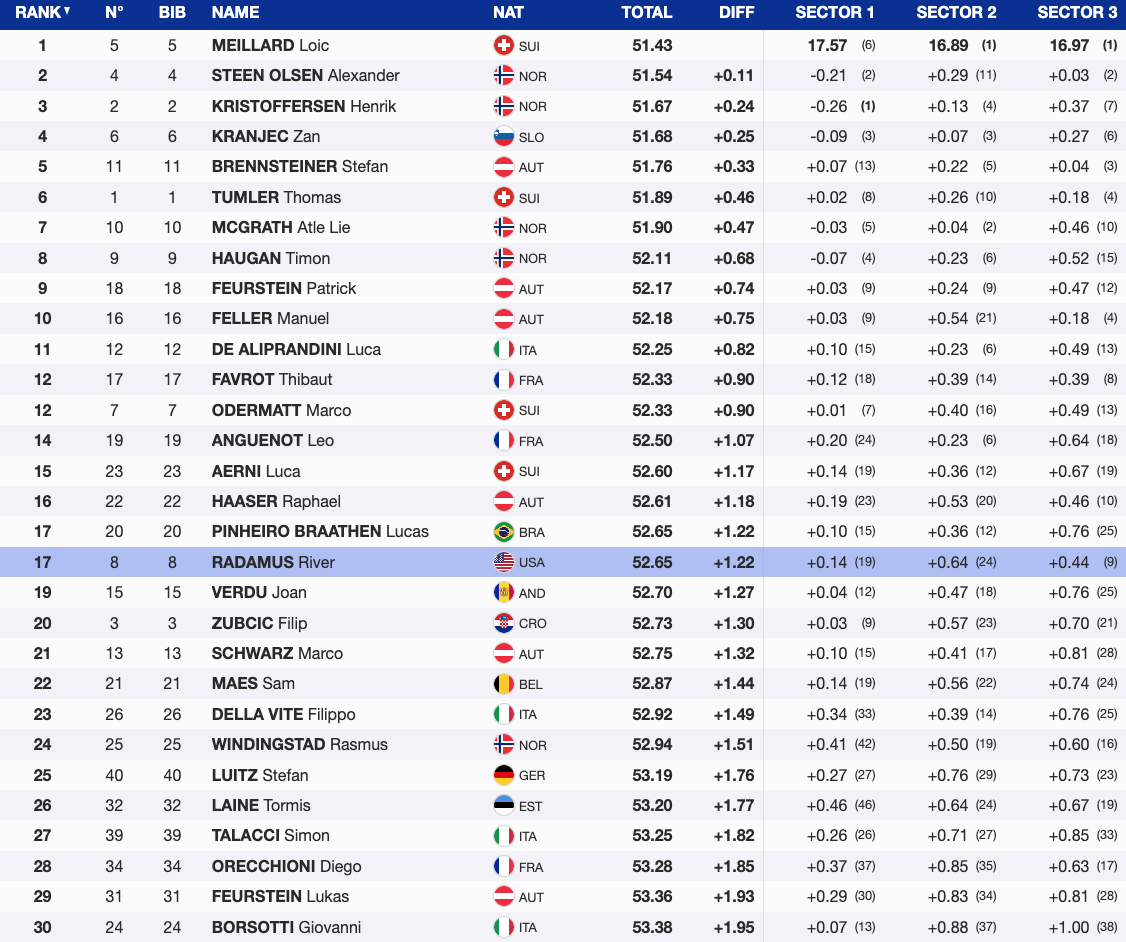
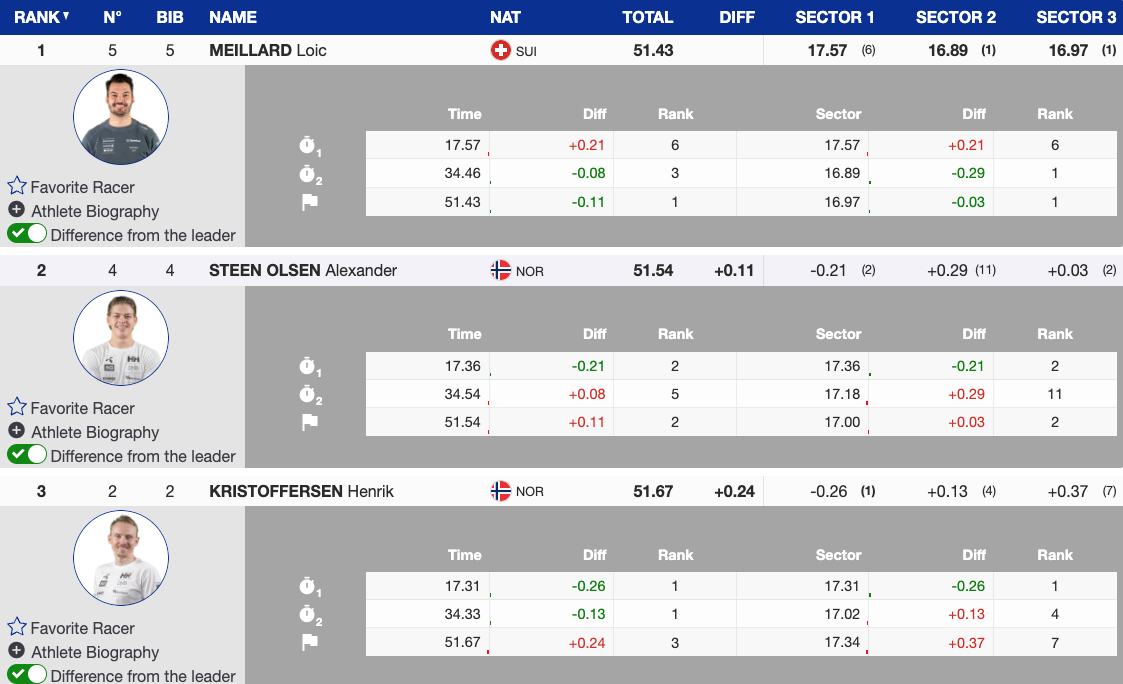
With bib 5, Switzerland’s Loïc Meillard delivered a commanding run, attacking the Planai with confidence and speed to take the lead. His smooth transitions and aggressive approach gave him a 0.11-second edge over Norway’s rising star, Alexander Steen Olsen, who impressed with an exceptional performance to secure the second-fastest first run time.
Veteran Henrik Kristoffersen, also representing Norway, remained within striking distance, finishing 0.24 seconds behind Meillard in third. Meanwhile, Meillard’s teammate Marco Odermatt, skiing with bib 7, couldn’t find the speed to challenge the leaders on the softened surface. Odermatt finished tied for 12th, 0.90 seconds off the lead.
Close Competition Defines First Run
The Schladming slope, warmed by unseasonably high temperatures, saw soft ice conditions that demanded tactically smart runs. Athletes were forced to adapt quickly, with some finding speed and others struggling to capitalize. After the first twenty skiers completed their runs, twelve racers were within a second of Meillard’s leading time, highlighting the tight competition. Among the top ten, Norway leads with four athletes, followed by Austria with three. Switzerland placed two racers in the top ten, while Odermatt, though not in the top ten, remains in striking distance at 0.90 seconds off the lead.
River Radamus, wearing bib eight and representing the Stifel U.S. Ski Team, skied with determination but couldn’t find the speed to match the night’s frontrunners. Despite primarily solid execution in sections of the course, he finished tied for 17th, 1.22 seconds behind Meillard. Radamus was the sole North American to qualify for the second run, keeping U.S. hopes alive for a strong finish.
The leaderboard after the first twenty racers reflects the intensity of the night: close margins, unpredictable movements, and everything on the line for the second run. With the reverse start order in play, the finale promises an electrifying battle under the Schladming lights.
Notably, the forgiving snow conditions led to only one non-finisher among the first thirty. This meant skiers with higher bibs would need to deliver exceptional runs to secure a spot in the night’s finale.
Austrians Shine in Front of Home Crowd
The Austrian team delivered strong performances to the delight of the massive home crowd packed into the Schladming finish arena. Stefan Brennsteiner led the charge, posting the fifth-fastest time of the first run, just 0.33 seconds behind leader Meillard. Brennsteiner’s excellent execution and clean skiing through the challenging conditions kept him firmly in contention for the podium.
Patrick Feurstein also impressed, sitting in ninth with a time 0.74 seconds off the lead. Close behind was Manuel Feller, who battled the soft ice conditions to secure 10th place, just 0.75 seconds back. With three Austrians within striking distance of the top spots, the second run promises to be thrilling for the home fans eager to see their favorites climb the podium.
In total, six Austrian skiers qualified for the second run, underscoring the depth of the home team. The roar of the Schladming crowd, renowned for its ability to inspire Austrian racers, seemed to elevate their performances on the night. With the energy of the crowd behind them, these skiers are well-positioned to make the most of their opportunities in the second run.
Challenging Conditions Favor Clean Runs
Notably, the softened snow conditions contributed to a low attrition rate, with only one skier among the first thirty failing to finish. The manageable surface allowed most athletes to complete their runs, though it left little room for errors that cost valuable time.
This reality raised the stakes for skiers with higher bib numbers, who faced slightly more challenging conditions. However, good skiing would be rewarded with a qualifying time. To secure a spot in the night’s finale, these athletes needed to deliver exceptional performances, pushing the limits while maintaining speed on the increasingly demanding track.
Five skiers with bibs above thirty rose to the challenge, with Germany’s Stefan Luitz, wearing bib 40, being the fastest and last to qualify, finishing 1.78 seconds back in 25th place. The top 30 skiers are separated by a mere 1.95 seconds.

First Run Results: Top 30 Finishers
Click images to enlarge
Analysis of the Fastest Three and North American Qualifiers

About the Author: Peter Lange