Franjo von Allmen/ GEPA pictures
Von Allmen Joins Legends with Third Straight Olympic Gold
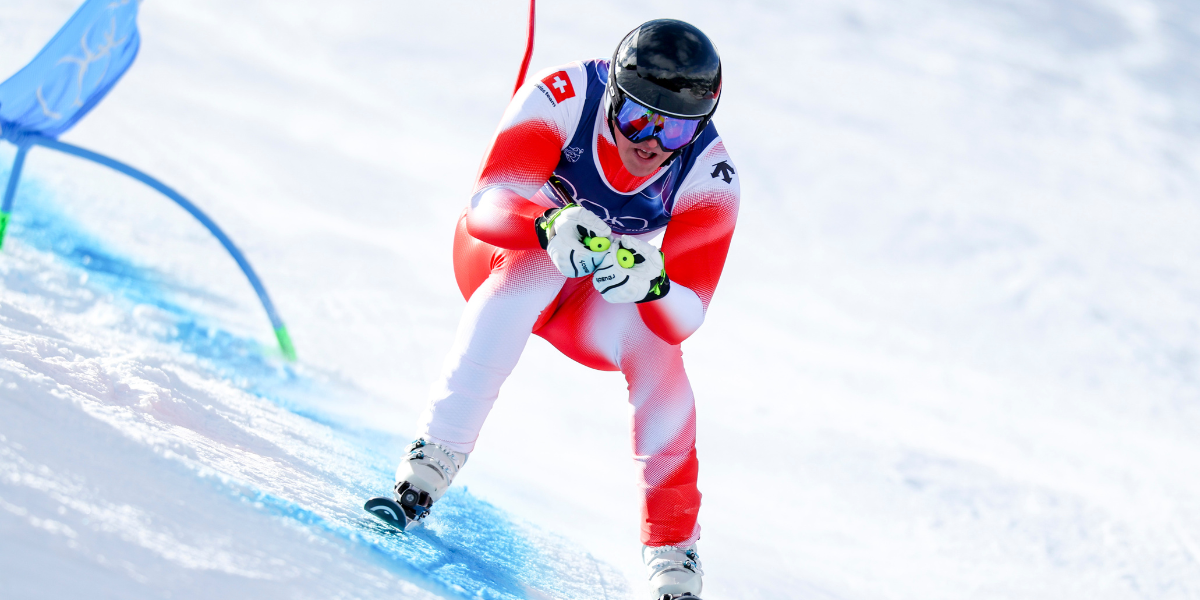
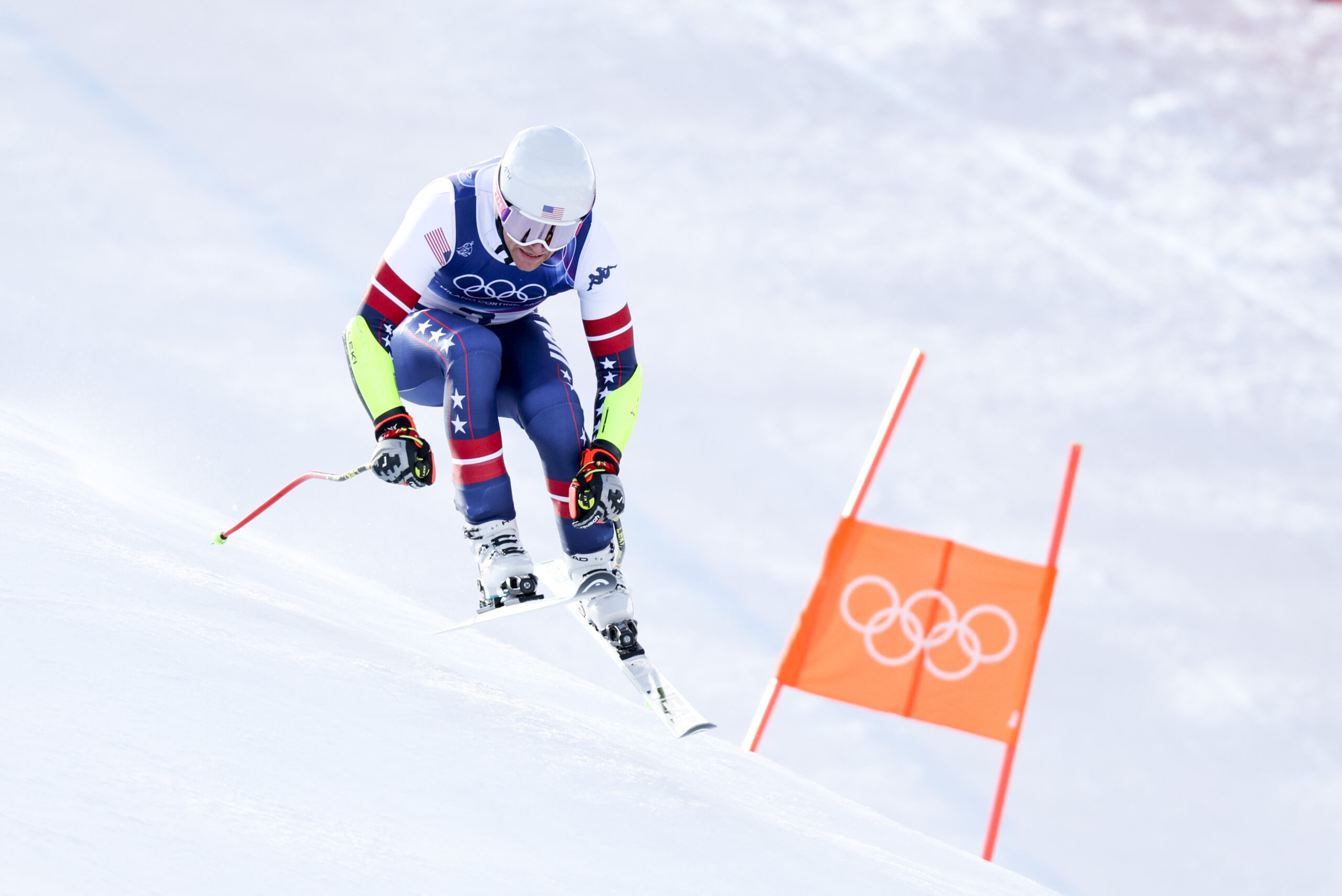
Franjo von Allmen owned the day on the Stelvio in Bormio, Italy. He is on fire at these Olympic Games, and that confidence was unmistakable from the start. Super-G is about walking the razor’s edge — finding the perfect balance between aggression and precision, attacking the course while still delivering a clean ski, and above all, maximizing aerodynamics. Von Allmen mastered that equation. He held his tuck longer than anyone else, committed to it over the blind rolls, and carried relentless speed down the hill.
“Compression pushes a bit — full attack,” came the call over the coaches’ radio. And full attack is exactly what he delivered. He was in his tuck far more than the rest of the field, visibly more confident over the terrain changes, fighting for every aerodynamic advantage. He found his flow state on this hill.
With the victory, von Allmen secures his third gold medal of these Olympic Games — three in a row. Unbelievable. The last men to achieve that feat? Toni Sailer in Cortina in 1956 and Jean-Claude Killy in Grenoble in 1968. Now, von Allmen joins that legendary company.
“For the moment I feel like I am dreaming. I hope I don’t wake up. I’m missing the words today. It’s completely surreal what’s going on today and the whole Olympics.”- Franjo von Allmen
🏅Olympic Men’s Super G- Top Five Results
- 🥇 Franjo von Allmen (SUI) — 1:25.32
- 🥈 Ryan Cochran-Siegle (USA) — +0.13
- 🥉 Marco Odermatt (SUI) — +0.28
- 4th: Nils Allegre (FRA) — +0.31
- 5th: Raphael Haaser (AUT) — +0.57
Execution Over Excuses: Cochran-Siegle Delivers When It Counts
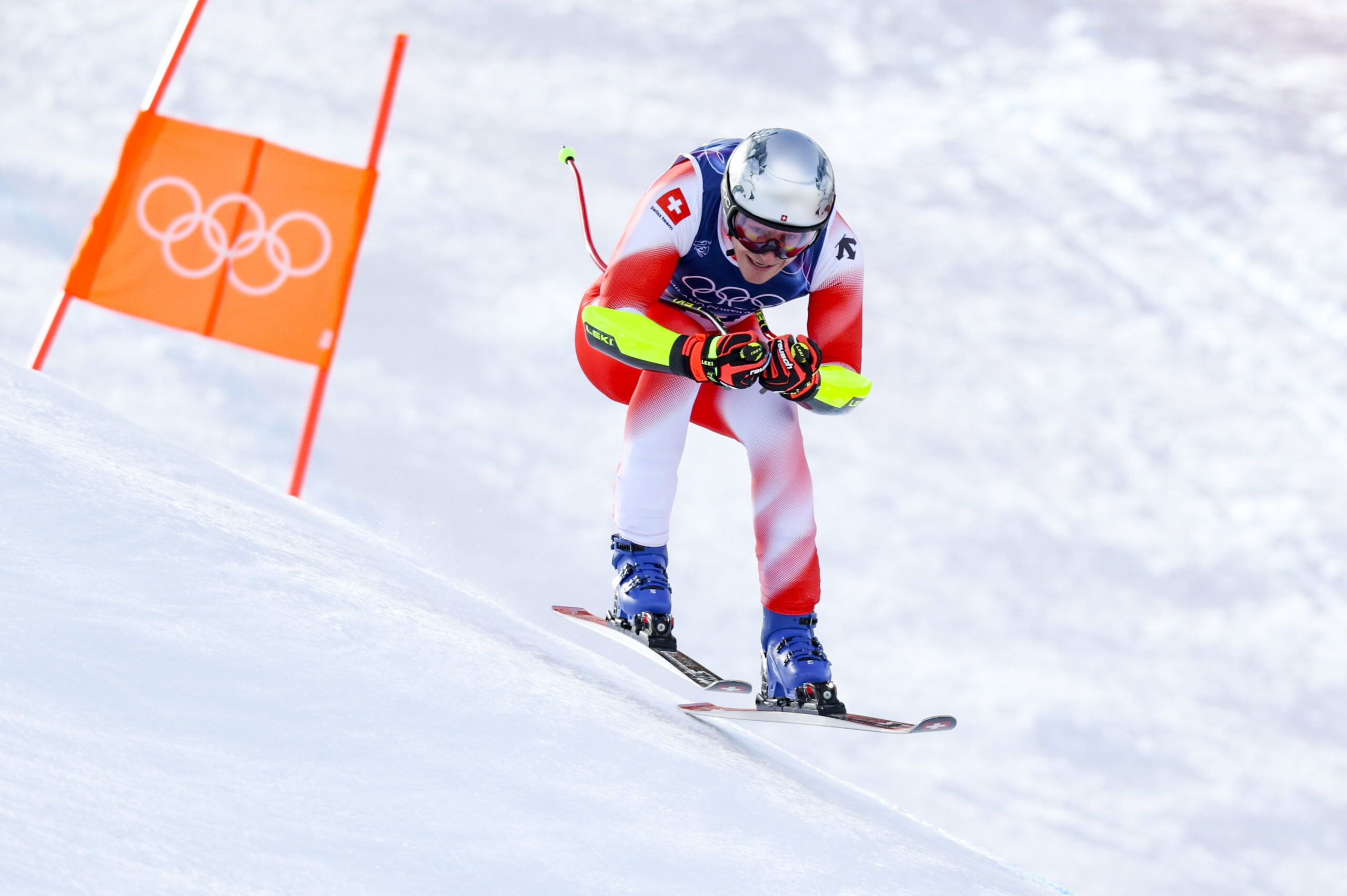
Ryan Cochran-Siegle captured the silver medal, his second straight Olympic silver after finishing runner up in Beijing in 2022. He skied with composure and confidence, delivering a run built on trust and flow. From the midway point down, he carried his speed exceptionally well, staying disciplined in his aerodynamics and letting the skis run.
A green light flashed when he crossed the finish, and with his mother, 1972 Olympic gold medalist Barbara Cochran, watching in the finish area, the moment carried even more weight. A full circle Olympic story.
Cochran-Siegle revealed afterward that he had been sick leading into the Downhill but kept it quiet. No excuses. Today was about execution. His skiing looked smoother and cleaner than earlier in the week. While he could have stayed in his tuck slightly longer in the final section to squeeze out a bit more speed, the overall run was a performance worthy of another Olympic podium.
“It wasn’t my best day in the downhill,” Cochran-Siegle shared. “I woke up feeling nauseous and threw up before the start. You feel a little alone in that process, and it’s disappointing with how much work goes into it. But in a way, that failure helped me recognize what’s really important. I just had to get back to skiing and focus on what I can control — everything else is out of my hands.”
He added, “Seeing my teammates’ success, seeing their joy, it reinstilled that belief in myself. Today I wasn’t going out trying to win an Olympic medal. I was trying to ski the way I want to ski. Sometimes it’s good to be a goldfish — to reset, trust yourself, and just go.”
I’ve now covered four speed events for RCS, and he’s been on the podium three times. I won’t officially claim lucky charm status — but 75% isn’t bad.
All In for Gold, Settling for Bronze — For Now
Marco Odermatt was on a mission. You could see how badly he wanted the gold. His intent was clear from the start, attacking and skiing on the limit while skiing a direct line. He opened aggressively and carried strong speed through the upper sections.
But the Stelvio punishes overcommitment. As the course straightened and transitioned into the final pitch, he began to open up too much and lost speed through the bottom section. He cut off his line in places, skiing almost too aggressively, and it cost him momentum where it mattered most. The result was bronze.
Looking ahead to the Olympic Giant Slalom, Marco kept his mindset simple and direct: “It’s another race. It’s the last chance for me to win gold – let’s go get the gold.”
It was a fast run, but not as clean or as efficient as Franjo von Allmen’s. On a hill where aerodynamics and finding the right line was everything, that difference proved decisive.
Home Hopes and Hard Lessons on the Stelvio
The course was set by an Italian coach, but that did not translate into an advantage for the home team. On a day when aerodynamics and absolute commitment ruled, the Italians struggled to capitalize.
Giovanni Franzoni led the charge for Italy, finishing in sixth place. He delivered a solid run but lacked the final gear needed to fight for the podium.
For veteran Dominik Paris, the race unraveled early. In a right footer that was noticeably bumpier than the surrounding terrain, he committed fully to the turn. As the snow broke up underfoot, he moved slightly inside, and the ski bounced free. It was an abrupt and heartbreaking exit for one of the strongest downhillers on home snow.
Christof Innerhofer finished 11th and Mattia Casse 24th, but neither was able to maintain speed from top to bottom. On a course that rewarded efficiency and clean aerodynamics, small losses compounded quickly.
Looking beyond the home team, I would have expected Vincent Kriechmayr to contend for the win or at least a podium spot. The Austrian skier, however, could not quite find the speed and ultimately finished seventh. His skiing was technically sound, but on this straight, speed-oriented track, he was not quite on the limit enough. The skis simply were not running at the level required to challenge for medals.
It caps off a Games that did not meet his individual expectations, though he did secure a silver medal in the Team Combined alongside teammate Manuel Feller. Still, on a course like the Stelvio, where commitment and glide defined the podium, the margins were unforgiving.
North Americans: Promise, Pressure and Missed Speed
Ryan Cochran-Siegle once again led the way for the North Americans, capturing silver and delivering a composed, aerodynamic performance that stood apart from the rest of the field.
Behind him, it was a more challenging day for the Americans.
River Radamus showed early strength and intent, attacking the upper section with confidence. But coming into the side hill he arrived slightly late, missed a gate, and did not finish.
Sam Morse came out charging, attacking the course with intent and looking to generate speed rather than ski defensively. The snow, he said, was grippy and the track “super fun to ski,” and in the Super-G it “ran a lot easier than I expected.” But that rhythm may have worked against him late in the run.
“I got caught over-skiing a little bit at the bottom,” Morse said. “I don’t feel like I made any super major mistakes. I skied within myself.”
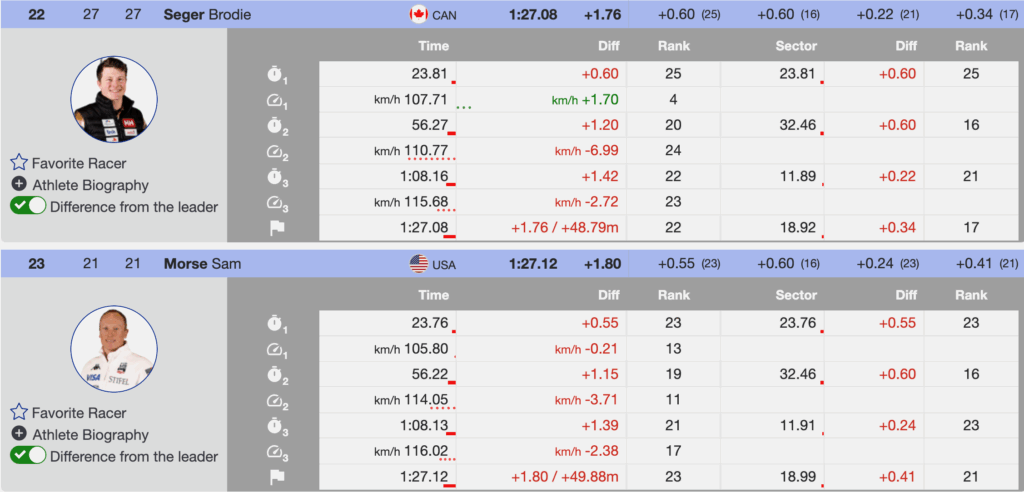
On a hill like the Stelvio, though, over-skiing even slightly can cost crucial glide. He was not as clean at the top of the turn as he needed to be, and when the course demanded maximum efficiency into the final pitch, the speed was not quite there. He finished 23rd, 1.8 seconds off the pace.
In his first Olympic Games, Kyle Negomir also pushed the tempo but acknowledged the group did not fully match its potential.
“I don’t think any of us particularly skied up to our capabilities,” Negomir said, reflecting on the Americans’ overall performance.
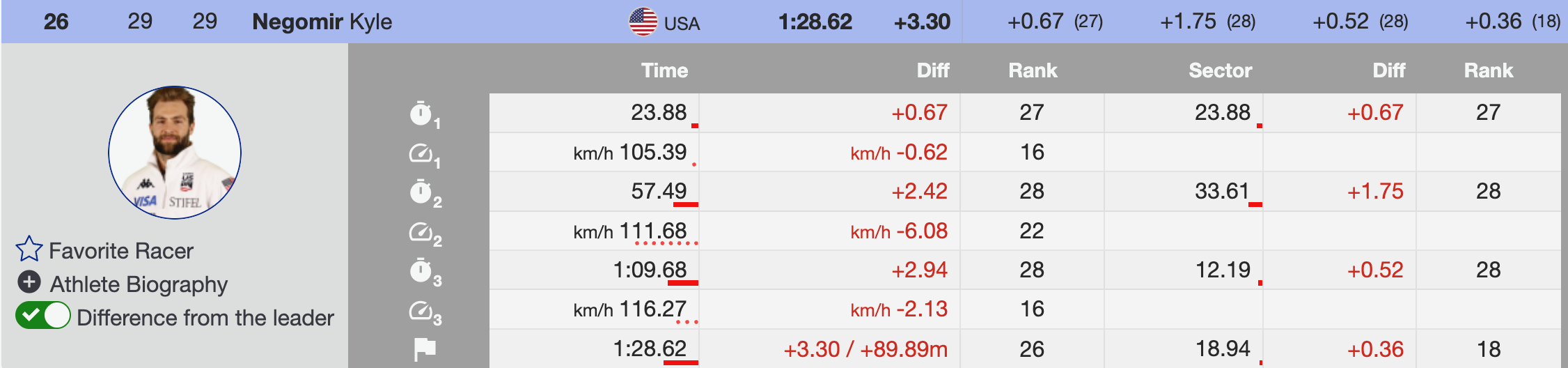
He went slightly inside on his line during his run, dropped onto his side, and lost too much speed to stay competitive, finishing 26th. Still, he kept perspective and was quick to recognize what Ryan Cochran-Siegle accomplished.
“It’s so cool to see Ryan push through and stay committed. We’re all really proud of him,” Negomir said. “I’m really, really happy for Ryan. He deserves that. I know he had a lot of pressure on him today, and to back it up is super impressive.”
For the Canadians, it was also a difficult day.
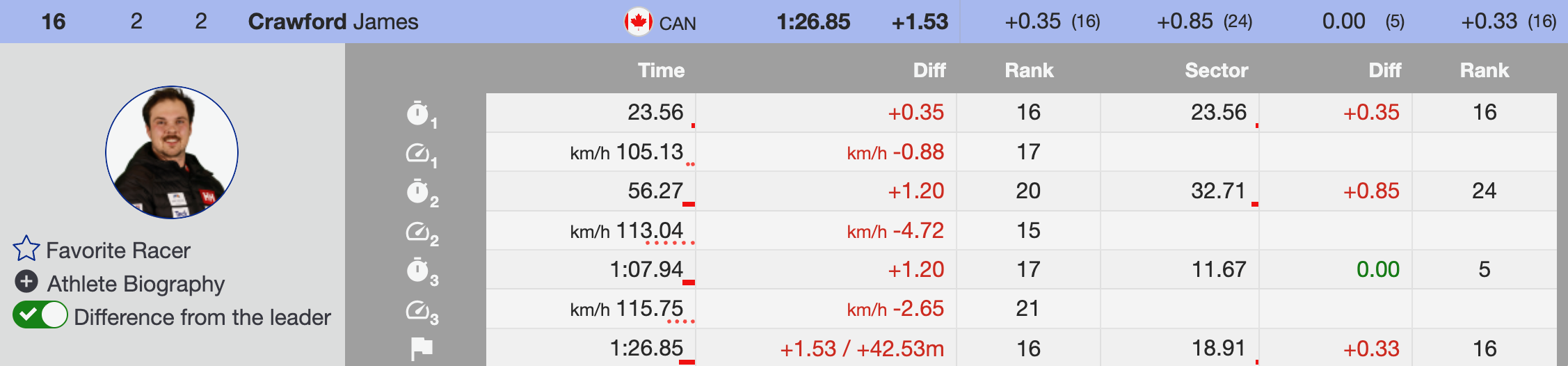
Jack Crawford, wearing bib 2, led the team but did not look as decisive in his line choice as we are used to seeing. He was a bit too open at times and did not maximize his time in the tuck, limiting his top speed. He finished 16th. At moments he looked slightly hesitant, not quite as aggressive as he could have been on this straight, glide-heavy course.
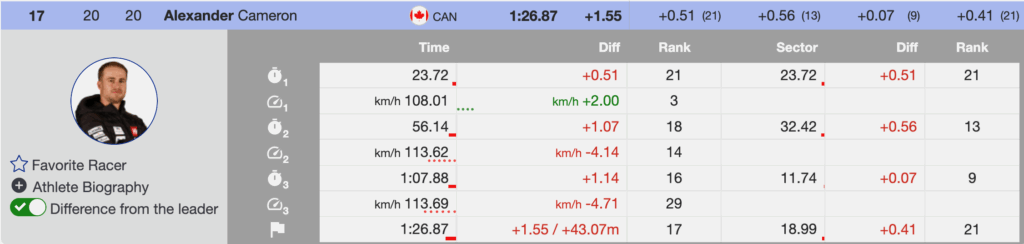
Cam Alexander also struggled to find his speed and finished 17th. Brodie Seger showed good pace through the middle section but was unable to maintain it from top to bottom, ending up 22nd. Riley Seger did not finish after failing to generate enough elevation on the side hill and missing a gate.
The overarching takeaway for the North Americans in these Olympic speed events is that the speed is there, but the separation is in the details. The intent to attack was clear across the board. The talent is undeniable. But on a track like the Stelvio, where medals are won through relentless aerodynamics, exact line choice and unwavering commitment, execution has to be nearly perfect.
The difference was not dramatic mistakes. It was time spent a fraction too long out of the tuck. A line opened just slightly too much. A push that disrupted glide instead of building it. At this level, those margins are unforgiving. The foundation is strong, but closing the gap requires turning aggression into efficiency and confidence into clean, repeatable speed.

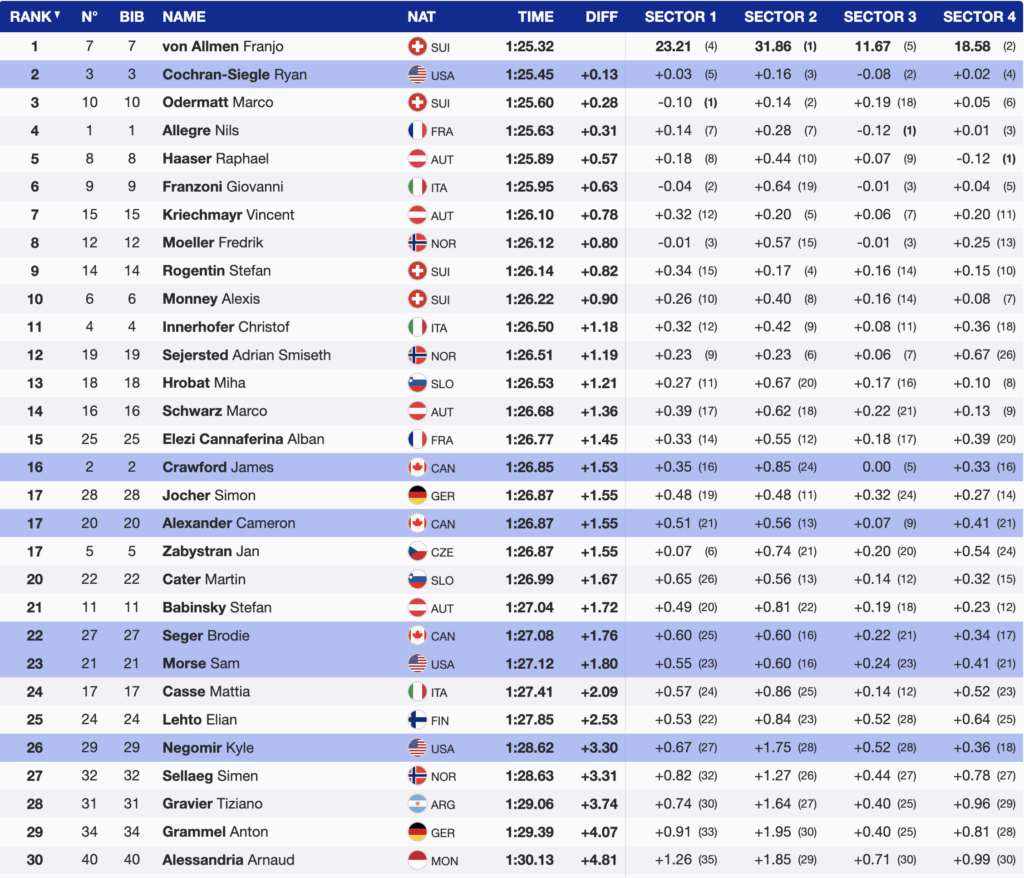
Olympic super G Results
Click images to enlarge
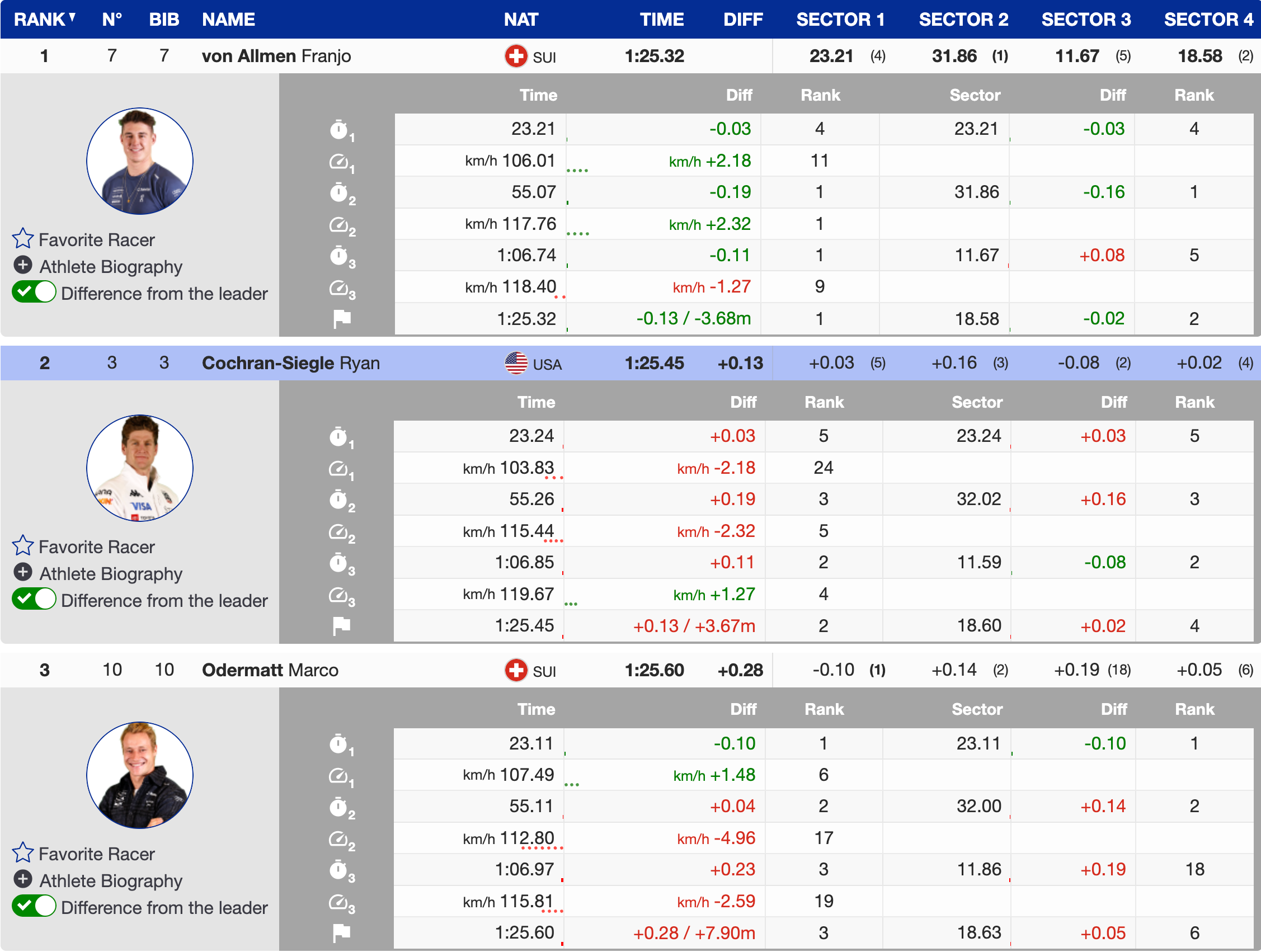
Analysis of the Medalists and North American Finishers
About the Author: Katie Twible