Shiffrin’s Heartfelt Decision: A New Path at the FIS Alpine Ski World Championships in Saalbach, Austria
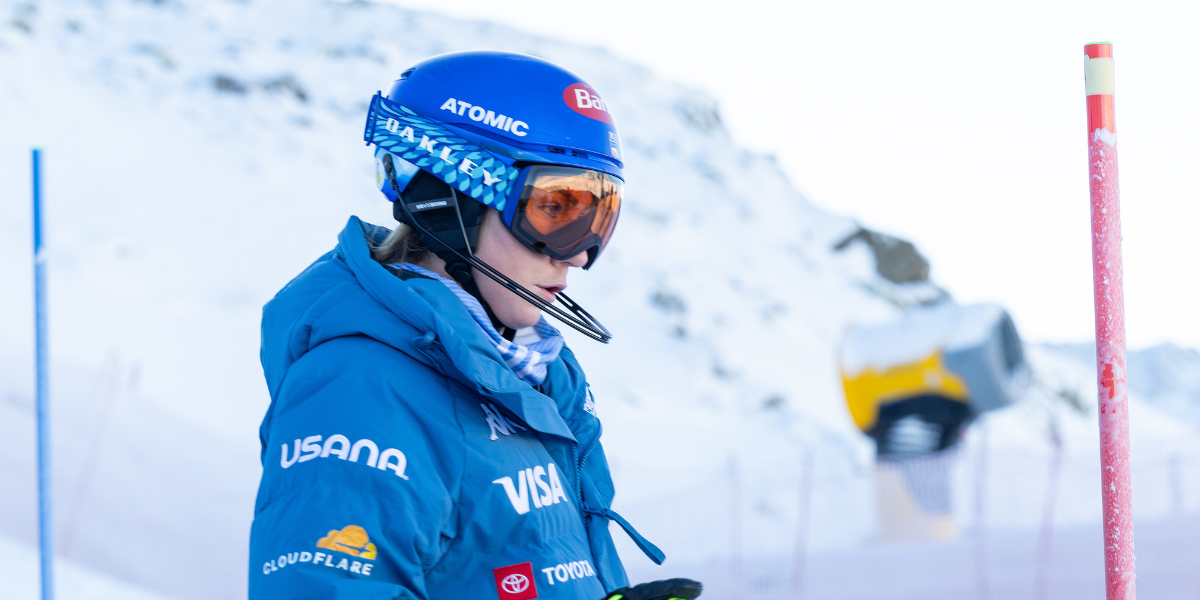
Mikaela Shiffrin, the most successful ski racer in history, has faced one of the most challenging decisions of her career. She dedicated all her energy to preparing for giant slalom but needs more time before competing again at the highest level.
A Relentless Effort to Return
Since her crash in Killington, Shiffrin has pushed herself to rebuild the confidence and technical precision necessary to race at the FIS Alpine Ski World Championships. She acknowledged the mental struggles slowing her return, comparing them to PTSD. Despite progressing, she cannot push through the final barrier to regain the speed and aggression required to compete.
“I thought once we arrived in Europe and got consistent GS training, I’d improve step by step,” she said. “I believed my passion for racing would outweigh any fear, but right now, I just need more time.”
The Pain of Letting Go
Shiffrin had initially been ruled out competing in the team combined, believing she needed every available moment to prepare for GS. But now, after deciding she will not race GS at the FIS Alpine Ski World Championships in Saalbach, Austria, she has made the heartbreaking realization that she must step back from the event she once dominated.
“Missing GS is soul-crushing,” she admitted. “Two years ago, I was skiing at my best. It was the most fun I’ve ever had in GS. Now, not even being able to start is heartbreaking.”
Shiffrin stays focused on the present. “You have to come to terms with where you are. Just focus on the task at hand right now: completing this recovery. It’s going to continue to take time.”

Breezy’s Influence and a New Opportunity
As she processed the decision, Shiffrin found herself pulled in a different direction—toward the team combined. Her longtime friend and teammate, Breezy Johnson, newly crowned downhill World Champion, helped her see the moment differently. Johnson’s enthusiasm gave her hope.
“Hearing Breezy talk about it convinced me that we really have potential to have a good time,” Shiffrin said. “Just maybe this is going to be fun.”
Their connection dates back to their childhood, competing in races like the Whistler Cup and Topolino. Now, at the sport’s highest level, they have a chance to share a moment they never expected. Shiffrin sees this as more than just another race—it is a gift, an opportunity to compete without pressure and reconnect with the joy of racing.
“I feel very, very honored and privileged that she would even consider racing the team combined with me, even after I’m not fully fit,” Shiffrin said. “Despite everything, she still wants to help guide me back into racing. That’s so incredible for me. I’m so thankful for her for that. It feels like a gift, and I am going to do my best to earn it.”
A New Focus and a Glimmer of Hope
While Shiffrin continues to train slalom and remains committed to competing in the event, this moment in the team combined provides a new perspective.
“It’s like a light in the tunnel,” she said. “Not the end yet, but a glimmer of hope that this could be fun.”
Shiffrin’s path forward remains uncertain. But alongside a teammate who believes in her, she is stepping into the starting gate tomorrow in the team combined event—not for points, rankings, or records, but for the love of the sport that has defined her career.
A Team Formed by Performance, Not by Choice
For weeks, the Stifel U.S. Ski Team clarified that Team Combined partners would be determined strictly by performance. The fastest downhiller would pair with the fastest slalom skier, and so on down the list. This process ensured that each pairing had the best chance of success based on results, not preference. While Breezy Johnson and Mikaela Shiffrin didn’t choose to race together, Johnson ultimately convinced Shiffrin that she should participate.
About the Author: Peter Lange