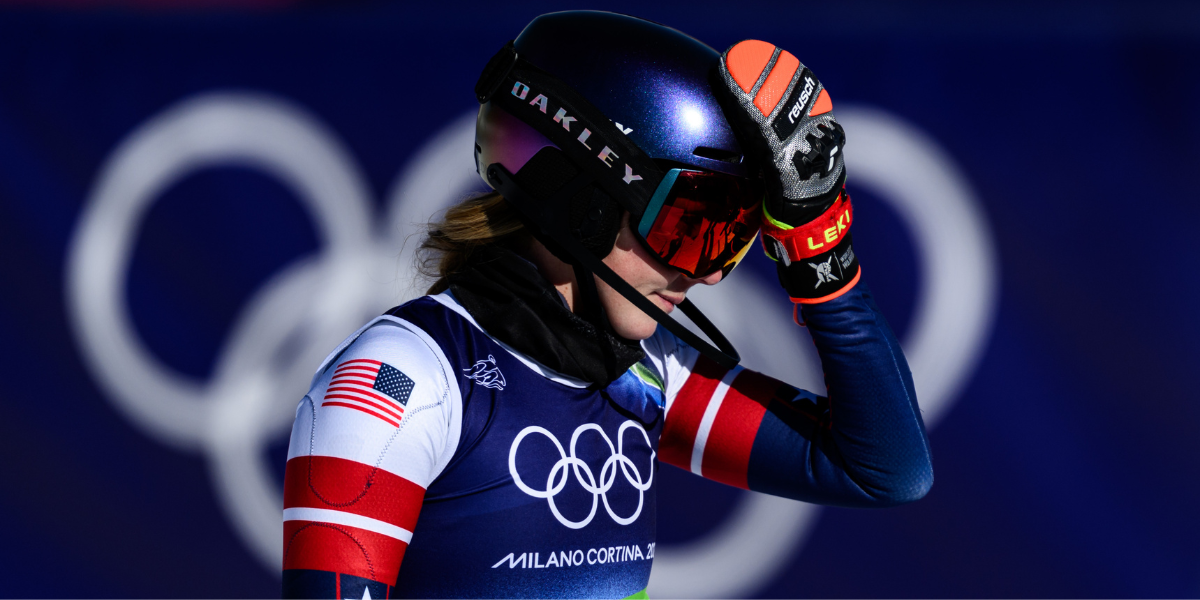
Mikaela Shiffrin /GEPA Pictures
The final gates of the 2026 Milano/Cortina Winter Olympics fell to the best skier of her generation.
Mikaela Shiffrin did not protect history. She attacked it.
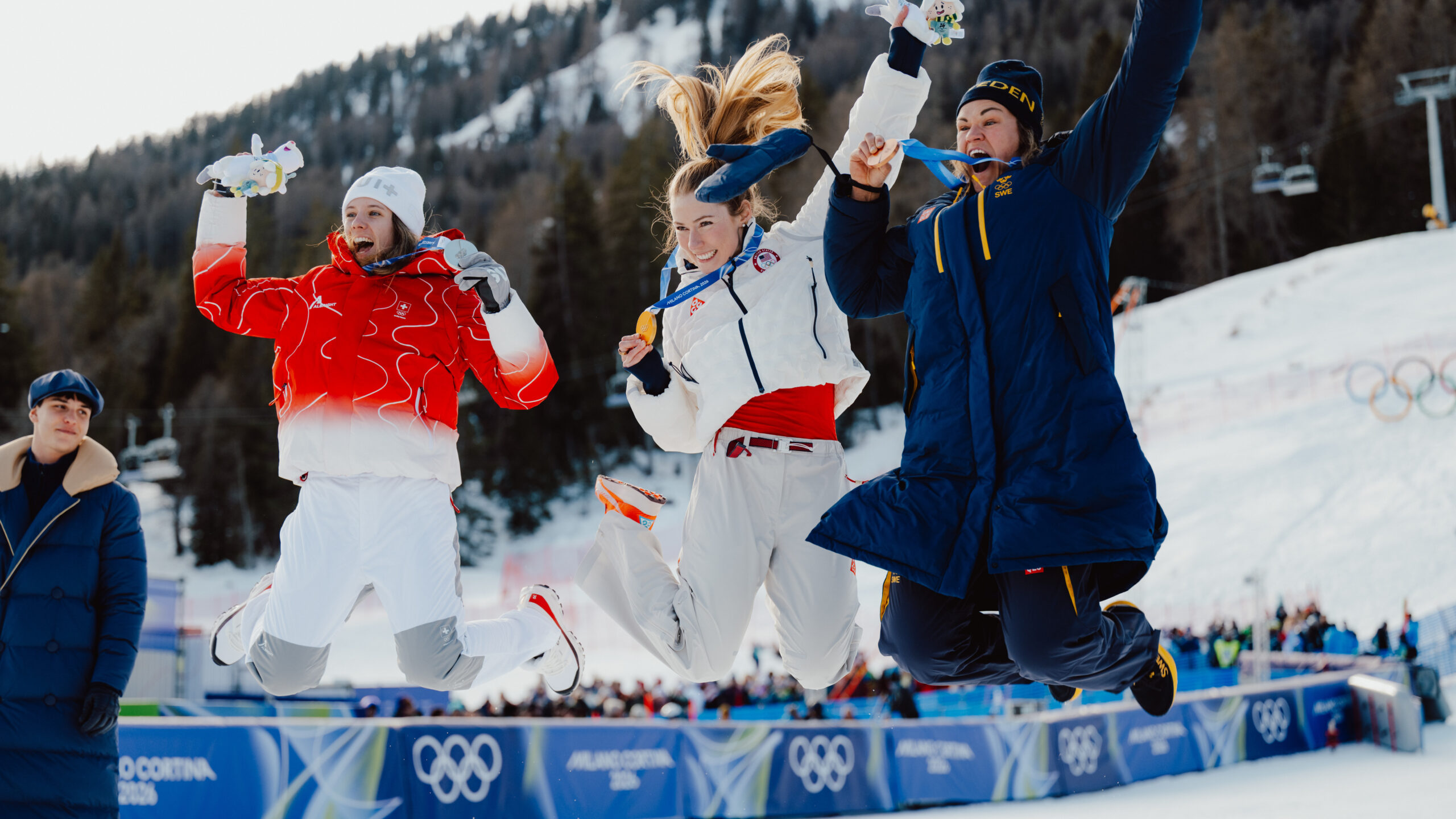
With a commanding two-run performance, Shiffrin claimed Olympic slalom gold in 1:39.10, defeating Switzerland’s Camille Rast by 1.50 seconds and Sweden’s Anna Swenn Larsson by 1.71.
It is her third Olympic gold medal — the most ever by an American alpine skier.
She stands alone.
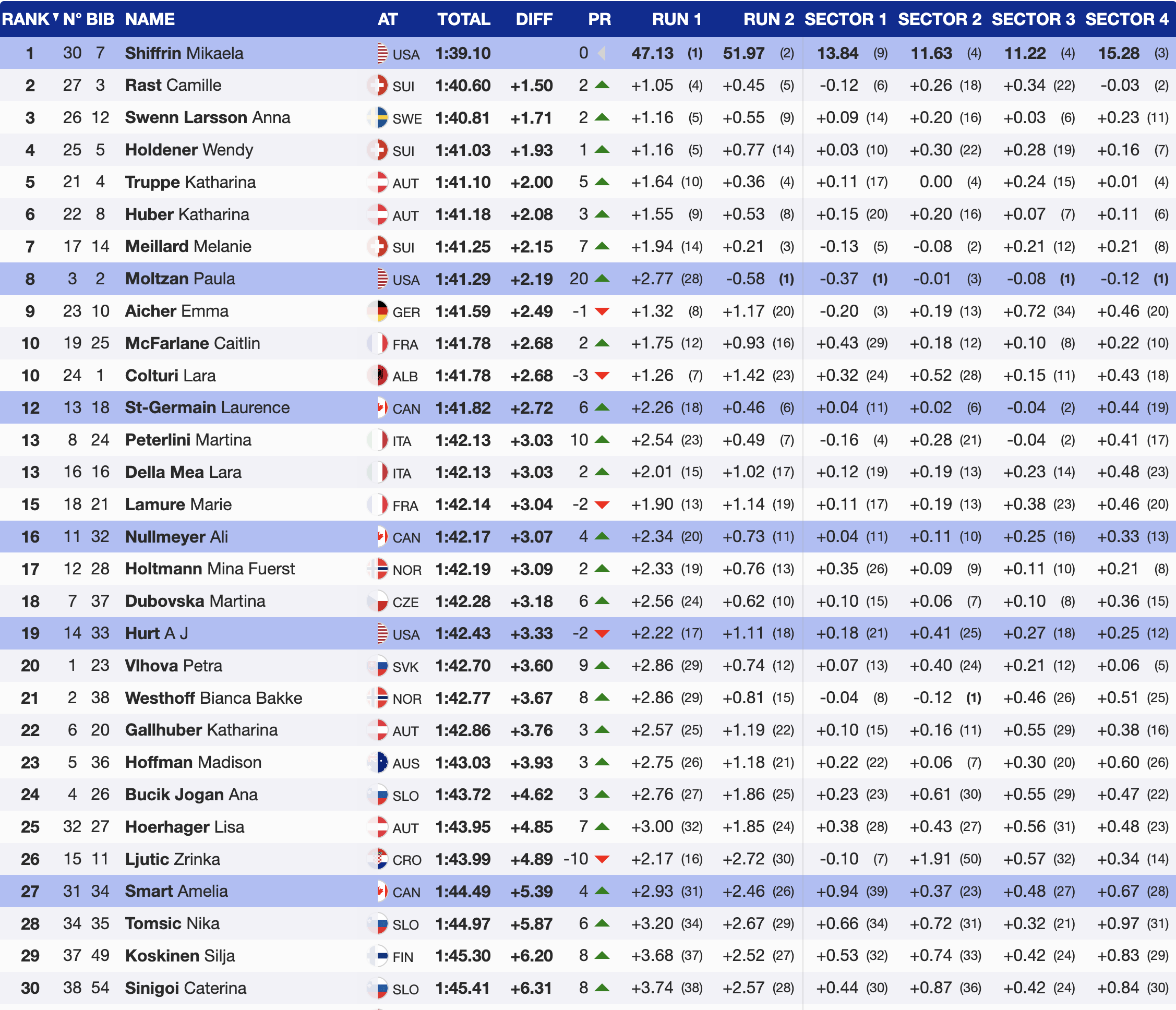
🏅 Women’s Olympic Slalom — Final Results
Gold 🥇 🇺🇸 Mikaela Shiffrin (USA, 1995) — 1:39.10
Silver 🥈 🇨🇭 Camille Rast (SUI, 1999) — +1.50
Bronze 🥉 🇸🇪 Anna Swenn Larsson (SWE, 1991) — +1.71
4th 🇨🇭 Wendy Holdener (SUI, 1993) — +1.93
5th 🇦🇹 Katharina Truppe (AUT, 1996) — +2.00
A Champion Closes With Authority
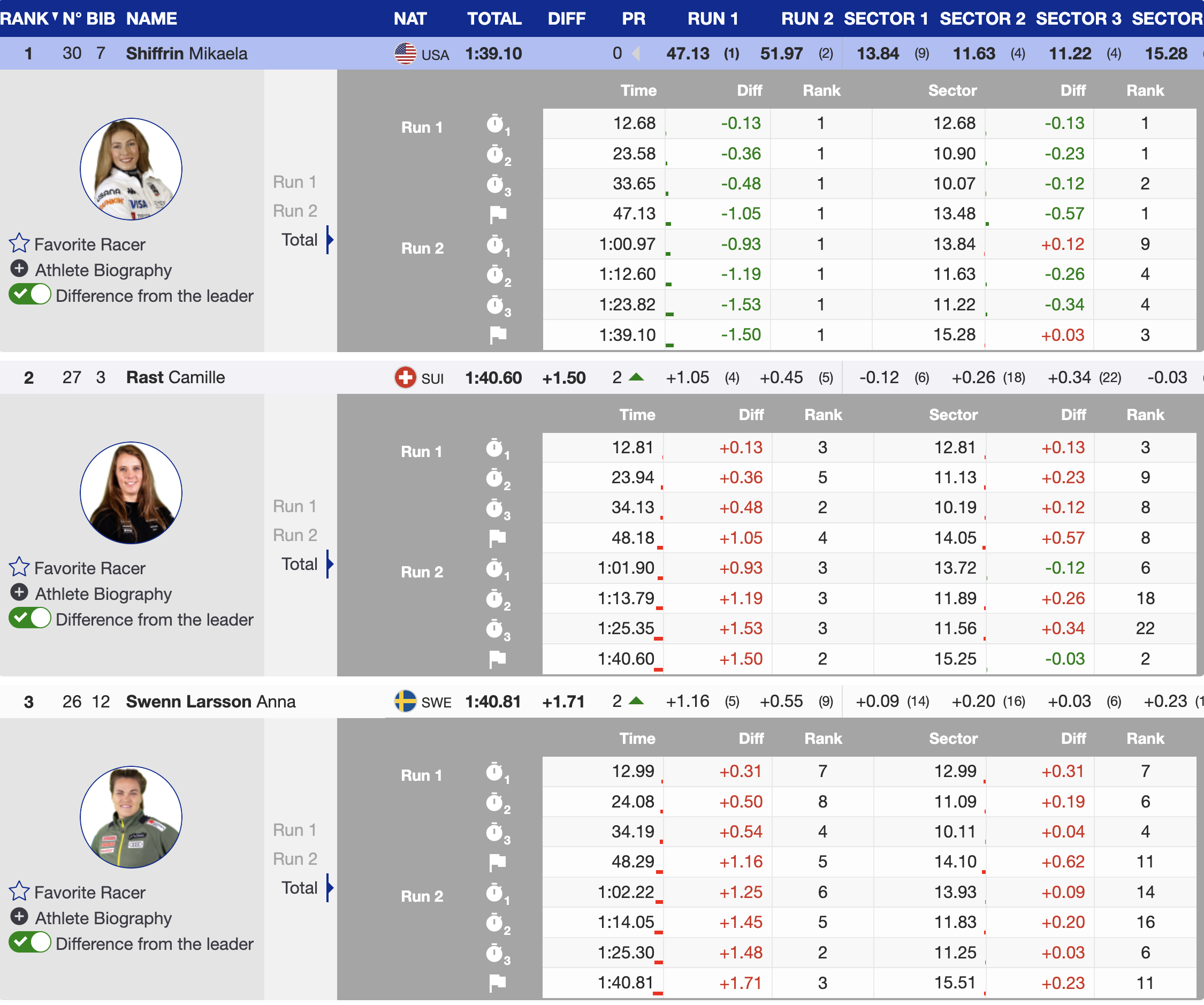
Shiffrin entered the second run with a 1.05-second advantage — massive in Olympic slalom terms. Still, one mistake erases everything.
She gave back a fraction early.
Then she extended.
Her skis accelerated through the middle section. Her movements stayed powerful and efficient. By the final pitch, she was increasing the margin rather than managing it.
Second-fastest run of the second leg.
A 1.50-second victory in the final alpine race of the Games.
Only three Americans had ever won two Olympic gold medals in alpine skiing — Shiffrin, Ted Ligety, and Andrea Mead Lawrence.
Now Shiffrin is the only American with three.
Shiffrin Silences the Doubts
No more speculation. No more questions. No more doubt.
Mikaela Shiffrin closed the alpine program the way champions do — by skiing at the limit when it mattered most.
After crossing the finish line to secure her third Olympic gold medal, Shiffrin deflected talk of legacy.
“I think there’s many people who can take that title,” Shiffrin said when asked about being considered the greatest of all time. “Many were skiing today. This is a sport where we get to share the beautiful feelings. Even if one can be on top of the podium, we share it together.”
Her performance told the rest of the story.
Fastest in the first run. Second-fastest in the second. A 1.50-second margin in an Olympic slalom.
“I came here for the skiing,” she said. “I wanted to feel these two runs that I felt today — that it was on the limit, that it wasn’t easy, but I took the risk even when it felt like there was something to lose. But in the end there was everything to earn.”
When asked for the secret to sustaining greatness, Shiffrin was clear.
“My secret is my team,” she said. “The people around me and my support system. They’ve been the most incredible people to be around. The Olympics is an experience — it is never what you expect it to be.”
The emotion hit after the race.
“I wanted to thank my team, and I wanted to send love to my family who’s back home,” she said. “To see my mom and talk to my dad — it’s a lot. It’s too much to process and express at the same time.”
In the final alpine run of Milano/Cortina 2026, Shiffrin did not just win.
She finished it.
Rast Delivers on the Biggest Stage
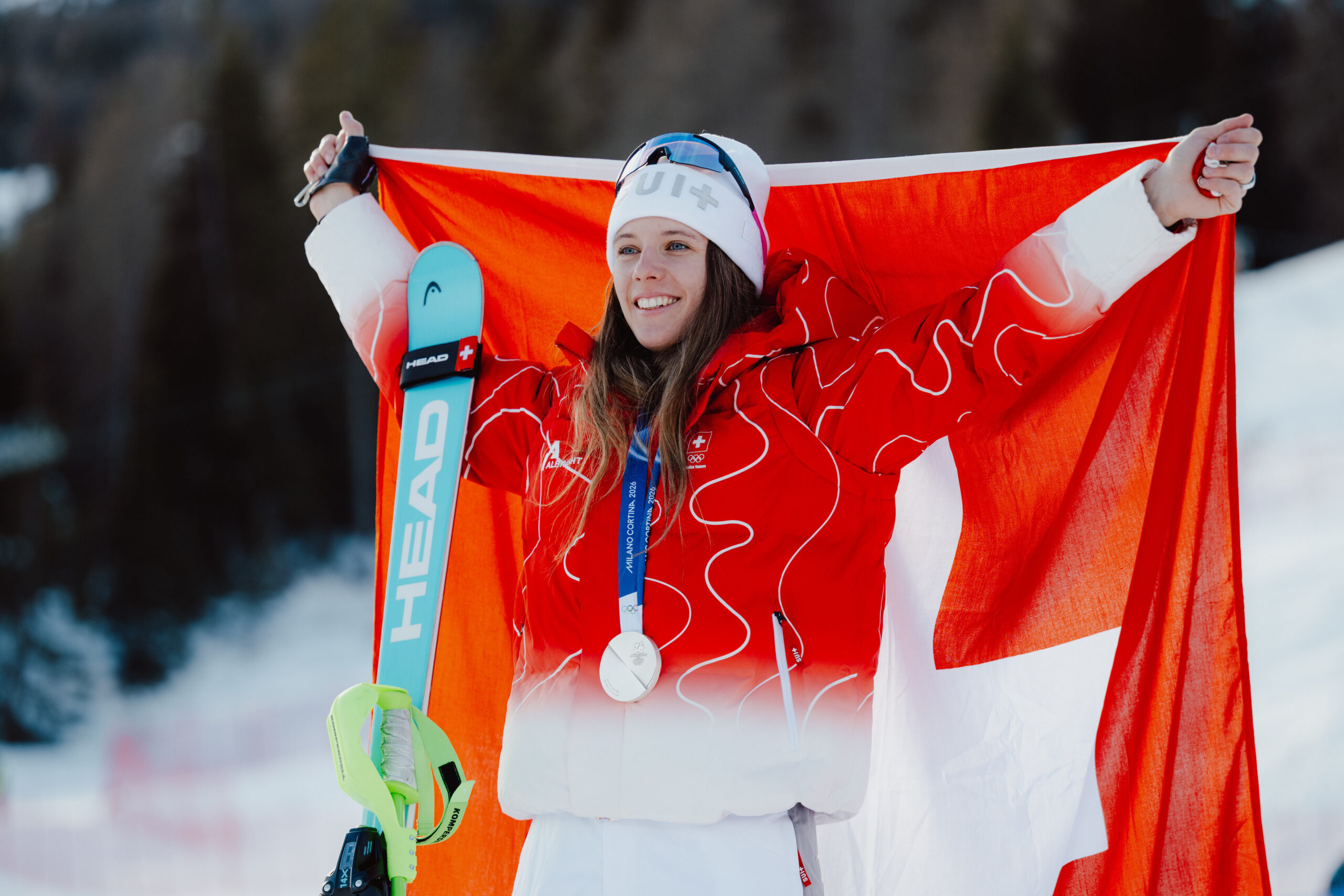
For Camille Rast, the silver medal confirms what this season has already shown — she belongs among the elite.
“It was really a difficult race,” Rast said. “Because it was really tight and we had to give everything from top to bottom. I tried, and it was good.”
Fourth after the first run, Rast attacked the second. Her 52.42 was enough to seize the lead with three skiers remaining and apply pressure to those behind her. When Lena Dürr straddled the first gate of her second run, Rast was guaranteed a medal.
“I knew the girls behind can ski fast,” she said. “The pressure is different when you are in the top three at the start gate. I managed to make a good run from top to bottom.”
The medal carried added meaning.
“Today was the last race I did with my coach. He is retiring now,” Rast said. “It was his last race and I wanted this medal so badly for him. I am so happy for that.”
World champion to Olympic silver medalist in 12 months.
Elite confirmed.
A Long Road to Bronze
Anna Swenn Larsson’s bronze was built over years.
“To never give up, to keep believing,” she said. “I had tough years. I went out of the top 30. I broke my foot. You have to have people behind you that trust you.”
In her fourth Olympic Games, the Swedish veteran finally stood on the podium.
“It was what I have been working for,” she said. “An Olympic medal was my goal. But it’s not easy to put it all together. I’m so proud that I could do it today. It’s hard to take in.”
Her teammate Sara Hector felt the weight of it.
“I’m super happy for her,” Hector said. “We’ve been skiing together since we were children. It’s a very special day for Sweden.”
For Swenn Larsson, the bronze medal was not just a race result.
It was validation.
🇺🇸 United States
- 🇺🇸 Mikaela Shiffrin (1995) — Gold — 1:39.10
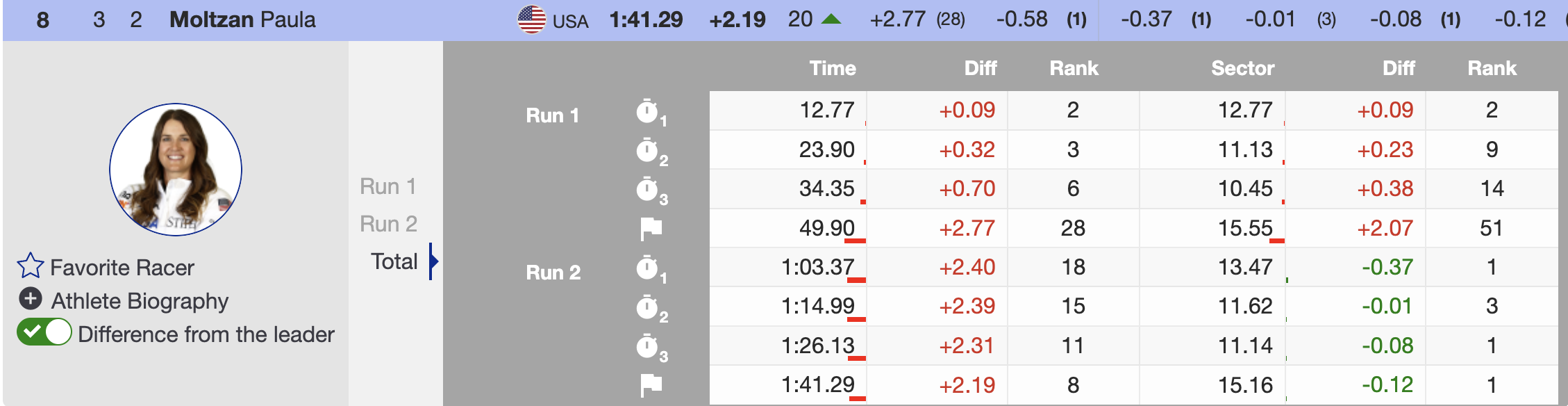
- 🇺🇸 Paula Moltzan (1994) — 8th — +2.19
- Fastest second run of the race (51.39)
- Climbed 20 positions from 28th after Run 1
- Briefly held the leader’s chair
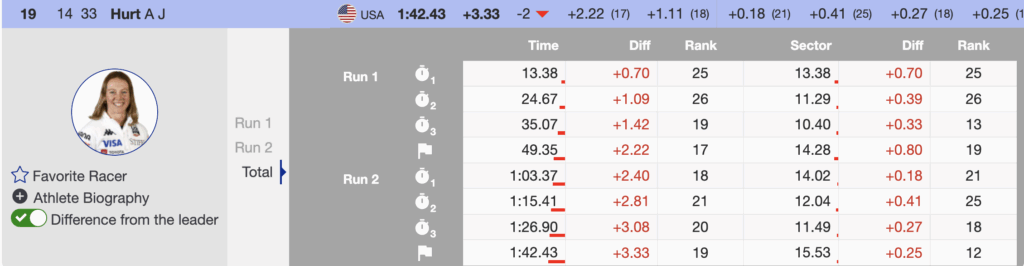
- 🇺🇸 A.J. Hurt (2000) — 19th — +3.33
Moltzan produced one of the most impressive second runs of the entire Olympic slalom. After major mistakes in the first run left her 28th and barely inside the flip, she attacked from third in the second run and immediately set the standard.
“I didn’t really think I’d be able to climb this much,” Moltzan said. “But I’m really happy with the second run I put down. My first run ski was also good. It just wasn’t clean, and that sets you back in a really strong field.”
Her 51.39 was the fastest second run of the race, and she surged 20 positions up the leaderboard to finish eighth.
“There were a lot more turns in the second run,” she said. “The offset between the gates was about a meter more, so you’re turning a lot more and the speeds are a little slower. You can control it. I prefer to turn, so it was better for me.”
“I’m happy to leave the Olympics on that run,” she added. “I’m excited to see my family and excited to go home.”
🇨🇦 Canada
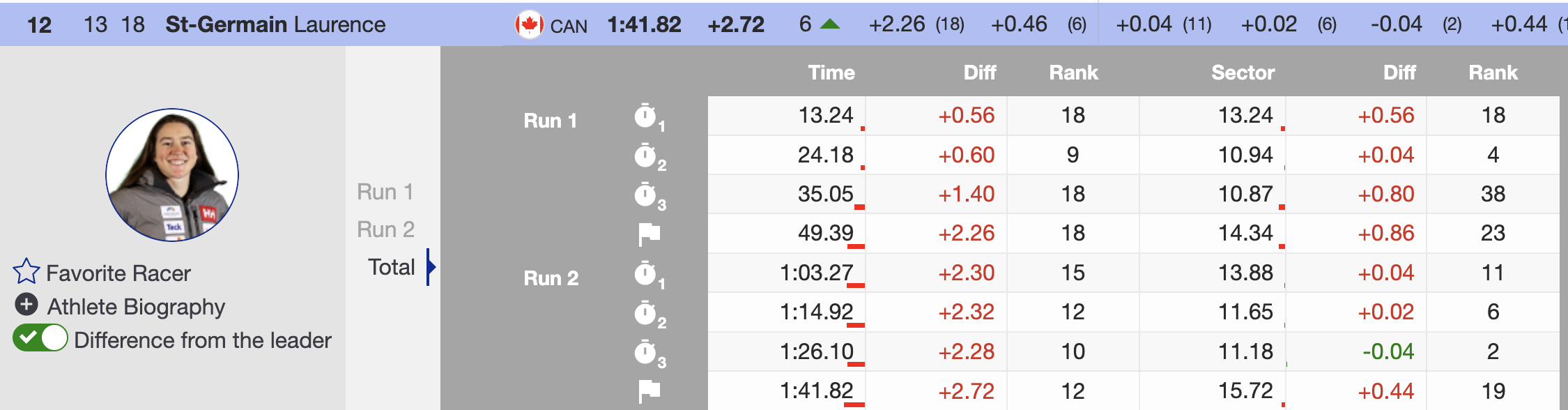
- 🇨🇦 Laurence St-Germain (1994) — 12th — +2.72
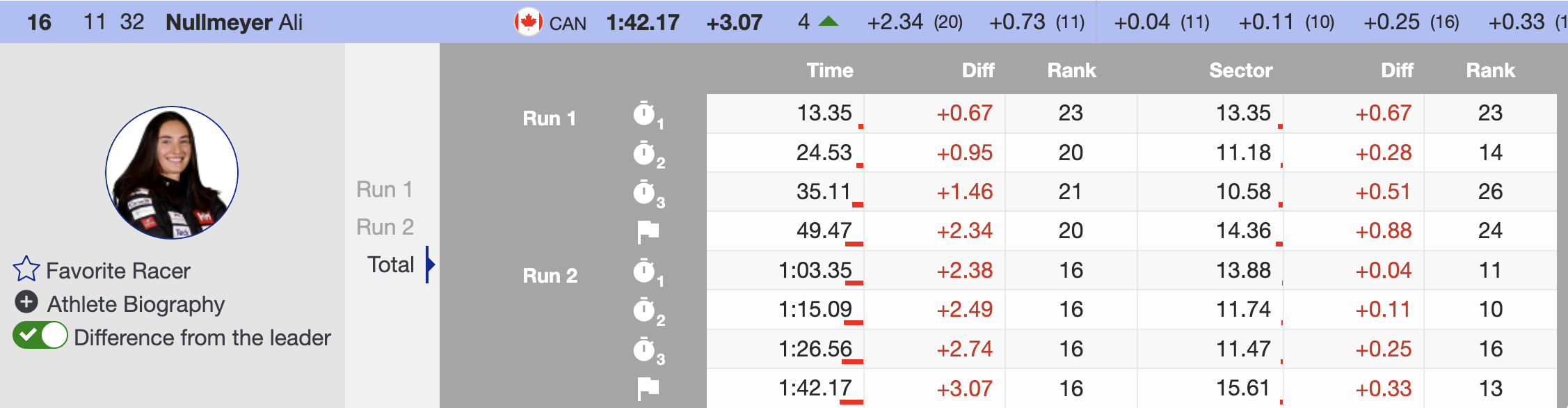
- 🇨🇦 Ali Nullmeyer (1998) — 16th — +3.07
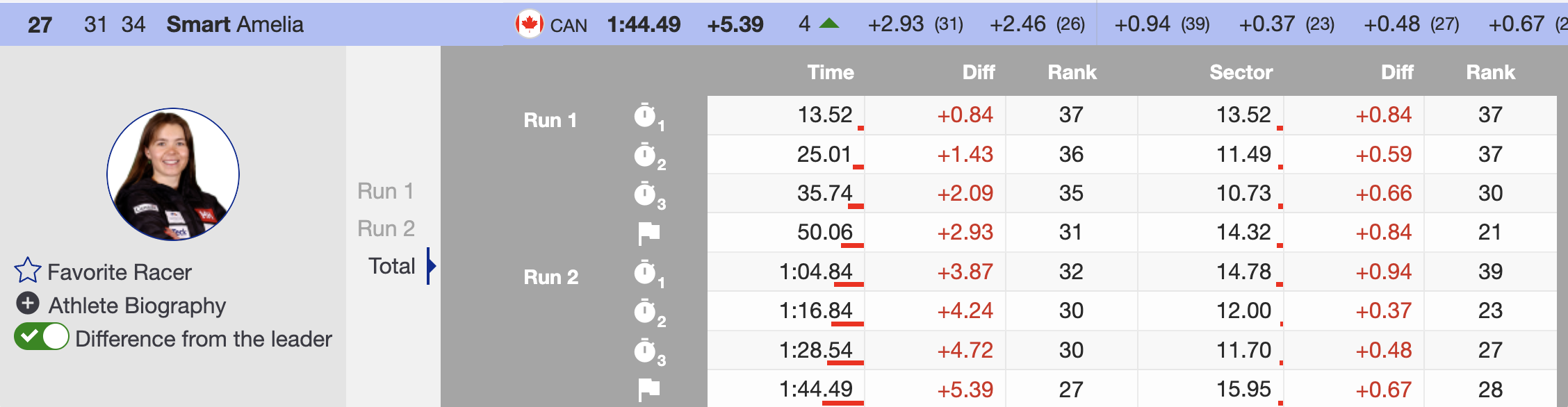
- 🇨🇦 Amelia Smart (1998) — 27th — +5.39
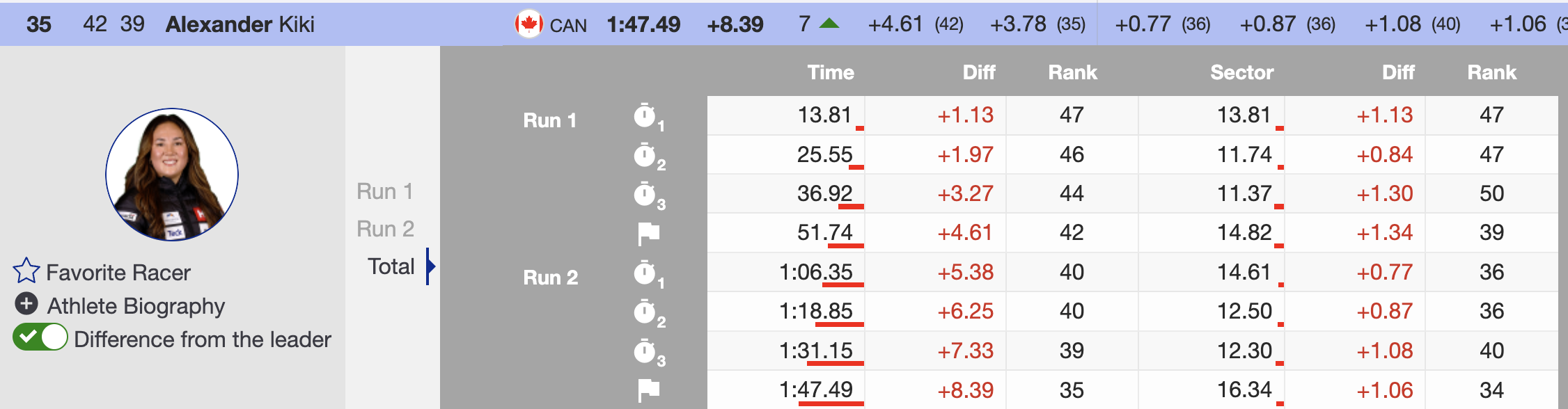
- 🇨🇦 Kiki Alexander (2001) — 35th — +8.39
St-Germain produced a composed second run to move into the top 15, while Smart and Alexander closed out their Olympic campaigns further down the standings.
The Final Alpine Frame
There was chaos in the second run.
Cornelia Öhlund straddled after breaking a pole while in medal position. Lena Dürr’s medal vanished on the first gate. Wendy Holdener narrowly missed the podium once again.
But in the end, the outcome was unmistakable.
The greatest technical skier of her era delivered when the pressure was absolute.
The gates are pulled.
The medals are awarded.
The alpine chapter of Milano/Cortina 2026 is complete.
The last alpine day of the Olympics belongs to Mikaela Shiffrin.

Top 30- Race Results
click on images to enlarge
Top Three and North American Athletes Analysis
About the Author: Peter Lange