Ragnhild Mowinckel GEPA pictures
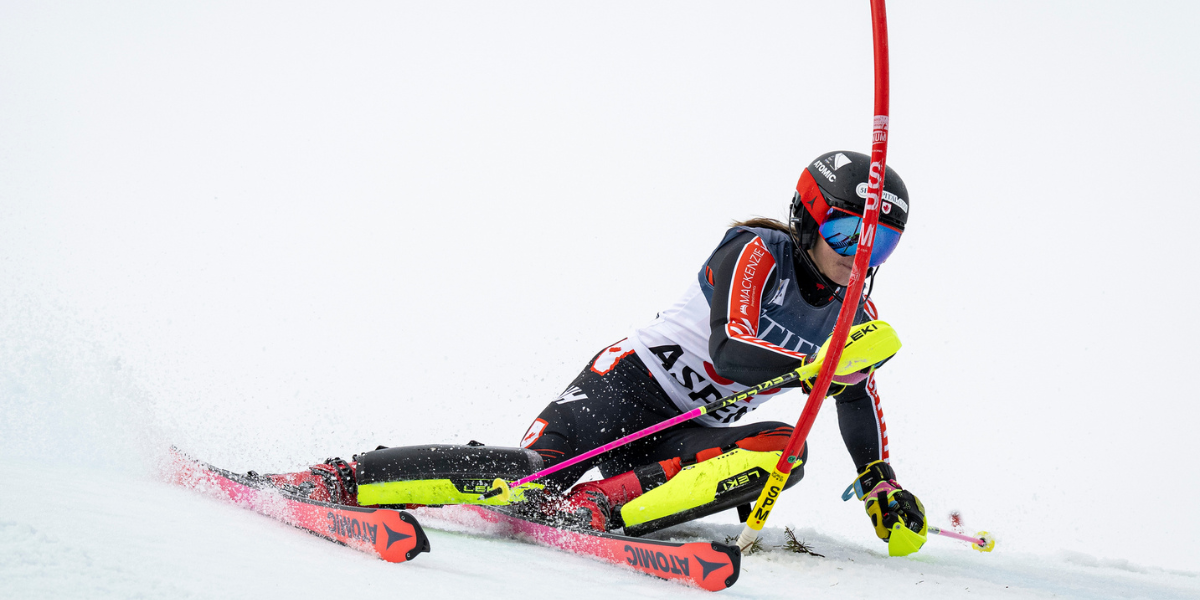
This week, Norway’s winningest female alpine ski racer in history, Ragnhild Mowinckel, concludes her World Cup career at the Finals in Saalbach, Austria. The popular athlete summarizes her career highlights and offers insights in a conversation with Ski Racing Media. Also, teammate Kajsa Vickhoff Lie shares thoughts about losing her long-term mentor and the future of Norway’s women’s speed team.
“I wish to stop while at the top,” Mowinckel told Ski Racing during an interview at Kvitfjell, Norway, in early March before the final two regular-season World Cup super-Gs. She explained that she announced her upcoming retirement in late February so that she would have time to say goodbye to the people and the sport.
However, there is no slowing down until the end. “It is full gas all the way,” she says with her well-known, happy smile.
Click on images to enlarge


Extensive career
Mowinckel is a world-class, multi-discipline competitor. Her medal collection contains two Olympic silver medals (2018 giant slalom and downhill), two World Championship bronze medals (2019 alpine combined; 2023 giant slalom), five Junior World Ski Championship medals (2012 and 2013), and 15 Norwegian National Championship medals (2012-2022).
She has won World Cup races in giant slalom, super-G, and downhill. Notably, her first World Cup start was a slalom in 2012. Before her final World Cup weekend, she has accumulated 14 podiums, including four victories, during a World Cup career that spanned 12 seasons.
Entering the World Cup Finals in Saalbach, Mowinckel ranked 8th in super-G, 9th in downhill and 14th in giant slalom, qualifying her to compete there in all her current race disciplines. In the women’s giant slalom race on March 17, she finished 8th, moving her up one spot to 13th in the 2024 giant slalom World Cup standings.
Mowinckel ends her nearly 250 World Cup career starts with the super-G and downhill competitions on March 22-23.
As a grand finale this season, the Norwegian ski racing icon captured her first-ever World Cup downhill win in Cortina d’Ampezzo, Italy, in late January.

Greatest achievements
What does Mowinckel see as the highlight of her career?
“One thing is the results; there have been a lot of cool (moments). But I think, for my part, that I am a somewhat ‘boring’ athlete focused on processes and the development I have experienced both as an athlete and a person,” Mowinckel tells Ski Racing. She says many crucial parts have had to come together to accomplish her achievements.
“My (race) results are only a result of me achieving that process first. And that is maybe what I bring with me; that I have managed to reach the top in an endeavor that is viewed as very difficult. Those things: how you are put together and function, and for my part, the personal development through a whole career with many challenges.”

Taking ownership
Before the 2018 season, Mowinckel began taking more ownership of the processes and her career. What did that involve?
“That has probably been one of the cornerstones for me being able to achieve my success; that I have managed to take ownership in what I am doing and be more participatory in those processes.” She explains further:
“Starting when you were a child, you have a coach. You listen to the coach, and maybe you don’t ask many questions. You just think that the other (person) knows better than you do. But it is we who sit inside our heads; there are no other pilots in there,” Mowinckel says, pointing out the importance of adding your opinion. “Listening more to myself in those situations is what has brought me further and made me feel secure.”
Tough times
After earning Olympic and World Championship medals in 2018 and 2019, Mowinckel faced a challenging period in 2019-2020. First, she suffered a knee injury in March 2019. She tore her ACL and injured her meniscus during downhill training at the World Cup Finals in Soldeu, Andorra, requiring surgery in her right knee.
Only eight months later, after rehabilitation and training, she once again tore the ACL in the same knee during ski training. At that point, she was almost ready to return to competition, but the second knee surgery and another round of rehabilitation training kept her out of the 2020 season. She came back to the Alpine World Cup the following season.
Since the 2022 season and onwards, she has earned consistent podiums and top-10 results.
Fluor leftovers
This season presented her with another challenge. Mowinckel was disqualified at the Sölden giant slalom season opener after placing 6th in the first run. FIS found traces of the now banned fluor on her skis in what has become a routine test. Mowinckel was not at fault and was crushed.
Her ski company HEAD conducted an analysis in the following days and found that the fluor came from one of their ski-prepping tools, which contained remnants of fluor from being used on fluor products during previous seasons.
Mowinckel was devastated and upset and lost out on a potentially good result. The disqualification started a discussion in the ski racing community about the new FIS rules, which punished her for a mistake she had no part in and was unaware of.

Positive vibes
Despite the rough start this season, Mowinckel and the team have returned to a positive place.
“We have managed to turn this season around, so I feel I am in a place where I can give full gas and that I am competitive the whole time. This really feels fun now,” 31-year-old Mowinckel says happily about her final World Cup season.
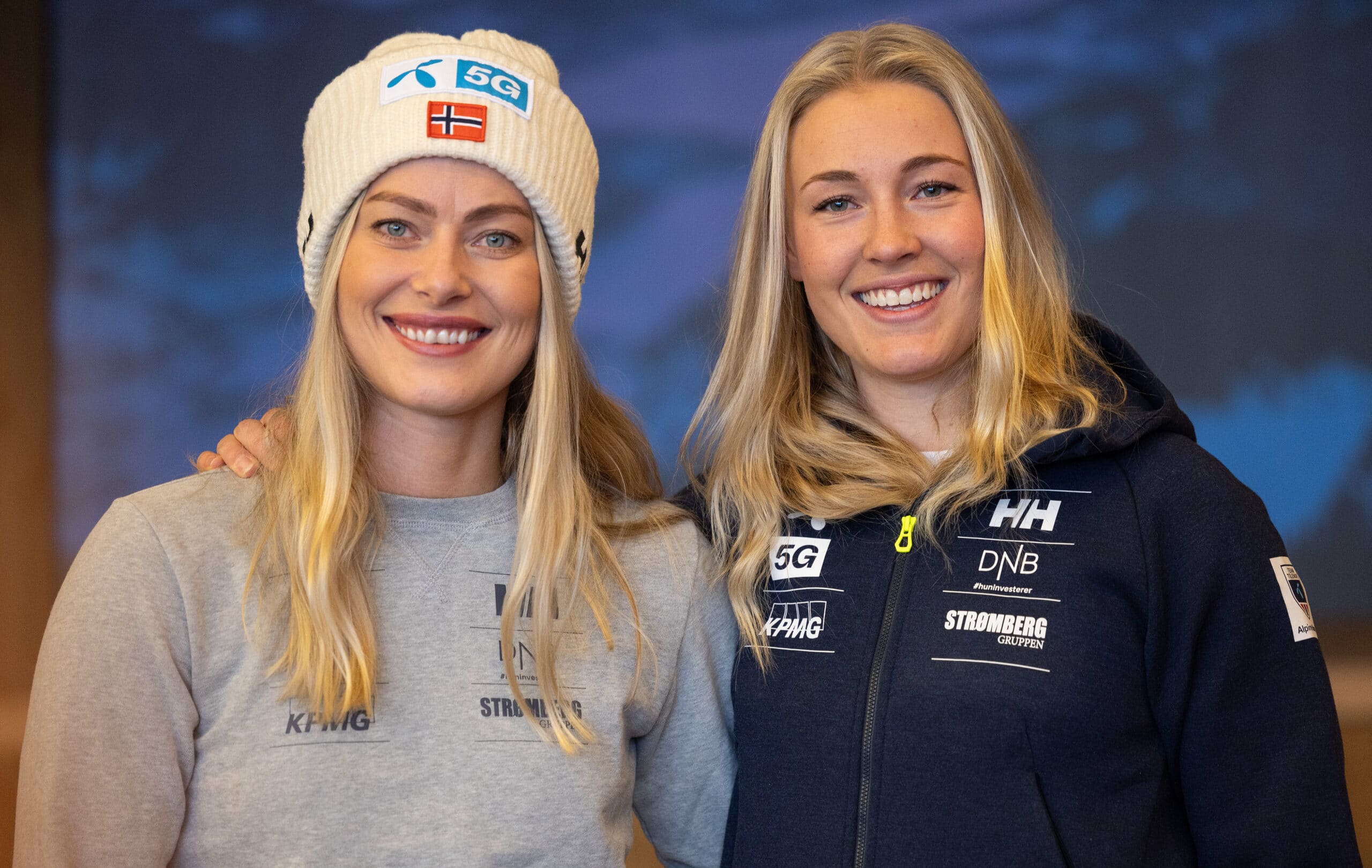
Mowinckel and six-year younger teammate Vickhoff Lie have a close and good relationship. Vickhoff Lie is extremely sad about losing Mowinckel from the small Norwegian women’s speed team:
“I don’t even want to think about it,” she says during her interview with Ski Racing at Kvitfjell in early March. Vickhoff Lie, the 2023 World Championship bronze medalist in super-G, wants to enjoy the rest of the season together with her teammate and work well together during competitions.
“She has been Alfa and Omega for me throughout my career,” the 25-year-old says about Mowinckel. Vickhoff Lie sees Mowinckel as the main reason Norway has focused on women in alpine skiing, especially in the speed disciplines.

New team captain
“We have been able to build something incredibly nice together, especially in speed on the girls’ side,” Vickhoff Lie says about her time with teammate Mowinckel. She points out the need to add more female skiers to the Norwegian speed team to keep up the current team spirit.
“I will work hard to get more (skiers) up and motivate them to become a part of the very, very cool team we have right now,” Vickhoff Lie says.
With Mowinckel gone, Vickhoff Lie will be the team’s new leader. How does that feel?
“I have had a good teacher, so I believe it will be fine, I feel very comfortable where I am currently and have learned a lot throughout my career. I will do my part so that both I and up-and-coming girls can perform as well as possible during the next years,” she responds.
In addition to Vickhoff Lie, speed team member Inni Holm Wembstad will probably return to the World Cup speed events in the 2024-2025 season, according to Claus Ryste, the Norwegian team’s alpine director.
24-year-old Wembstad is working her way back from two consecutive knee injuries sustained in St. Moritz, Switzerland, in December 2022 and December 2023. Wembstad has had six World Cup starts since her February 2022 debut but has been out of the tour since her injury in 2022.
Building a speed team
During a conversation with Ski Racing about the development of younger speed athletes in general, Ryste says that it is not beneficial to advance racers to the World Cup before they are ready for the next level. One should nurture the talented skiers and know that it takes a while to develop them. According to Ryste, skiers should develop a solid technical base before specializing in the speed disciplines.
At the same time, Norwegian skiers start training and racing super-G at an earlier age than in most nations. “That is why, historically, we have been the world’s best super-G nation,” Ryste says.
Vickhoff Lie is eager to build a new speed team now that Mowinckel will be missing. She points out the possibility of combining giant slalom and the speed disciplines, “which is very important for the girls coming in; that they don’t lose the giant slalom technique, but that they actually can improve it together with us.”
Vickhoff Lie finished 10th in her first-ever giant slalom World Cup race this season.
The soon-to-be team leader mentions some younger racers who seem interested in racing speed at the World Cup level. “At least some are knocking on the door. So, I will open my arms, just like Ragnhild did to me,” Vickhoff Lie says while smiling.
Experience
Mowinckel and Vickhoff Lie hope young ski racers decide to pursue super-G and downhill.
Vickhoff Lie has created a speed training camp for young female skiers in Norway. Last June, 30 teenage girls participated in a three-day speed camp run by Vickhoff Lie and her coaching team. The popular camp will return this June. Essential principles for Vickhoff Lie’s camp are that the camp is open for girls from all over Norway; the athletes participate without parents to strengthen social bonds between the girls; and the camp is completely free of charge for the participants so that economic background does not affect skiers’ ability to participate.
Mowinckel is also encouraging and exclaims: “Go for speed! It is fun!
“Paradoxically, I am a speed racer who isn’t very fond of speed. But despite that, I have been skiing speed professionally for 14 years. And I think there is so much more to this life (as a speed racer) than to ski from A to B,” Mowinckel explains enthusiastically. “You feel the adrenaline, but you also achieve a fantastic feeling of mastery, which is so cool to bring with you further on in life.”
The retiring Norwegian speed specialist summarizes genuinely: “I have been so incredibly lucky to have experienced this!”
Soon, Mowinckel can enjoy applying her skills gained in ski racing to new areas of life.
About the Author: Bente Bjørnsen Sherlock