GEPA pictures/Mario Buehner
Andorran Sensation: Verdu Claims First Podium in GS Thriller
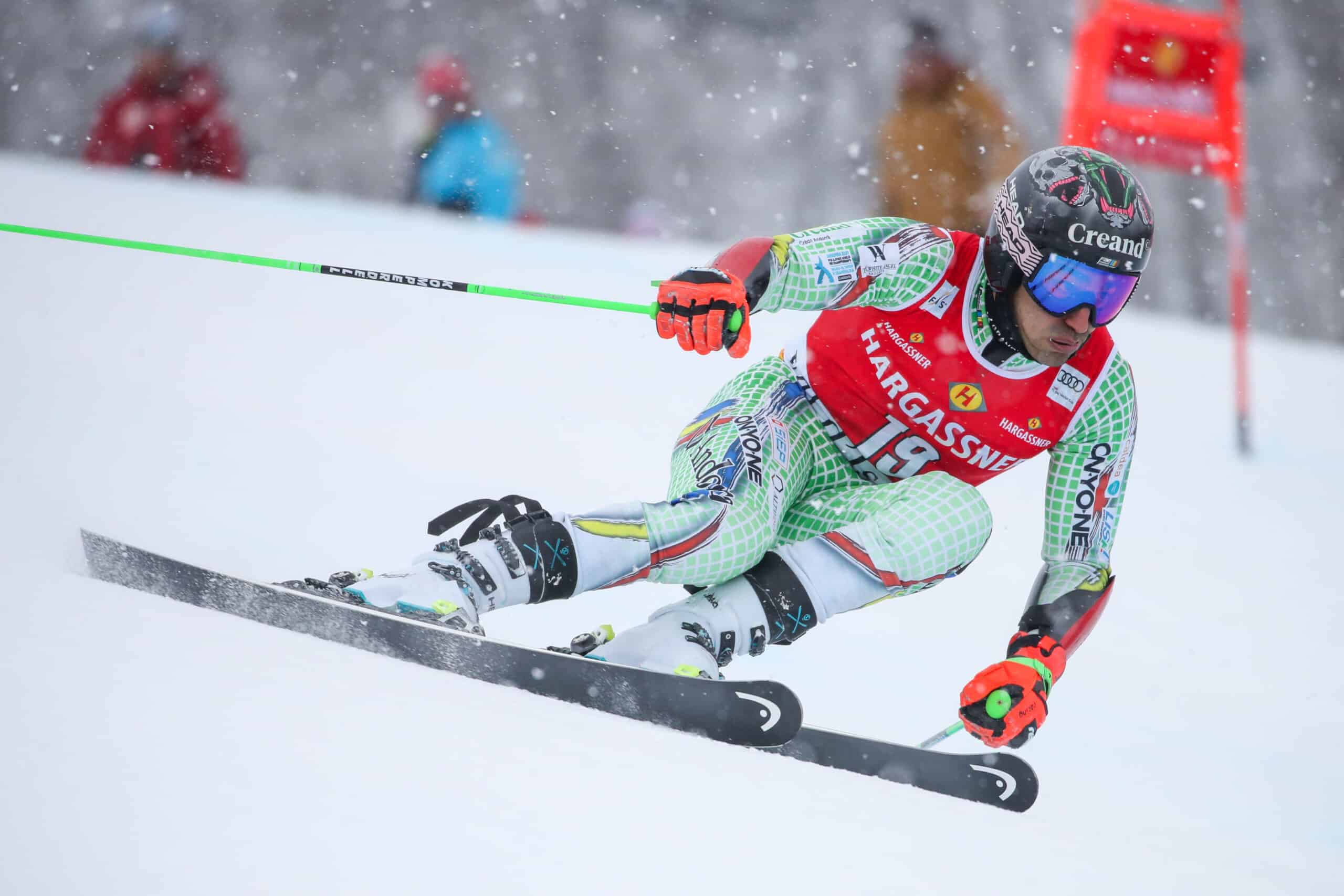
Today, it didn’t require second-run perfection for Marco Odermatt to win his third consecutive Val d’Isère giant slalom. He left the start with a (-1.23) advantage over Austria’s Marco Schwarz and fought the entire way using astonishing athleticism to cross with a (-0.98) victory. With an exceptional display of GS, Schwarz moves up two positions to take second. However, perhaps the podium story of the day is the third-place finish of 28-year-old Andorran Joan Verdu. It was not only his first podium, but it was also his first top ten.
“Many little mistakes,” Odermatt acknowledged. “Visibility was very, very flat. I struggled a bit on the top.”
The fastest five from the first run displayed powerful skiing on the edge of the possible. First, Andorra’s Joan Verdu took the lead, and then Austria’s Marco Schwarz immediately took it from Verdu, leaving only three to ski. Third best on the first run, Switzerland’s Loic Meillard was the first to finish without the lead. But then Henrik Kristoffersen crossed into 7th. And it was then it was known that Verdu had earned his first podium.
Radamus Shines in Top Ten Finish at Val d’Isère GS Opener
After an excellent start to the day, Stifel US Ski Team member River Radamus could cross the second run finish with the lead, guaranteeing him a top ten in the first World Cup GS of the season. Radamus finished the day 10th (+2.83). Unfortunately, the next racer to ski, Germany’s Alexander Schmid, took the lead before Radamus could make his way to the comfort of the leader’s throne. However, a top ten is a significant achievement and should be celebrated. During the final ten to ski, the lead continually changed, and with only five remaining to ski, Croatia’s Filip Zubcic had a narrow (+0.06) lead and eventually finished 4th.

Canada’s Erik Read struggled to find his first run speed, and when he crossed the finish, he had already lost five positions (+0.86) behind the then-current leader rookie Zwischenbrugger. However, Read ended the day a very respectable 19th (+4.44).
Rookie Brilliance: Zurbruegg and Zwischenbrugger Impress in GS Debut
In his career first World Cup, Switzerland’s Sandro Zurbruegg used bib 69 to qualify 30th during the first run. But the 21-year-old was not satisfied just scoring; he attacked and the first skier on the afternoon Val d’Isère’s Stade Olympique de Bellevarde course occupied the leader’s throne for the following three athletes. By the end of the day, he had moved up 13 positions to finish 17th (+4.39)
Another World Cup rookie to score in his career’s first World Cup was Austria’s Noel Zwischenbrugger, who was running 6th; he also attacked and assumed the leader’s seat. He maintained the lead for the following eight racers and moved up ten positions in the afternoon to finish 13th (+3.58). Zwischenbrugger had the fastest second run in his very first World Cup.
Good skiing was heavily rewarded on the second run. Four athletes delivered performances that moved them up ten or more positions in the afternoon.
Val d’Isère men’s GS results and analysis of the fastest three and North Americans

Analysis of the fastest three and North Americans


About the Author: Peter Lange