Giovanni Franzoni/GEPA pictures
Franzoni Strikes First in the Men’s Combined
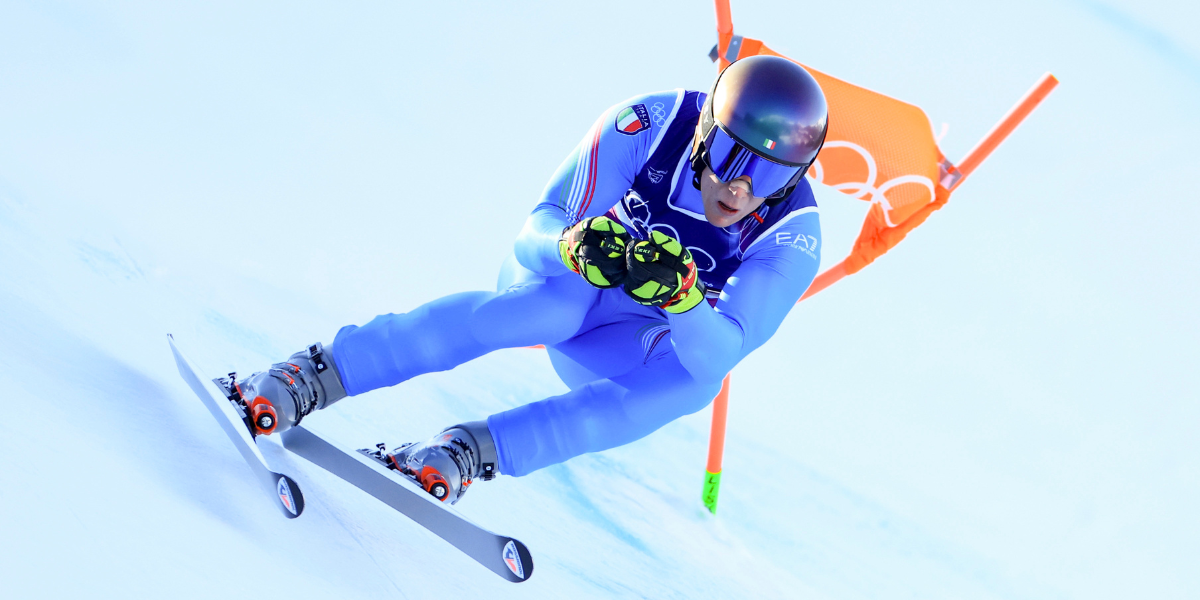
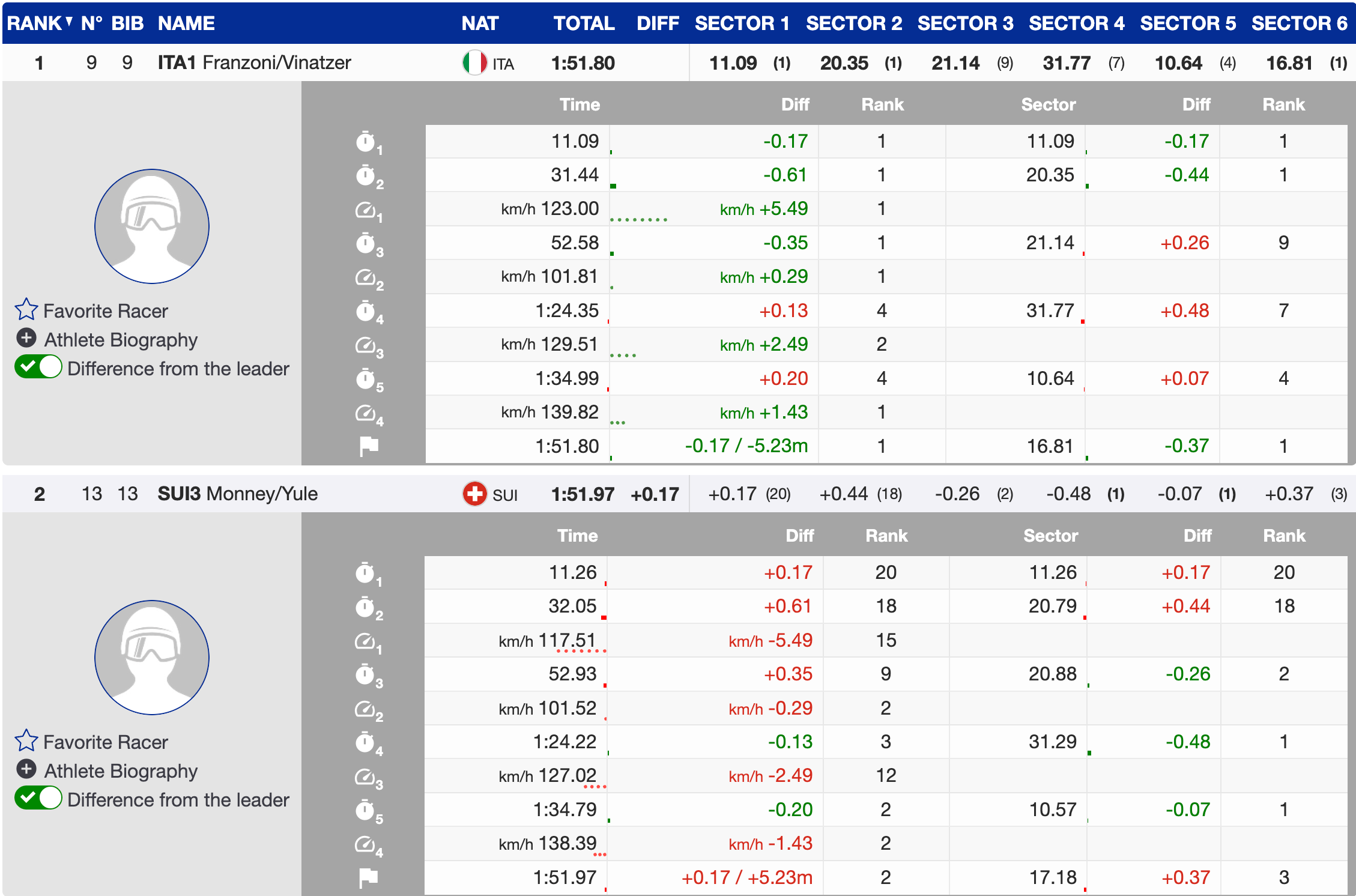
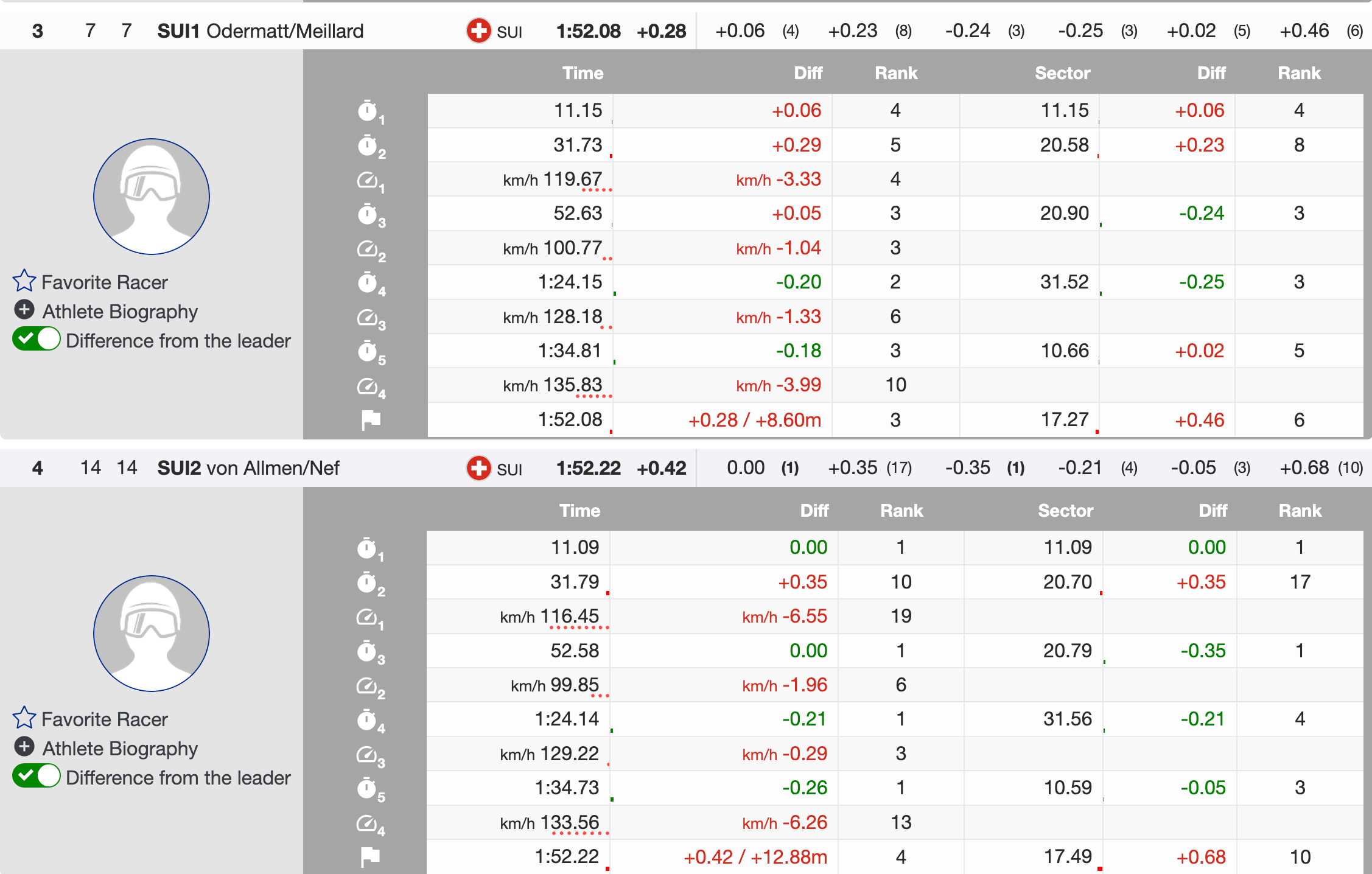
Giovanni Franzoni set the benchmark early in the men’s combined, storming into the lead after the downhill with a run defined by confidence and commitment. The Italian, who has already collected four podium finishes this season, delivered a performance worthy of his Olympic silver medal in the downhill and showed that same belief from the start gate today. Green lights flashed the entire way as Franzoni attacked the big terrain, highlighted by a massive 42 meter flight. While he gave up a touch of time through the middle section after the jump, he carried exceptional speed into the bottom, charging to the line and beating Marco Odermatt, who was sitting in the lead at the time, by a commanding .46 seconds to claim the early lead.
That margin gives his slalom teammate Alex Vinatzer plenty to be excited about heading into the technical half of the combined, but in slalom nothing is guaranteed. With conditions, rhythm, and pressure all in play, the fight for the final result remains wide open.
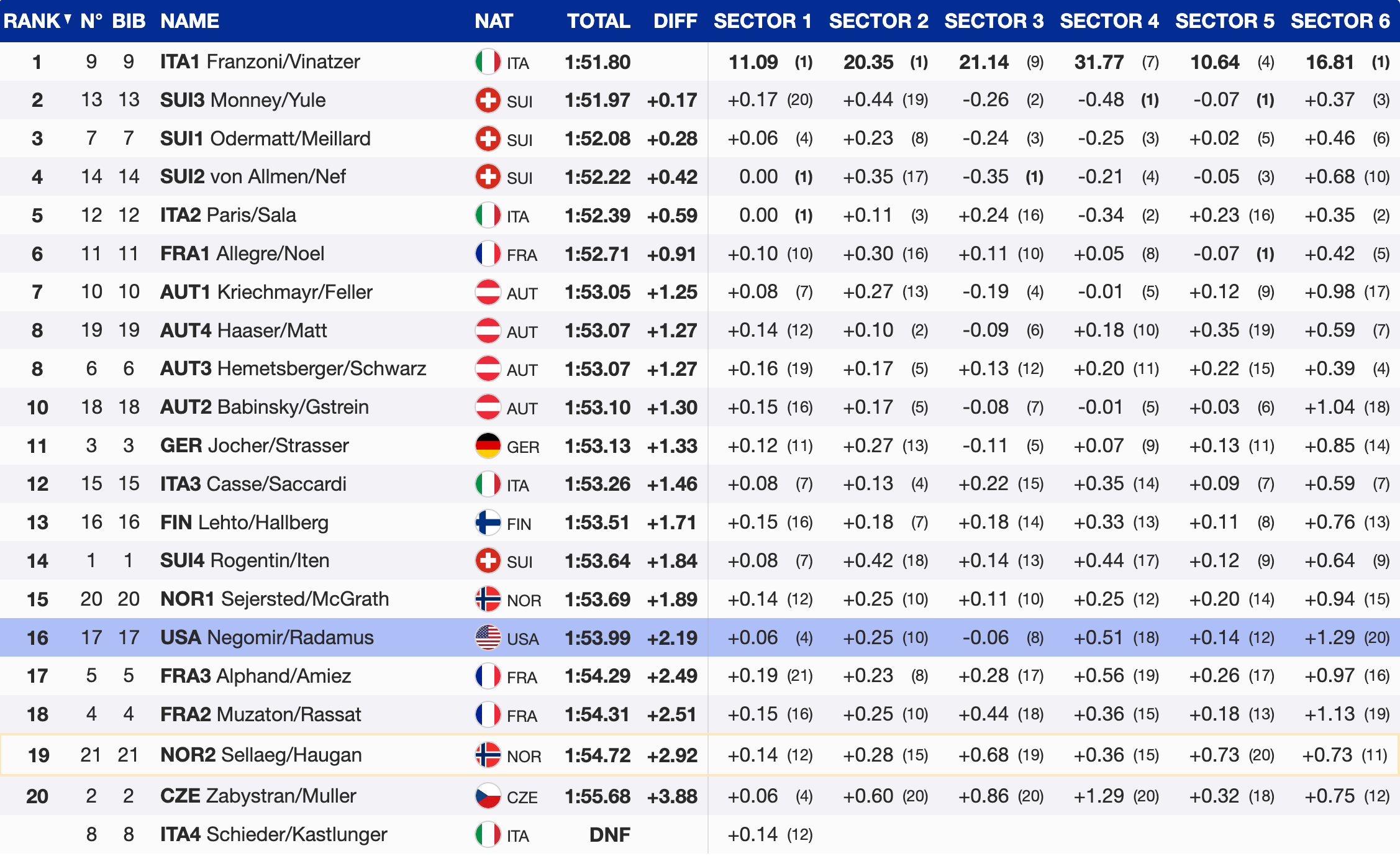
Top 5 After Men’s Downhill:
- 1st: ITA1 🇮🇹 Giovanni Franzoni (ITA)— 1:51.80
- 2nd: SUI3 🇨🇭Alexis Monney (SUI) — +.17
- 3rd: SUI1 🇨🇭Marco Odermatt (SUI) — +0.28
- 4th: SUI2 🇨🇭Franjo von Allmen (SUI) — +0.42
- 5th: ITA2 🇮🇹Dominik Paris (ITA) — +0.59
Speed, Redemption, and Slalom Opportunity for the Swiss
Alexis Monney charged into second place with a storming downhill run, skiing with a clear sense of redemption after his fifth place finish in the Olympic downhill. The Swiss skier cleaned up the sections that troubled him on Olympic race day and showed true pace from top to bottom. Monney dominated the lower half of the course, choosing a fast, direct line and staying tucked through sections where many others were forced to open up. That performance secures a crucial second place position and gives his slalom teammate Daniel Yule a strong opportunity heading into the final run of the men’s combined.
Marco Odermatt, who had set the early pace, could not hold onto the top spot but still delivered a powerful run to finish third. Speeds were high from the top as Odermatt attacked the course with intent, launching a massive 52 meter flight and skiing with strong aerodynamics and clean line choice throughout. While it was not quite enough to stay in the lead, the result marked a step of redemption on this track and puts his slalom teammate Loic Meillard in an excellent position for the slalom portion of the men’s combined.
Switzerland Poised to Repeat History
Switzerland is once again firmly in control after the downhill, currently occupying second, third, and fourth and positioning itself for another potentially dominant performance in the men’s combined. The depth of the Swiss team means the battle may come down to teammates pushing one another for a place on the top step of the podium rather than fending off the rest of the field. The last and only time the men’s combined was contested came at the World Championships in Saalbach, where Switzerland delivered a podium sweep.
Whether history repeats itself remains to be seen. Italy holds the lead after the downhill portion, but slalom is notoriously volatile, and with pressure building and margins tight, the final outcome remains wide open heading into the deciding run.
Austria Stays Compact Heading into Slalom
The Austrians are tightly stacked after the downhill, with just .05 seconds separating their four teams. They currently sit in seventh, two tied for eighth, and tenth place, keeping them well within striking distance heading into the slalom. With Austria’s slalom squad among the strongest in the field, this compact spread sets the stage for a potentially dramatic shake-up in the final run, where small margins and aggressive skiing could quickly turn the standings on their head.
The Stifel U.S. Team Looks to Make Up Ground
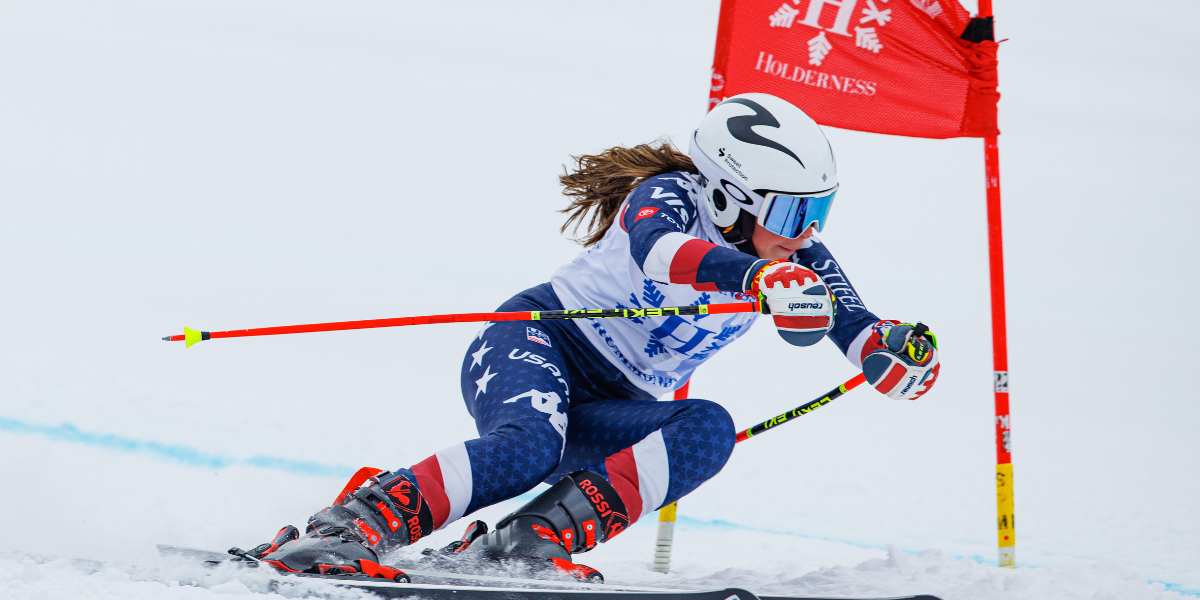
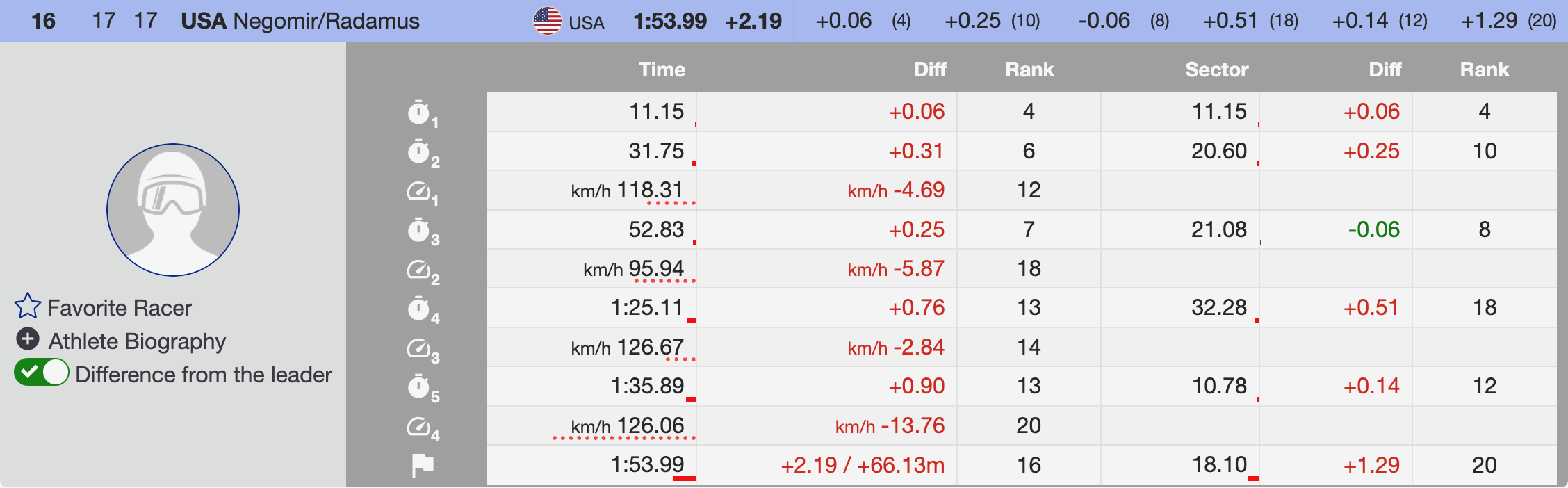
The lone American team of Kyle Negomir on the downhill and River Radamus in the slalom faced an uphill battle after an all-out run from Negomir on the Bormio track. Knowing he had to leave it all on the hill to give his team a chance, Negomir pushed aggressively from the start, committing fully to the edge and taking on significant risk in pursuit of speed. A bit inside and bounced around in the opening section, he fought to find aerodynamics through a loose and attacking run and was nearly high-siding in the middle section. Too low and late into the bottom, Negomir could not quite carry the speed needed to claw time back and was heavily compressed before the finish. He crossed the line +2.19 seconds off the pace, leaving Radamus with time to make up in the slalom but a clear sense of the effort and commitment behind the run.
“It’s pretty unique in ski racing to get to race for a team and take risks for more than just yourself,” Negomir said. “Teaming up with River Radamus, one of my best friends, added another level of motivation to really push the limit in the downhill. With the pressure of the Olympics and the adrenaline, you don’t feel anything on the course. Coming in as an underdog team, I knew I had to be right on the edge to try to give River a chance going into the slalom.”
With the start list flipped for the slalom portion, River Radamus will benefit from an earlier start, while Alex Vinatzer will run last, adding another layer of strategy and pressure as the men’s combined reaches its decisive phase.

Men’s Team Combined Explained
The men’s team combined makes its Olympic debut at Milan/Cortina 2026, introducing one of alpine skiing’s most unpredictable and spectator-friendly formats to the Games. Unlike traditional events, the team combined pairs two specialists from the same nation, one downhill skier and one slalom skier, with their combined times determining the final standings.
The event begins with a downhill run, skied by a speed specialist and seeded by downhill ranking. That opening run establishes the time gaps and sets the start order for the slalom. In the second run, a slalom specialist takes over, with the slalom contested in reverse order of the downhill results. The fastest teams from the downhill run last, skiing under maximum pressure.
With Olympic quotas limiting how many nations can field true specialists in both disciplines, the start list is compact, and margins are tight. That scarcity means nearly every team entered has a realistic path to the podium.
In the team combined, the downhill creates separation, but the slalom decides the medals. Watch the slalom run live at 8:00 a.m. ET.
Men’s Olympic Team Combined Results
Click on images to enlarge
About the Author: Katie Twible