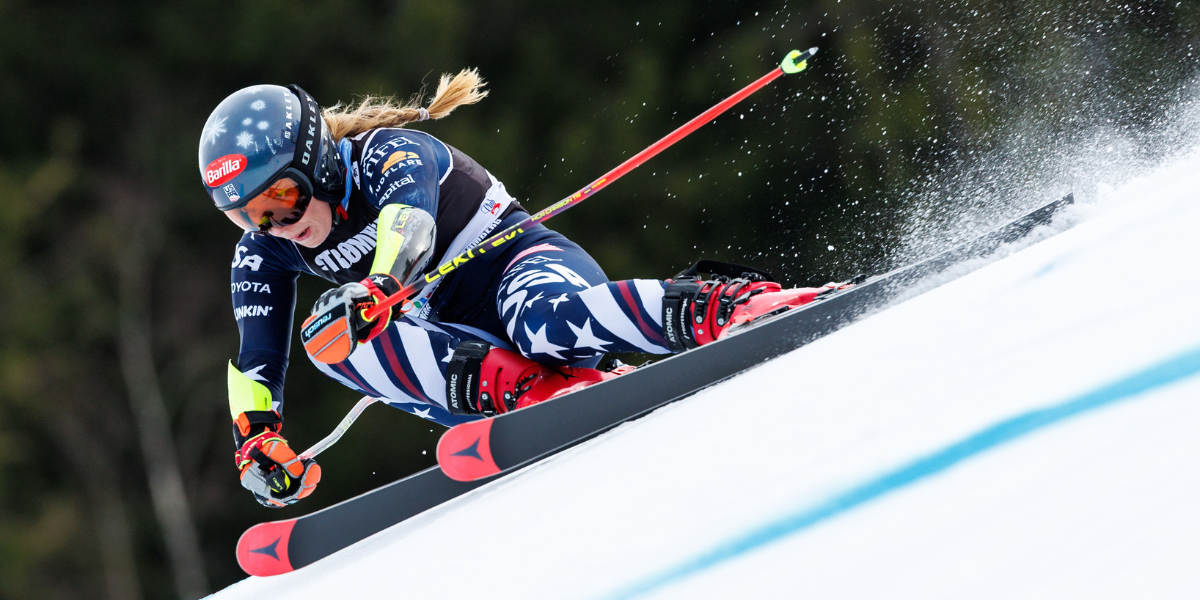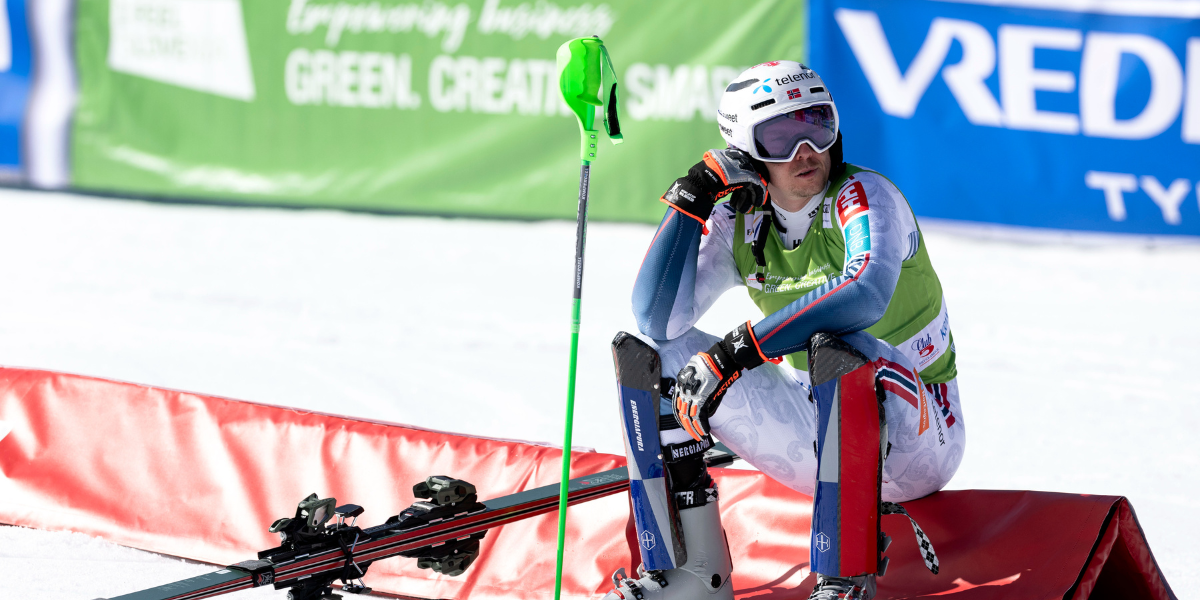
Slokar. GEPA pictures
A Slovenian who started skiing “by coincidence” and almost retired from competitions two years ago won the last race of the 2021/22 season. Andreja Slokar was finally able to deliver at the highest level, thanks to her talent, perseverance and the support of the people closest to her. Slokar gave Ski Racing Media insight into her skiing journey. She highlights the highs and the lows that led her to becoming a winning athlete on the alpine circuit.
The turning point
Just two years ago, not many would have predicted that Andreja Slokar would twice climb to the top of a World Cup podium. Even fewer would have predicted that she’d be in contention for Olympic and World Championships medals. Born in 1997, Slokar’s results didn’t show a promising trend after her debut in FIS races. In 2020, when she was 21, Slokar’s name didn’t exist on the national team roster.
Slokar says, “Since I joined the FIS program, I was never good enough to be on the national team. I sometimes managed to be selected, but I was more out of the team than with the team.” Slokar struggled year after year and for at least seven or eight seasons things seemed to go from bad to worse. Cut from the Slovenian team, crippled by self-doubt and lack of confidence, Slokar experienced the lowest point of her career in 2020.
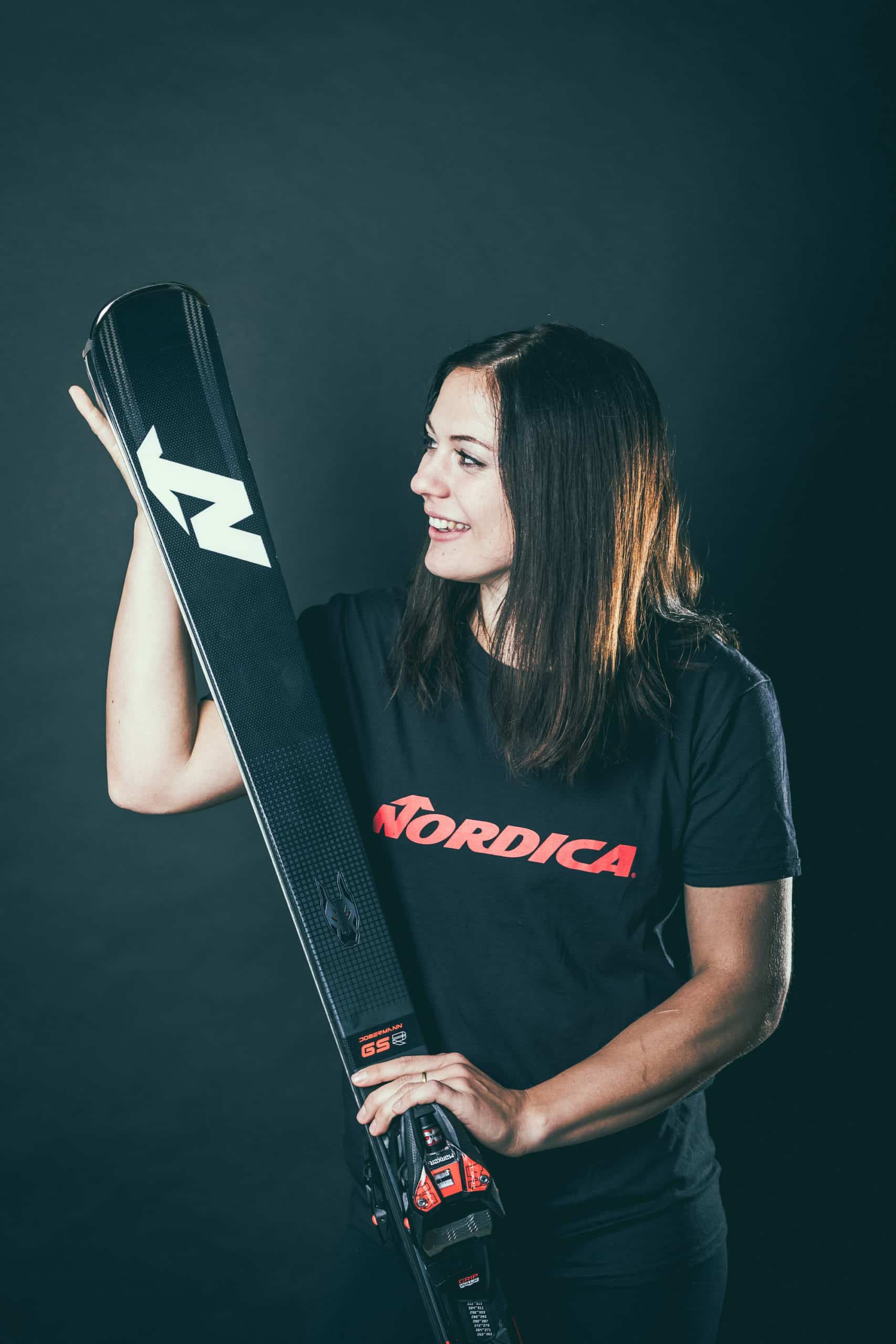
“At some point, I said, okay, that’s it. I don’t think I’ll ever be good enough to achieve something meaningful (in skiing). I was tired of trying and spending a lot of energy and time making sacrifices for nothing.”
“I started asking myself many questions. I didn’t like how my career was developing and I felt really, really bad. Then I started to change. I worked on mental training and relied on the support of a psychologist, but without a focus on performance. I think that resolving the challenges in your personal life can significantly impact your sports life too.”
Adding to Slokar’s support team
Slokar grew her support network, surrounding herself with people who helped her discover new perspectives. This included her current boyfriend, Davide Brignone (brother and coach of 2020 FIS World Cup winner Federica). Slokar reveals,“Davide showed me another way of thinking, of looking at life. He helped me understand that sport is just a part of it, and there’s nothing to be scared about. Then I got myself a new team: a new coach in Boštjan Božič. I also employed a new ski serviceman in Igor Plešivčnik”. But above all, Slokar’s family played a crucial part in this process. They helped her through her most difficult moments, supporting her in many ways, including financially.

At 22, the resilient Slovenian started the 2020/21 season positively. The pieces began to come together as she became faster and faster in training. She progressively built confidence and improved her results. She finally returned to the World Cup for a Slalom in Semmering, Austria on December 29th, 2020.
Slokar remembers, “Semmering wasn’t my first World Cup race, of course. I had already had six starts, but that race felt like a new beginning and I didn’t know what to expect. As usual, I was stressed – I always feel nervous whenever I go to the start area. In the past, there had been times when my legs stopped working and my head had started running all over the place. It felt like I had forgotten how to ski. In Semmering, I realized that my tension was different. It was positive energy. I was finally capable of coping with the stress. That race changed my whole season, maybe my career, and I knew I wanted to do more.”
From a coincidence to medal hunting
Basketball had always been the Slokar family’s number one sport. Slokar’s cousin made it to the top level, to the NBA. As a kid, she had a lot of energy. And despite living in a place where it rarely snows a friend of her mum’s suggested she try skiing. Slokar reports, “And when it does, the little snow we get is blown away by the wind very quickly. That’s what our Vipava Valley is famous for, the wind.”
“Nobody skied in my family, so I never meant to become a skier. I started by pure coincidence and if it wasn’t for my mum’s friend’s advice, I wouldn’t be who I am now,” confessed Slokar. “My first skiing experiences were at Javornik, a single slope resort. Well, I can’t even call it a resort, as it’s so little. At the local club, they said I could achieve something because I was so energetic, so I used to go skiing after school, meet with friends and have fun. But I’ve always been competitive and I immediately started to enjoy racing.”
Slokar was successful in the FIS Children category, especially in her last year, 2013. Her best result was a win at Pokal Loka’s international race in Slovenia. She also finished in top positions at Trofeo Topolino, another FIS Children international race held in Italy. However, the good momentum stopped at the age-category change and a long period of disappointment and doubt followed.
“Somehow, it started to work” during the 2020-21 season
Slokar’s European Cup campaign was fruitful: a couple of victories and a few podium results in Slalom before securing her first World Cup points in Slalom and GS. And then, boom! At her first World Championships, at Cortina 2021, she moved up 12 positions in the second run of the Slalom and finished 5th overall despite starting with bib number 31. The result allowed Slokar to enjoy lower starting numbers and achieve more consistent results in the World Cup, including her first qualification to the FIS Finals. The rest is recent history: last season, Andreja showed impressive upside, winning the Parallel at Lech/Zürs and the Slalom at the Méribél Finals. It was a welcome bounce back after producing generally unimpressive performances in the middle of the season.
Challenges always exist
Slokar recalls, “Last season started well, but then I had some personal problems which greatly affected my skiing. I was also sick in December and when I got better, I tested positive for COVID-19 in January. It was stressful, but then the Olympics came, which was great for me.”
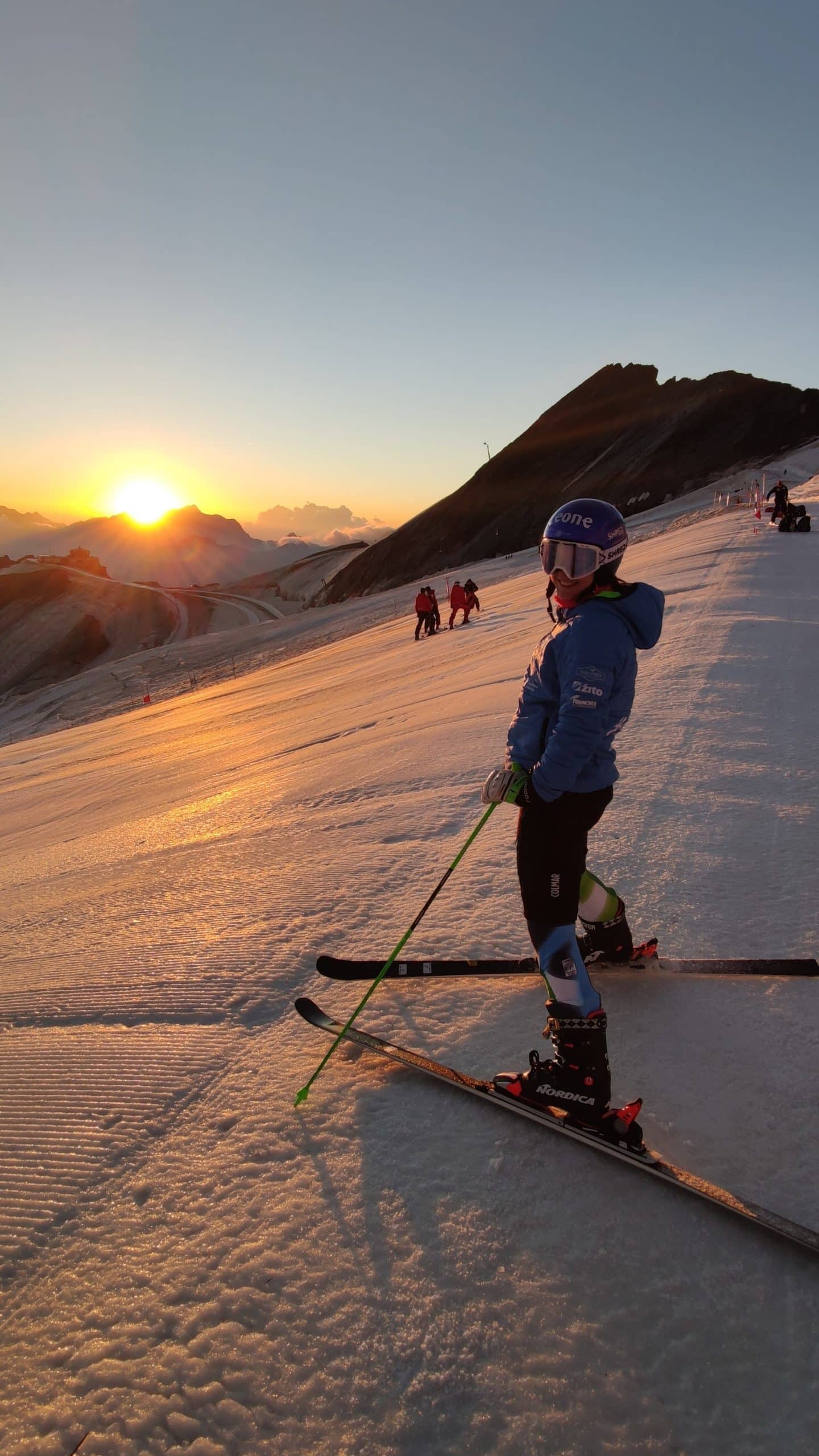
Slokar feels like she can perform better under higher pressure now, so she enjoys the stakes of major events like the recent Olympic Winter Games in Beijing. “I didn’t go to China just to have fun. I went there to play my cards; I felt ready.” The (slalom) race proved a bittersweet experience for Slokar: so close to the podium (5th) that she felt both happy and disappointed. “I’ll have another (Olympic) chance in four years, in Cortina, which feels almost like a home race for me, being so close to Slovenia. I also like the venue for the 2023 World Championships [the same slope as her World Cup win in Méribél]. I like medal events, but I don’t want to say too much and put too much pressure on myself. I’m just excited to go there.”
Almost ready for Sölden
Her darkest days are hopefully behind her; Slokar is working hard to turn the past two seasons into the beginning of a successful journey into the skiing élite. “I have a new ski serviceman with Nordica this year (Slovenian Andrej Potočnik). When I started skiing with Nordica four years ago, I wasn’t sure about being their only World Cup female athlete and being involved in racing development and testing. It could have gone both ways, but it ended up working very well. They support me and are fully motivated to improve on the women’s circuit, so I’m thrilled with the situation. I have decided to continue with Nordica for two more years.”

Slokar recently spent a month training in South America alongside other Slovenian skiers such as Ana Bucik and Meta Hrovat. She focused on GS and Super-G, working on long-radius turns and trying to gain confidence in speed events. “My strength is that I have rapid legs, so I am naturally quick in the short turns of the slalom. Now I’m working on becoming more patient, learning to wait longer until the direction changes. I didn’t train much in Super G and GS earlier in my career and might not even compete in the speed disciplines next season, even though it’s something I’d love to do, eventually. But Super G training sessions can also be helpful for GS; last year, I struggled with higher speed and straighter course settings.
About the Author: Andrea Cappelletti