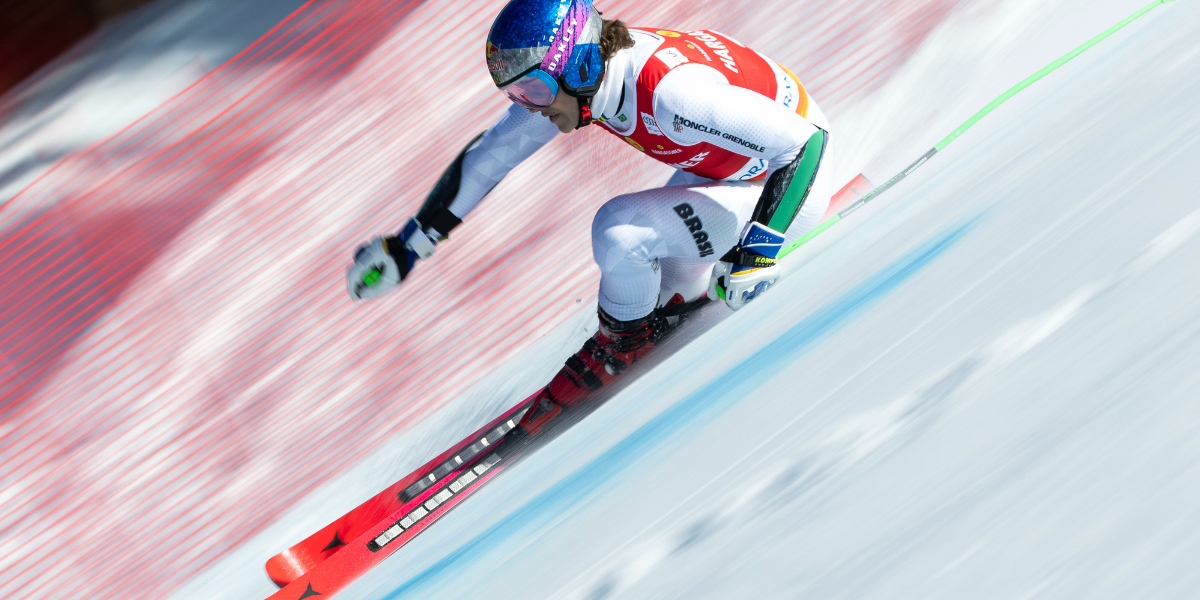
Lucas Pinheiro Braathen / GEPA pictures
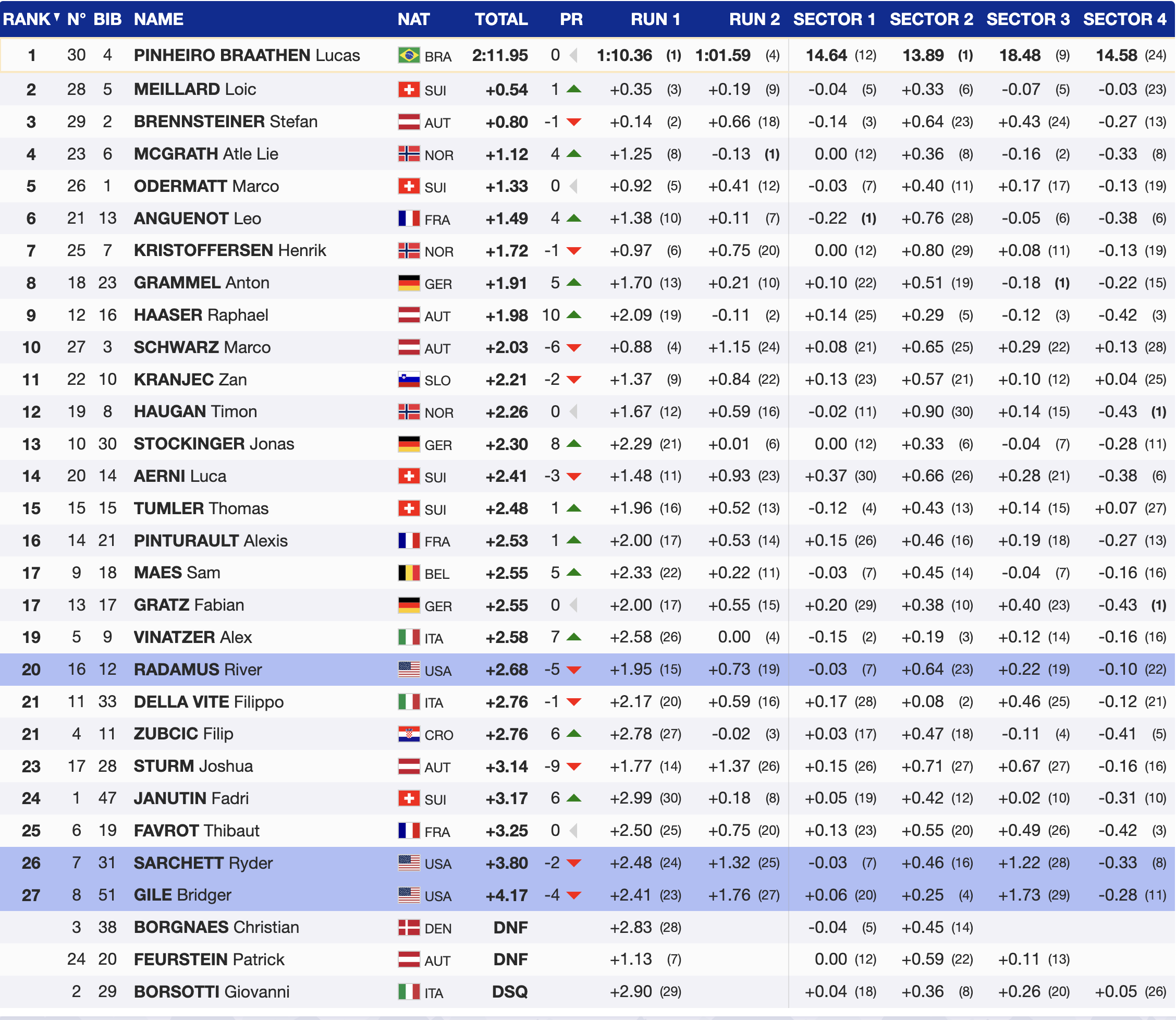
Lucas Pinheiro Braathen delivered under pressure Saturday in Kranjska Gora, winning the FIS Ski World Cup giant slalom on the Podkoren 3 course and claiming his first World Cup GS victory skiing for Brazil.
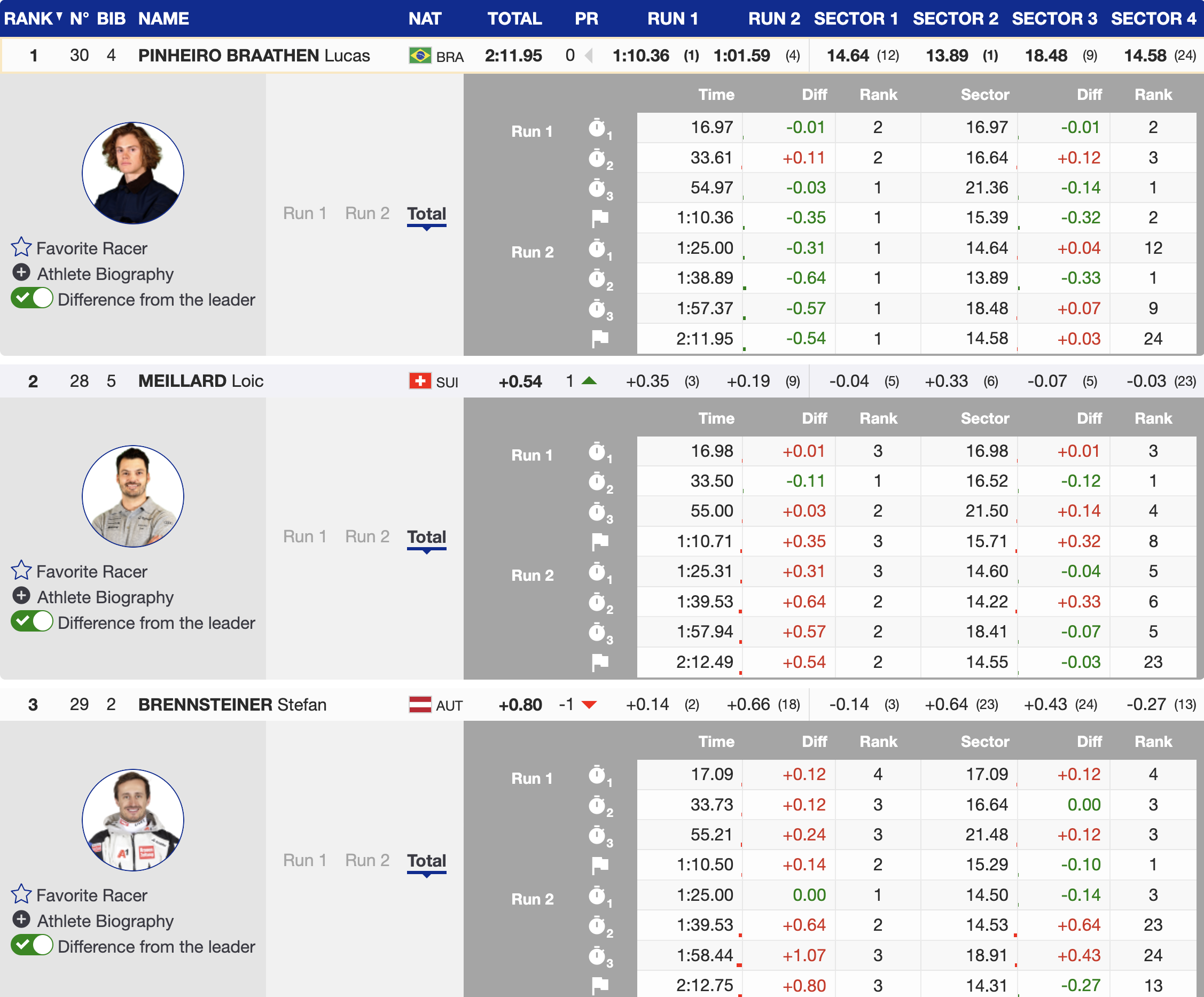
The Olympic giant slalom champion controlled the race from the first run and then held off a stacked final group in the second run to finish in 2:11.95.
Switzerland’s Loïc Meillard finished second, 0.54 seconds back, while Austria’s Stefan Brennsteiner completed the podium at +0.80.
The result also sets up a dramatic battle for the giant slalom crystal globe, which will now be decided at the World Cup Finals in Hafjell, Norway.
Top 5 – Kranjska Gora giant slalom
- 🇧🇷 Lucas Pinheiro Braathen (BRA, 2000, Atomic, Oakley) Bib 4 — 2:11.95
- 🇨🇭 Loïc Meillard (SUI, 1996) Bib 5 — +0.54
- 🇦🇹 Stefan Brennsteiner (AUT, 1991) Bib 2 — +0.80
- 🇳🇴 Atle Lie McGrath (NOR, 2000, Head) Bib 6 — +1.12
- 🇨🇭 Marco Odermatt (SUI, 1997, Stöckli) Bib 1 — +1.33
Why did the second run start so chaotic?
Fadri Janutin of Switzerland set the tone immediately when the second run began.
Finishing 30th after the first run, Janutin made it obvious the second course was dramatically faster than the morning set. He was 11.58 seconds faster than his first run, signaling a very different rhythm on the Podkoren 3 slope.
The next two skiers could not handle the increased speed and failed to finish. After three racers, Janutin remained the only skier with a legal second-run result.
Which skiers led the early second-run battle?
After the first ten skiers completed their runs, the early leaderboard featured two Völkl-Marker athletes at the top.
Germany’s Jonas Stockinger led the race in 2:14.25, with Sam Maes of Belgium second at +0.25.
Both skiers had taken advantage of the faster second run to move significantly up the standings while the top-ranked racers waited at the start.
How did the race change midway through the second run?
By the halfway mark of the race the leaderboard had shifted dramatically.
Austria’s Raphael Haaser surged into the lead with the fastest run of the race at that point, stopping the clock in 2:13.93. Moments later Germany’s Anton Grammel raised the bar again, taking over the lead in 2:13.86 with 12 racers still to go.
The aggressive skiing required on the fast second run continued to reward athletes willing to push the limit.
How did the Stifel U.S. Ski Team perform in Kranjska Gora?
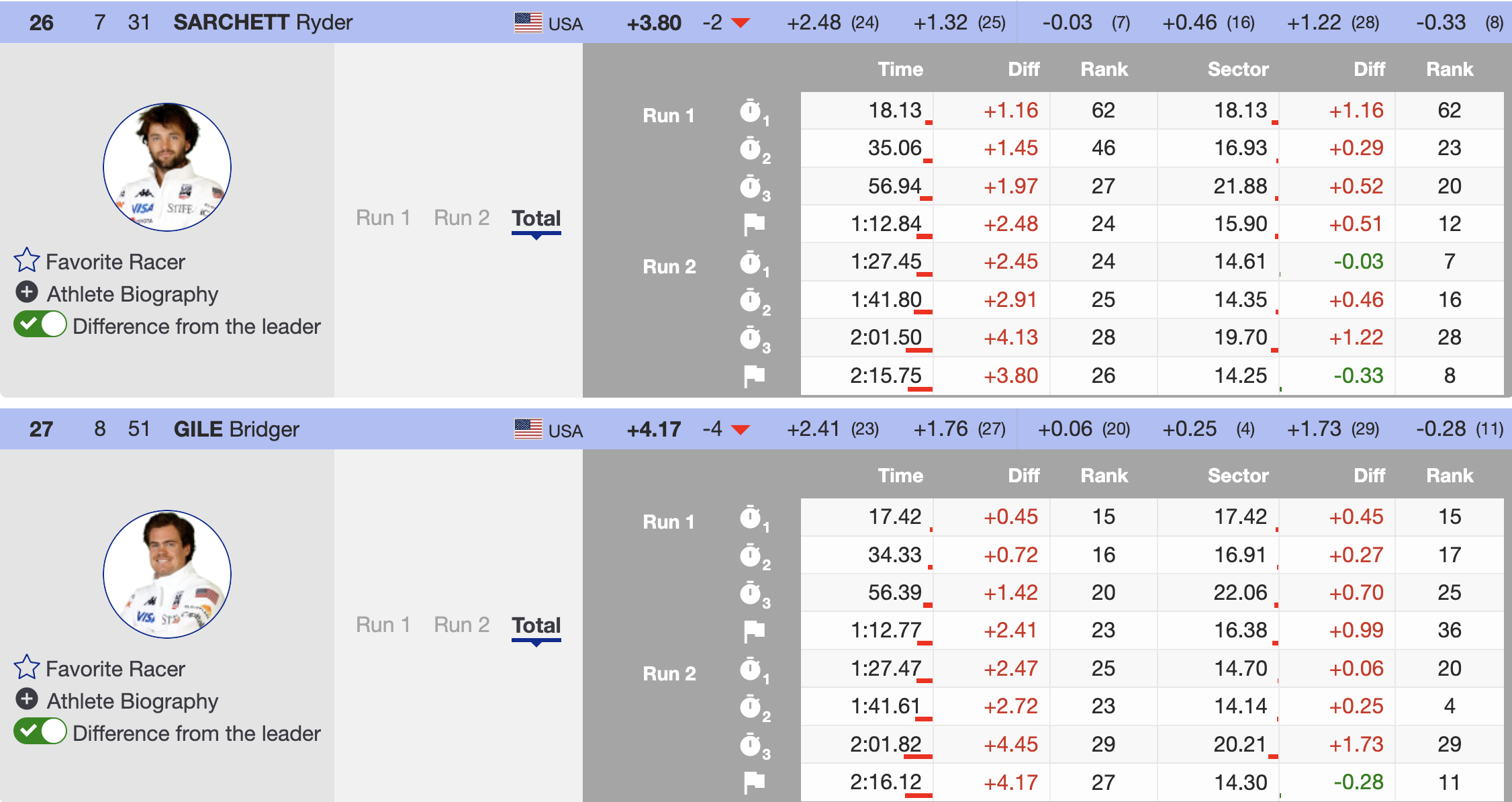
The first Stifel U.S. Ski Team skier to attack the second run was Ryder Sarchett.
Sarchett skied aggressively but made a significant mistake in the third sector. Up to that point his run had been competitive, but the error cost him heavily and he crossed the finish 1.22 seconds behind the leader at the time.
Still, Sarchett finished in the points for the third time this season, another step forward in his young World Cup career.
Next came Bridger Gile. Like Sarchett, Gile showed promising speed early in the run before a big mistake in the third sector eliminated his chances of moving up the leaderboard.
“I’m very happy with the skiing,” Gile said. “I feel like I’ve been skiing well and fast for most of February with good results in Europa Cup, so it was nice to show that speed against the best competition in the world.
“The second-run course was very straight with a lot of distance between the gates and my plan was to go as straight as possible. I ended up carrying more speed than I expected and the line I inspected over the roll was too straight for that speed. That was a bummer, but I’m happy with the skiing and it’s a good way to end the season.”
Despite the mistake, Gile still scored World Cup points for only the second time in his career, a positive result as the season winds down.
Did River Radamus qualify for the World Cup Finals?
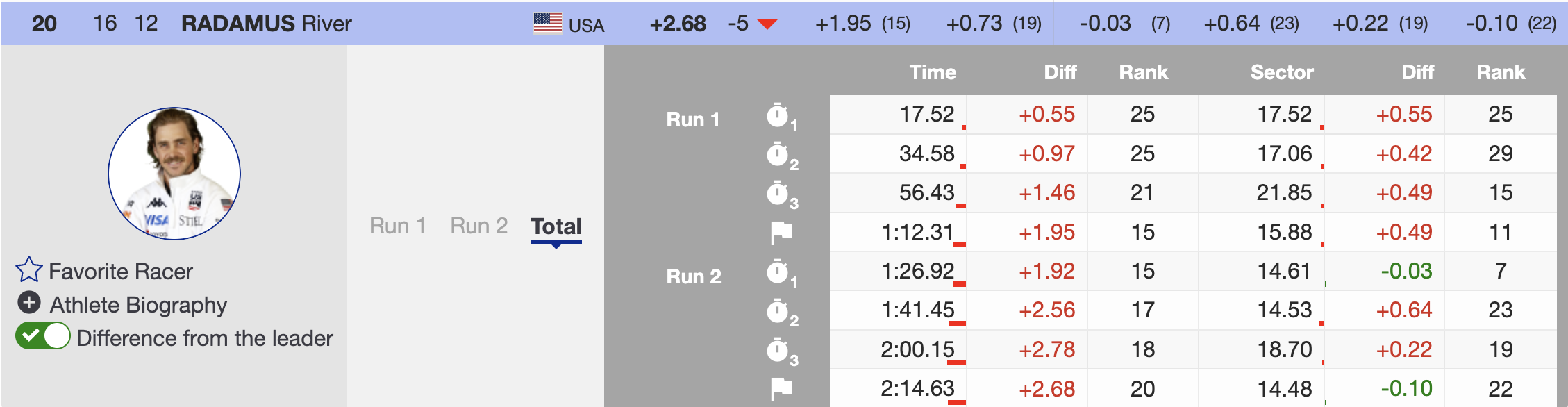
The final Stifel U.S. Ski Team skier in the race was River Radamus, who started 16th in the second run.
Radamus never fully found rhythm on the straight, high-speed set and crossed the line 0.70 seconds behind the leader at that moment.
Even so, his season standing remains secure. Radamus will comfortably qualify for the World Cup Finals giant slalom in Hafjell, marking his fifth consecutive GS Finals appearance.
Who set the fastest second run?
When the fastest eight racers from the first run took the course, France’s Léo Anguenot held the lead.
Norway’s Atle Lie McGrath started the final showdown with a 0.13 advantage over Anguenot.
McGrath gave back that margin in the first sector but then found exceptional speed through the middle of the course. He surged through sectors two and three and crossed the line 0.37 seconds into the lead.
His run would ultimately stand as the fastest second run of the race, launching him from eighth after the first run to fourth overall.
How did the favorites attack the podium?
The final group then attacked one after another.
Next came Marco Odermatt, who started with a 0.33 advantage.
Odermatt held the lead through the early sectors but lost his margin in the third sector and finished 0.21 seconds behind McGrath, good enough for second at that point but ending his hopes of victory.
Austria’s Marco Schwarz followed with a 0.37 advantage but faded late in the run and crossed 0.91 seconds back.
How did Loïc Meillard secure a podium finish?
Switzerland’s Loïc Meillard then produced one of the most composed runs of the day.
Starting with a 0.90 advantage, Meillard built on his lead through the first two sectors before giving back a small amount of time in the third sector. He crossed the line 0.58 ahead of McGrath, guaranteeing himself a podium finish.
Moments later Stefan Brennsteiner attacked with a 0.21 advantage over Meillard.
The Austrian was level with Meillard at the second timing split but lost ground in sector three and finished 0.26 behind the Swiss skier, securing third place and confirming Meillard would finish no worse than second.
For Meillard, the podium continued a strong stretch of form following the Olympic Games.
“It’s a good feeling,” Meillard said. “It was two weeks since the Olympics so we had a good time off. Good rest and training, but you never really know if your level is still good enough to fight for the front. To be able to do it is great.”
The Swiss skier remains in the hunt for the giant slalom crystal globe heading to the World Cup Finals.
How did Stefan Brennsteiner secure another podium?
Austria’s Stefan Brennsteiner continued the best giant slalom season of his career with another World Cup podium in Kranjska Gora.
Starting the second run with a 0.21-second advantage over Meillard, Brennsteiner matched the Swiss skier through the upper sections of the course but lost time in the third sector before crossing the finish 0.26 seconds back, securing third place.
Despite the small mistake in the lower section, Brennsteiner was satisfied with the result.
“I am not that happy with the second run but I am happy with the position,” Brennsteiner said. “I had a really good first run so it wasn’t that necessary that the second run is so quick.”
The Austrian also enjoyed the warm spring conditions and atmosphere on the Podkoren 3 slope.
“I like it so much here,” Brennsteiner said. “The weather is so nice, it’s a real spring race and the fans are also so hyped. You can watch ski racing in a T-shirt, which is perfect.”
How did Lucas Pinheiro Braathen secure the victory?
All eyes then turned to Lucas Pinheiro Braathen, the first-run leader.
Starting with a 0.35 advantage over Meillard, the Brazilian star increased the margin early in the run. His powerful skiing through the fall-line maintained control of the race and he never gave the challengers an opportunity.
When he crossed the finish line, the Brazilian fans erupted.
Pinheiro Braathen had secured his first World Cup giant slalom victory skiing for Brazil.
Why was this victory so meaningful?
The win carried deep personal significance for the Olympic champion.
“I’m just skiing with a lot of happiness, a lot of joy,” Pinheiro Braathen said. “The only thing I’ve been trying to do since the Olympics is enjoy it. Obviously I’m preparing for some difficult races with a lot on the line, but I try not to make it too big of a deal. Ski with the flow, ski with my heart.”
The timing was also symbolic. Exactly two years earlier he had announced his return to the sport.
“It’s been one hell of a journey,” he said. “A lot of insecurity, a lot of beautiful moments as well. Here I sit today, winner of a World Cup race. I feel like I would never have been able to do that if it wasn’t for all the highs and lows that brought me here.”
In the end, he credited the result to trusting his own direction.
“I think I’m most proud of daring to trust my path,” Pinheiro Braathen said. “Maybe it’s not something everyone agrees with, but at the end of the day I just have to do me. That’s what I did today and it brought me the win.”
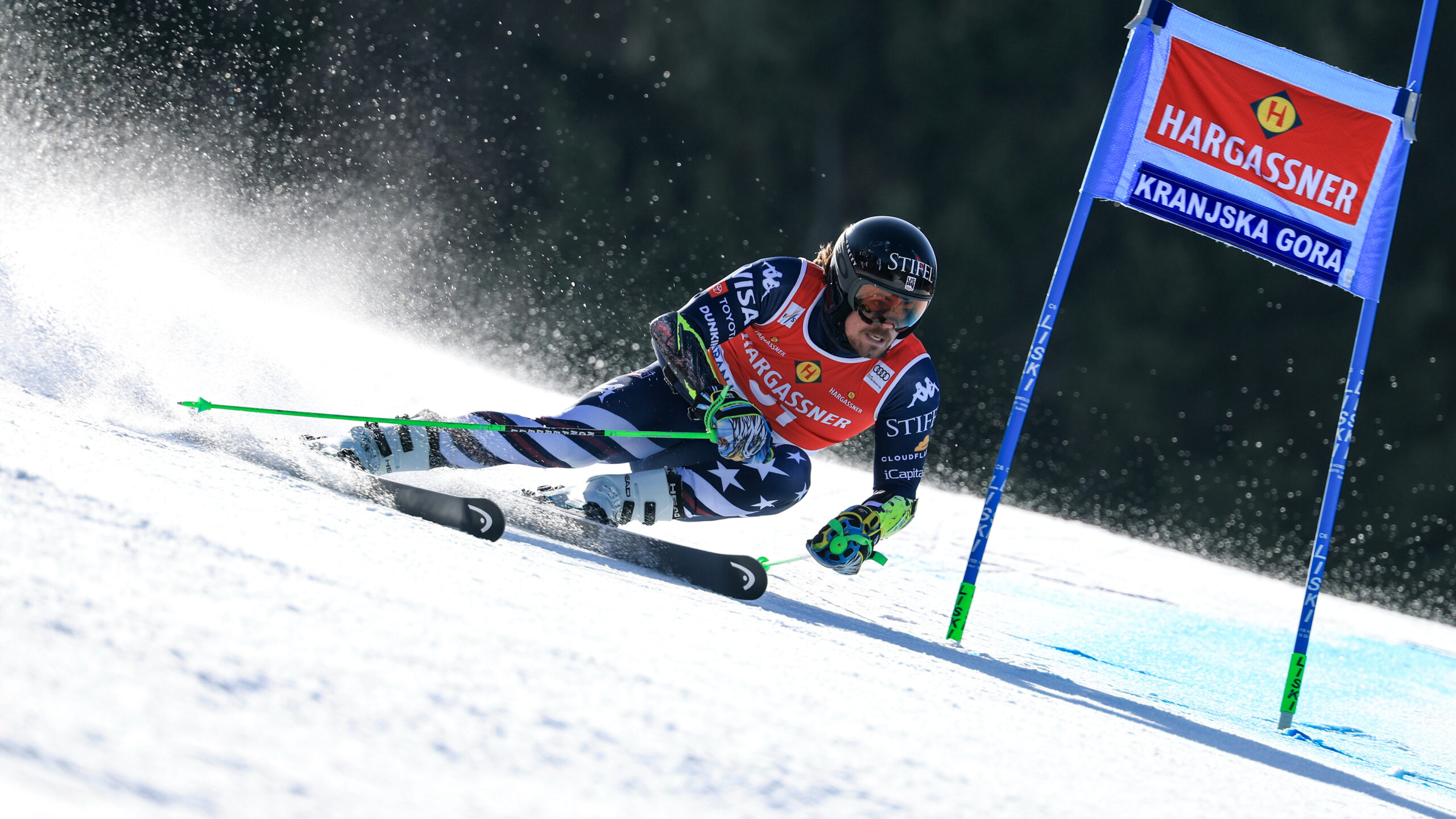
Stifel U.S. Ski Team results
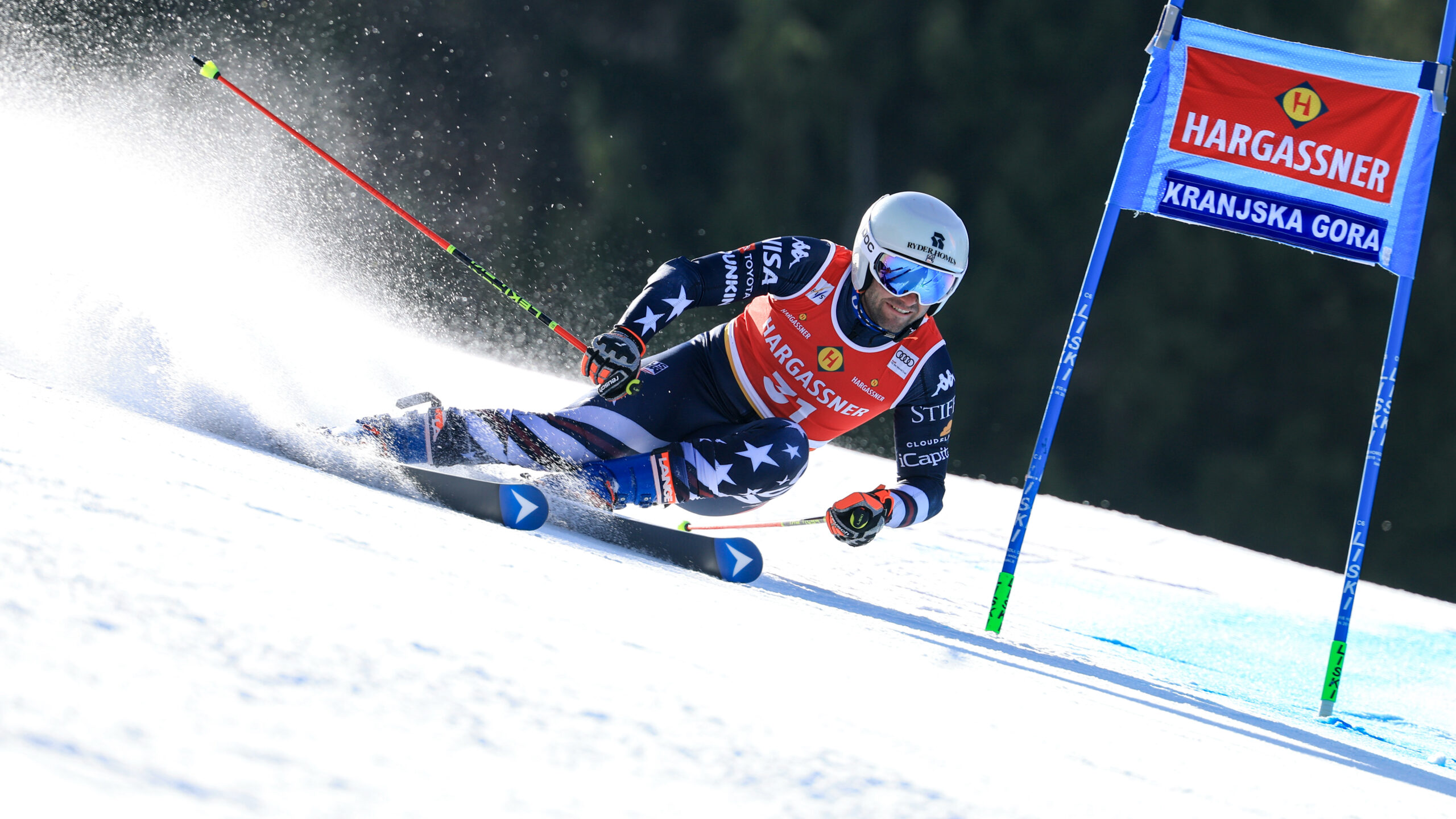
Despite mistakes in the second run, the Stifel U.S. Ski Team placed three skiers in the points in Kranjska Gora.
- 🇺🇸 River Radamus (USA, 1998) — +2.68
- 🇺🇸 Ryder Sarchett Bib 31 (USA, 2003) — +3.80
- 🇺🇸 Bridger Gile Bib 51 (USA, 1999, Head, Oakley) — +4.17
All three Americans lost time in the third sector of the second run, but scoring three athletes in the points is an encouraging result. Sarchett and Gile also close their World Cup seasons on a positive note.
How did the giant slalom standings change?
Pinheiro Braathen’s victory significantly tightened the fight for the giant slalom crystal globe.
Top Five GS standings after Kranjska Gora
- 🇨🇭 Marco Odermatt (SUI, 1997, Stöckli) — 495 pts
- 🇧🇷 Lucas Pinheiro Braathen (BRA, 2000, Atomic, Oakley) — −48
- 🇨🇭 Loïc Meillard (SUI, 1996) — −89
- 🇦🇹 Stefan Brennsteiner (AUT, 1991) — −114
- 🇳🇴 Henrik Kristoffersen (NOR, 1994) — −177
With one giant slalom remaining at the World Cup Finals in Hafjell, the season title will be decided there.
Who qualified for the World Cup Finals giant slalom?
Saturday’s race in Kranjska Gora finalized the field for the World Cup Finals giant slalom in Hafjell, Norway.
Germany’s Jonas Stockinger delivered a crucial performance, moving into 25th place in the season standings with 62 points and securing the final automatic qualification spot.
The top 25 skiers in the World Cup giant slalom standings qualify for the Finals, along with the Junior World Champion and any skier with 500 or more overall World Cup points, who may start any discipline.
With the standings now set, the battle for the giant slalom crystal globe will be decided at the Finals.

Race Results
click on images to enlarge
Top Three Analysis and Qualified North American & British Racers
About the Author: Peter Lange