At the end of his 2019-20, River Radamus questioned the trajectory of his ski racing career. At the time, the then-22-year-old World Cup skier was competing in four events, had only scored points in one parallel GS that season, and failed to qualify for multiple second runs in GS by hundredths of a second.
Defeated and overwhelmed with self-doubt, Radamus was at his lowest point, struggling mentally and physically to keep up. Going into the 2020-21 season, Radamus was engulfed with the urgency to figure himself out — or he wouldn’t be ski racing for much longer. Starting from the ground up, working with a sports psychologist, nutritionist, and dedicating himself to the gym more than ever before, Radamus’ fear of wasted potential fueled his desire to be the best athlete and ski racer he could be. The result: the best season of his World Cup career.
Radamus approached last season with more confidence than ever before. At the season opener, he scored 27th in GS, and while not a huge result in his mind, it was a huge weight lifted off his shoulders that jump-started his season.
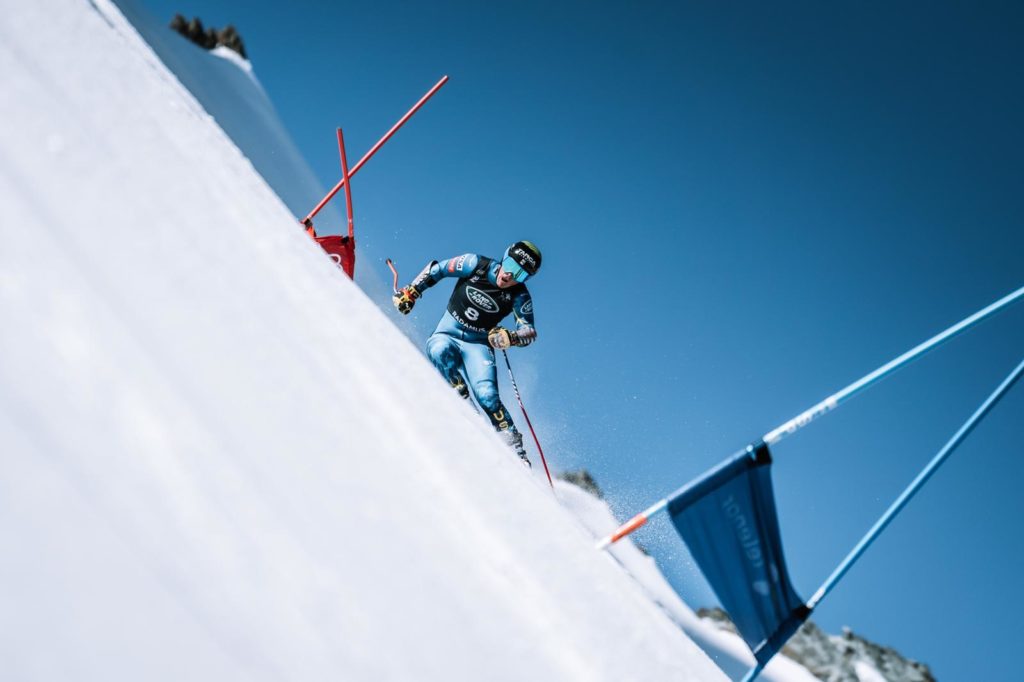
Fast forward to Adelboden in early January 2021, after scoring in GS both days, Radamus entered a strange period in his career when mentors Ryan Cochran-Siegle, Ted Ligety, and Tommy Ford would all leave the tour due to injury. Radamus went from being the fourth guy on the GS team to the only guy in GS at world championships. Losing his mentors, Radamus then found himself responsible for taking a leadership role for those up-and-comers on the team. Wanting to put his best foot forward for his teammates who were not able to compete, Radamus had two of his best results: 10th in the parallel and 11th in the GS. Radamus took his leap and finally felt like he belonged.
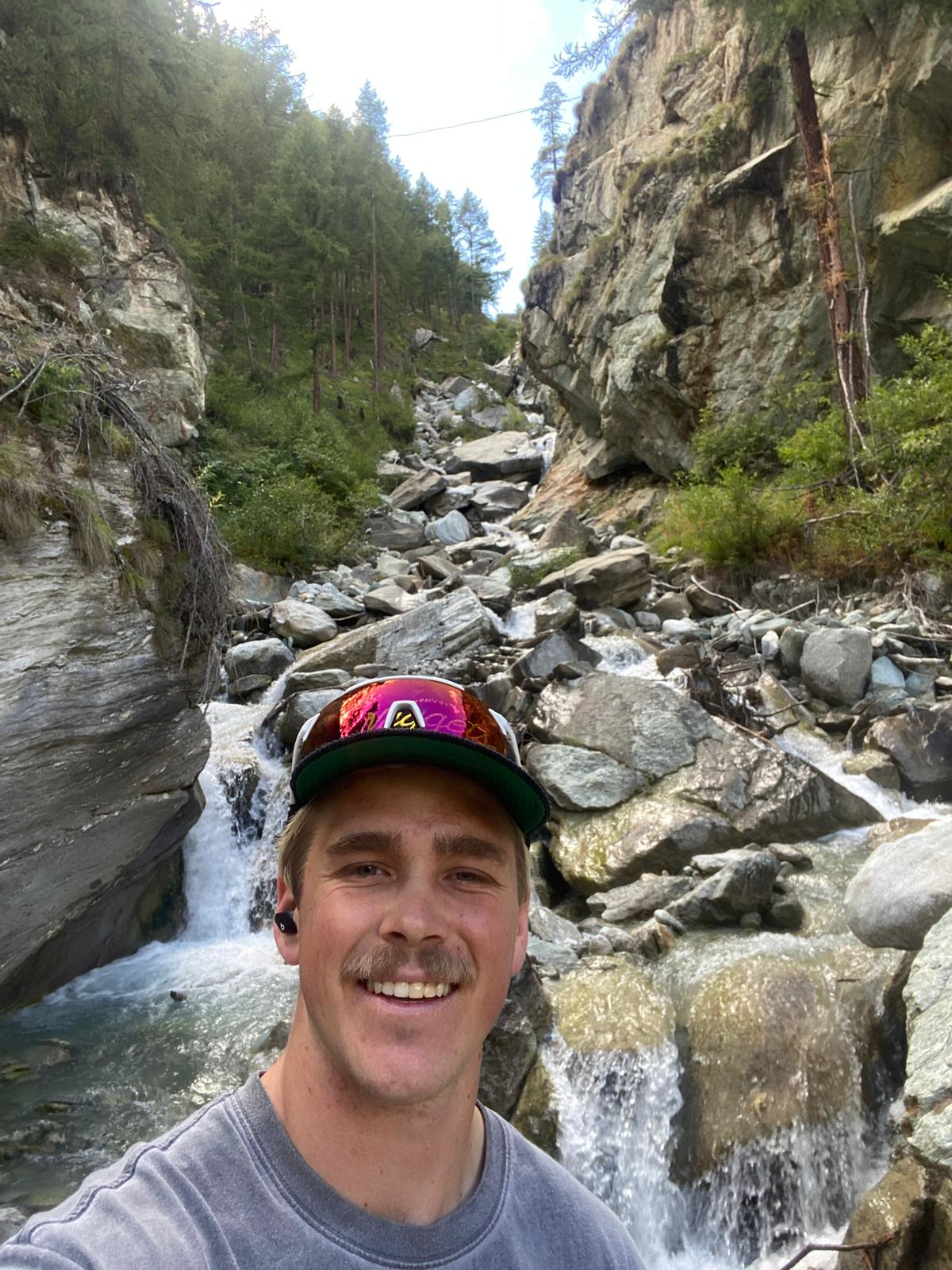
“Learning from last season, I have a better understanding of my body, my mind, and my needs more than ever before,” said Radamus. “Taking it upon myself last summer, I feel like I got more in tune with myself so it was much easier for me to create a plan of attack this year and see what my remaining weaknesses were more objectively.”
A summer of urgency ended up being a positive step for Radamus, but it changed his perspective. If he could achieve everything he had last season after one summer of urgency, what could he accomplish now? This year, Radamus refined his approach between the gym, his mental approach, and time on snow to capitalize on the weaknesses he discovered.
Gameplan
Radamus has never considered himself the best athlete in the gym, and still doesn’t. His upper body and core have never been his strong suit, which has caused back pain in the past and required time off snow to rehabilitate. This year, Radamus focused more than ever on back, core, and upper body strength to improve his start times and keep his body performing better than ever before.
Mentally, Radamus shared that last season he was challenged to perform on second runs. His level of urgency just to qualify for a second run left him subconsciously easing up once he got there.
“It wasn’t a conscious thing but I wasn’t able to execute at the same level as I was the run before,” said Radamus. “I think it’s something that will come naturally with time, and with experience being in that position, but also finding ways to create that situation and the intensity that comes with that situation in training on snow and training in the gym, just finding ways to manufacture that kind of environment, so I’m more used to it and more comfortable, and more able to perform.”
Skiing-wise, this summer has not leant itself to the things Radamus wanted to work on. With warm summer conditions and limited time on snow, Radamus is craving conditions that resemble winter. However — after a spring camp in Mammoth and one week in Mount Hood in the middle of the summer — Radamus returned to snow in Europe feeling his skiing was solid and happening naturally.
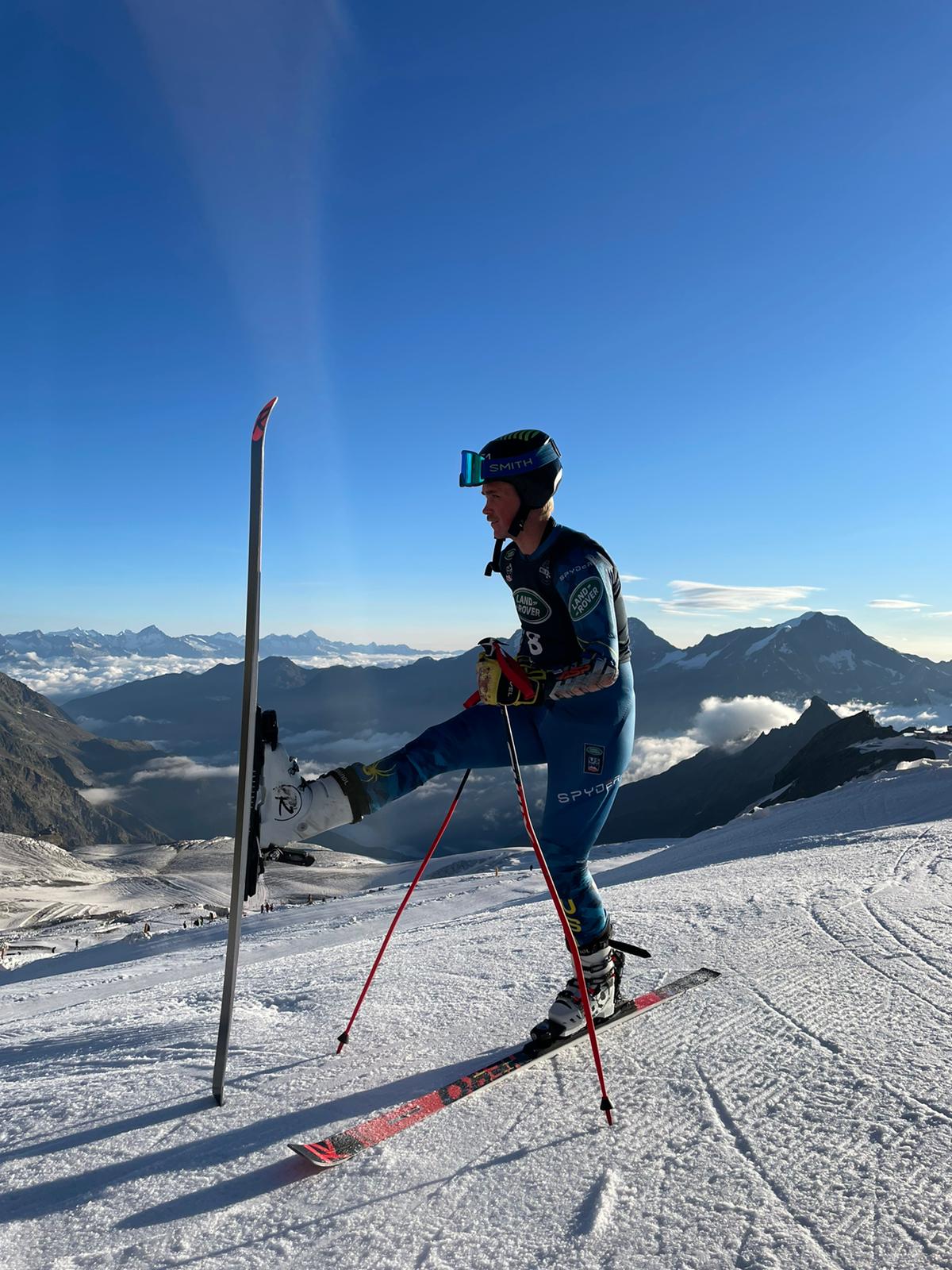
“I didn’t feel like I needed to work for it, I just felt like I was connected to the ski, it just felt a lot more effortless,” said Radamus. “And I think a lot of that is due to my conditioning in the summer. I feel stronger than I ever have, so I think that helped a lot.”
Looking ahead at Soelden, Radamus has the confidence in his skiing and the fundamental strength to begin pushing his line straighter. He hopes to bring more intensity to be clean on the snow. Radamus attributes a lack of power in years past to a lack confidence in his strength. Now with the confidence in his conditioning, he has both the power in his turns and the urgency to attack. He’s ready to prove what he is capable of.
“The goal is to increase my rankings, get in the top 15, make the Olympics, and perform at a higher level than I did last year, but I need to recognize some of that is out of my control,” said Radamus. “The bigger thing is to make sure I’m doing what I can to prepare as much as I can, and to put myself in a position where I can execute as much as I can. As long as I’ve done that, where I haven’t left anything on the table, whatever the ranking will be, will be accepted by me because I’ll be proud of it knowing the work I’ve put in.”
Heading into the season, it will be the first time Radamus will start top 30, a position that creates a mentality of being in Soelden to execute rather than just take part. Of course, on his horizon, there is one big stage for Radamus to consider this year, one that heightens his prep period and changes his mindset going into the season: the Olympics.
“No kid grows up as an athlete in an Olympic sport and doesn’t dream about going to the olympics,” shared Radamus. “I’d be lying if i didn’t say that wasn’t a huge goal for me. I don’t want to focus on it so much I lose sight of the bigger picture and the things that get me there.”
About the Author: Karina Schwartznau