Featured Image: Sam DuPratt. Credit: GEPA
Sam DuPratt’s Unsolicited Guide to Ski Racing: A Career Built on Grit and Ownership
Sam DuPratt didn’t just ski fast—he persevered. His racing journey took him through youth clubs, the U.S. Ski Team, NCAA championships, the independent circuit, and the World Cup. Along the way, he broke both legs, earned points on the sport’s biggest stage, and returned from injury to win again.
DuPratt’s story is a testament to resilience and a blueprint for ownership—of performance, mistakes, recovery, and everything in between.
Start at Squaw: Ski First, Ask Later
DuPratt grew up racing with the Squaw Valley Ski Team, where days were long and structure was minimal. From 9 a.m. to 4 p.m., athletes just skied—whether carving groomers, launching jumps, or chasing friends through the trees.
“We weren’t over-coached,” DuPratt said. “We skied all day. That’s where the love started.”
The program grouped kids by ability, not age. If you fell behind your friends, you dropped a level. It created a quiet pressure that pushed athletes without over-structuring them. That culture helped DuPratt develop grit, instincts, and a lifelong passion for time on snow.
FIS Racing in Park City: Coaches Are Resources, Not Rulers
After moving to Park City in 2006, DuPratt spent his high school and FIS racing years with the Park City Ski Team. For his final two years of high school, he attended The Winter School, which allowed him to balance a full academic course load with high-volume training and racing.
The program was competitive and structured, but what shaped him most were the coaches who encouraged self-reliance and critical thinking.
“They were resources, not rulers,” he said. “They didn’t expect obedience. They expected effort.”
DuPratt learned to challenge ideas, not out of defiance, but to gain a deeper understanding of them. He credits that period with teaching him how to think like an athlete, not just act like one.
“Coaches aren’t always right—and they don’t have to be,” he said. “What matters is learning how to ask the right questions and come to your own conclusions.”
That mindset helped him later navigate different teams, personalities and systems. It also taught him accountability: Your performance is your responsibility, no matter who’s holding the radio.
The U.S. Ski Team: Dream Reached, Direction Lost
In 2012, DuPratt made the U.S. Ski Team. At 18, he had just finished the season ranked No. 1 in the world for his age in downhill.
It felt like arrival—but it came with a hidden trap.
“I thought being on the team meant I had made it,” he said. “I stopped questioning things. I just followed the plan.”
He handed over control of his racing—training, equipment, and decision-making—to others. When the results didn’t come, he lost confidence. After two years, the team let him go.
DuPratt returned the next year as an invitee. This time, he pushed back on everything. He took full responsibility for his decisions—good or bad—and raced with conviction. He requalified in super-G and GS.
“I wasn’t skiing better—I was thinking better,” he said.
Still, by 2015, he wasn’t ready to compete at the level required to succeed on the World Cup. The team released him again.
Utah and the NCAA: Racing with Perspective
DuPratt joined the University of Utah and raced two seasons in the NCAA. It was a change of pace—and a shift in mindset.
“College was the most fun I had in ski racing,” he said. “It gave me structure, school, friends outside the sport, and a team that lifted each other up.”
He didn’t treat college as a retirement tour. He trained deliberately, knowing he still had goals beyond the NCAA circuit. In 2017, he was named a giant slalom All-American, proving he could compete at a high level while managing academics and recovery.
With less time on snow than national team athletes, he compensated by focusing on fitness, mental preparation, and equipment awareness.
“College doesn’t coddle you—and that’s why it works,” he said. “If you want to keep improving, it’s all on you.”
Going Independent: Stress, Ownership, and Breakthrough
After college, DuPratt gave ski racing one more shot. He joined GroundSwell Athletics, a small program led by Cody Marshall and Bob Bennett, and set out to build his season from scratch.
He managed his own training, travel, schedule, funding and equipment. It was demanding and expensive—but it worked.
“It was the most stressful year of my life,” he said, but I improved the most because I owned every part of it.”
That season, he won the 2019 NorAm super-G title, earned World Cup starts, and scored his first World Cup points at Kitzbühel in January 2019. He followed that with another top-30 in Val Gardena in December 2019.
“I knew I belonged,” he said. “And it meant more because I got there my way.”

Val Gardena Crash: Everything Stops
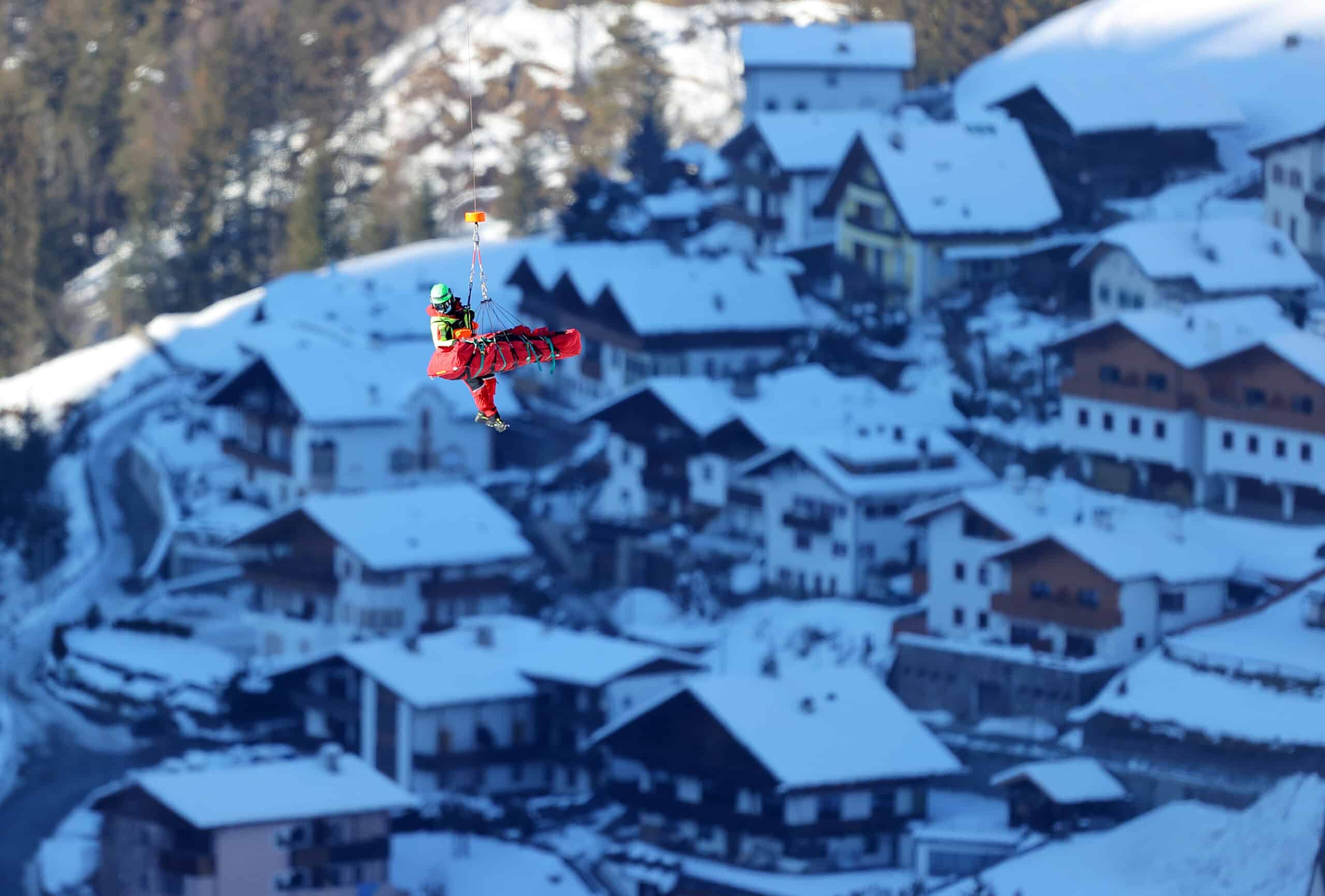
On Dec. 17, 2020, DuPratt returned to Val Gardena for a World Cup downhill training run. He crashed and broke both legs.
Before that day, he had never missed a season due to injury. Afterward, the setbacks piled up: broken arms, broken hands, a fractured back, torn ACLs, and a torn meniscus.
“I never saw myself as fragile,” he said. “But when you list it all out, it’s hard to ignore.”
Rehab and Fear: Learning to Start Again
Rebuilding physically was hard. Mentally, it was even harder. Fear became a daily challenge.
“I was terrified,” he said. “We don’t talk about fear in ski racing—but everyone has it.”
DuPratt worked closely with physical therapists, questioned every step of rehab, and leaned on honesty to make progress.
“When I returned to racing, I didn’t feel brave—I felt scared. But I knew the only way out was through.”
The Long Road Back
DuPratt’s first race after the injury came on Nov. 16, 2022, in an FIS downhill at Copper Mountain. It was a low-key start to the 2022–23 season but a huge personal milestone.
Later in the season, he won the 2023 NorAm super-G title—his second—earning a return to the World Cup.
Then came the full-circle moment: December 2023, back in Val Gardena. The same venue where he’d broken both legs.
“To stand in that start gate again—that was everything,” he said.
Master Your Equipment—or Pay the Price
DuPratt says too many racers don’t know enough about their equipment. He’s seen skis test two seconds slower than others over a 30-second run.
“Equipment won’t win you races, but it can definitely lose them,” he said.
He encourages athletes to learn bevels, binding ramp angles, mounting points, canting, and cuff alignment—and to adjust based on what they feel.
“If something feels off, don’t ignore it. Understand it,” he said.
Life After Skiing: From the Hill to Cloudflare
When DuPratt retired, he pivoted into tech and took a role with Cloudflare. It wasn’t a clean break—he brought everything he learned with him.
“Racing taught me how to evaluate, adapt, and stay driven,” he said. “Those lessons show up every day.”
What He Carries—and What He Doesn’t Miss
He’ll always value the friendships, mentors and memories. But he doesn’t miss the stress, travel or daily pressure.
“There’s beauty in ski racing,” he said. “But it’s exhausting. I don’t need to chase it forever.”
Advice for the Injured and the Lost
His message to young skiers battling injury or doubt is clear: Take charge.
“No one’s coming to rescue you,” he said. “You have to take the wheel.”
He urges athletes to trust their instincts, question respectfully, stay patient, and be honest.
“Own your recovery like you own your skiing,” he said. “That’s how you move forward.”
Own It
DuPratt’s unsolicited guide to ski racing isn’t about wins, losses or resumes. It’s about ownership.
Every decision, every comeback, every mistake—every race.
“Don’t chase jackets,” he said. “Chase excellence. Own your path. That’s the only way to grow.”
About the Author: Peter Lange