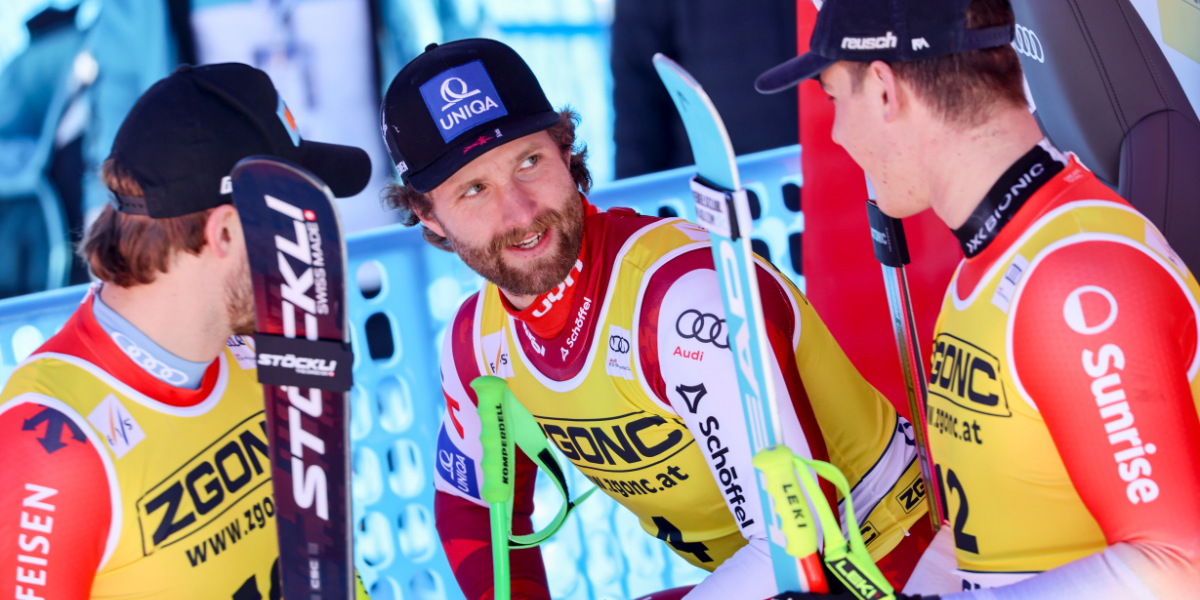
Monney, Schwarz, Von Allmen Livigno Podium / GEPA pictures
Schwarz makes history as Livigno debuts on the World Cup
Marco Schwarz delivered a composed, disciplined run to win the first men’s Alpine World Cup race ever held in Livigno, earning the first World Cup super-G victory of his career.
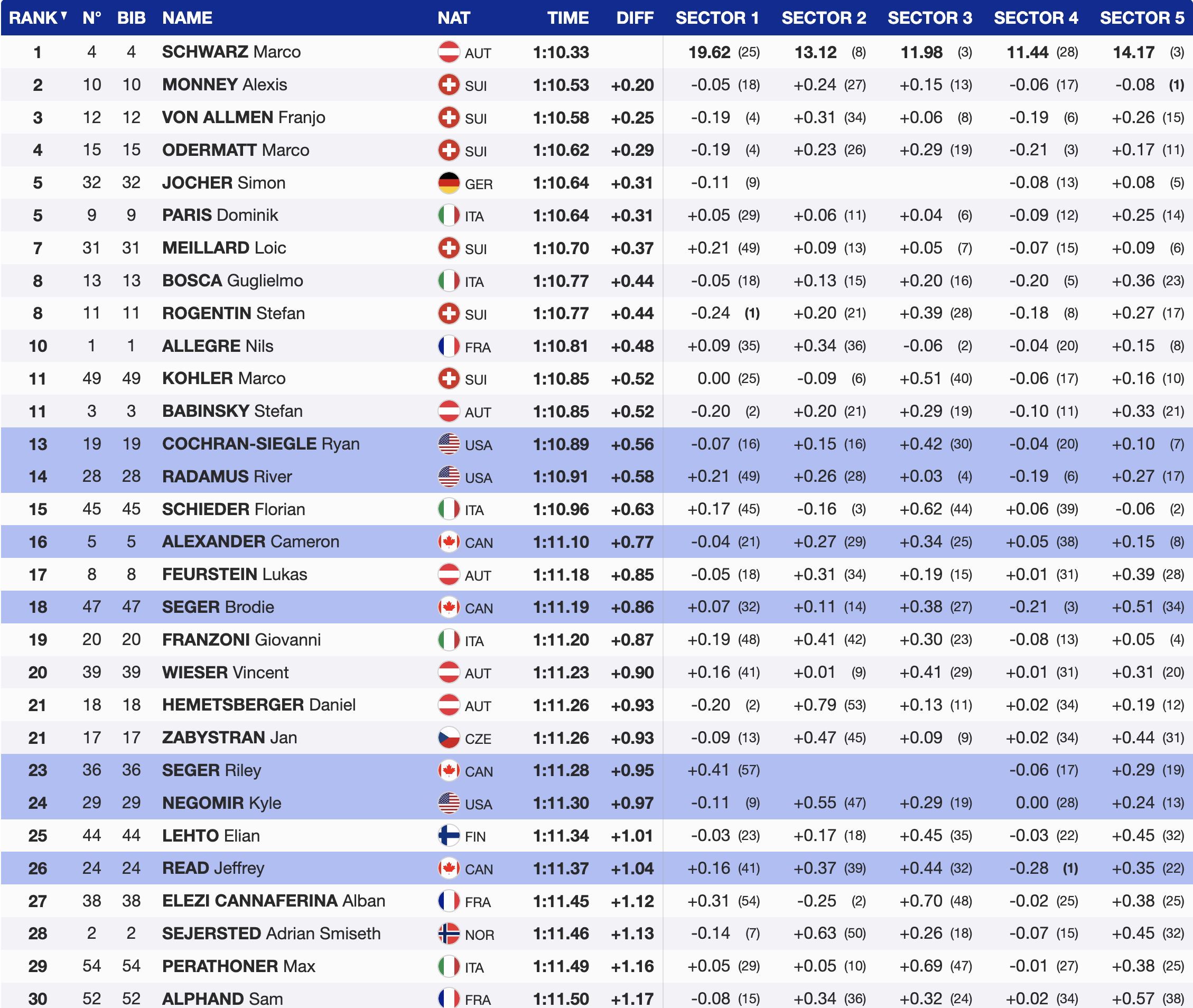
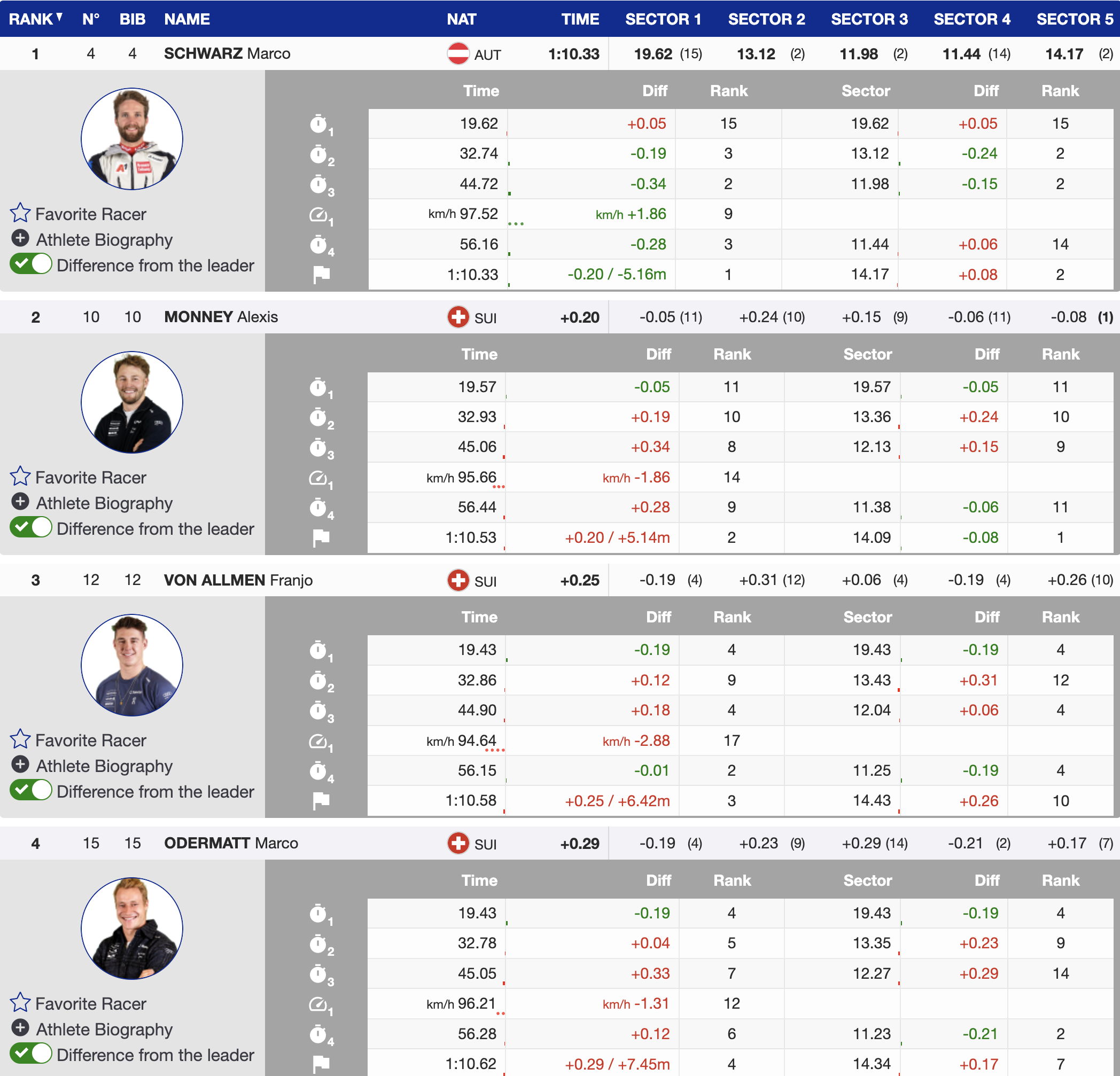
Schwarz stopped the clock in 1:10.33, building his advantage through the middle of the course and managing risk where others lost time late. The Lizeta track rewarded commitment throughout, but the fifth and final timing sector proved decisive. While several contenders arrived with advantages and gave them back at the bottom, Schwarz skied the final section cleanly and efficiently, doing enough to hold the lead.
“I had a really good run, and it feels good to be back on top in the speed discipline as well,” Schwarz said. “I’m actually more nervous now sitting on the chair than I was on the start gate, but I’m really happy.”
The win marked only the second super-G podium of Schwarz’s career and the eighth World Cup victory overall, extending momentum from his giant slalom win in Alta Badia last week. He said that result helped confirm his speed form had returned.
“Alta Badia was a milestone again,” Schwarz said. “Since then, I’ve had the feeling back that my speed skiing is good again and that I can compete on the highest level.”
On a course that demanded both aggression and restraint, Schwarz said the balance mattered most.
“You have to ski very aggressive, but also super clean,” he said. “That was the goal today.”
Swiss density at the top as Austria’s favorites falter
Switzerland flooded the top of the results sheet behind Schwarz, placing three skiers inside the top four and reinforcing its depth in super-G.
Alexis Monney finished second at +0.20, earning the third World Cup super-G podium of his career. Monney delivered the fastest final sector in the field, but time lost through the middle of the course kept him just off the win.
“It was really tight from top to bottom,” Monney said. “On a hill like this, you have to stay clean everywhere, because one small mistake costs a lot.”
At just 24, Franjo von Allmen continued his rapid rise with a third-place finish at +0.25, the fourth World Cup super-G podium of his career. Von Allmen carried speed through the upper and middle sections before paying the price late.
“I felt really strong through most of the run,” von Allmen said. “But the last sector is where you have to be perfect. That’s where the race was decided.”
Marco Odermatt followed in fourth at +0.29, unable to find his usual late-run acceleration as the season’s heavy race load showed.
The Swiss surge contrasted sharply with Austria’s broader speed picture. The nation’s two highest-ranked super-G skiers entering the race—Vincent Kriechmayr and Raphael Haaser—both failed to finish, reshaping the race before it reached its midpoint.
A race decided late—and by the margins
Livigno’s debut delivered one of the tightest super-G results in recent memory. The spread from first to 30th was just 1.17 seconds, and 24 skiers finished within one second of the winner. Conditions stayed fair throughout, rewarding good skiing deep into the start list, but the final sector demanded exact timing. Skiers repeatedly arrived with green lights only to give time back at the bottom.
Schwarz said his recent giant slalom win in Alta Badia helped restore confidence in speed. “Alta Badia was a milestone again,” he said. “Since then, I’ve had the feeling back that my speed skiing is good again and that I can compete on the highest level.”
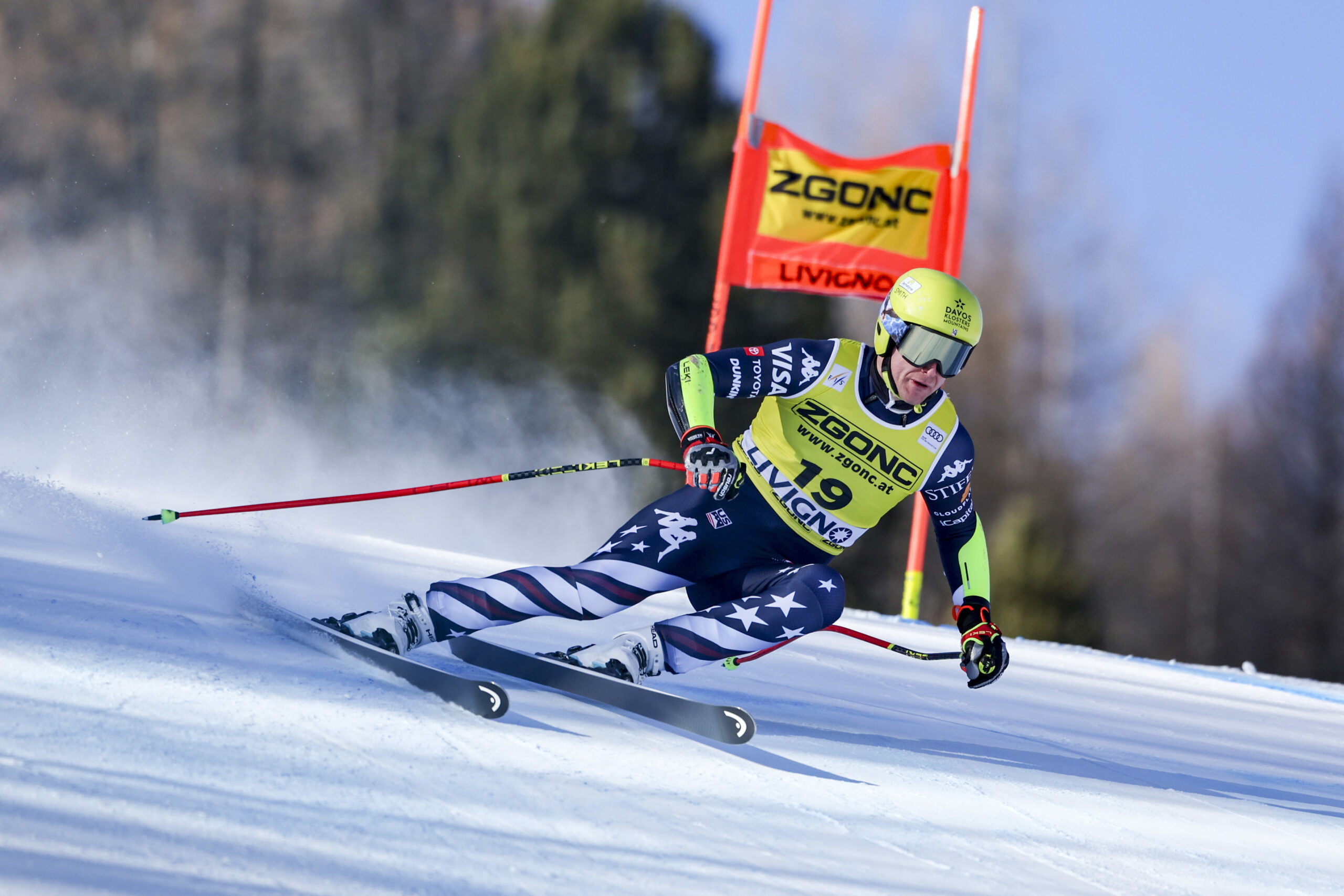
🇺🇸 United States — Stifel U.S. Ski Team
The Stifel U.S. Ski Team placed three athletes inside the top 30, clustered tightly near the top 15.
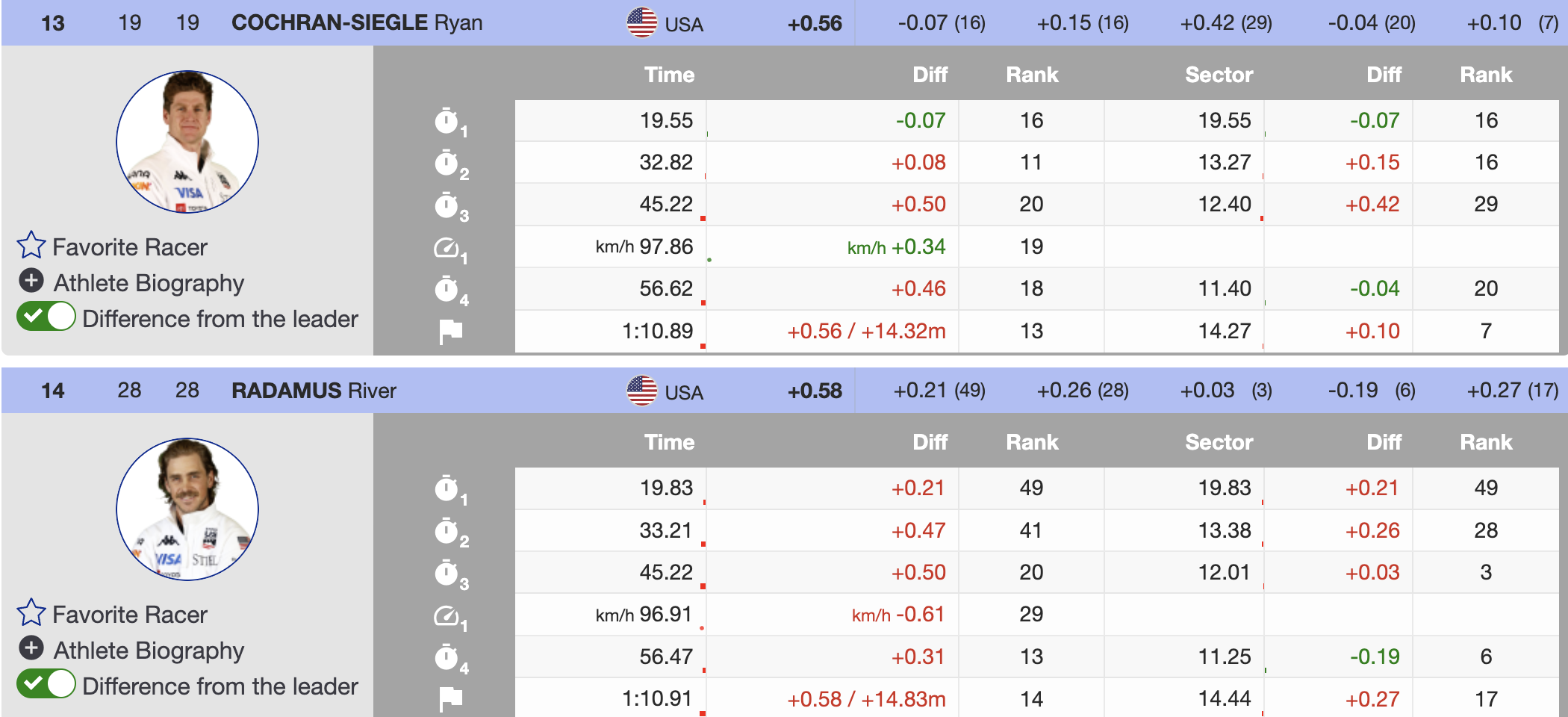
- Ryan Cochran-Siegle (1992) — 13th, +0.56 — HEAD
The 2022 Olympic super-G silver medalist delivered a balanced run and finished as the top North American on the day. - River Radamus (1998) — 14th, +0.58
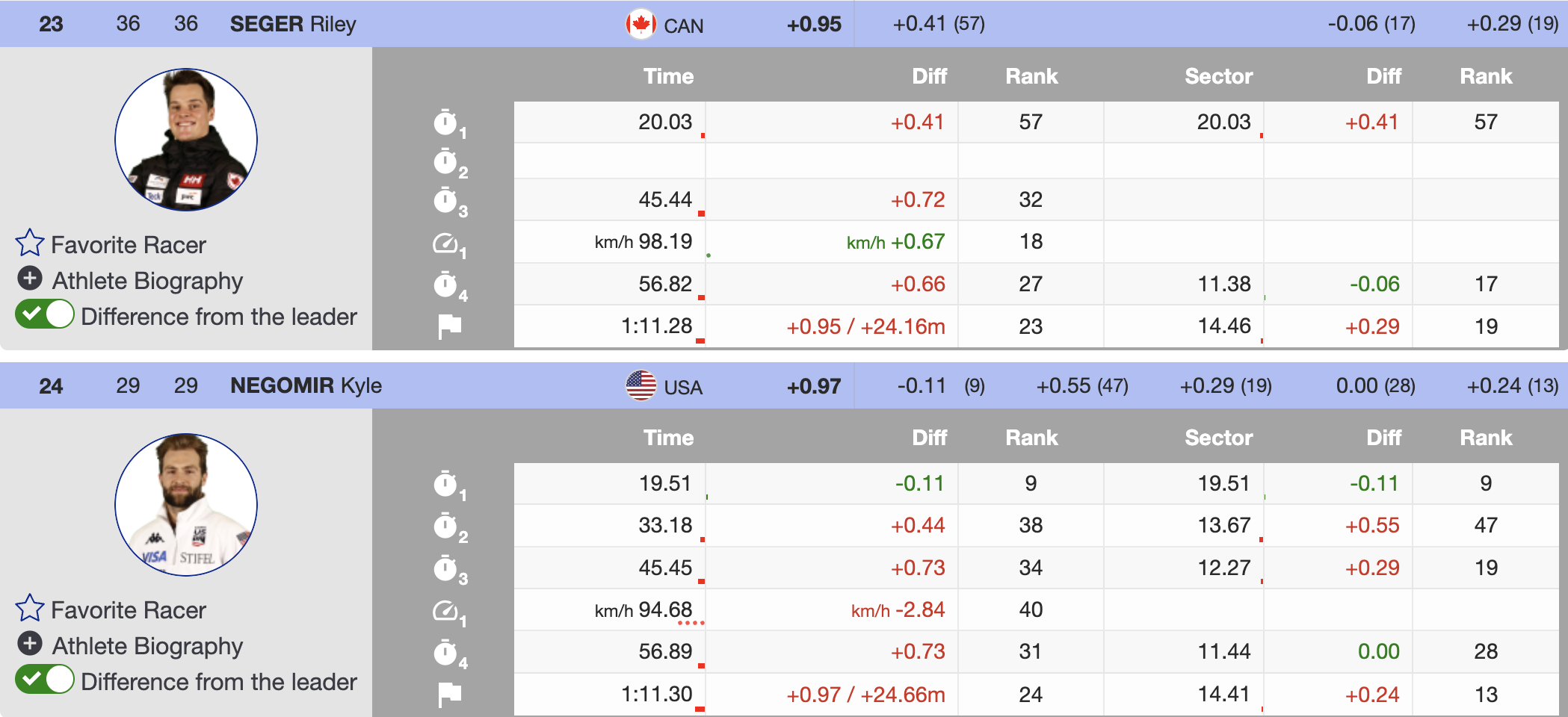
The U.S. No. 1 giant slalom skier again showed his super-G range, finishing just behind Cochran-Siegle and reinforcing his versatility. - Kyle Negomir (1996) — 24th, +0.97 — Atomic
Negomir continued a strong season, staying inside one second and converting another solid result.
Ryan Cochran-Siegle said his run reflected solid execution, even if it fell just short of the precision needed to move higher up the results.
“It was a solid effort,” Cochran-Siegle said. “I made some nice turns throughout the run, and at least one that needed to be skied better to really deserve a big result.”
Cochran-Siegle added that Livigno’s debut delivered ideal racing conditions.
“It’s hard to beat skiing in the sunshine in Italy, on consistent snow, with a pretty fun track,” he said.
He finished 0.02 seconds ahead of teammate River Radamus, and couldn’t resist a lighthearted note afterward.
“If I can’t beat River in fantasy football this year,” Cochran-Siegle said, “it was nice getting him by 0.02 in the race.”
🇨🇦 Canada
Canada placed four skiers in the top 30, highlighted by depth and momentum through the Italian speed block.
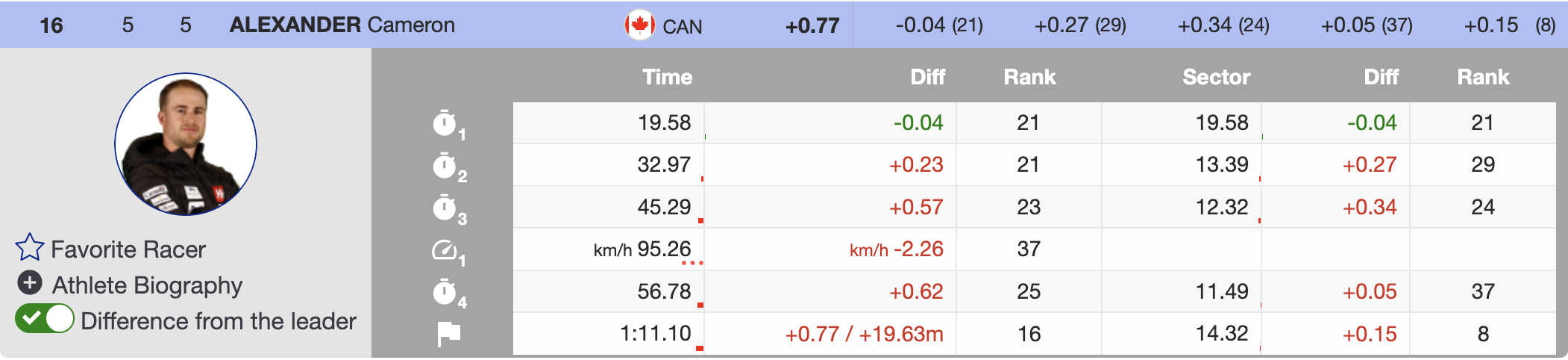
- Cameron Alexander (1997) — 16th, +0.77
Still rebuilding after knee surgery, Alexander skied solidly without yet finding peak speed. - Brodie Seger (1996) — 18th, +0.86
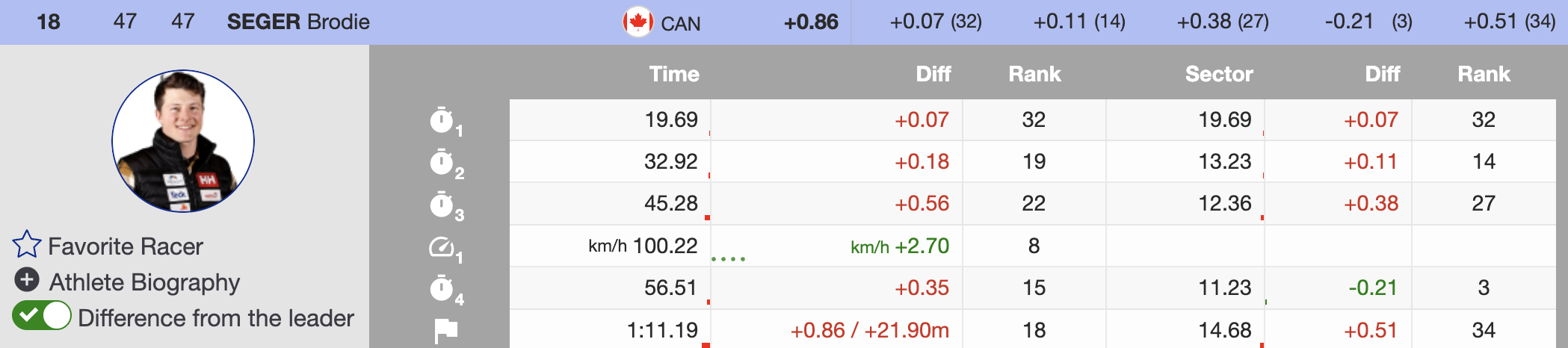
Starting bib 47, Seger delivered one of the day’s standout late runs, finishing as the second-fastest Canadian. - Riley Seger (2000) — 23rd, +0.95
Fifteenth in Val Gardena earlier this month, Riley Seger continued his Italian super-G momentum with another points finish. - Jeffrey Read (1998) — 26th, +1.04
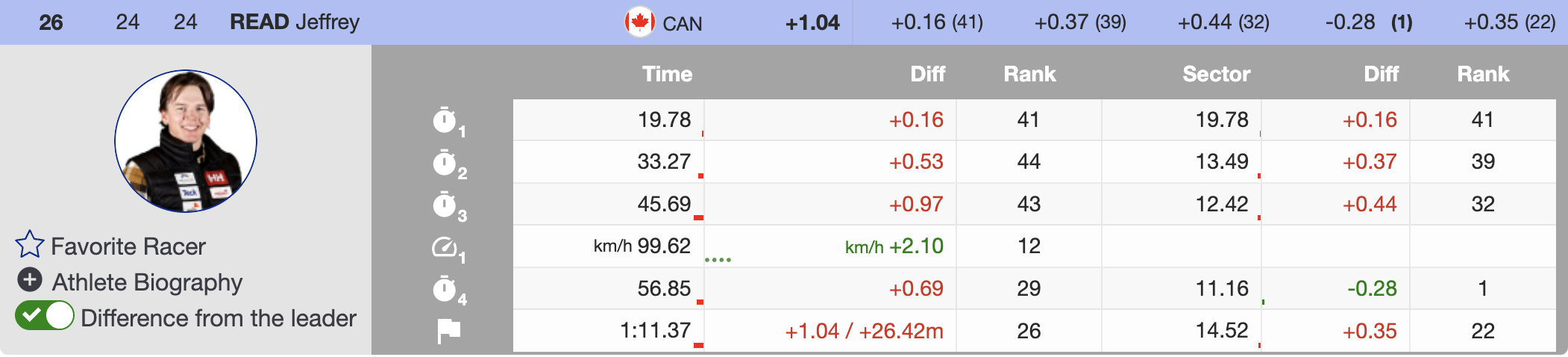
Read finished just outside one second, underscoring how compressed the field remained.
World champion James “Jack” Crawford did not score, marking a second consecutive super-G without points after opening the season 16th and seventh in Colorado.
High-bib impact — a defining theme
Livigno produced a high-bib scoring surge rarely seen in super-G. Eleven skiers starting with bib 31 or higher finished inside the top 30, a direct result of early DNFs that rewarded clean execution regardless of start number.
High-Bib Scorers — Bib 31 or Higher (Top 30)
- Bib 32 — 🇩🇪 Simon Jocher (GER) — T-5th, +0.31
⚡ Fastest finisher among bibs 31+ - Bib 31 — 🇨🇭 Loïc Meillard (SUI) — 7th, +0.37
- Bib 49 — 🇨🇭 Marco Kohler (SUI) — T-11th, +0.52
- Bib 45 — 🇮🇹 Florian Schieder (ITA) — 15th, +0.63
- Bib 47 — 🇨🇦 Brodie Seger (CAN) — 18th, +0.86
- Bib 39 — 🇦🇹 Vincent Wieser (AUT) — 20th, +0.90
- Bib 36 — 🇨🇦 Riley Seger (CAN) — 23rd, +0.95
- Bib 44 — 🇫🇮 Elian Lehto (FIN) — 25th, +1.01
- Bib 38 — 🇫🇷 Alban Elezi Cannafarina (FRA) — 27th, +1.12
- Bib 54 — 🇮🇹 Max Perathoner (ITA) — 29th, +1.16
🟨 Highest bib to score points - Bib 52 — 🇫🇷 Sam Alphand (FRA) — 30th, +1.17
The numbers underline how compressed the race was. With 24 skiers inside one second of the winner and 11 high-bib scorers, Livigno’s World Cup debut delivered a clear message in an Olympic season: execution wins, start position does not mean you can’t score.

Top 30 results
Click images to enlarge
Analysis of the top four and North Americans among the top 30
About the Author: Peter Lange