Ski Racing Roundup: Strobl in Slovenia, Kostelic in hospital, Austrians in Spyder This winter, www.skiracing.com will be home to weekly news roundups, leading you to regional and international developments you may have missed. Following our website re-launch on October 21, you can check in each Thursday for Nate Vinton’s roundup of the latest international competition news. If you have suggestions for the our site, contact the editor at webeditor@insideinc.com.
Josef Strobl pledging allegiance to a new flag
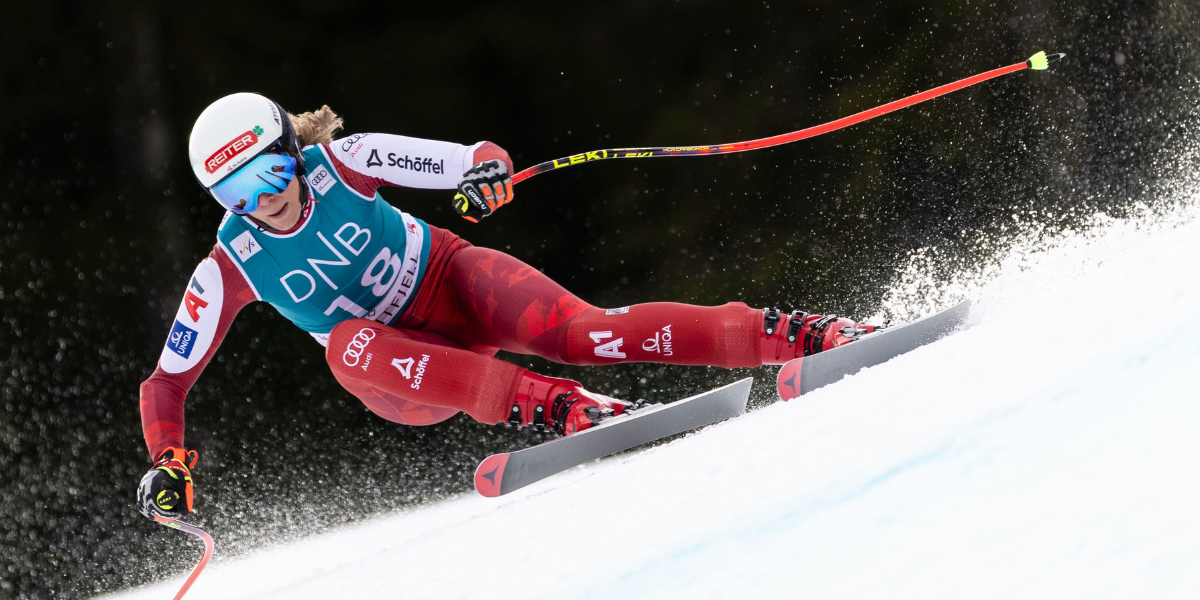
Austrian downhill skier Josef Strobl (also known as “Pepi”) acquired Slovenian citizenship and is hoping to compete for the country already this season, the Slovenian Ski Federation said Wednesday. Klemen Bergant, head of the country’s alpine skiing teams, told the state-run news agency STA that the Slovenians “are doing everything to get Strobl to ski for
our team already this season.”
By changing countries, Strobl, 30, risked a one-year lockout by FIS, the sport’s governing body. However, because the Austrian Ski Federation agreed to the transfer, the ban is unlikely to be issued. Bergant said Strobl got Slovenian citizenship “a
few days ago.”
Strobl quit the Austrian national team because he was left out of the squad for the 2003 world championships in St. Moritz, Switzerland. “I could not accept that any longer,” said the speed specialist in June.
Strobl finished third in the overall World Cup standings in 1997 and 2000, and won six World Cup events. Austria’s team chief Toni Giger said Wednesday the team was “very sorry” that Strobl left them. “We have tried for a long time to convince him to stay. In the end, he felt it was time for a change,” Giger said. “Josef is highly talented and it’s a pity for us to lose a potential race and World Cup winner to another country,” he said.
Strobl may compete in the earliest alpine races of the 2005/2006 season. Strobl was repeatedly skipped over in team selections in his native Austria last year, and announced in early June that he was looking to become Slovenian.
At the FIS fall meetings late last week in Zurich, Slovenia’s alpine ski pool director Tone Vogrinec said that Austrian federation president Peter Schroecksnadel was cooperating with the transfer, which helps Strobl race.
‘Our interest is to build up our downhill team’ said Vogrinec. ‘To have Pepi will be a big benefit to our younger skiers. To compare times helps in speed events. Ever since the days of Bojan Krizaj, young Slovenian ski racers have wanted only to be slalom skiers. If they don’t make it, then they try downhill. But it is too late by then.’
Strobl has been training with the Slovenians since the beginning of the summer, when he explained to the media that he was tired of not qualifying for major events. He has also pointed out that he won’t be the first Austrian to take such measures (click here).-from AP and staff reports
Ivica Kostelic hospitalized with heart problems, released
Croatian-born world champion Ivica Kostelic was taken to hospital on Tuesday after cutting short his training in Hintertux, Austria. He was admitted to a Zagreb clinic for heart checkups, said his spokesman, Ozren Mueller. “Kostelic had a higher pulse and he felt exhausted,” said Mueller.
Kostelic was later cleared of any serious health problems and will return to the slopes on the weekend. Speaking to reporters on Wednesday, Kostelic called it ‘a whole lot of panic over nothing, thank God.” Doctors suggested the momentary deviation was likely the result of a minor virus or a hard thump in the ribs from common crashes on the hard snow. “Everything is normal and I expect to be back and skiing in a few days,” Kostelic said. He was expected to be discharged from hospital on Thursday.
“Ivica Kostelic is a healthy man,” said cardiovascular surgeon Jure Mirat. “He can fully continue his sporting regimen where he left off.” Kostelic, the winner of seven World Cup slalom races, was preparing for a new skiing season after blowing his knee out last year at Schladming, Austria.
Kostelic said he “thought something was wrong when ‘my pulse rose into the mid-80s as it is usually around the 60’s when I’m idle. I didn’t want to take any chances as some other skiers had had some similar problems become serious.”
Both Kostelic and his more famous sister, Olympic champion Janica Kostelic, have a history of health problems. Both have had knee surgery several times in recent years, and Janica stayed away from the slopes last year to have her thyroid gland removed. She has been training, but hasn’t said yet when she plans to resume competitive skiing.
Beaver Creek men’s World Cup schedule praised, re-arranged
Late last week, at the annual FIS fall meetings in Zurich, the officials in charge of alpine World Cup confirmed that the program at Beaver Creek will be adjusted slightly for logistical purposes. The Beaver Creek race will still include all four disciplines, but they will be run consecutively, from Thursday through Sunday, December 2 through 5.
The previous plan called for a super G on Tuesday, followed by downhill training runs on Wednesday and Thursday. But officials have been worried that Tuesday super G would follow too closely on the heels of the Lake Louise super G scheduled for just two days earlier. Their worry stems from last year’s debacle, when several of Beaver Creek’s training runs had to be cancelled; the athletes were there, and the hill was in pristine race-ready condition, but an entire shipment of skis and other equipment was stuck in a semi-truck on the U.S./Canadian border, held up by customs because the truck’s shipping manifest didn’t match the weight of the cargo.
Top World Cup speed skiers regularly travel with upwards of 20 pairs of skis. This year the national teams will again pool their considerable baggage for the trans-national travel, but this time the host of the Beaver Creek races, the Vail Valley Foundation, will be overseeing the transport. They plan to have the skis leave Lake Louise in two separate shipments, the first containing only downhill skis and leaving immediately after the Lake Louise downhill to arrive in Colorado in time for the training runs. The super G shipment will now have until Thursday to arrive in Vail.
Also in Zurich, the FIS race director for men’s World Cup, Gunther Hujara, called Beaver Creek ‘an example’ to other World Cup hosts for its willingness to host four events. ‘A few people, working on the inside with all these projects on the World Cup calendar, know that I’m quite a fan of having a system we call the ‘Grand Prix’ system’ he said. ‘That means that we use our most capable sites for an event with more than two disciplines might be three, might be four. Now, in Beaver Creek on the calendar, we have a small world ski championships.’
NEW BIRDS OF PREY PROGRAM
Thursday, December 2: super G
Friday, December 3: downhill
Saturday, December 4: giant slalom
Sunday, December 5: slalom
British ski racers finding a roof to put over their heads
A British developer is planning to build the world’s largest indoor ski slope, and hopes that it could become a training site for top British ski racers. ‘SnOasis’(click here for more) is the brainchild of developer Godfrey Spanner, and has been estimated as a $534 million project. Located in a former cement quarry in Great Blakenham, it could accommodate thousands of skie
rs at a time on a 1,600 foot-long course with a 328-foot vertical. According to the website Snowlife.com, the project has earned support from the British Olympic Association and other race-oriented organizations.
Indoor skiing is a growing phenomenon in European countries with lower elevations and a speculative eye turned toward global warming trends. Germany seems to be leading the charge. Last year, the U.S. Ski Team’s women’s World Cup team trained in Germany at the Bottrop Alpincenter, an indoor facility owned in part by World Cup legend Marc Girardelli. Other German indoor ski sites are the the Jever Ski Hall and the Snowtropolis.
Austrians, Canadians and Americans in wind tunnels with Spyder
Photographs recently appeared online showing the Austrian ski team in their new Spyder suits. The photos may disappoint fans who hoped the Austrians would walk into the 2004/2005 season (the first year Austrians have worn Spyder) with the letters ‘AUT’ running down their shins (the Americans have long sported a ‘USA’ panel there).
Photos of Hermann Maier, Benni Raich and Renate Goetschl wearing the new red, black and white suits while hamming it up in an Audi wind tunnel, are available at the website of Austria’s Sport1 service. (Click here.)
Earlier this summer, several American athletes including Erik Schlopy spent time in a wind tunnel in Buffalo, New York. And Canada’s Alpine Ski Team has did their own wind tunnel work a week and a half ago at the General Motors Technical Centre in Michigan, according to a story posted at the team’s website. The affliation between Alpine Canada Alpin and Pontiac GMC goes back more than 35 years.
During the testing, Canada’s downhill specialists withstood wind speeds of up to 75 miles per hour, while experimenting various tuck positions and equipment. The goal of this exercise is to find the optimal racing position and downhill suit in preparation for the 2004/2005 racing season. Traditionally, the General Motors Aerodynamics Lab is used to test the aerodynamic capabilities of new GM cars and trucks. However, for a third consecutive year, the lab hosted the Canadians.
Previous Ski Racing Roundups:
INTERNATIONAL, September 15, 2004
DOMESTIC, September 28, 2004
NORDIC, September 29, 2004
INTERNATIONAL, September 30, 2004
DOMESTIC, October 5, 2004
NORDIC, October 6, 2004
About the Author: Pete Rugh