This past weekend in Soelden, World Cup racers were focused on the business at hand; however, the conversation often shifted to February’s Olympic Winter Games in China.
For athletes and particularly ski racers preparing to compete at Beijing 2022, they will need to decipher a Winter Games unlike any previous. Considering the pandemic and the effects thereof, everything appears to be a great unknown, a complicated Chinese puzzle or mystery of sorts.
These athletes have never seen and will have to adapt to the unfamiliar weather and snow conditions in a country that has never hosted a World Cup alpine event. They’ll have to adhere to the numerous health protocols and countermeasures revealed in “playbooks” released by the International Olympic Committee and Beijing organizers. There will be plenty for racers to “discover.” Those who can cope with and quickly pivot for any and all circumstances – both on and off the mountain – will increase their chances to bring home medals.
Many Olympic hopefuls insist they are fine with taking a wait-and see approach; however, concerns remain.
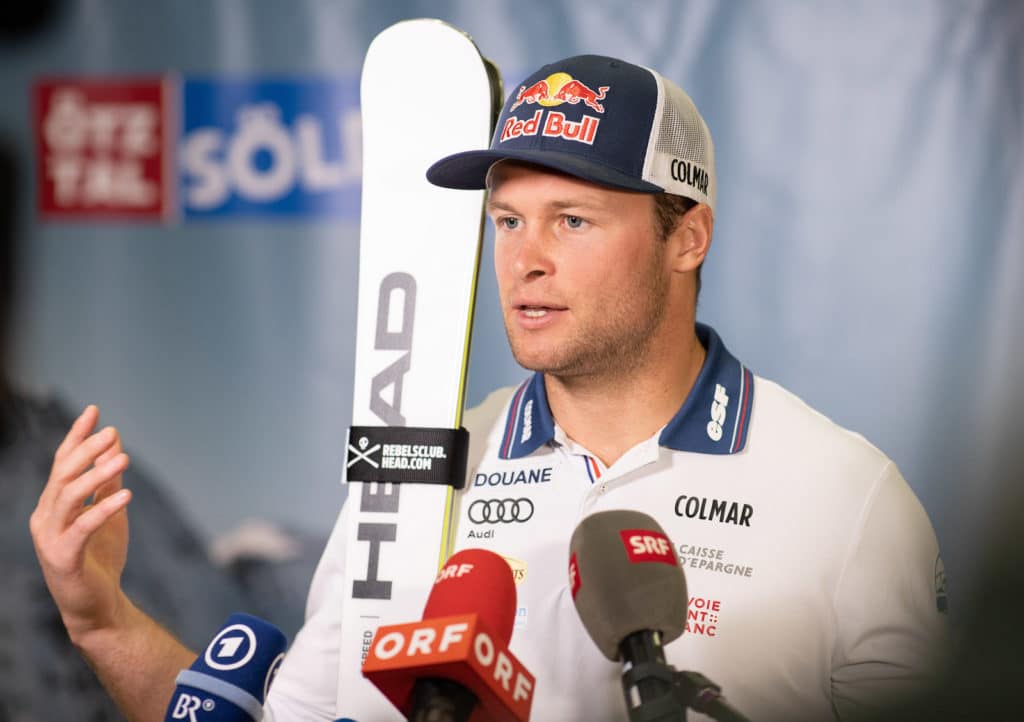
“I’m a little bit scared about how it will be there in Beijing because they have already said that we will be [isolated] in the village,” says men’s overall World Cup champion Alexis Pinturault. “When you stay nearly three weeks at the Olympics and you can just be in your room, in the village, on the slope training and nothing else, it will be somehow quite long.”
The Olympic races will be contested in Yanqing, located about 90 kilometers northwest of Beijing, at China’s National Alpine Ski Center, a venue which opened in November 2019 and is now accessible by both high speed railway and the Beijing-Chongli Expressway.
World Cup test events for both men and women had to be canceled in February 2020 and 2021 due to travel restrictions to China. However, numerous Chinese national and FIS races have been contested on Xiaohaituo Mountain, with its elevation of 2,198 meters. The competition venue – which will rely on an intricate snowmaking and water diverter system – offers seven slopes and an Olympic racing piste with a maximum steepness of 69 degrees.
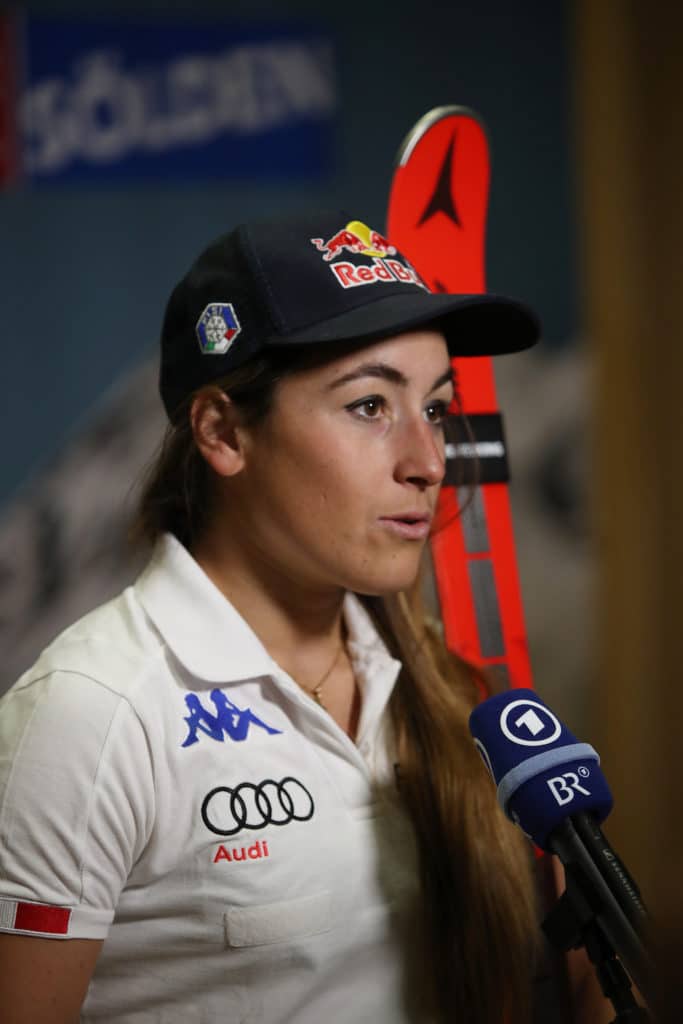
“No one knows the course – actually, I just know about the slope from word of mouth,” says PyeongChang 2018 Olympic downhill champion Sofia Goggia. “I heard that the slope is pretty steep, with blind rolls and it’s not that easy. I really don’t know more because you cannot judge a book from its cover.”
Sochi 2014 Olympic downhill and PyeongChang 2018 Olympic super-G champion Mattias Mayer suggests that seeing a downhill course for the first time may even play into his favor, as he proved four years ago.
“In PyeongChang, I was injured the year before when they had the test event, so I was there for the first time at the Olympics – maybe for me it’s not that a big of a difference,” says the Austrian veteran with positivity. “Nobody has had the possibility to train over there, no one knows the hill or area around, but of course it will still be something special and something good.”
“It’s strange, but it’s also pretty simple because it’s the same case for all of us – somehow it’s fair, because it is a new slope for all,” says Pinturault.
Naturally, many athletes have studied POV video from Chinese racers as well as drone footage from above.
French veteran and two-time world giant slalom champion Tessa Worley looks forward to competing at her third Olympics.
“It’s always a big surprise to be on a new slope and for sure we will try to look at whatever we can, but sometimes with video and photos, it’s not easy to get the real feeling of the slope,” Worley says. “I don’t want to have too many ideas before – I just want to get on the slope, ski and not ask myself too many questions.”
Former overall World Cup champion Federica Brignone shared a gondola ride in Soelden with Chinese skier Ni Yueming. Yueming is China’s top racer and the only representative from her country competing in Soelden.
“I asked the Chinese girl here in Soelden, but she’s from the north so she couldn’t tell me too much,” Brignone says, also noting the language barrier in her effort to learn more about the Yanqing slopes
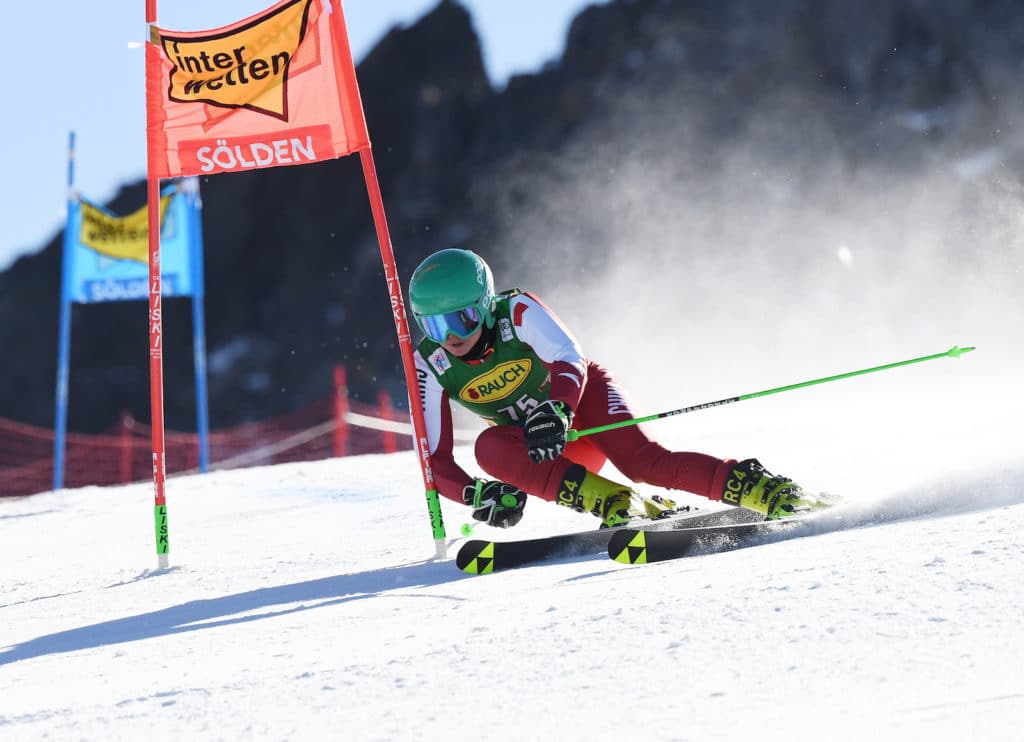
The 26-year-old Yueming participated in 11 consecutive FIS races at the future Olympic venue between Feb. 4-9, winning two super-Gs, two alpine combines and three slaloms. She was also third in two downhills, on a shortened track with 490 meters of vertical drop.
Austrian speed skier Ramona Siebenhofer is bringing a positive outlook, amid the uncertainty, into what will be her second Olympic Games.
“You have to stay calm because nobody knows and it’s the same for everybody,” says the 30-year-old Austrian. “When you get information, you’re not even sure if it’s true because you just don’t know.”
FIS president Eliasch prepares to travel to Beijing
One might suspect that there could be issues and unforeseen trouble with preparation of courses and execution of races considering China’s lack of international ski racing experience. However, FIS president Johan Eliasch offered a strong vote of confidence this past weekend in Austria.
“Of course with such a big event there is concern, but at the same time I’m not too worried because we have such a great team of people, such great experience when it comes to organizing events,” Eliasch said, referring to the FIS race directors across all disciplines.
Additionally, a well-represented international jury has overseen prior races on the future Olympic slopes, including the FIS events in February.
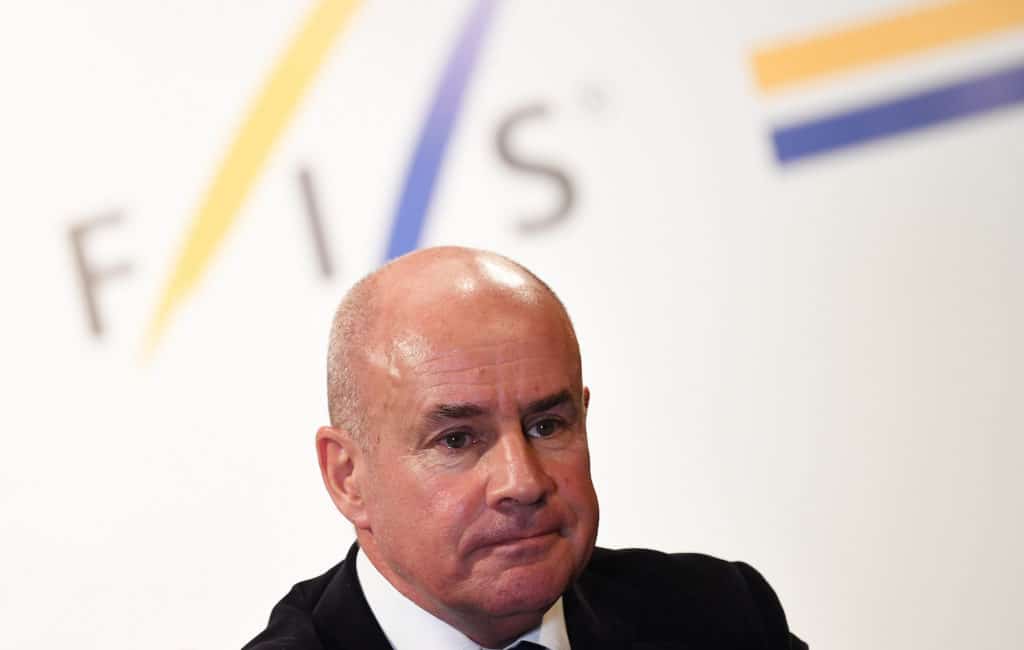
“We are cautious in our approach and this will be one of those occasions – it’s like you’re a pilot and you have one place to land, so you focus on that landing, and that’s exactly what we’ll do,” Eliasch said.
The FIS leader informed that he plans to travel to China toward the end of November or early December, to meet with colleagues at the Chinese Ski Federation and Beijing 2022 organizing committee.
Close proximity between the Olympic village and race venue
While athletes will certainly need to be patient with frequent Covid-testing, lack of outside movement from their “Red Bubble” and stringent health protocols, the commute from the Yanqing Olympic Village to the race venue appears more convenient than at previous Olympics.
The venue is just six kilometers, or a 10-minute ride, from the village, which skiers will share with bobsledders, lugers and skeleton athletes, as the second competition venue in Yanqing is the sliding sports track.
In September, a cableway linking the village and various parts of the National Alpine Skiing Center was completed, fully connected and capable of operation, according to the manufacturer Beijing Enterprises Group.
In terms of additional logistics, protocols, procedures, and instructions, the racers say they will rely heavily on their respective teams, federations and national Olympic committees.
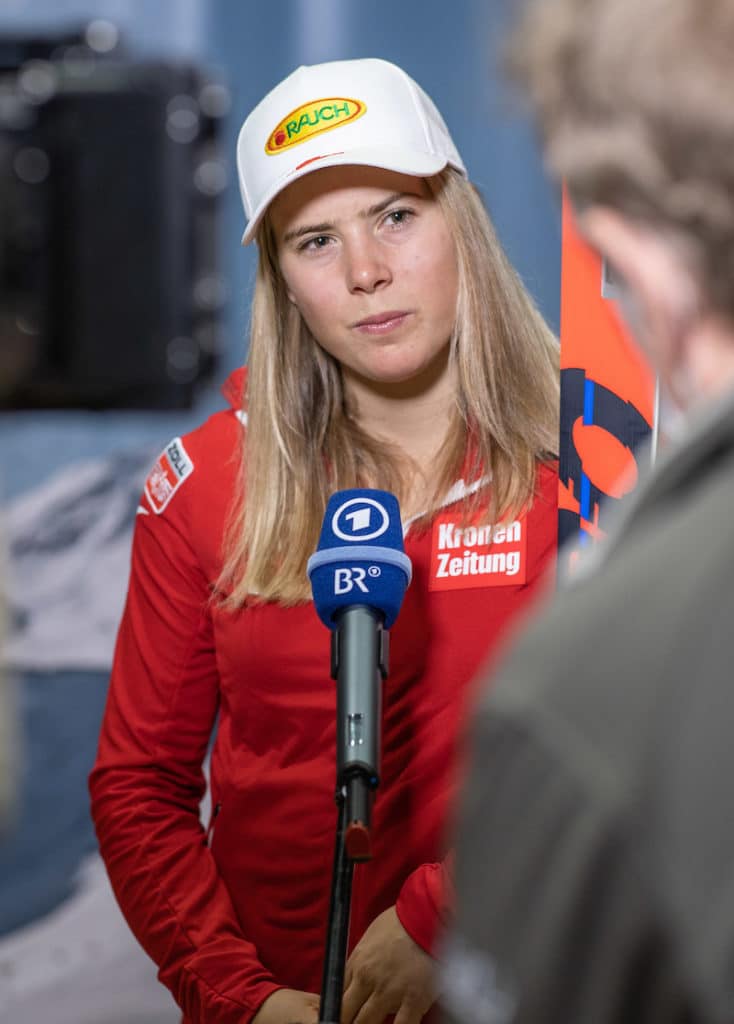
“Nobody knows what is coming – of course it won’t be easy to control what is going on there, but we have received some good information from our ski federation,” says Austrian Katarina Liensberger, who hopes to have similar success like at February’s world championships in Cortina, in which she won three medals, including gold in slalom and parallel. “They are doing whatever they can so we have the best preparation and the best Olympics that we can have.”
“There are lots of lists and medical checks that you have to make,” says Liensberger’s teammate Siebenhofer. “So far, they’ve just told us that we will fly there from Vienna.”
Italian Marta Bassino says it will be “a new slope, a new world.”
Bassino’s teammate Goggia – who insists that she is 100% recovered from a fall that wiped out her world championship hopes and abruptly ended last season – is succinct in summarizing her approach to the Beijing Games.
“There are so many topics and issues, that now I’m not caring about,” says the feisty Italian speed skier. “When the moment comes, I will do the right things. Right now, I am not worrying about things I cannot control.”
Follow Brian on Twitter – @Brian_Pinelli
About the Author: Brian Pinelli