Alex Krupka / U.S. Nationals SG / Photo U.S. Ski & Snowboard
Alex Krupka arrived at the final race of his season knowing exactly what was at stake.
One more result could change everything.
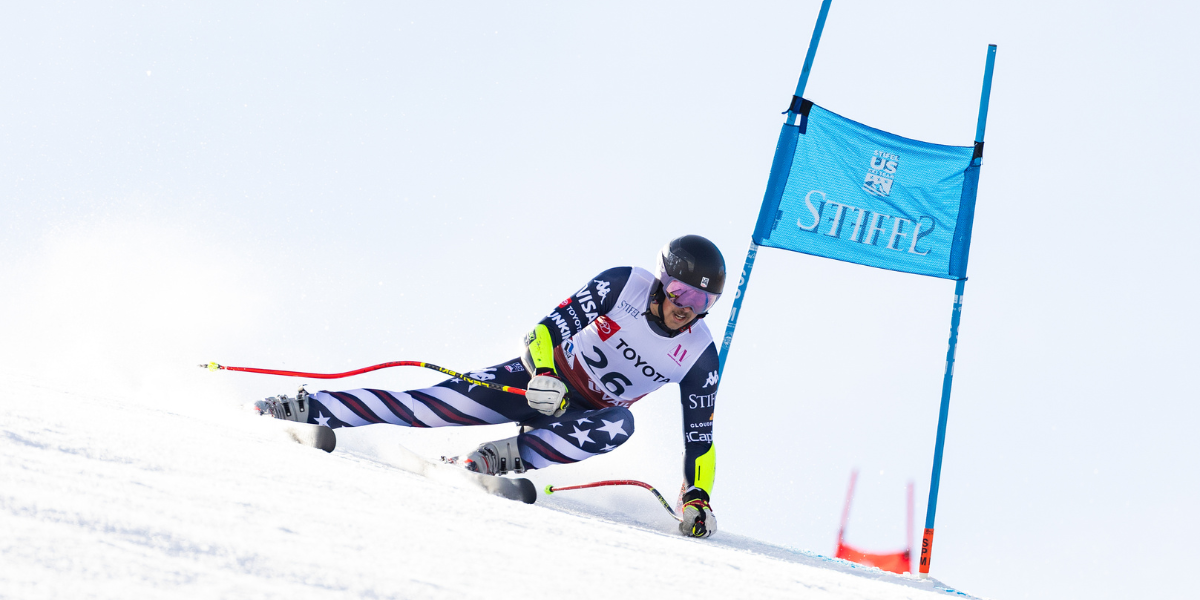
The 20-year-old Ski & Snowboard Club Vail skier needed a giant slalom score low enough to secure Stifel U.S. Ski Team criteria. Instead of skiing cautiously, Krupka attacked his home hill in Vail, Colorado, won the race outright and earned the first FIS giant slalom victory of his career.
By the end of the day, one of the strongest young multidiscipline skiers in American alpine racing officially secured his spot on the Stifel U.S. Ski Team C Team.
For a skier who finished the winter ranked third in the world for his birth year in Super-G, seventh in downhill and eighth in giant slalom, the breakthrough felt earned. Yet the deeper story behind Krupka’s rise explains why coaches around U.S. skiing have quietly followed his trajectory for years.
His skiing was built long before the results arrived.
Vermont Roots Built the Foundation Before Vail Refined It
Long before Krupka developed into one of the top young American speed prospects, he was simply a kid chasing speed across icy East Coast terrain.
His earliest memories come from Cannon Mountain in New Hampshire and Sugarbush in Vermont, where his parents first taught him to ski.
Even then, skiing always felt exciting.
“I always wanted to ski fast and make big turns,” Krupka said. “That feeling of speed and flow was what made me fall in love with skiing from the beginning.”
Those Vermont years still shape the skier he is becoming.
Krupka believes the constantly changing snow and terrain on the East Coast forced him to adapt. Mistakes had consequences. Recoveries mattered. Conditions were rarely ideal.
That environment helped create the aggressive but reactive style now visible in his speed skiing.
Eventually, the family moved west to Vail, where Ski & Snowboard Club Vail and Vail Ski & Snowboard Academy helped turn raw ability into elite progression.
The combination proved powerful: East Coast resilience paired with Rocky Mountain opportunity.
Why Super-G Became Krupka’s Best Event
Although Krupka races all four disciplines, he is consistently drawn back to Super-G.
The discipline blends timing, patience, instinct and commitment in ways that fit his personality naturally.
“Super-G feels the most natural to me because it combines technical skiing with speed and decision-making,” Krupka said. “There’s a rhythm and flow to it that’s hard to describe unless you’ve experienced it.”
That connection showed throughout the season.
Strong early NorAm performances in Beaver Creek immediately rebuilt his confidence after a difficult previous year. At one point, Krupka admitted he wondered whether giant slalom might ultimately become his primary path forward. Then the Super-G results started arriving.
Suddenly, the trajectory changed.
Krupka’s multidisciplinary background also sharpened his overall skiing. Giant slalom improved his timing and discipline. Speed events expanded his confidence and tactical awareness. Even slalom — the discipline he openly says still needs work — continues to challenge him in productive ways.
That versatility remains valuable at his age, even as his long-term ceiling increasingly appears tied to speed.
Junior Worlds Showed Him the Real Level
This season also brought Krupka to his first FIS Junior World Ski Championships in Narvik, Norway.
The experience mattered even more than the results.
Narvik delivered difficult conditions, shifting weather and plenty of frustration. The downhill was canceled. Rain complicated multiple events. Krupka felt he left speed and opportunities on the hill.
Still, the week gave him something equally important: perspective.
Representing the United States at a world championship event forced him to understand the level required internationally — not just physically, but mentally and tactically.
“You realize very quickly that everybody there is talented,” Krupka said. “The difference comes from who can stay composed, adapt the fastest and still attack when conditions get difficult.”
The event also reinforced his belief that he belongs in that environment.
Krupka will still have another year of Junior Worlds eligibility next season.
The Race in Vail That Changed Everything
Despite several strong results during the winter, one race at home ultimately defined Krupka’s season.
Late in the year, he understood exactly what was at stake. One more performance could secure his Stifel U.S. Ski Team criteria. Instead of skiing defensively, Krupka produced the best giant slalom result of his career.
He won.
The result delivered both his first FIS tech victory and his nomination to the Stifel U.S. Ski Team.
More importantly, it validated years of sacrifices that rarely appear in results sheets.
Early mornings. Missed social events. Endless travel. Training blocks that often happened far from attention or headlines.
Krupka understands those sacrifices clearly.
“At some point, you realize nothing about this sport happens accidentally,” he said. “The little decisions you make every day eventually show up in your skiing.”
Ski Racing Has Always Been Part of the Family
The sport surrounded Krupka long before he reached the national team level.
His older brother Jimmy Krupka has competed in multiple World Cup slaloms for the United States, giving Alex direct exposure to the realities of elite ski racing from a young age.
That influence mattered.
The brothers watched race videos together, studied World Cup skiing, and talked constantly about tactics, movement and racing mentality.
“Watching Jimmy go through everything at the World Cup level made the dream feel real,” Krupka said. “It showed me how much work it actually takes, but it also made me want it even more.”
His parents helped lay the foundation, while Jimmy showed him firsthand what elite ski racing looks like.
That balance helped Krupka forge his own path rather than simply following someone else’s.
The Regional Team System Helped Accelerate His Rise
Krupka’s progression also reflects the early success of the new Regional National Development Program.
He was one of five named athletes — along with three invitees — from the inaugural regional-team season to earn advancement onto the Stifel U.S. Ski Team this year.
For Krupka, one of the biggest strengths of the structure came from bringing together athletes from different parts of the country while still allowing them to remain connected to their home programs and coaches.
He also believes the structure still has room to grow, particularly in building greater continuity between camps and training environments.
Still, the first season produced tangible results.
Several athletes moved directly from the regional level into the national team pipeline, an encouraging sign for the future depth of U.S. alpine skiing.
The Coaches Who Helped Push Him Forward
Krupka also made sure to credit two coaches he believes changed the trajectory of his career: Matt Underhill and Will Hadden.
Underhill worked with the Regional National Development Program, while Hadden coached Krupka at Ski & Snowboard Club Vail. Together, Krupka said, they helped push his skiing beyond the strong junior level and prepared him to compete consistently against some of the best athletes on the NorAm circuit.
“I wouldn’t have made it anywhere past the FIS race or college level without them,” Krupka said. “A lot of the NorAm success I had this year is because of Matt and Will.”
That gratitude says a lot about Krupka himself. Even after earning a Stifel U.S. Ski Team nomination, he still talks about his progress as something built alongside the people who helped guide him there.
NCAA Skiing Remains Part of the Conversation
Krupka’s focus now remains fully on continuing his international progression and seeing how far he can push his skiing at the professional level.
He also remains open to NCAA skiing if it eventually becomes the best fit for his long-term path.
He respects the level of coaching and athlete progression within NCAA programs and pointed to the success many athletes have found using college skiing as a bridge toward the international level.
“NCAA skiing is an incredible opportunity, and there are a lot of great coaches and programs there,” Krupka said. “There are plenty of athletes who’ve used that route really successfully.”
That perspective reflects the balance in Krupka’s approach right now. He remains ambitious, but realistic enough to understand that alpine careers rarely follow identical paths.
What Comes Next for One of America’s Top Young Speed Skiers?
Now the challenge changes.
Krupka plans to spend significant time in Park City with increased access to the Center of Excellence. Physically, he knows strength development remains critical.
He openly describes himself as tall, lean and still developing the power needed to maximize his skiing at higher speeds.
Tactically,his focus remains equally specific: depth.
When Krupka gives himself enough space and stays patient through the turn, he believes his skiing naturally settles into place.
That understanding reflects a skier who already thinks deeply about his craft.
Krupka still approaches racing like someone trying to prove he belongs.
That mindset may matter as much as the results themselves.
Because Alex Krupka no longer looks like a skier hoping to reach the next level.
He looks like one preparing to stay there.
About the Author: Peter Lange