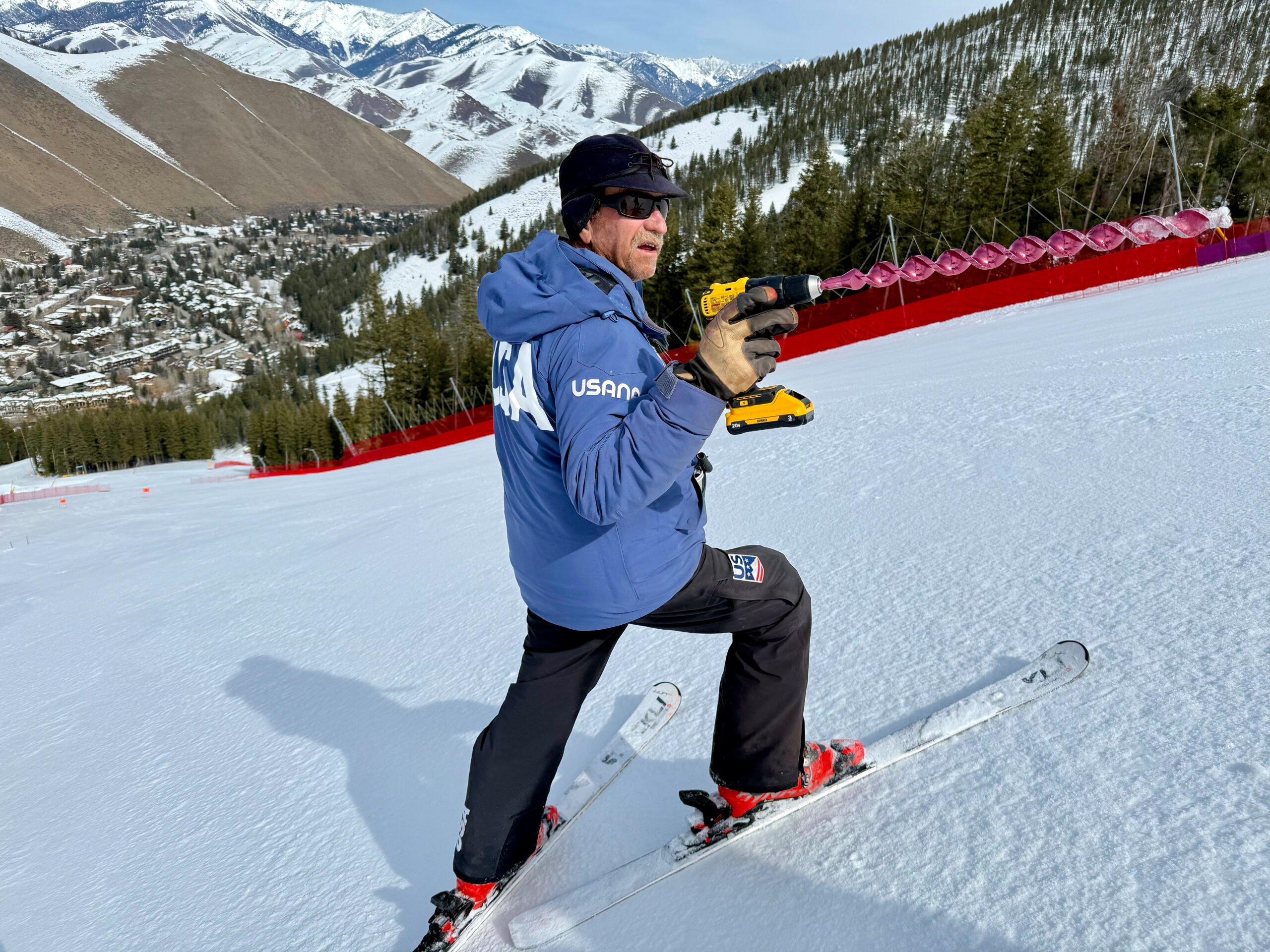
Tom “Cowboy” Johnston Photo: Heather Black
The newly constructed Challenger Downhill does more than pay homage to Sun Valley’s ski racing history—it reimagines it.
A Historic Moment for Sun Valley
The ski racing community held its breath when FIS provisionally named Sun Valley the 2025 Audi FIS Stifel World Cup Finals host. Sun Valley had successfully hosted multiple U.S. National Championships, but a World Cup? The resort hadn’t seen that caliber event since the 1970s, and even then, the races had taken up a fraction of the hill for tech events. That’s not to mention that this is no ordinary World Cup. It’s the Finals: the grand finale, the best of the best.
The Challenge of a New Downhill
The downhill track was at the center of this nervous anticipation. U.S. Nationals had already tested other sections of the mountain, but designing a World Cup-legal downhill course meant creating something entirely new—something the athletes hadn’t yet experienced. Even course designer Tom Johnston, better known as “Cowboy,” acknowledged: “It’s been controversial, coming to a new slope for finals, at the end of the year and all.”
A Legacy of Speed
Against the backdrop of these reservations, champions of Sun Valley’s racing future pushed ahead with enthusiasm. Sun Valley’s then-Race Department Head, Wally Rothgeb, and Tim “Swampy” LaMarche—nicknamed “the patron saint of speed development”—had a clear plan for the downhill track. After all, there had been a world-class downhill on the event side of the mountain around 87 years ago.
The Roots of Downhill Racing at Sun Valley
The story of the downhill they passed to Cowboy to build upon begins in earnest in the 1930s. Averell Harriman established the Sun Valley Resort in 1936, and the businessman cultivated ski competition to bolster the fledgling resort’s notoriety in the international ski community. The Harriman Cup soon became a well-known and well-regarded achievement because of his dogged commitment to competitions. The 1943 American Ski Annual quoted: “Just as it is the dream of every tennis player to compete once at Wimbledon, it is every skier’s hope to participate in the famous Harriman Cup Races at Sun Valley.”
The Birth of Bald Mountain’s Downhill
Organizers moved the Harriman Cup to a lesser-known peak, Bald Mountain, two years after the inaugural event. The downhill was hand-cut on the peak’s north side at the suggestion of Dick Durrance, Dartmouth skier and three-time winner of the race. Durrance had climbed, skied, and surveyed this densely-treed mountain and deemed it the future of skiing in Sun Valley— “at least for the better skiers.”
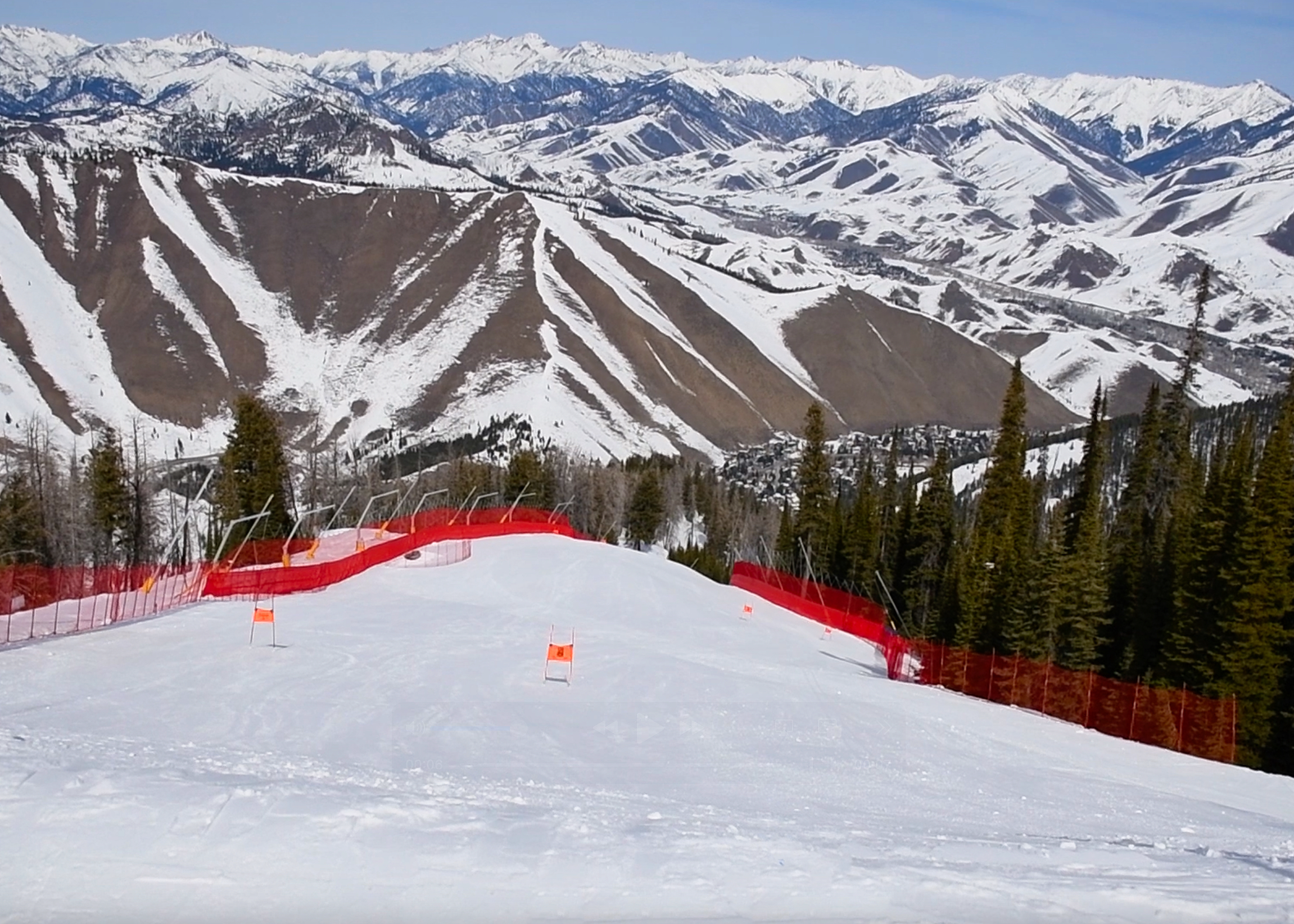
Durrance designed a course that dropped 3,000 vertical feet from Bald Mountain’s peak to the Warm Springs River two miles below. He allegedly included a shortcut through the trees that only he knew—having cut it himself and earning a $2 fine from the U.S. Forest Service for felling trees without permission. The original start house still sits atop Bald Mountain, a few skates away from a pitch so steep you can just about see the finish line from the first gate.
Reimagining the Challenger Downhill
This would be the inspiration for Sun Valley’s new Challenger Downhill.
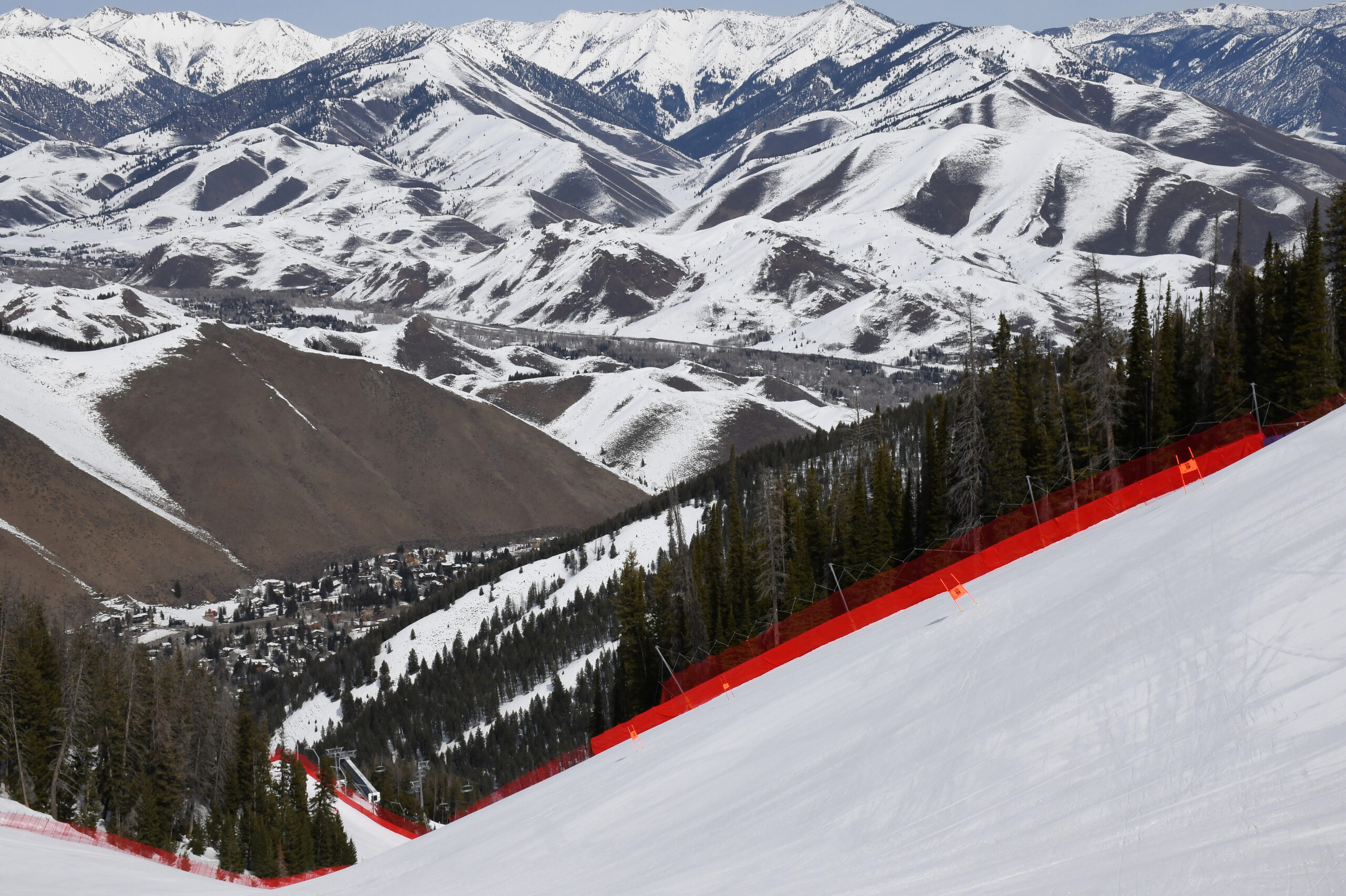
Like the original course, the track follows a ridge off the top of the mountain before dropping into the gully of the Warm Springs Trail, where athletes will wind with the contour of the hill toward the Steilhang Traverse. From then on, the contemporary course runs skiers left of the original but still finishes just a stone’s throw from the Warm Springs River.
The Challenger Downhill comes up just short of Durrance’s original, at 2,770 feet of vertical drop and 1.5 miles of track. Yet with trial athletes averaging 70 miles an hour (crossing the finish line at 1 minute, 25 seconds), the Challenger Downhill would likely surpass Durrance’s wildest dreams for a thrilling race.

A Course Built for Speed
That said, the Challenger Downhill might surpass the wildest dreams of contemporary athletes, too.
“My brother test-ran it last week!” Lauren Macuga told us. “He said it was very fun. It had some really sweet bank turns and some big jumps. He said it’s going to be really fast and really open, and I said, ‘Oh, this sounds really sweet!’”
Macuga emphasized that her top priority is reaching the podium again and finishing the season with the same fervor she has always shown. We asked about the new track and how that might influence her strategy coming into the event.
“No one’s been there, so what will be important is who can figure it out the quickest,” Macuga shared. “I’m good at learning and executing a course. Whatever way you want me to go, I’m gonna go there; I’m gonna do it.”
A Demanding Test for Ski Racing’s Best
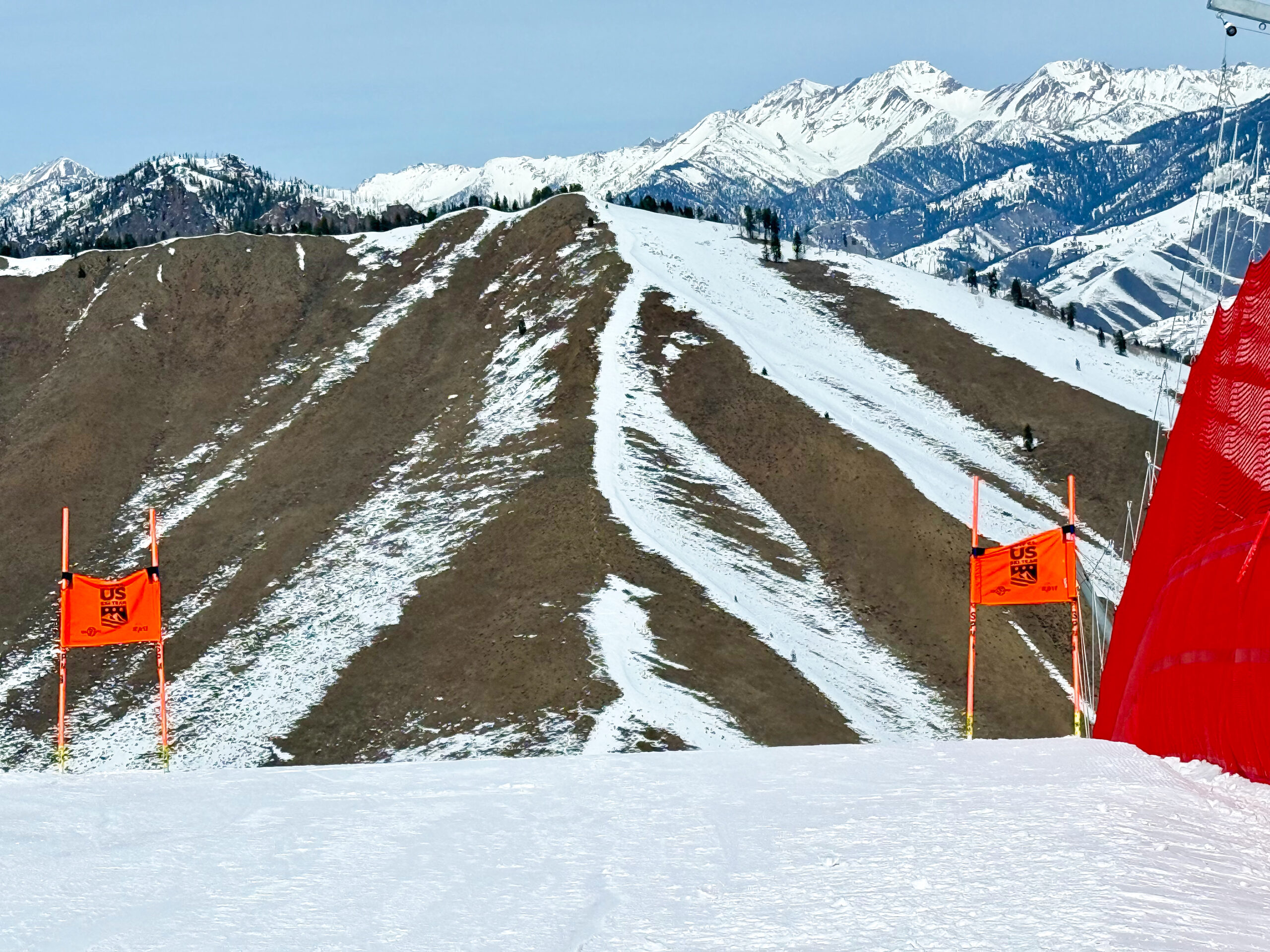
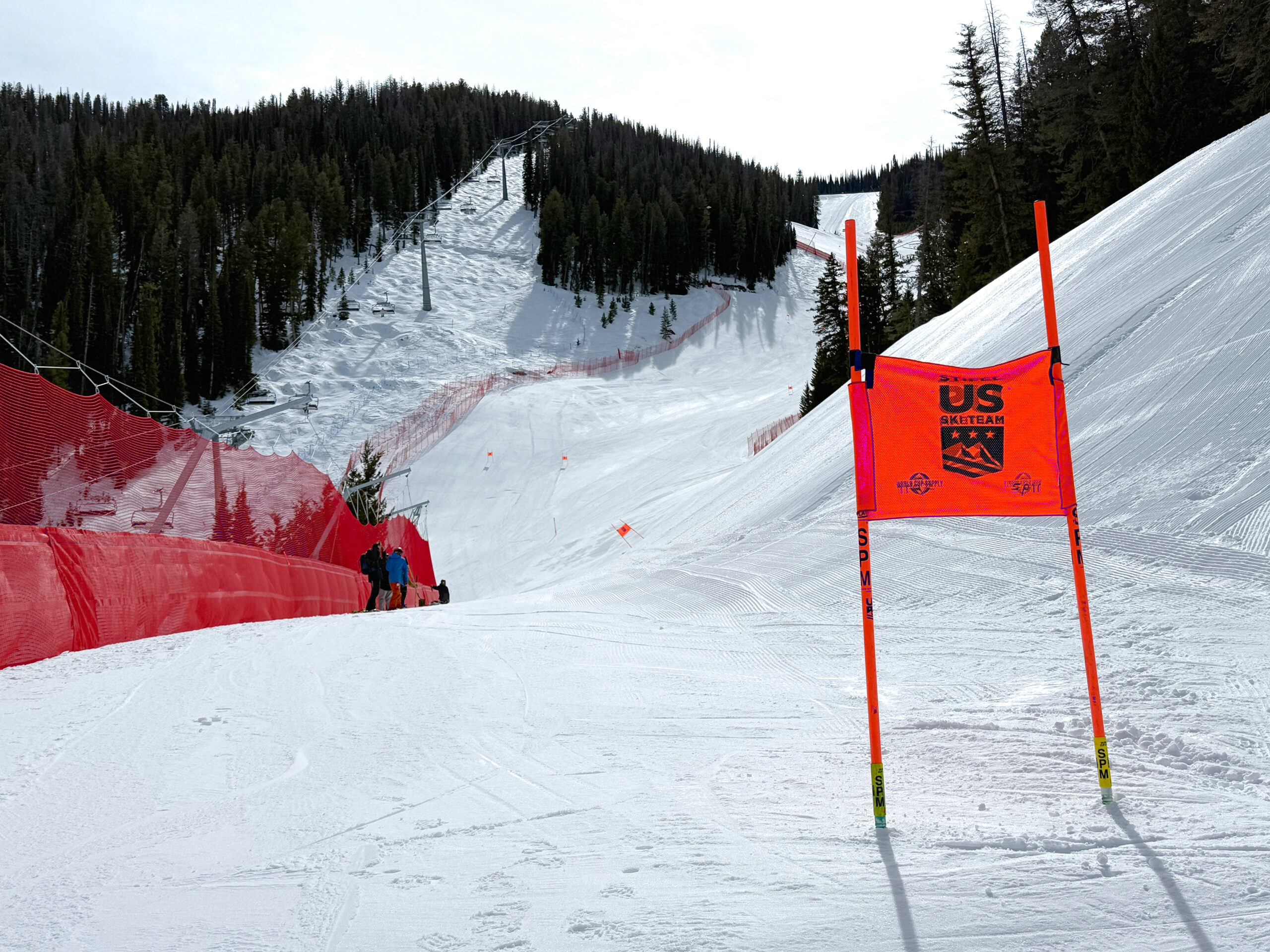
And there will be plenty to learn on the Challenger Downhill. With an average pitch of 36.7 degrees, the track is steeper than any other current World Cup track (the closest being Cortina, with an average of 33.6 degrees). Athletes must carry speed into wide bank turns of “The Legends” and “Carol’s Wagon Wheel” sections of the course. As athletes travel from these steep side hills into the barrel of the canyon, they’ll fight powerful g-forces, wearing down their leg strength. The Sawtooth and Frontier Jumps have gliding approaches into blind landings; from the athlete’s point of view, you may as well be grabbing a tuck to fly into the peaks of the Sawtooth mountains.
Not the Hahnenkamm—Something Else Entirely
With such an intense and mysterious course, rumors floated that the Challenger Downhill would be the “Hahnenkamm of the U.S.” Cowboy, but the Challenger Downhill’s designer disagrees.
“I don’t compare it to anything. Sun Valley is Sun Valley.” Cowboy sports a handlebar mustache and a mid-winter tan. He’s been in Sun Valley for over a month overseeing course preparation.
“I think it’s pretty unique, especially in the gully. The whole track has a lot of steep grades all the way down. We tried to clear these side hills so we could play to that gully shape, and that mitigates the steepness,” Cowboy explained. We asked if his title had anything to do with his course design, which he laughed at. He explained that his nickname, ‘Cowboy,’ originated in college and stuck because he owned a couple of cows back home in Wyoming. He still does.
A Course Designed by a Master of Speed
He comes across as just that: an unassuming, no-nonsense cowboy. But don’t let the humble country persona fool you: Cowboy is a master of speed design, having built numerous legendary downhills from the dirt-up, including the Olympic tracks at Snowbasin (U.S.), Yongpyong (Korea), and Yanqing (China). And when not tending to cows this past summer, Cowboy devoted hours to course design on Google Earth, spent time on the hill, and decided where to build up the dirt and let snowmaking do the rest.
However, as unique as the Challenger Downhill may be, Cowboy still nodded to its predecessor: “This was an old downhill, years and years ago. It’s nice to bring that legacy back and try to re-generate something that was once here.”
A Homecoming for Sun Valley’s Best
That legacy is only more potent for Sun Valley athlete Haley Cutler, who made her World Cup debut just this season. Cutler soared over and around familiar features as she test-drove the new track, experiencing them in an entirely new way.
“It was a full circle moment. I grew up skiing Baldy top to bottom and messing around on all the side hills… and now I’m testing it for a World Cup race! It’s been surreal,” she said. Cutler gave us a tip about the kind of athlete well-suited for this course: “Someone who can stay in the steep fall line but also be technically sound enough to take it deep into each turn is going to thrive on this track.”
Macuga Eyes the Podium and the Future of Women’s Speed
Macuga corroborated Cutler’s comment: “With those big, open turns… you’re going to need to be patient and so clean in those turns. That will carry more speed,” Macuga explained. Besides trying to get on the podium, we were curious what else Macuga was feeling excited about regarding the Challenger Downhill.
“It’s just so much fun to bring ski racing to the States. Women’s speed… It’s definitely not as popular as it used to be. Hopefully, this will start bringing speed back, getting girls more interested, and ultimately getting more speed ladies out there.”
The Future of Speed in the U.S.
Therein lies the true reason to get excited about the Challenger Downhill: not because it’s the next Kitzbühel, or because there will be nail-biting moments on its features, but because it achieves something rare and unique in the U.S. ski racing scene. The Challenger Downhill embodies ski racing past, present and future.
About the Author: Lexi Black