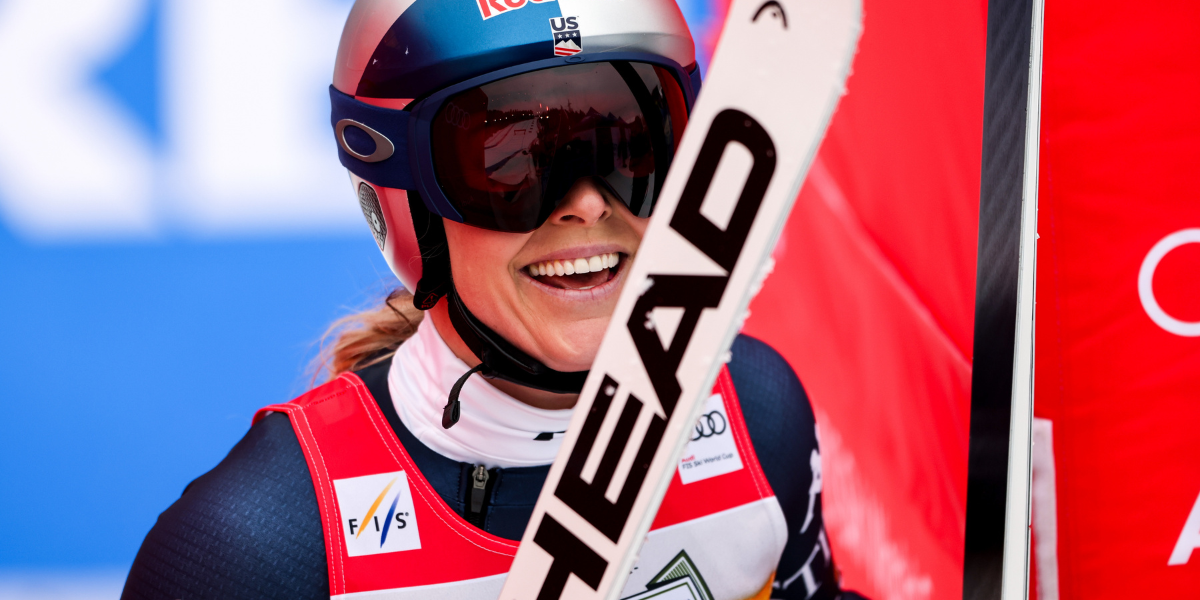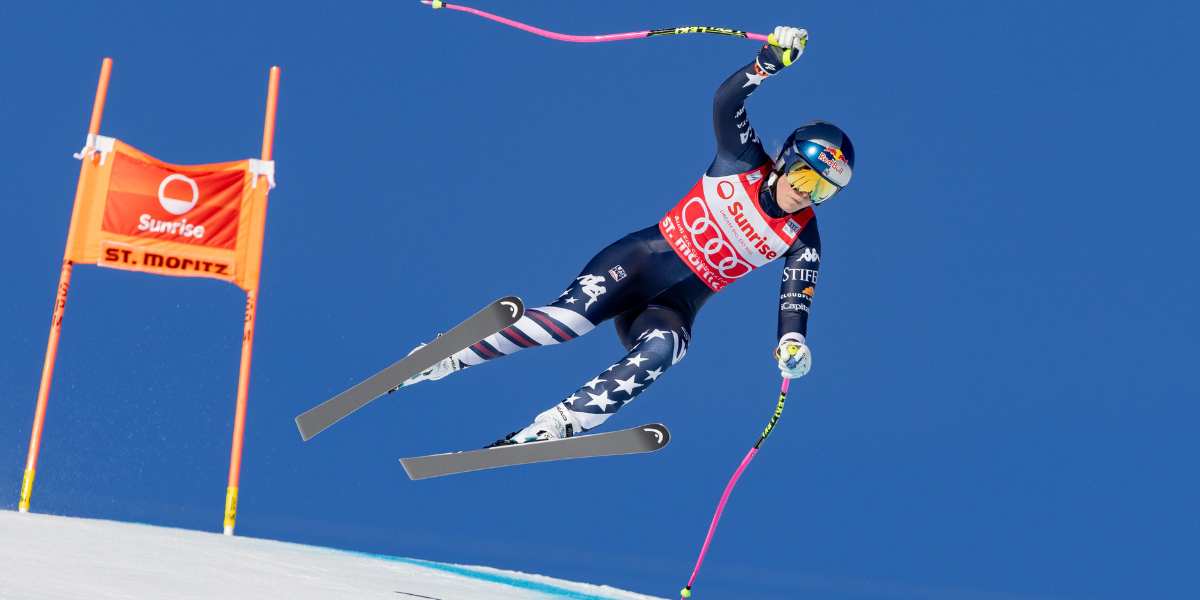
Lindsey Vonn / ST Moritz DH / GEPA pictures
In ski racing, precision, technique, and preparation matter — but they are only the foundation. Winning at the highest levels of our sport requires something more: the courage to take risks. The greatest racers in the world succeed not because they avoid mistakes, but because they accept the possibility of failure in pursuit of something greater.
Risk as a Psychological Skill
Risk isn’t only a physical reality. It’s a psychological skill that demands acceptance, judgment, and commitment. Athletes must learn to navigate uncertainty, embrace discomfort, and make decisions under pressure that push the limits of control.
This is not recklessness. It’s intelligent courage — knowing when and how to push, even when the outcome is uncertain.
Case Studies in Courage
Look at the sport’s best:
- Marco Odermatt skis with near-economic efficiency, but when conditions shift or lines tighten, he doesn’t back off. He charges, trusting instinct over caution. That’s why he’s redefining GS and super-G.
- Mikaela Shiffrin may be known for technical mastery, yet her most dominant runs come when she lets go of “perfect” and commits with controlled aggression — especially through the final turns of a second run.
- Aleksander Aamodt Kilde blends power and fearlessness, attacking the fall line even when it means skiing on the edge of control. He understands that winning requires both physical trust and the willingness to abandon self-protection.
- Petra Vlhova and Clément Noël have openly acknowledged that turning off hesitation is essential. Their best runs aren’t the cleanest — they’re the most assertive.

The Decision-Point: What Winners Do Differently
Every racer confronts a moment — in training or competition — when they must choose between skiing safely or committing to the fastest line.
Winners make that decision with courage, not fear.
They push past their comfort zone, embrace the chance of errors, and accept the possibility of skiing out. That willingness gives them the chance to win.
Why Most Racers Don’t Take Risks
In my work with athletes, I see three common barriers:
- Fear of failure: The urge to play it safe and avoid crashing, disappointing coaches, or missing results.
- Perfectionism: The belief that skiing “clean” is more important than skiing “fast.”
- Comfort-seeking: The tendency to stay in the zone of control rather than in the zone of improvement.
How Racers Build Courage
Courage can be trained. Here’s how:
- Practice risk-taking in training: Create sessions where losing the line or skiing out is acceptable — even encouraged.
- Normalize failure: Treat mistakes as data, not disasters.
- Train decision-making: Use tactical drills that force mid-course judgment under pressure.
- Build trust in skills: Confidence enables courage; athletes must trust their technical base.
- Use mental rehearsal: Visualize skiing at the edge — the speed, pressure, and commitment.
Courage Isn’t Reckless — It’s Strategic
Charging isn’t blindly risking everything. It’s making smart choices under pressure, refining what you believe is possible, and then acting on it.
To win, athletes must loosen their grip on control, trust their preparation, and ski with intensity that feels slightly beyond comfortable.
The difference between winning and being “almost there” often comes down to one thing: the courage to charge.
About the Author: Dr. Jim Taylor