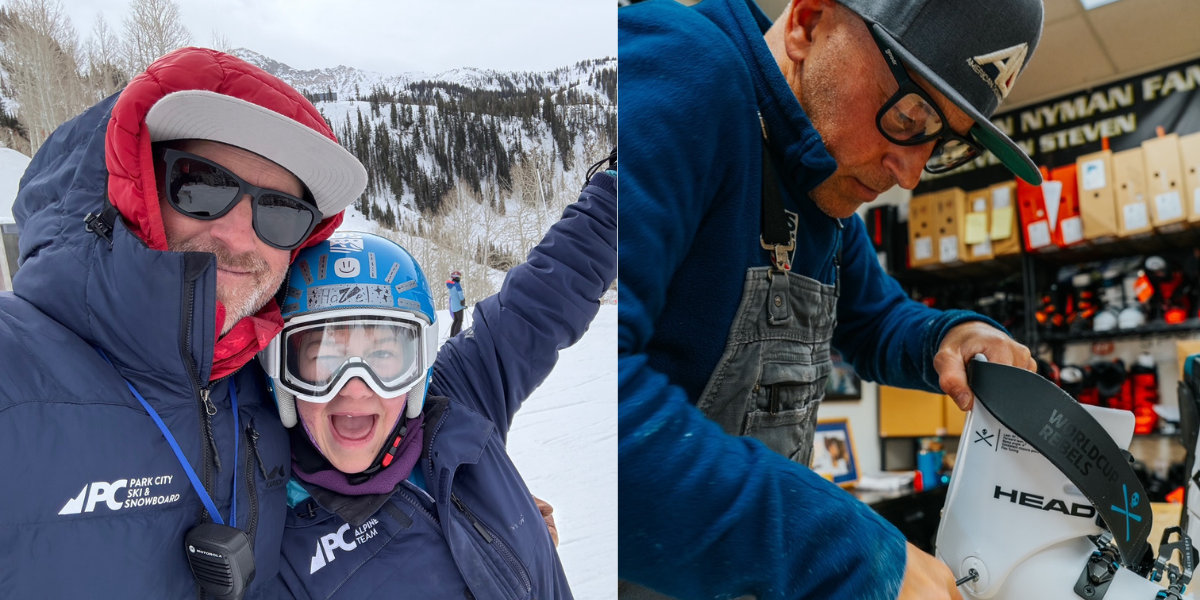
Featured Image: Matt Schiller with his daughter and working in his shop/ Provided by Matt Schiller
Some people in ski racing are known for their results. Others are known for their technical expertise. A select few become trusted voices because they’ve spent decades helping athletes, coaches, and programs solve problems at every level of the sport, on and off the hill.
Matt Schiller is one of those people.
I’ve known Matt since I was 13 years old. Over the years, I’ve watched him wear nearly every hat imaginable in ski racing: Alpine coach, PSIA examiner, US World Cup service technician, Competition Race Director for Nordica and Atomic, boot shop owner, and trusted advisor to athletes ranging from first-year racers to Olympians. No matter the role, one thing has always remained the same: Matt’s ability to see the wholistic connection between athlete movement, equipment, and performance.
For as long as I’ve known him, Matt has been one of those people you seek out when something isn’t working. Maybe a racer can’t find balance at the top of the turn. Maybe a coach can’t understand why an athlete’s movement patterns aren’t translating into speed. Maybe a skier has gone through multiple pairs of boots and countless adjustments and still feels like they’re fighting their equipment. The answer is often the same:
“Go talk to Matt.”
Over the last three decades, Schiller has quietly built a reputation as one of the most respected equipment minds in North American skiing. Not because he’s the loudest voice in the room or because he chases trends. Instead, he’s earned trust by helping athletes understand the relationship between how they move and how their equipment supports those movements. In fact, if you ask him about his career, he’s far more likely to talk about the athletes than himself.
“I’ve always been the guy behind the guys and girls behind the guys and girls,” he told me. It’s a fitting description for someone whose work has influenced countless skiing careers while largely staying out of the spotlight.
A Career Built Through Curiosity
Ask Schiller how he ended up becoming one of skiing’s most respected equipment specialists, and you’ll quickly learn there was never a master plan. Like many lifelong skiers, he started by teaching skiing. Teaching led to coaching, and coaching sparked a fascination with equipment. The deeper he went, the more he realized performance wasn’t simply about what athletes did on snow. It was also about how their equipment supported—or limited—their ability to move.
That curiosity eventually led him into race rooms, product development conversations, and ultimately the World Cup. “That’s just Formula One,” he says of the World Cup environment. There, performance is measured in hundredths of a second, and every detail matters. The experience reinforced something Schiller had already begun to understand through coaching: the biggest breakthroughs often come from the simple small adjustments.
A millimeter here. Maybe a subtle stance change there. Tiny refinements that help an athlete find balance, pressure, or movement more efficiently. But the lesson wasn’t really about equipment. It was about understanding the athlete first.
Building the Equipment Around the Athlete
Throughout our conversation, there was one idea Schiller returned to again and again: “I’m trying to take the boot out of the equation.”
Coming from someone who has spent decades building, modifying, and obsessing over ski equipment, it sounds almost contradictory. In reality, it perfectly captures his philosophy. For Schiller, equipment has never been the star of the show. The athlete is.
Over the years, he’s watched countless skiers chase solutions through equipment alone: a different boot, a stiffer flex, a new alignment system, another adjustment. Too often, he believes, the conversation starts in the wrong place. People look at the equipment before they look at the athlete, in his words, “individual mechanics need to be addressed first.”
Schiller works in the opposite direction. Before discussing boot models, flex numbers, or alignment changes, he wants to understand the person standing in front of him. How do they move? What are they trying to accomplish? Where are they along the development curve? What are their strengths? Where do they struggle? Only then does the equipment conversation begin.
That coaching mindset is what separates him from many traditional boot fitters. He sees movement first and equipment second. And that distinction matters! Equipment should enhance an athlete’s natural abilities, not force them into positions they were never meant to occupy. The goal isn’t to create a certain look or follow the latest trend. It’s to help athletes access the natural movements they already possess and perform them more efficiently.
When equipment is working properly, it disappears. A skier shouldn’t be thinking about their boots halfway through a turn. They should simply be skiing.
Schiller understands better than most how even the smallest equipment changes can influence performance. A subtle adjustment to cuff alignment, a slight modification in boot setup, or selecting the right flex pattern can fundamentally change how an athlete interacts with the snow.
But those technical decisions only matter when they begin with the athlete. The equipment isn’t the starting point. The skier is.
After thousands of athletes and more than three decades in the sport, he’s learned one simple truth: No two skiers are exactly alike. And every solution begins with understanding the individual.

More Than a Boot Shop
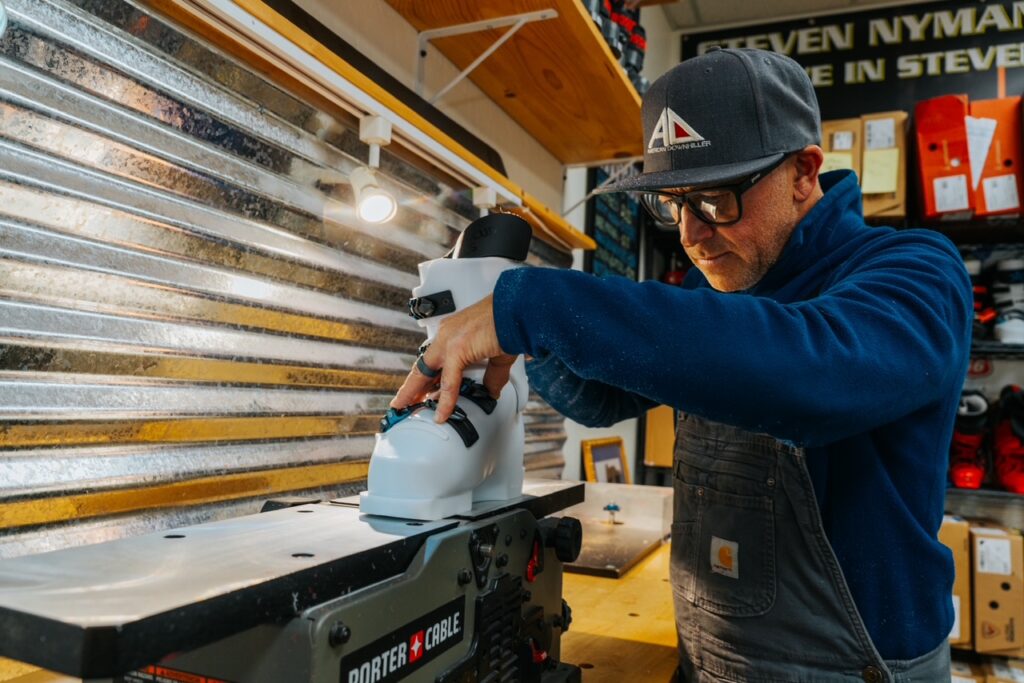
That philosophy is on full display at Park City Boot Room. Located in one of North America’s most influential ski communities, the shop has become a destination for athletes, coaches, instructors, and ski professionals searching for answers.
On any given day, a World Cup athlete might be discussing equipment changes before the season. A junior racer could be preparing for summer camp. A coach may be reviewing movement patterns and searching for insight through video analysis. What brings them all together is trust.
People don’t come to Schiller simply because he can modify a boot. They come because they know they’ll leave with a better understanding of their skiing. The coaching side of Schiller has never disappeared. Every appointment becomes a conversation. Every adjustment comes with an explanation. Rather than simply making changes and sending athletes out the door, he helps them understand what he’s seeing and why those changes matter, as well as what they might feel on snow.
In many ways, the shop reflects everything Schiller has become throughout his career: part workshop, part classroom, and part gathering place for people committed to improving their skiing.
The Part People Don’t See
As our conversation wound down, I asked Schiller what he hoped people would remember about his contribution to the sport. Before answering, he started doing some mental math. His estimate was staggering.
Nearly 9,000 pairs of boots. Thousands of athletes. Thousands of unique challenges. Thousands of opportunities to influence someone’s experience in skiing.
Yet the number itself isn’t what matters most to him. What matters is how the work was approached. Whether he was working with a World Cup athlete chasing podiums or a young racer preparing for their first season, every boot received the same level of care and attention. Every detail mattered.
It was never about who the athlete was. It was about doing the job the right way. That mindset reveals something important about Schiller. While his résumé includes coaching, World Cup service, equipment development, and decades of boot fitting experience, he has never measured success through titles or recognition. Instead, he talks about the athletes he has helped, the coaches he has worked alongside, and the relationships that have developed over decades in the sport. Many of the young racers who once sat in his shop now return as collegiate athletes, coaches, and even parents of racers themselves.
The boots may have been the vehicle. The people were always the purpose.
Why His Voice Matters
Ski racing has never lacked information. Today, athletes, coaches, and parents have access to endless equipment reviews, social media advice, podcasts, videos, and opinions.
What is often harder to find is perspective.
That’s what makes Matt Schiller’s voice so valuable. His insights aren’t built on a single season, athlete, or trend. They’re built on more than three decades spent coaching athletes, teaching instructors, working with manufacturers, servicing equipment at the World Cup level, and helping racers of every age and ability understand how equipment influences performance.
What stands out most is that despite all that experience, he remains deeply curious. He still approaches challenges the same way he always has: How can we help this athlete move better?
It’s a simple question, but one that has guided nearly everything he’s done throughout his career. That philosophy is one of the reasons I wanted Matt to become part of Ski Racing Media. Over the years, I’ve watched him work with athletes at every level of the sport, and what has always stood out is his ability to translate complex equipment concepts into conversations people can actually understand. He bridges the gap between coaching, movement, equipment, and performance in a way that resonates with athletes, coaches, parents, and industry professionals alike.
As Ski Racing Media continues to serve the ski racing community around the world, I can’t think of many people better suited to help readers better understand the role equipment plays in performance. Not because he claims to have all the answers. But because he has spent a lifetime asking the right questions.
And after more than thirty years in the sport, he’s still searching for ways to help athletes ski better.
Look for Matt Schiller’s upcoming contributions to Ski Racing Media, where he’ll share insights drawn from more than three decades of experience in coaching, equipment development, boot fitting, and World Cup racing. We’re excited to welcome his expertise and perspective to the Ski Racing Media community.
About the Author: Katie Twible