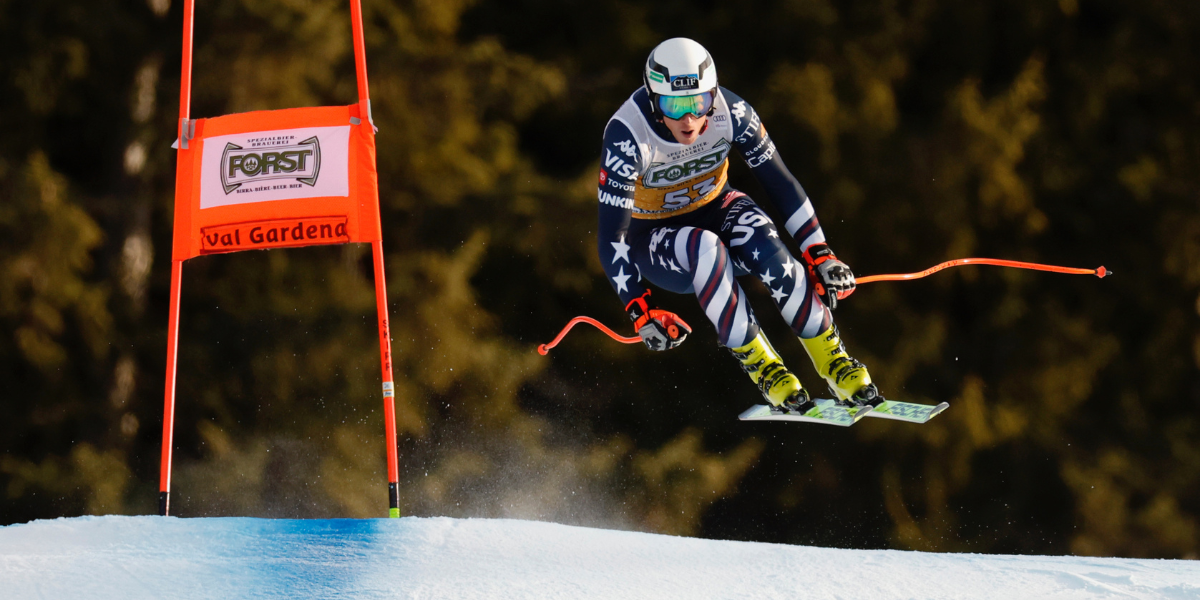
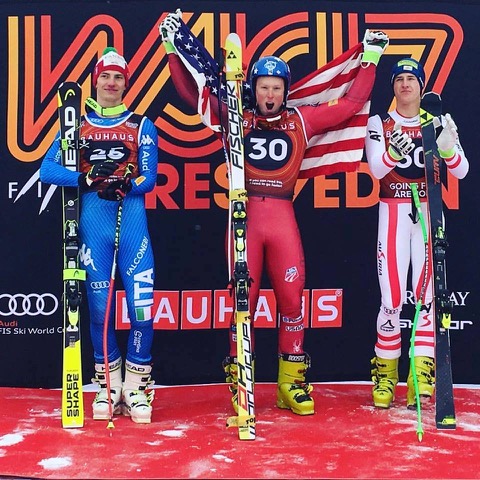
Sam Morse Val Gardena/Image provided by Earle and Pam Morse
Written by Samantha Calamari
If you trace the careers of Carrabassett Valley Academy alpine athletes far enough back, you end up on the same trail: Narrow Gauge at Sugarloaf, where Olympic-level habits are built one run at a time. It’s where athletes spend countless mornings clicking into their skis, inspecting the course, and repeating the work that makes the difference years later.
Ski Narrow Gauge and the truth is clear. It is steep, aptly named, and always demands that a racer be at the top of their game. Downhill racers can reach speeds between 70 and 80 miles per hour on Gauge, forcing athletes to balance gravity and resistance to achieve maximum hill velocity.
Chip Cochrane, accomplished downhill skier and longtime CVA coach to alumni Bode Miller ’96 and Sam Morse ’13, said of Narrow Gauge, “You learn to hit the brakes, or you learn to send it.” On this trail at Sugarloaf, CVA athletes learn to send it.
That mindset took hold early for Sam Morse and became central to the foundation that led him to qualify for the 2026 Milano Cortina Olympic Games. There, a global audience will finally see what Sugarloaf and CVA have long known. A Carrabassett Valley kid and true local, Sam has carried a love for alpine racing, supported every step of the way by family and community, all the way to the Olympic stage.
A Sugarloafer Since 1998
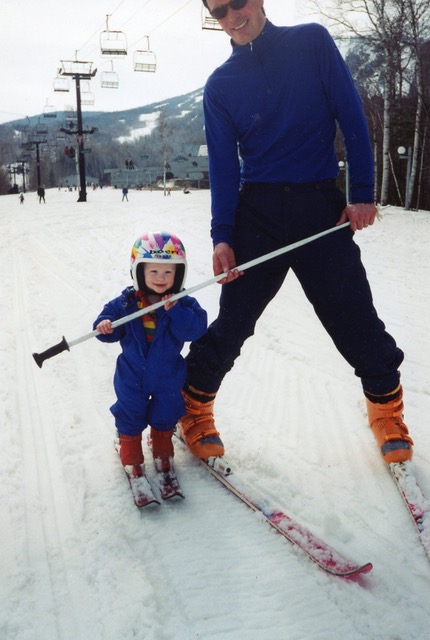
Sugarloafers are built differently, a lesson Sam began learning the first time he skied there at just 23 months old. A kid who approached everything with enthusiasm, he took to the sport immediately and embraced growing up with Sugarloaf as his backyard playground.
When he was old enough, he began honing his racing technique through the CVA Weekend Program. Every coach who worked with him had the same message: Sam had an unrivaled work ethic and an unshakable focus. He was ready for more, and CVA admitted him a year early, joking that he had fast-forwarded through middle school to chase his skiing dreams.
Sam’s first ski Day, Sugarloaf 1996- Image provided by Earle and Pam Morse
Beginnings of an Olympic Dream
In 2002, Sam was too young to make a family trip to the Salt Lake City Winter Olympic Games, but he grew up on the story. His father, Earle Morse, and older brother Ben Morse packed into a minivan and drove across the country to see the Winter Games in person. From the stands, they watched Bode Miller race to two silver medals in giant slalom and combined, the only medals earned by the U.S. alpine team that year.
Amid the post-race chaos, one of those medals found its way into the hands of former CVA Head of School John Ritzo for safekeeping. For a brief moment, John slipped the medal over Ben’s neck for a photo. That photo now sits on the Morse family mantel. For Sam, it was never just a picture. It was a tangible reminder that the Olympics were not distant or abstract. They were close enough to touch and felt within reach for a kid growing up on the Maine slopes.
Learning to Send It
Ask Sam’s mom, Pam Morse, what set CVA apart, and she points to the independence it required of its students. It gave them, she says, “an opportunity to take ownership and responsibility for their lives.” With an average class size of seven, there was little room to blend into the background. Students were expected to be self-motivated in the classroom while pursuing demanding athletic goals on the hill.
Sam embraced that environment. Despite being a year younger than many of his classmates, he graduated as CVA’s valedictorian in 2013.
In 2015, Morse began attending Dartmouth College while continuing to pursue alpine racing at the highest level. Two years later, he became the Junior World Downhill Champion, a result that reflected the same discipline he had practiced daily as a student-athlete at CVA.
Over more than a decade with the U.S. Ski Team, he established himself as a specialist in the speed events of downhill and Super-G, earning a reputation as one of the country’s most consistent speed skiers. Along the way, he recorded multiple top-ten and top-twenty finishes on the FIS World Cup circuit and delivered strong performances at U.S. National Championships.
Those closest to Sam say ski racing has never been the only measure of who he is. He speaks often about his gratitude for the family, coaches, and community who supported him along the way, and about the role his faith plays in keeping him grounded. Who he is away from the mountain has shaped him as much as the training he does on it.
A Lineage of Olympic Speed
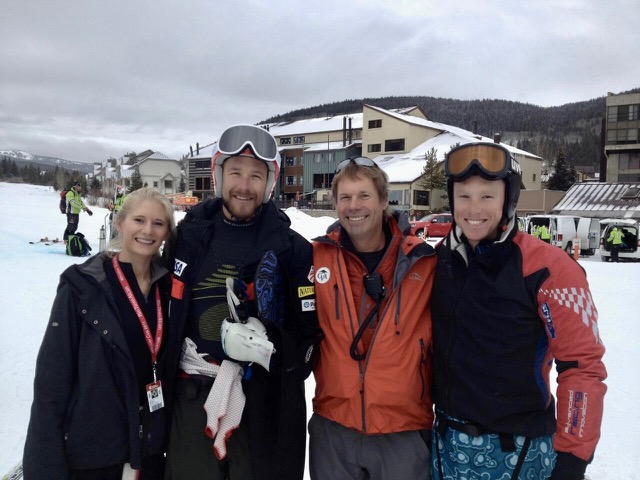
Morse’s Olympic debut adds another chapter to CVA’s established presence in U.S. alpine skiing. The academy has produced multiple Olympic alpine racers whose careers reflect the same technical foundation developed on Sugarloaf’s demanding terrain.
Kirsten Clark Rickenbach ’95 represented the United States at three Winter Olympic Games in 1998, 2002, and 2006. A multiple-time U.S. National Champion, she earned World Cup podiums and a silver medal in Super-G at the 2003 Alpine World Championships.
Bode Miller ’96 stands as one of the most accomplished alpine ski racers in American history. A five-time Olympian and six-time Olympic medalist, Miller recorded World Cup victories in all five alpine disciplines and won Olympic gold in the alpine combined at the 2010 Winter Games.
Together with Morse, these athletes illustrate a clear developmental path rooted in technical mastery, adaptability, and early exposure to terrain that demands precision and accountability.

Milano-Cortina 2026 Olympic Games: Don’t Miss the Action
Fans of alpine racing can get ready to rise early to catch the world’s best on the slopes. The 2026 Winter Olympics run from February 6–22, with coverage on NBC and streaming on Peacock.
Alpine events begin February 7, and talent will be on full display across all disciplines. To follow Sam “The Moose” Morse at the games, note the tentative schedule:
- February 7: Men’s Downhill, Stelvio Ski Centre, 11:30 CET / 5:30 EST
- February 11: Men’s Super-G, Stelvio Ski Centre, 11:30 CET / 5:30 EST
Sam is also a candidate for the Men’s Team Combined, depending on his Downhill results:
- February 9: Men’s Team Combined Downhill, Stelvio Ski Centre, 10:30 CET / 4:30 EST
From Narrow Gauge to the Olympic slopes, the lessons Sam learned early in his career have prepared him for this stage, where skill, focus, and grit are tested at the highest level.
From the Meadows, the Headwall, to the Miles Mile
When you race on Narrow Gauge, the tracks of the racers who came before seem to come alive in the snow. Momentum builds through the Meadows and carries into the critical turns below. The right-footer Headwall must be nailed to link cleanly into the left-footer Miles Mile. Choose the right line and build the speed needed to find the fractions of a second that decide a race.
Narrow Gauge holds a unique place in American ski racing history as the only East Coast course to host a World Cup downhill. The opportunity to train here has long given athletes the tools to carry their ambitions far beyond Sugarloaf.
For Sam Morse, those lessons were learned early and repeated often. While his results speak loudly in the alpine world, those who know him best point to something more lasting. As his mom, Pam Morse, put it, “His work ethic and his grit will outlast everybody.”
On Narrow Gauge, that may be the most important skill of all—the kind that carries athletes from this trail to the Olympic stage.
About the Author: SR Staff Report