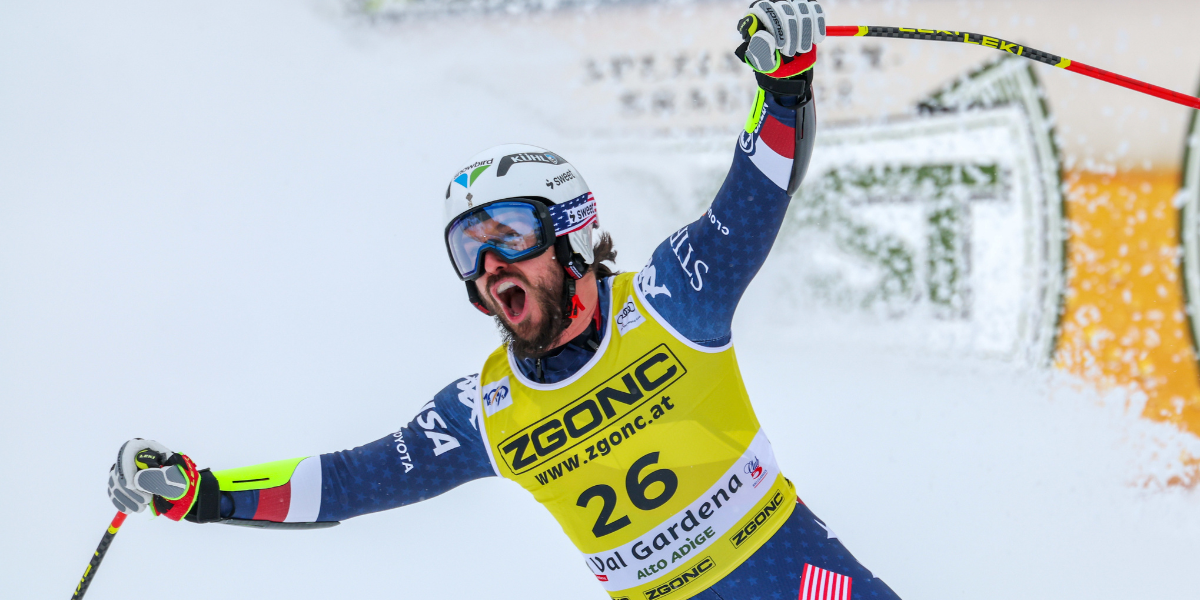
Sam Morse Kitzbühel GEPA pictures/ Mathias Mandl
World Cup speed skier and serviceman, Sam Morse here, reporting on my experiences on which part of the race is most crucial for your wax call!
Last year, I wrote a post on which part of the race to prepare your edges for, and now I want to share my thoughts on which part to wax for. Weather reports can often be overwhelming when you are trying to choose what to wax—factors such as altitude and time can give you very different weather predictions.
The abrasive surface of manufactured snow generally causes the overlays to wear off the bases relatively quickly. It is generally accepted that your overlays are diminished after at the top. Hence, it makes sense for your overlay wax call to match the temps and humidity of the start. What you hot wax, though, can last much longer and allows you to choose which part of the course you want to wax for.

Waxing for the Kitzbühel Streif
This week, we are racing in Kitzbühel at the famous Hahnenkamm-Rennen, which descends through three distinctive altitudes with different temperatures and snow surfaces. The course begins with an incredibly steep, cold, icy, and technical section in which wax will make little difference. Then you drop onto this pancake-flat road for thirty seconds, which can make or break your race if you miss the wax. Because it’s flat, this road, which lacks water injection, is difficult to slip and is frequently covered with soft, loose snow. The course’s final section descends quite a bit of vertical distance, and you end up skiing spring-like conditions at the bottom, but once again, it’s so steep and fast that wax has less effect.
It’s pretty clear here that the road section in the middle is the course section you want to wax for. In looking at your weather report, you can then target the mid-elevation temps and snow type while still considering that you need a durable enough wax to last through the top icy sections. My choice for this weekend is a one-to-one mix of Toko HP Blue and Red Hot Waxes.

How to choose the section to wax for
When choosing which part of the race to wax for, start by looking at the terrain and where the flattest and slowest part of the course is where your wax will be most effective. Next, consider what different temperature windows you must ski through to get to this flatter section. You don’t want to wax too warm for a flat, slushy bottom of the course if you must ski through a shaded cold snow upper section where you would be snowshoeing!
Final consideration
The last thing to consider is timing. The daytime air temperature changes frequently, but the snow temperature change lags behind the air temperatures, as the water in the snow acts as a cold sink, delaying the warming. For old snow, look several hours before the race starts to predict the temperature change in the snow. New snow has less water and more air content and will change temperature quickly. See you on the slopes! ~Moose
About the Author: Sam Morse