
Annika Hunt
Part of theTOKO Wax Room series
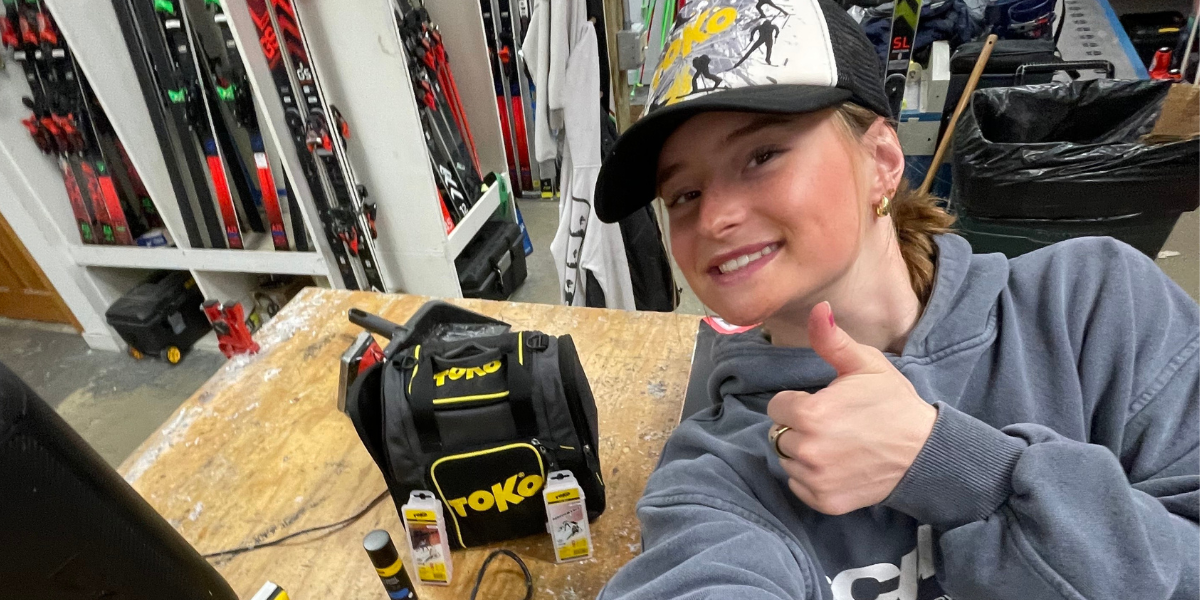
My name is Annika Hunt, a Toko athlete, and I want to share a few tips and tricks on how to properly maintain and care for your speed skis so they can help you get down the mountain as fast as possible—for as long as possible.
Just like you approach a super-G course differently than a slalom course, tuning and maintaining speed skis is a completely different game than tech skis. The biggest difference is lifespan. You want your SG and downhill skis to last multiple seasons. When they are properly cared for, speed skis actually get faster with age.
Here’s how I maintain and protect my speed skis so they stay fast year after year.
Waxing Is Everything for Speed Skis
When it comes to speed skis, waxing becomes your new love language—and I’m not just talking about waxing before training.
Wax cycling is one of the best ways to hydrate your bases, prepare them for varying snow temperatures, and ultimately make your skis faster over time. Waxing, scraping, and rewaxing—over and over again—is my number -one tip for maintaining speed skis.
One important thing to remember: Your skis need time on snow during the wax-cycling process. If you continuously wax your bases without skiing on them, the cycles won’t have the same effect. If you don’t train for speed often, take your skis out for a freeski day every few cycles to activate the work you’ve done.
When wax cycling, I love using TOKO Cleaning Hot Wax with the TOKO Wax Machine Roller. I prefer the wax machine over a traditional iron because it minimizes the risk of burning my bases. It’s also much more efficient, which makes a big difference when you’re cycling wax multiple times.
Hot Waxing Wwith an Iron: Protect Your Bases
If you don’t have the TOKO Wax Machine Roller, no worries—the TOKO T18 Digital Racing Iron does a fantastic job melting wax quickly and evenly.
When dripping wax onto your bases, it’s extremely important to apply enough wax before ironing. You want most of the base covered with dripped wax so the iron never touches a dry area. Burning a speed ski is far more costly than burning a tech ski.
A burnt base will slow your ski down significantly, and in speed events, that difference matters. Even worse, if you’re forced to regrind your speed skis, you lose most of the benefit from wax cycling. Grinds vary, and if your skis are fast with their current structure, a new grind may not deliver the same performance.
Hot Scraping: Clean Before You Wax
My final waxing tip is to occasionally hot scrape—especially after skiing on dirty or salty snow.
Hot scraping is a great way to clean out the pores of your ski base before applying a fresh wax layer. To hot scrape, apply wax as usual and scrape it off immediately while it’s still warm. If your bases are dirty, you’ll see the grime come out in the wax.
This step is especially important after training on injected or salted surfaces, where contamination can build up quickly.
Edge Tuning: Less Is More
Compared to slalom or giant slalom skis, tuning speed skis is actually pretty simple.
The key is to avoid filing whenever possible. Speed skis don’t need to be nearly as sharp as tech skis. The goal is refinement, not aggression. Filing removes edge material, and you want to preserve as much edge as possible so your skis last.
I rely almost exclusively on fine diamond stones—especially the TOKO Extra Fine 1000 World Cup Diamond File—to create clean, smooth edges. To finish the job and eliminate any hangers, I always use the TOKO Ceramic World Cup Edge Tuner. This step is crucial for keeping your skis fast and predictable.
Protecting Speed Skis on Snow
Even outside the tuning room, speed skis need special treatment.
When training, I always take my first warm-up run on GS skis to scout for rocks, icy chunks, or debris that could damage my speed skis. It also gives me a chance to confirm snow temperature and whether my wax choice was right.
I always carry TOKO Liquid Paraffins in case conditions change. If the snow turns out colder than expected, a quick spray of cold liquid wax can make a noticeable difference.
Finally, avoid taking too many runs on your speed skis. Two to three runs per pair is plenty. Beyond that, you risk overheating and burning the bases.
Final Thoughts
Maintaining speed skis requires more attention, but the payoff is worth it. The more love you give your skis, the more they’ll give back to you on race day.
Thanks for reading, and happy waxing.
About the Author: Annika Hunt