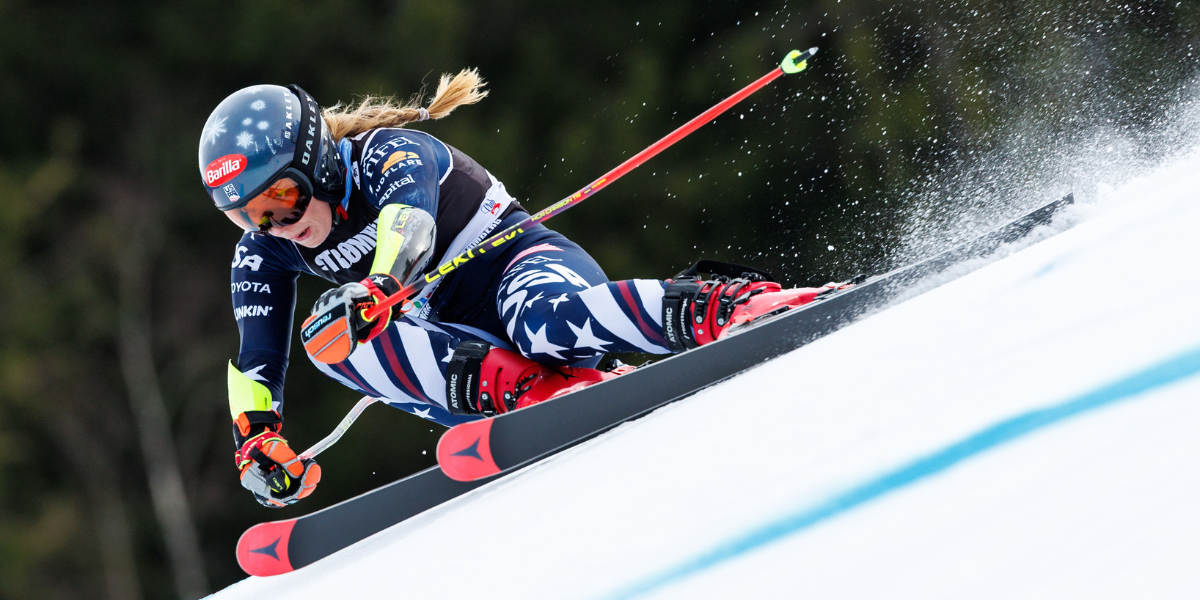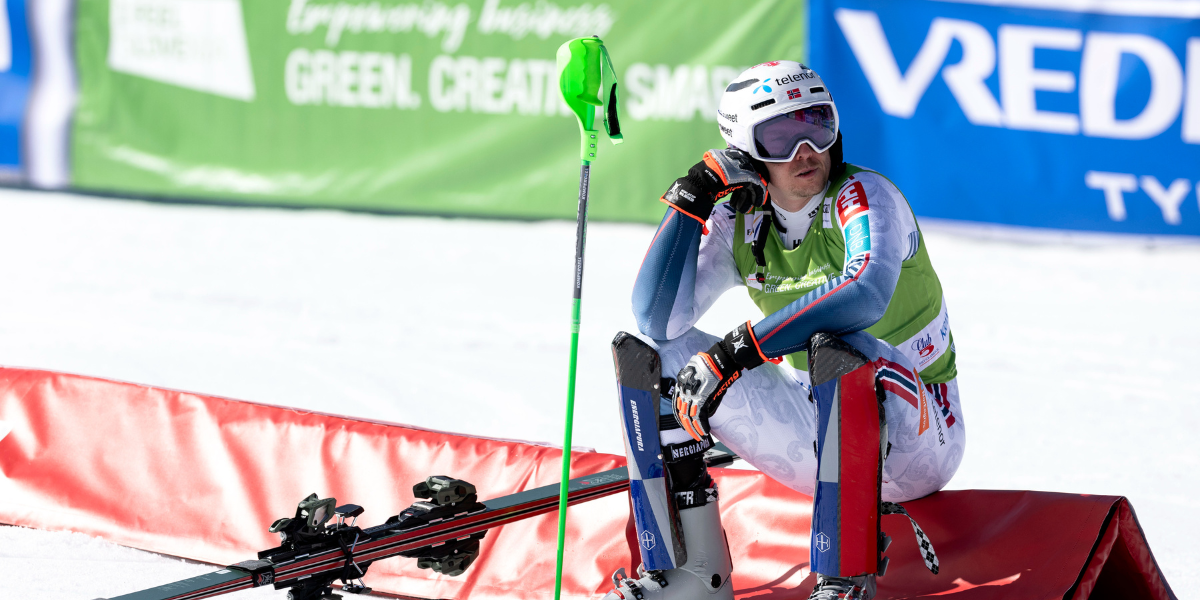
Uncooperative weather has been an unfortunate pattern, but after two days of canceled training runs, American and Austrian downhillers are eager to kick off the season at the Matterhorn Cervino Speed Opening.
Snowfall accumulation, limited visibility and winds have prevented multiple reconnaissances among racers of the new Zermatt-Cervinia, Switzerland to Italy, Gran Becca race course. Teams officially tested the high-altitude glacial piste only once on a beautiful bluebird Wednesday in the shadow of the Matterhorn. Athletes are savoring the experience, trying to gauge and garner as much as possible from their lone experience on the course.
Racers and organizers are cautiously optimistic that manageable winds will allow the scheduled races on Saturday and Sunday despite the expected weather conditions. However, a change to the lower reserve start at 3,485 meters appears likely.
“I haven’t tried to digest too much of the forecast, but in reality, I think the elements will play a bigger factor than we’re necessarily used to seeing,” said Stifel U.S. Alpine Team skier Ryan Cochran-Siegle. “You’ll definitely want some luck on your side.”
“They’ve made the right calls these past two days, but we’re fired up and antsy to kick out of the start,” said the veteran native Vermont racer.
“Unpredictable weather here, Saturday it will be windy,” said FIS Chief Race Director Markus Waldner after Friday’s canceled training run.
“The race directors have done as much as possible to make everything fair, and the canceled training runs can actually make for a very interesting race,” said U.S. racer Sam Morse.
“Tomorrow, the weather looks moderately clear in the morning – the major concern is wind. We’re excited and hopeful.”
Finding Speed on the Gran Becca
The visually stunning new track captivates top racers, who convey that it isn’t overly difficult, with pivotal elements including long sweeping turns and gliding sections. Their assessment comes from the lone training run, launched from the Gobba Di Rollin, start at 3,720m, the highest of any World Cup downhill.
“It has most of the elements of a classic downhill – gliding, jumping and you need to have a soft touch on the ski,” said Morse, who was unofficially seventh in Wednesday’s training, albeit with a missed gate. “It’s not like a super technical, turny course by any means. There is one technical section down the pitch that’s pretty important, and the rest is hammer away.”
“There are pretty much two turns that will determine the race,” said veteran U.S. downhiller Bryce Bennett. “It’s a good first downhill, but I wouldn’t call it the essence of downhill. And you’ll need a blast from the wind gods if we do race.
“There are some skills that come into play that we don’t see at other places anymore – like straight-up gliding and a lot of it, so that’s a cool element.
“You’ll need to ski aggressively onto and through the pitch – there are four turns on the pitch. One right-foot double at the bottom of the pitch determines your speed for the entire course. Carrying speed through that turn onto the flats, and then there’s one last fallaway left-footer towards in the last 30 seconds – if you maintain all your speed from the pitch through the finish, you can have a good day.”
Austrian Vincent Kriechmayr – who won four of ten downhills last season, finishing runner-up in the season standings to Norwegian Aleksander Aamodt Kilde – emphasized the significance of the same turn.
“The most difficult part comes after the flat where there is one section that is crucial to get right, to remain fast; otherwise, all of your speed is gone,” Kriechmayr said. “It’s is not the most difficult downhill, to be honest. But it has the potential to be a very cool race with an amazing panorama.”
The U.S. downhillers expressed that they still feel prepared and are staying positive and focusing on controlling what they can despite considerable downtime at their Zermatt hotel during the week.
“We all tried to take the first training seriously, knowing that the weather forecast would be variable,” said Cochran-Siegle. “We’ll see what the weekend gives us, but we all understand what we must do to be fast – the skiing and the movements you need to make to maintain your speed.”
Morse said that racing on the Gran Becca is wide open, considering the great unknown and lack of training runs.
“I really believe it is going to be an exciting race – the classic tracks that the veterans have run a lot of times, they really have dialed in. The fact that we only had one training run is going to create opportunity for some guys deeper in the field throwing it in there,” said the native Maine racer.
Navigating the Zermatt-Cervinia Venue
Logistics are tricky at the unfamiliar, dual-country venue, where the journey from Zermatt to the top of the ‘Gran Becca’ course takes almost an hour and a half.
“It’s like Wengen on steroids – it’s tough,” Bennett said. “It’s such a beautiful place – the weather was amazing when we were here in September. When it’s good, it’s good.”
Austrian Daniel Hemetsberger added a touch of humor, exaggerating slightly.
“There are a lot of logistics to deal with and It’s a long trip to get up from Zermatt. It seemed like forever, like half of an eternity,” he said.
Anyone’s guess is whether or not the new ‘Gran Becca’ race course and timing of the early season addition to the World Cup calendar becomes sustainable.
“It’s tough for all the teams – for the past 20 years, we have known that glacier skiing in November is variable,” Bennett says. “I think that’s why many teams probably pushed for coming to North America, where there is more consistent snow, weather and training.”
About the Author: Brian Pinelli