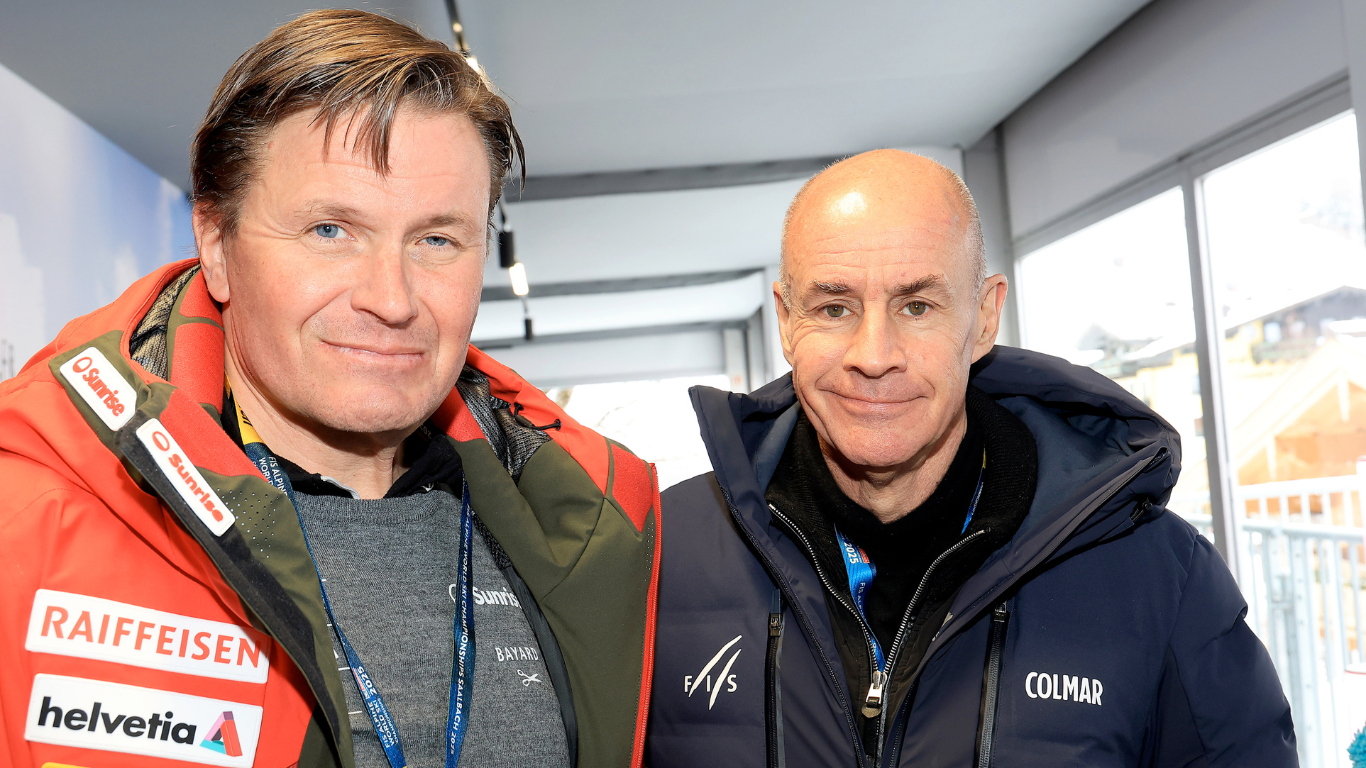
Urs Lehmann and Johan Eliasch GEPA pictures
Urs Lehmann to Become First CEO of FIS, Step Down as Swiss-Ski President
Even before the first race of the 2025–26 Olympic season, Alpine skiing faces a major leadership change. Urs Lehmann, co-president of the Swiss Ski Federation, will leave his post at the end of September to become the first chief executive officer of the International Ski and Snowboard Federation (FIS).
The 56-year-old Swiss official will take on the newly created role during the FIS Technical Committee Autumn Meetings, scheduled for Sept. 23–27. His move ends 17 years as Swiss-Ski president and 19 years on its executive board. The announcements came Friday in statements from FIS and Swiss-Ski.
“I’m really looking forward to this new challenge,” Lehmann said in the Swiss-Ski press release. “After the very positive development of our collaboration with FIS President Johan Eliasch over the past few months, we now want to lead FIS into the future with our combined strengths – together with Secretary General Michel Vion, the entire FIS team, and the member federations. I want to be a bridge builder.”
FIS President Johan Eliasch called the appointment a critical step forward. “Strengthening our leadership with Urs is an important step to ensure we are best positioned to meet the major challenges of the coming years,” he said.
From Rival to Partner
Lehmann and Eliasch have not always agreed. The two clashed publicly in the past, most notably over FIS’s plans for centralized marketing. While both supported the concept in principle, Lehmann criticized aspects of its implementation and communication. In recent months, they have eased tensions and emphasized a shared vision for the sport’s growth.
Their history dates back to the 2021 FIS presidential election, when Lehmann challenged Eliasch for the top job after the retirement of longtime leader Gian Franco Kasper. Eliasch won in the first round of voting.
Strong Relationships and Challenges Ahead
FIS and several national federations, including Austria’s, have experienced strained relations in recent years. Lehmann maintains strong personal ties with Austrian officials. Austrian Ski Federation Secretary General Christian Scherer welcomed the news cautiously, noting the CEO role does not appear in the FIS statutes and will need clarification by the executive board. He said the federation will watch closely to see if the leadership change boosts revenue and strengthens organization.

Transforming Swiss-Ski
Lehmann, a doctor of economics, joined the Swiss-Ski executive board in 2006 and succeeded Duri Bezzola as president two years later. He transformed the federation into a dominant force in Alpine skiing, winning five of the last six Nations Cup titles.
“Urs Lehmann’s vision of making Switzerland the number one skiing nation again has become reality,” said Swiss-Ski co-president Peter Barandun. “The Swiss-Ski family is extraordinarily grateful to Urs for everything he has done for Swiss snow sports. We are already looking forward to working together in the new constellation.”
During a transition period, Lehmann will share the presidency with Barandun until the next Swiss-Ski executive committee meeting in mid-September. The federation will review its leadership model in the coming months.
Stepping Away from Other Roles
Lehmann will also step down as president of the Crans-Montana 2027 Alpine World Ski Championships organizing committee and as co-president of the Swiss 2038 Olympic and Paralympic Winter Games Association.
“As much as I am looking forward to this new challenge, I am leaving Swiss-Ski with a heavy heart,” Lehmann said. “My decision was made easier by my deep conviction that Swiss-Ski is perhaps better positioned than ever before. I very much look forward to actively shaping the future of snow sports, a matter close to my heart, in the coming years.”

From Champion Racer to Global Leader
Before moving into sports administration, Lehmann raced on the Alpine Ski World Cup in the 1990s. According to FIS-ski.com, he earned five career top-10 finishes — four in downhill and one in super-G — and reached the pinnacle of his racing career in 1993, winning the downhill world championship in Morioka Shizukuishi, Japan. He retired from competition in 1997.
Lehmann also served on the FIS Council from 2021 to 2024. In business, he led pharmaceutical company Similasan as CEO from 2009 to 2024 before becoming chairman of its board. His combined athletic, administrative, and corporate experience now positions him to guide skiing’s world governing body into a new era.
Source: FIS-ski.com and Swiss-Ski press release
About the Author: Peter Lange