The realities of retiring from ski racing
A few years ago, I asked Daron Rahlves if he had retired too early. Nope, he said. “I wanted to do it on top, and I did,” said Rahlves, whose eyes still had the intensity of an untamed champion. “I wanted to get out healthy.”
It was tough for many friends and fans to fathom why he left the sport after a banner season. He was on fire in 2006, winning the Beaver Creek, Bormio, and Wengen downhills to finish the season third in the World Cup downhill standings.
Rahlves kept his competitive drive revved through not only ski cross — taking gold at the X Games and going to the Vancouver 2010 Olympic Winter Games — but also participating in the Rahlves Banzai Tour he founded. Rahlves also happens to rips the gnarliest lines for Teton Gravity Research Films. His decision to retire deserves respect and appreciation.
Earlier this year, I found myself carrying gates in Colorado, where I ran into one of the Italian technical coaches. “You quit?” he said, doing a double take upon seeing me in a different role. “Oh man, you had at least another three years in you.”
It was nice to hear, but the fact is, the outside world gets only a glimpse of the inner life of a professional athlete. There are certainly amazing highs, but there are a lot of arduous tasks for aging racers, especially those of us on the cusp — searching for training, pleading with national governing bodies for World Cup starts, and trying to raise enough funds to keep going.
The peanut gallery doesn’t always see this, instead passing judgment on our decisions. We should have retired years ago, they say, or we should have stuck around longer.
But if someone stays in the game past their prime and just wants to keep racing for the fun of it, we should praise their passion for sport. Sometimes I think masters love ski racing more than anyone else.
On the flip side, deciding to hang up your race skis is the easy part. It’s what comes next that’s tough. How quickly you go from being relevant to, let’s just say, less relevant. Going from training, traveling, and hanging out with World Cup superstars to — in my case — carrying gates takes a toll on the ego. But it’s a humbling, new and different challenge that makes me try to help racers not make the mistakes I did.
Recently, I was setting a course at Steinach Glacier and someone was screwing in gates above me. It was a lovely morning, but I assumed my athlete would be doing that. This guy was much bigger, and older. (And, yes, since we don’t train alone very often, I didn’t make the investment in brush gates.) It was none other than former slalom world champion Manfred Pranger.
I knew we were going to train with one of his athletes the following day, but I had no idea that Pranger, who retired last season and is currently coaching part-time, was going to be such an awesome, generous guy. On a lift ride later that day, I asked him about his retirement. “It’s really hard; it’s different,” said Pranger. “And this year a 20th place will get you a spot to race World Championships.” He added that a few years ago, you needed multiple top-fives to qualify for Austria, but right now their slalom team just isn’t as deep as it was during his heyday.
Many retired racers wind up coaching in our sport because we love it, it’s a smooth transition, and it’s what we know best. Outside of ski racing, it’s a rougher transition. Sports Illustrated explains that 78 percent of NFL players have gone bankrupt or are under financial stress within two years of retirement. Within five years of retirement, some 60 percent of former NBA players are broke. Skiing’s average career length is a lot longer than the 3.3 years for an NFL player and closer to the 4.8 years of an NBA player. Only a few ski racers make big money, so almost all of us need to start a new career.
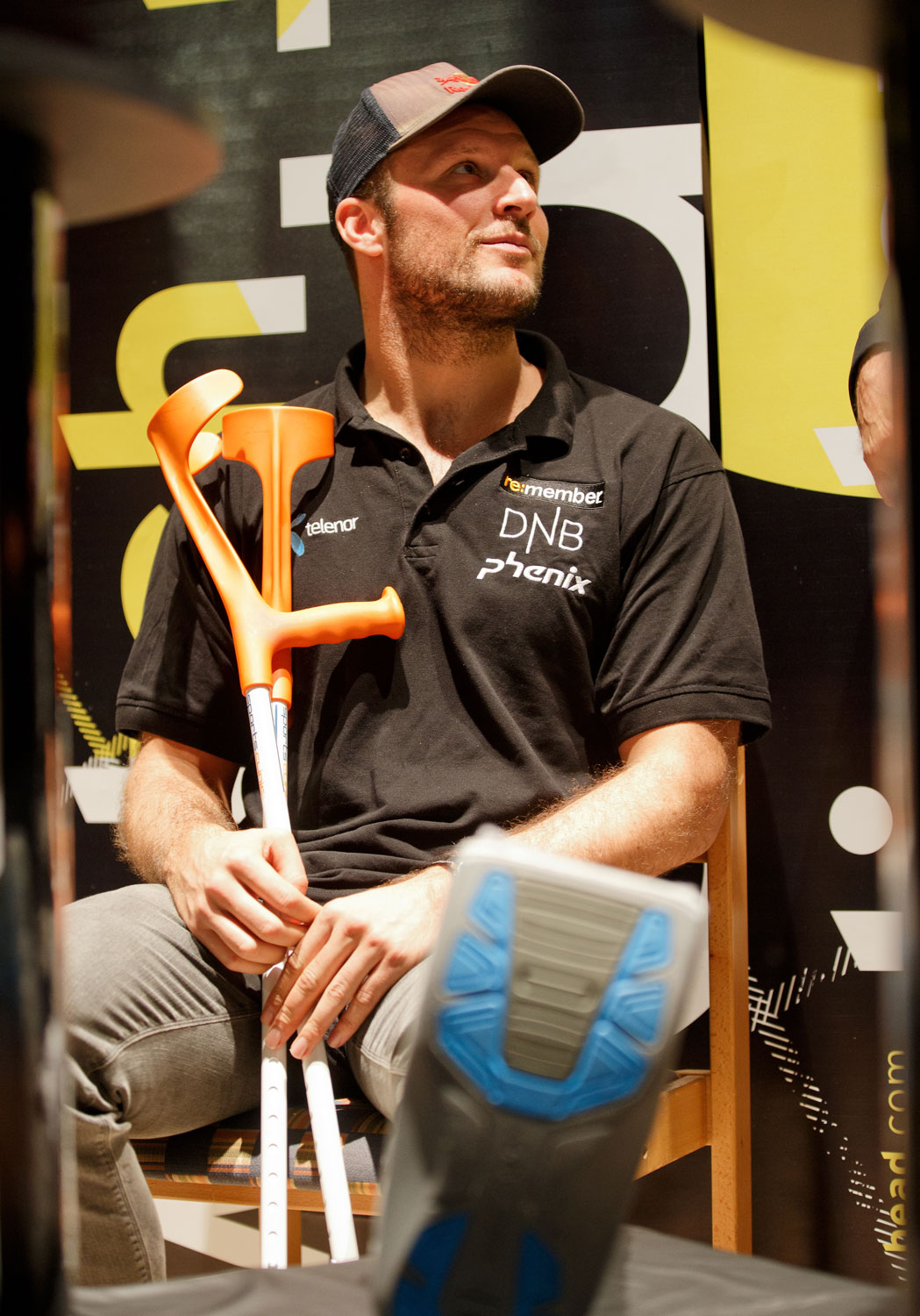 Aksel Lund Svindal looked in a different direction after injuring his Achilles. GEPA
On Aksel Lund Svindal’s first day back on snow after injuring his Achilles, we were riding the T-bar together. “When I got hurt I had to get away from skiing,” he said, “so I went to Silicon Valley to meet with some businesses and venture capital firms.”
Svindal — like many of us — doesn’t know what his next step is after racing. But he’s thinking ahead, meeting new contacts, and looking for new opportunities. He agreed that the timing of his injury may actually be a blessing because it gives him a better perspective on his future, which in this game is much easier said than done. Whatever racers do upon retirement, they need to spend some time finding where they can bring that same intensity and fire that made them competitive on the slopes.
About the Author: Warner Nickerson