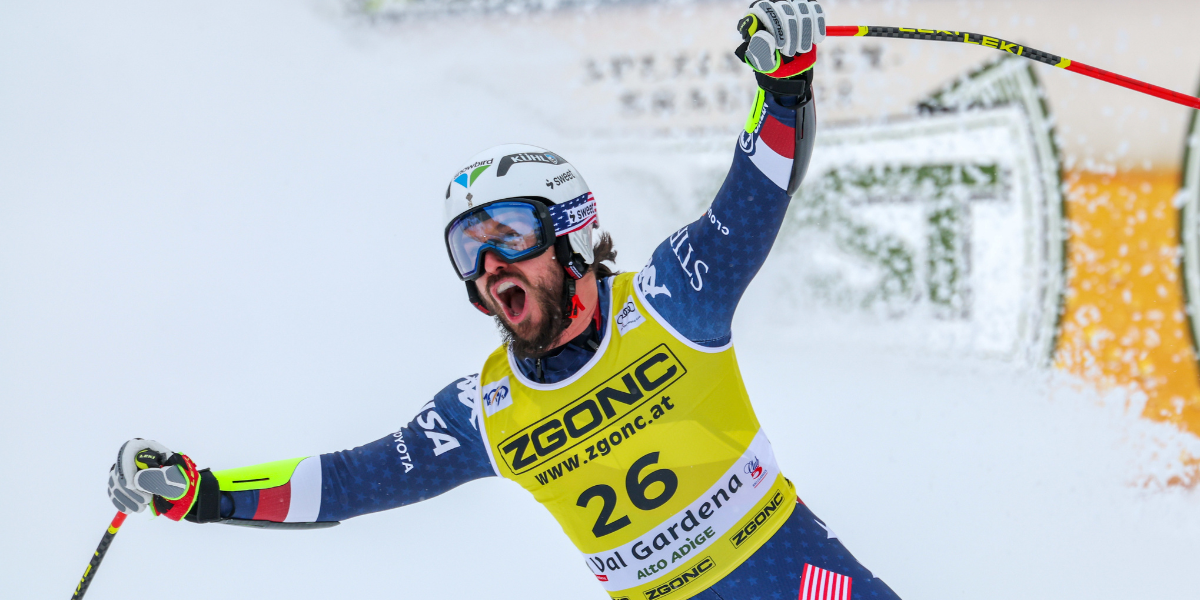

Featured image: GEPA Pictures / Harald Steiner
What happens when an athlete’s career ends—and no one prepares you for what comes next?
No one really prepares you for what happens after it’s over.
People think the hard part is the final race, the last game, the injury, or the conversation that changes everything. But the truth is, the real ending is much quieter than that. It shows up in the days and weeks after, when your life no longer looks the same—and you start to realize that neither do you.
It is the moment you wake up and your schedule is empty. No training. No competition. No next goal to chase. Just space where something once was.
And that space can feel a lot heavier than anyone tells you.
Sport isn’t just something you do—so what happens when it’s gone?
For most athletes, sport is not just something you do. It becomes how you measure your days, how you introduce yourself, and how you understand your worth. It shapes your routine, your friendships, your confidence, and your sense of direction. Over time, it stops feeling like a part of your life and starts to feel like the whole thing.
I used to tell my athletes all the time that ski racing is what you love to do; it is not who you are.
I said it because I believed it, but also because I think a part of me knew how easy it is to blur that line.
If I am being honest, I learned that lesson the hard way.
Whenever someone asked me how I was doing or how things were going, my answer was always tied to my sport. If training was going well, I felt good about everything. When things were off, everything else in my life felt off too. My sport dictated my mood, my personality, even how I showed up in conversations.
When that identity was suddenly gone, I felt lost in a way I was not expecting. I did not really know what to say when people asked how I was. I did not know how to talk about myself without referencing skiing. It made me realize just how much of myself I had wrapped up in something that was no longer there.
Why does leaving sport feel like a breakup?
When sport ends, it does not feel like a career change. It feels like a breakup.
Not the kind that is clean or mutual, but the kind that leaves you disoriented. You are separating from something that has been constant in your life for years. Something you have invested your time, your energy, and your identity into.
From the outside, it can look like you are just moving on to the next phase. But internally, it can feel like you have lost a part of yourself.
And it is not something you can just replace.
What does grief look like after sport ends?
What makes this transition even harder is that the emotional side of it is rarely acknowledged. Athletes are expected to be resilient, to push forward, and to adapt quickly. There is not a lot of space to sit in what you are actually feeling.
But the reality is, there is real grief in this process.
It does not always show up in obvious ways, and it rarely follows a clean or predictable path. You can find yourself moving through different phases without even realizing it, trying to make sense of something that does not feel fair or within your control.
- Denial: “Maybe I can come back. Maybe this isn’t really over.”
- Anger: “Why did this happen to me? Why now?”
- Bargaining: “If I rehab harder, if I push more, maybe I can fix this.”
- Depression: “Who am I without this? What’s the point?”
- Acceptance: “This chapter is over… but maybe that’s not the end of me.”
These stages do not always come in order, and they rarely happen just once. You can circle back, feel one more than the others, or sit in one longer than you expected.
The hardest part is that many athletes get stuck somewhere in this process, not because they are doing anything wrong, but because no one ever told them that what they are feeling is normal.
What happens when it isn’t your choice?
One of the most difficult parts of this transition is that, for many athletes, it is not a decision they get to make on their own.
Sometimes it is an injury that your body does not recover from, no matter how hard you work. Sometimes it is being told you are no longer part of a team or that you are not going to make the next level. In other cases, it comes down to the financial reality of the sport.
In my case, it was a career-ending injury.
That moment changes everything. Not just physically, but mentally and emotionally. You are forced into a reality you did not choose, and you are expected to adjust to it before you feel ready.
That lack of control is what makes it so hard. You are not just stepping away from something you love. You are being pulled away from it.
What fills the space after sport ends?
When sport ends, there is a space that opens up in your life, and at first, it can feel overwhelming.
The structure that once guided your days disappears.
The routine that gave you purpose is no longer there.
Even the environment where people understood you without explanation begins to fade.
Even the small things, like daily conversations with teammates or the feeling of working toward something bigger, are suddenly gone.
And in that space, there is often a question that keeps coming up.
Who am I now?
That question does not always have an immediate answer. It takes time to rebuild, to explore, and to figure out what fills that space in a way that feels meaningful again.
What I wish I had done differently
Looking back, there are things I wish I had done differently that would have made this transition less overwhelming.
I wish I had spent more time building an identity outside of my sport before it ended. I wish I had allowed myself to process the emotional side of it instead of trying to push through and move on quickly. I also wish I had asked for help earlier, rather than thinking I needed to handle it on my own.
These are things you do not always realize in the moment, but they become clear with perspective.
How can athletes navigate the transition?
There is no perfect way to go through this, but there are ways to make it more manageable and less isolating.
- Recognize that this is a real loss. Stop minimizing what you are feeling. When you acknowledge that you have lost something meaningful, you give yourself permission to process it instead of pushing past it.
- Separate who you are from what you did. The qualities that made you successful in sport—discipline, resilience, and work ethic—are still part of you. They did not disappear when your sport ended; they just need a new place to show up.
- Take action before you feel ready. It is easy to wait for clarity, but clarity often comes from doing, not thinking. Trying new things, even if you are unsure, is what helps you move forward.
- Stay connected to sport in a new way. Your relationship with sport does not have to end completely, but it will likely need to evolve. Coaching, mentoring, or staying involved in a different role can help bridge that transition.
- Talk about it. This transition can feel isolating, especially when it seems like everyone expects you to be fine. Opening up to people who understand can make a significant difference.
What does it mean to evolve beyond sport?
The most important thing I have come to understand is that you do not lose your athlete identity. You evolve it.
The mindset, the resilience, and the ability to push through challenges do not disappear when sport ends. They become part of how you approach whatever comes next.
It does not happen overnight, and it is not always a smooth process. But over time, you start to see that the end of your sport is not the end of your story.
It is just the end of one chapter.
And the beginning of something you have not fully discovered yet.
About the Author: Katie Twible