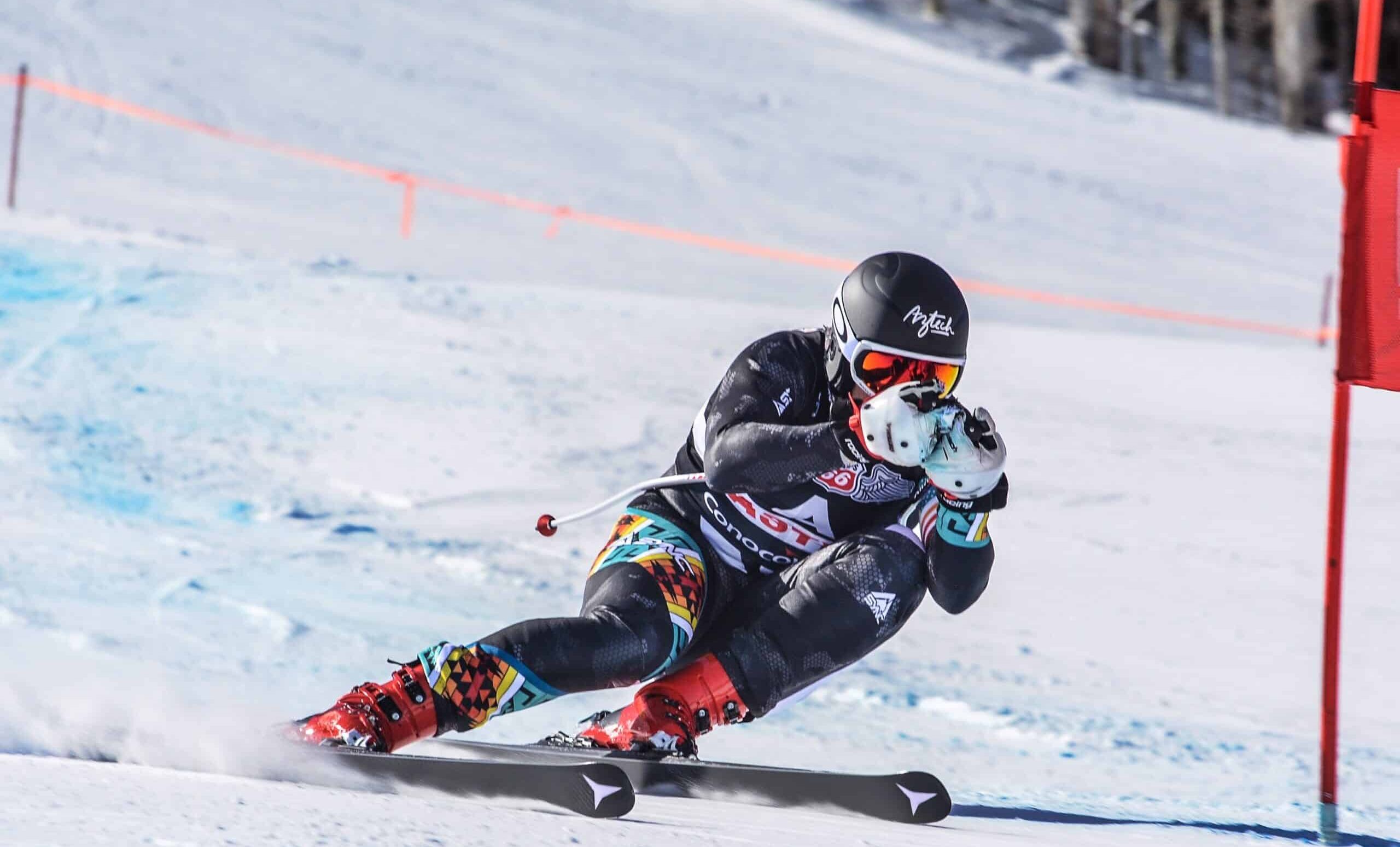
Wiley Maple Atomic media days, Bormio training run GEPA Photos
Wiley Maple’s ski racing journey reads like a gripping novel, filled with highs, lows, and unexpected twists. A seasoned skier with a seven-season World Cup stretch on the US Ski Team, Maple left an indelible mark with his best result on February 21st, 2015, in Saalbach-Hinterglemm, Austria – a 17th place.
His Olympic debut in Pyeongchang in February, 2018, showcased his prowess, but it wasn’t the end of his story. Maple retired from the World Cup after the 2019 Bormio downhill. He had last scored points in the Val Gardena-Gröden World Cup on December 15th, 2018. However, Maple couldn’t resist the call of the sport he loved, making a surprising return to Bormio on December 28th, 2023.
In an exclusive interview with Ski Racing Media, Maple provides insights into his compelling comeback, addressing crucial aspects of his decision-making process and challenges.
Commitment to the Season: A Rebellion Against the Norm
Maple’s commitment to the season wasn’t a mere decision. He says, “Returning to the sport was an act of rebellion,” outlining a unique path forged after graduation. With limited and undesirable job options in Aspen, Maple’s return to competitive skiing became a bold defiance against conventional norms.
“A series of strange circumstances pulled me back to the sport: the pro tour coming to Aspen, being asked to forerun a downhill, and, finally, France’s Johan Clarey showing that age is just a gauge, with his best seasons from age 35-42,” Maple explains. “But, to my great surprise, it was my return to health that really enticed me to try again.”
Health Concerns: Defying the Impossible
“Returning from a spinal fusion, Maple was hesitant about competing at the highest level. Despite a career plagued by injuries, including tearing his ACL, MCL, and meniscus on the pro tour, he embraced the risks. His body felt surprisingly more resilient than ever. Maple reflects, “Since retiring, I discovered some things about myself and my behavior that I have now attempted to address.”
Performance Evaluation: Confidence from Summer Triumphs
Summer victories in Corralco, Chile and early-season races in Copper Mountain and Santa Caterina, Italy Europa Cups built Maple’s confidence. In a sport where confidence reigns supreme, these successes were crucial building blocks for the challenges ahead.
Invitation to Bormio: Confronting Past Fears
Maple earned his Bormio World Cup invitation through top-tier Europa Cup (EC) performances. The ski team’s strict EC criteria demanded a top-ten finish, shaping Maple’s season strategy.
Returning to the World Cup in Bormio wasn’t Maple’s first choice. A past Bormio retirement, triggered by nerve pain on the daunting Stelvio track, still haunted him. But his return to the same track was poetic, conquering past fears.
“The ski team had EC criteria; I needed a top ten. So that was the plan this season,” said Maple. The Bormio track, though terrifying, became a triumphant stage for conquering fears and showcasing resilience. “The ski team had EC criteria; I needed a top ten. So that was the plan this season,” said Maple.
Confidence in Speed: A Journey Rediscovered
Throughout the summer, Maple felt his skiing prowess returning. Winning in Chile reaffirmed his speed, and subsequent NorAms and EC races built his confidence. Training runs in Bormio demonstrated his velocity, leaving him hopeful for the races ahead.
Significance of Bormio Success: Poetic Triumph
“Returning to the World Cup in Bormio was certainly the last place I would have liked to come back to WC racing. Anywhere but Bormio I had said. It is a terrifying track, dark bumpy and fast certainly a type of race I have relished in the past,” Maple confesses.
Returning to Bormio was profoundly significant for Maple. Achieving a career-best 12th place on the track that forced his retirement marked a poetic triumph. “It is the first hint of justice in a career that had me feeling like I was born to lose,” Maple admits.
Independent Racing: Balancing the Load
Considering racing independently, Wiley Maple sees few advantages and more downsides. If funded, the perk could be a flexible schedule, but as it stands, he’s at the mercy of external forces for everything. In his words, managing the entire load alone, from funds to planning, “sucks.”
One advantage: he takes sole responsibility; fixing issues faster. However, managing it all is daunting. Working with groups like American Downhiller and Apex, Maple found temporarily joining other teams crucial. Teaming up, even briefly, made a significant difference.
Reflecting on independence, Maple appreciates doing it on his terms. He proved the validity of alternative routes to reaching the World Cup. He emphasized that the camaraderie with temporary teams defines success. After Bormio, Burki Schaffer, the Stifel US Ski Team’s head speed coach, praised Maple’s unique roles as coach, technician and athlete.
.
Top 60 WCSL Mindset: Racing for a Cause
In the top 60 on the Downhill World Cup Start List again, Maple’s mindset shifted. While maintaining a consistent top 60 position, which creates a nation’s World Cup starting spot, his “why” has evolved throughout his career. Racing has become “will to power,” a way to influence change, particularly in addressing the climate crisis.
Will Gregorak’s contribution to his return: A Pivotal Ally
Will Gregorak isn’t just a friend; he was crucial in Maple’s return. Together, they navigated challenges, including ensuring most of Maple’s skis got on the snow, contributing significantly to the success of his remarkable comeback. “Will is one of the best skiers I have ever met,” Maple comments. “He was one of the few who believed my return was possible and was willing to help immediately.”
Solo Travel and Ski Maintenance: Sacrifices for Independence
With Gregorak back in Aspen, Maple tackles ski maintenance and solo travel. Despite the solitude, he connects with fellow Aspenites Tristan Lane, Dave Culp, and the Stifel US Ski Team for some travel support. Yet, he navigates most of his journey alone, meticulously preparing his equipment.
But this independence, while demanding, has a silver lining. While it results in extended days and late nights dedicated to his skis, Maple recognizes the benefit of being in control. Though proper recovery and fun may be sacrificed, the hands-on approach to equipment ensures a deeper connection. It becomes a meditative practice, where every tool stroke is a moment of focus and intent.
Traveling alone may lack the camaraderie, but Maple sees it as a way to stay out of trouble. Knowing the ins and outs of his skis becomes second nature, and if anything goes wrong, he acknowledges, “I have only myself to blame.” In the solitude of ski preparation, Maple finds a unique blend of self-reliance and introspection that shapes his competition experience.
Wiley Maple’s journey is a testament to resilience, self-discovery, and the enduring spirit of a skier who has refused to be defined by setbacks. As he forges his path in ski racing, Maple’s story continues to captivate, leaving fans eager for the next chapter in his remarkable career.
About the Author: Peter Lange