GEPA pictures
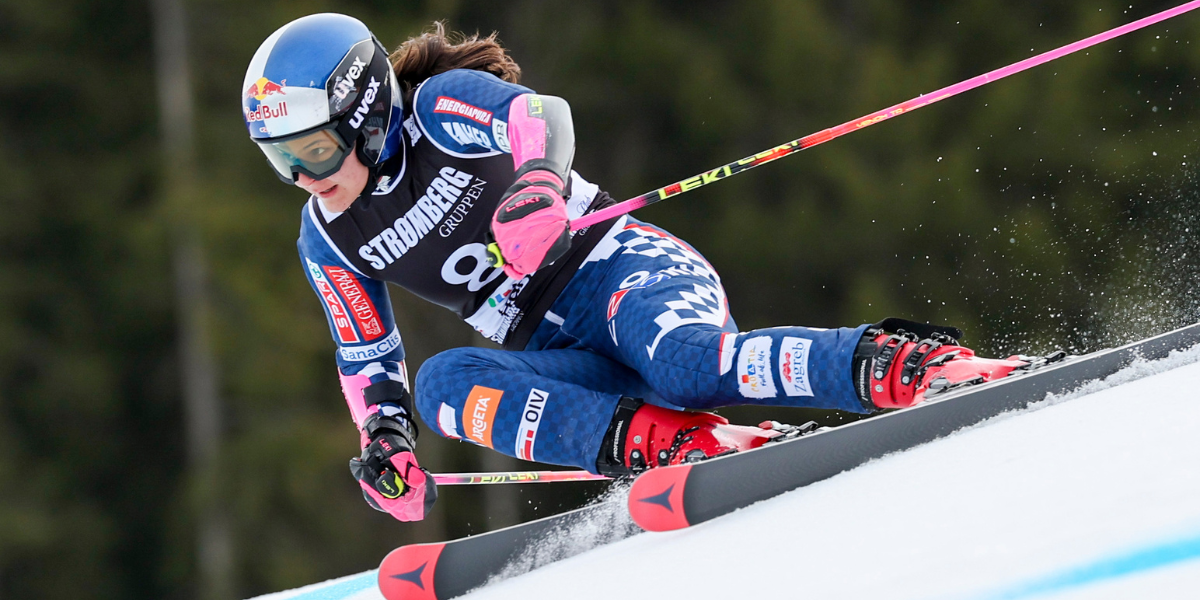
Zrinka Ljutić traveled to New Zealand to prepare for another demanding World Cup season. Her first notable victory of the trip, however, carried a meaning that reached far beyond preseason training.
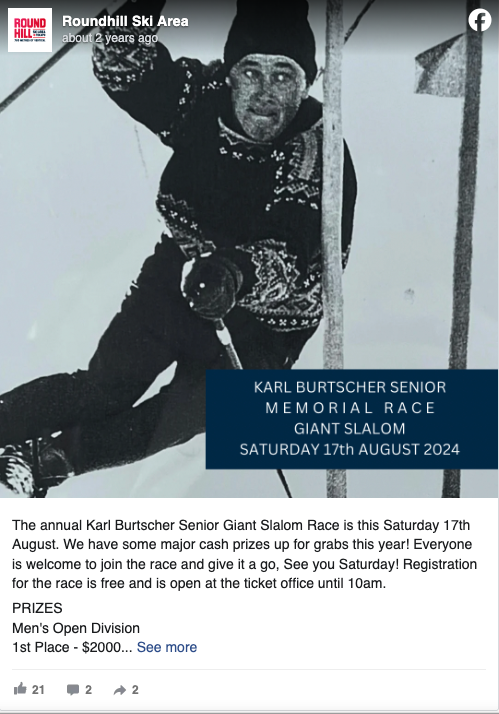
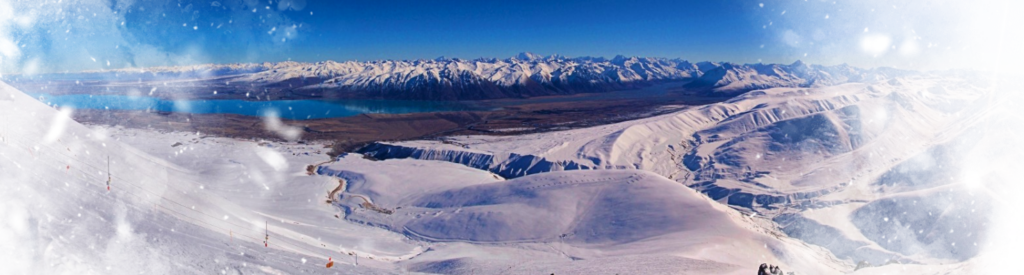
The 22-year-old Croatian won the 2026 Karl Burtscher Senior Memorial Race on Aug. 16 at Roundhill Ski Area near Lake Tekapo. The competition honors an Austrian skier whose work helped establish a lasting ski culture in a remote part of New Zealand.
Ljutić’s result brought those worlds together. She represents Croatia, developed much of her skiing in Austria and now trains on snow shaped by New Zealand’s Southern Alps.
According to Croatia Week. Ljutić arrived in New Zealand on Aug. 4 for a five-week training camp. She is preparing for the 2026-27 FIS Alpine Ski World Cup season and the 2027 FIS Alpine World Ski Championships in Crans-Montana, Switzerland.
Yet this race offered more than another day of training. It connected an established World Cup champion with the family history behind one of New Zealand’s enduring ski areas.

Why does Ljutić’s Roundhill victory carry special meaning?
Roundhill’s story began long before Ljutić became one of the world’s leading slalom racers.
Karl Burtscher Sr. grew up in Austria and developed into an accomplished skier. Croatia Week reported that he competed with Austria’s junior national team before racing professionally in the United States.
Eventually, his journey brought him to New Zealand. Burtscher worked as a ski instructor at Mount Ruapehu before moving south to the Lake Tekapo region.
In 1973, Burtscher and his wife, Audrey, purchased Richmond Station on the eastern shore of Lake Tekapo. They also took over the nearby ski field, then known as Tekapo Ski Field, and began turning it into a larger commercial operation.
The work demanded far more than a love of skiing. The family balanced farming, mountain operations and the challenges of life in an isolated high-country environment. At times, they managed without electricity or running water.
Still, the ski area grew. The access road widened in 1974. Two years later, the operation added a chairlift, café and ticket office.
More importantly, the mountain became a gathering place.
Tekapo Ski Club records cited by Croatia Week show that hundreds of children from the Timaru and Christchurch regions attended ski weeks there during the 1970s and 1980s. Some became instructors. Others eventually returned with children of their own.
Karl and Audrey Burtscher closed the ski field in 1990. After an 11-year break, Christian Burtscher, Karoline Rieder and Oskar Rieder reopened it as Roundhill Ski Area in 2001.
The Rieder family continues to own and operate Roundhill. Therefore, the memorial race honors more than one skier. It recognizes the family effort that helped generations of New Zealanders build lasting relationships with the mountains.
How does Ljutić’s story connect Croatia and Austria?
Ljutić proudly races for Croatia, a country with a remarkable alpine legacy despite its limited high-mountain terrain. Janica and Ivica Kostelić established Croatia as a World Cup power, and Ljutić has begun writing the next chapter.
During the 2024-25 season, she won World Cup slaloms in Semmering, Kranjska Gora and Courchevel. Those victories helped her secure the season slalom title and become the second Croatian woman to win that Crystal Globe, following Janica Kostelić.
Her development, however, also carries a strong Austrian influence.
Ljutić spent much of her childhood skiing in Innerkrems, Austria. There, she gained the repetition, timing, balance and efficient movement required to progress from a promising young racer into a World Cup champion.
That background makes her Roundhill victory particularly fitting.
Burtscher carried his Austrian skiing experience to New Zealand and helped create opportunities for others. Decades later, Ljutić arrived as a Croatian champion shaped partly by Austria’s alpine environment.
Their competitive careers belong to different eras. Still, both stories demonstrate how skiing crosses national borders and connects communities separated by thousands of miles.
What does the victory mean for Ljutić’s preparation?
A preseason memorial race does not carry World Cup points or a Crystal Globe. Nevertheless, racing provides something ordinary training cannot fully reproduce.
The course asks athletes to react under pressure. It tests their ability to maintain strong, efficient skiing when the clock matters. Even in August, those competitive demands can expose details that need attention before the World Cup season begins.
Ljutić enters the winter with proven ability and considerable expectations. Her 2024-25 slalom title confirmed that she can produce winning skiing across an entire season. Now she must continue developing while the rest of the field searches for ways to challenge her.
The 2027 World Championships provide another major target. Crans-Montana will test the world’s best alpine racers in February, making Ljutić’s Southern Hemisphere training block an early part of a much longer preparation process.
Roundhill offers snow, terrain and distance from the World Cup spotlight. It also gives Ljutić time to strengthen her skiing before the pressure of the international season returns.
Winning the Karl Burtscher Senior Memorial Race added competitive energy to that work. More significantly, it placed her inside the continuing story of a ski area built through family commitment and sustained by generations of New Zealand skiers.
Ljutić came to Roundhill looking toward the future. Her victory also gave her an unexpected connection to its past.
Source note: Ski Racing Media based the reported details and historical background in this article on an Aug. 17, 2026, report by Croatia Week.
About the Author: SR Staff Report