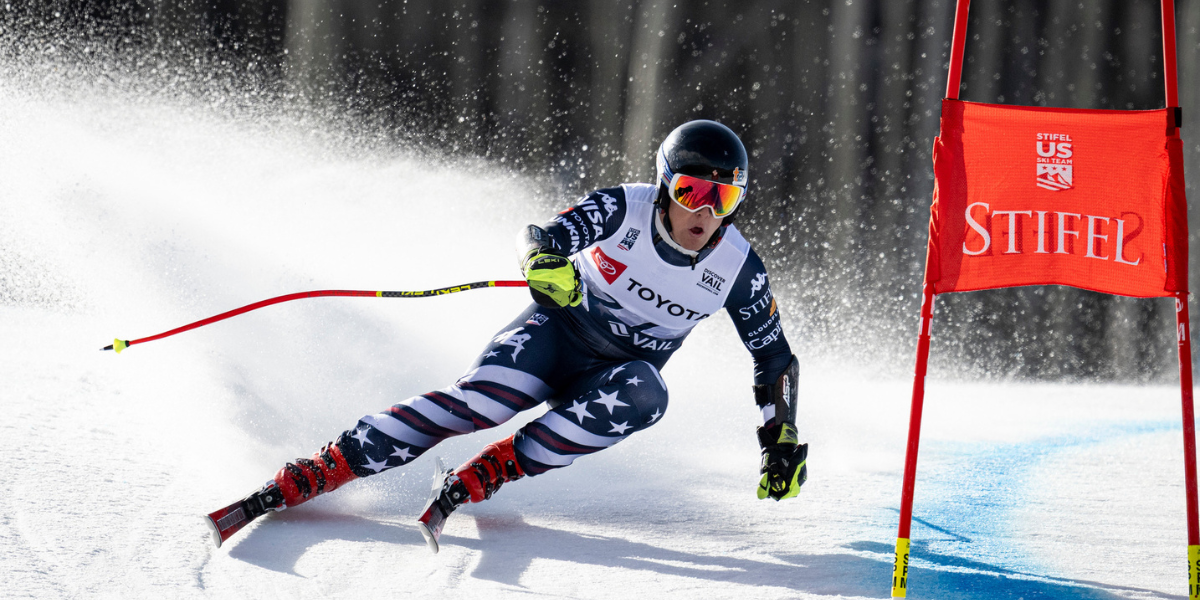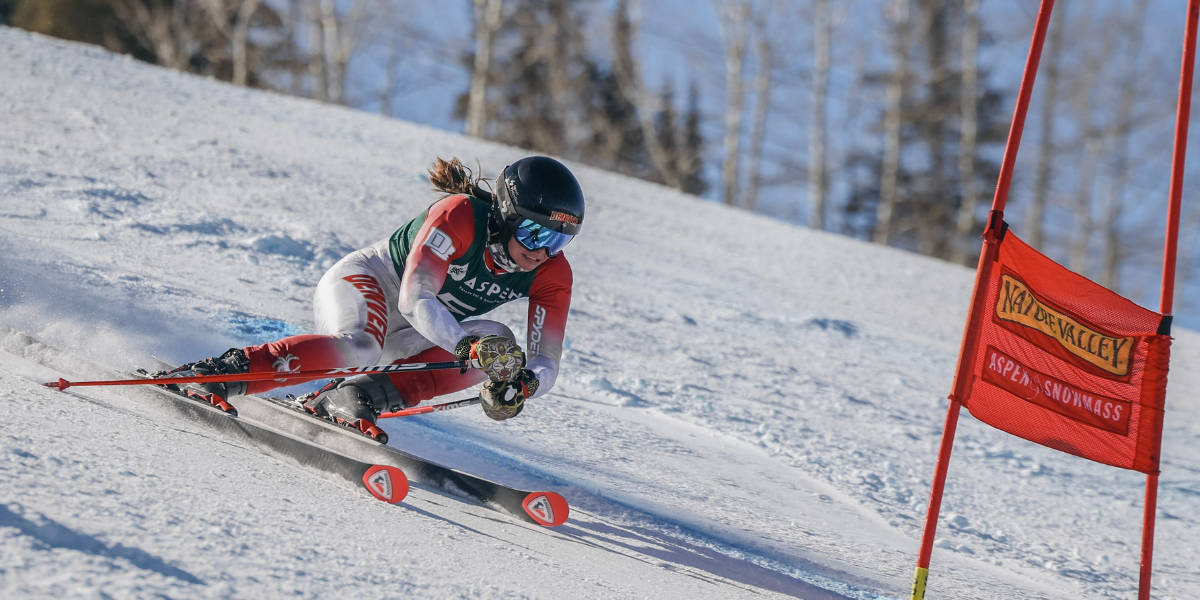
Gut-Behrami, Brignone, Shiffrin, GEPA pictures/Matic Klansek
Federica Brignone fought back from a (+1.22) deficit and defeated the five racers faster than her on the first run. She also bettered her record as the oldest woman to win a World Cup GS by one day. With back-to-back Tremblant victories, she and Gut-Behrami have won all the 2023-24 World Cup GS races. In deteriorating weather and visibility, Brignone skied brilliantly to win by (+0.33) over Switzerland’s Lara Gut-Behrami. Running 25th, she produced the fastest second run time.
“It was really difficult in the second run,” Brignone said. “I tried to go all-in, and I knew the conditions were really tough because we couldn’t see, it was snowing, and it was windy.. But normally in these conditions, I’m good. My brother said to me before the second run, ‘OK, we are ready; we have been training like this for a month now.”


For the 3rd time in a row, the third step of a GS podium was occupied by Stifel US Ski Team’s Mikaela Shiffrin (+0.39). First-run leader Petra Vlhová experienced a challenging second run to end the day (+0.67) in 5th.
“I could not see anything,” Shiffrin admitted. “But actually, it was still fun to ski in a way, sometimes a little bit wild. Tough conditions but a good fight.”
The race produced many career-best performances.
France’s Clara Direz used the second-fastest afternoon run to climb into her career-best 4th place. Canada’s Valerie Grenier climbs up five spots to finish sixth, her fourth top ten of the season. Stifel US Ski Team’s AJ Hurt rose eight positions to earn her first World Cup top ten, placing ninth.
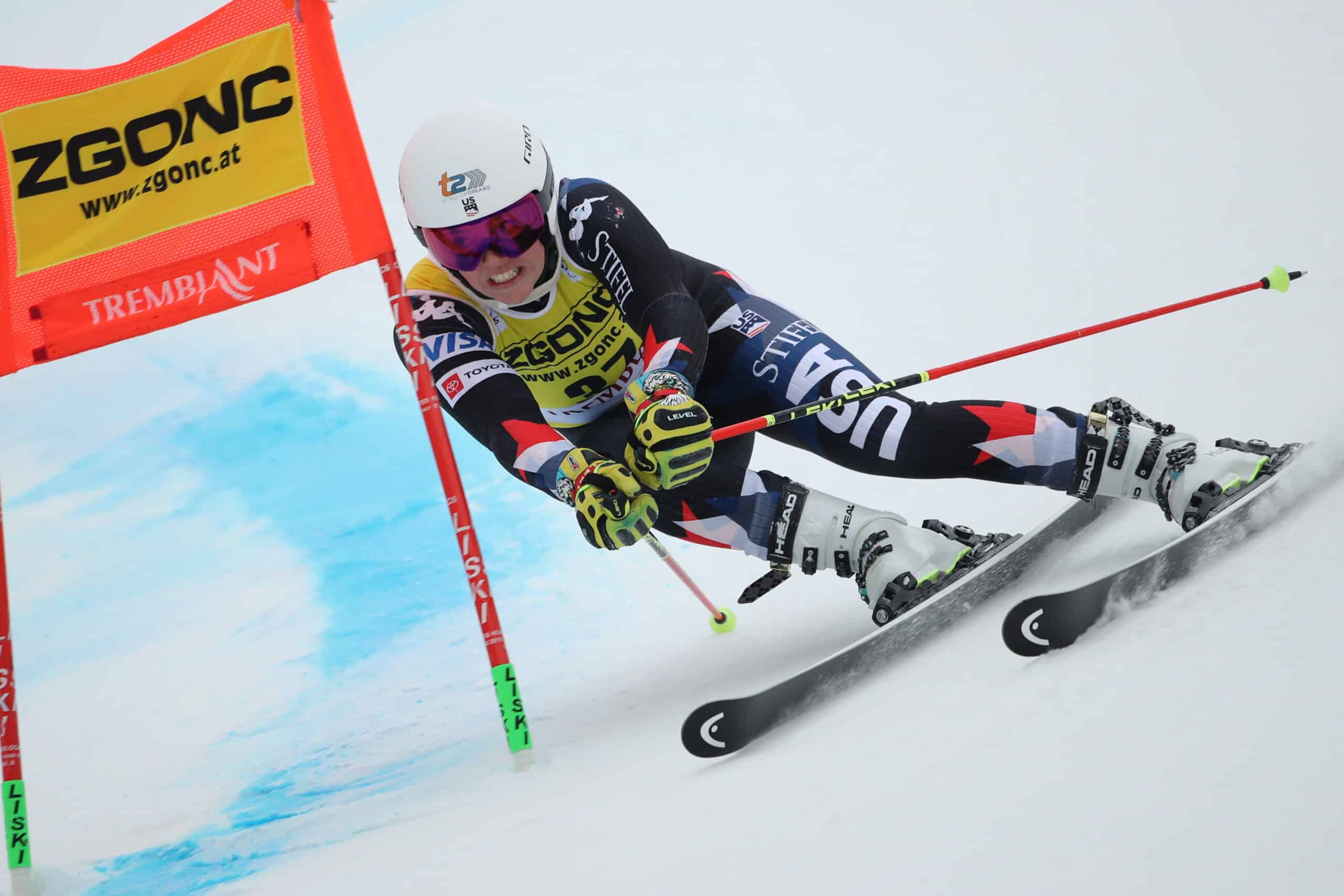
The second run, Flying Mile course, was faster and flowed more than the previous three. Because of that, there were fewer highly costly mistakes. Yesterday’s second course caused DNFs and massive time losses, but Sunday’s afternoon course was much easier to attack and all thirty women who qualified for the afternoon finished the race.
It is not uncommon to see early second-run starters move up the leaderboard. Notably, Stifel US Ski Team’s Paula Moltzan is no stranger to that experience. After dropping to 26th on the first run, she started 5th in the afternoon finale. However, by the time the first ten women had skied, she had moved up four positions and held the then-fastest second run time. However, Austria’s veteran Elisabeth Kapppaurer, also 29, occupied the leader’s throne. Together, the two continued their march up the leaderboard. At the end of the race, Moltzan 15th had moved up 11 positions, and Kappauerer 14th had moved up eight.
After half the qualified racers had finished their race, Moltzan’s teammate AJ Hurt sat on the throne with a (+0.38) lead and Moltzan still had the fastest second run. With only ten left to ski, France’s Clara Direz was leading, using the then-fastest second run time and had a (-0.28) advantage over hometown hero Canadian Valerie Grenier. However, after Direz’s run, the jury had to stop the race to fix the panels heavily affected by the downhill wind, bringing into question the weather’s effect on the race. However, Direz’s effort moved her nine positions to 4th place in the race.
It was a great day for North America, with four women in the top 15 and a 22-year-old Canadian, Cassidy Gray, repeating her career-best 24th place.
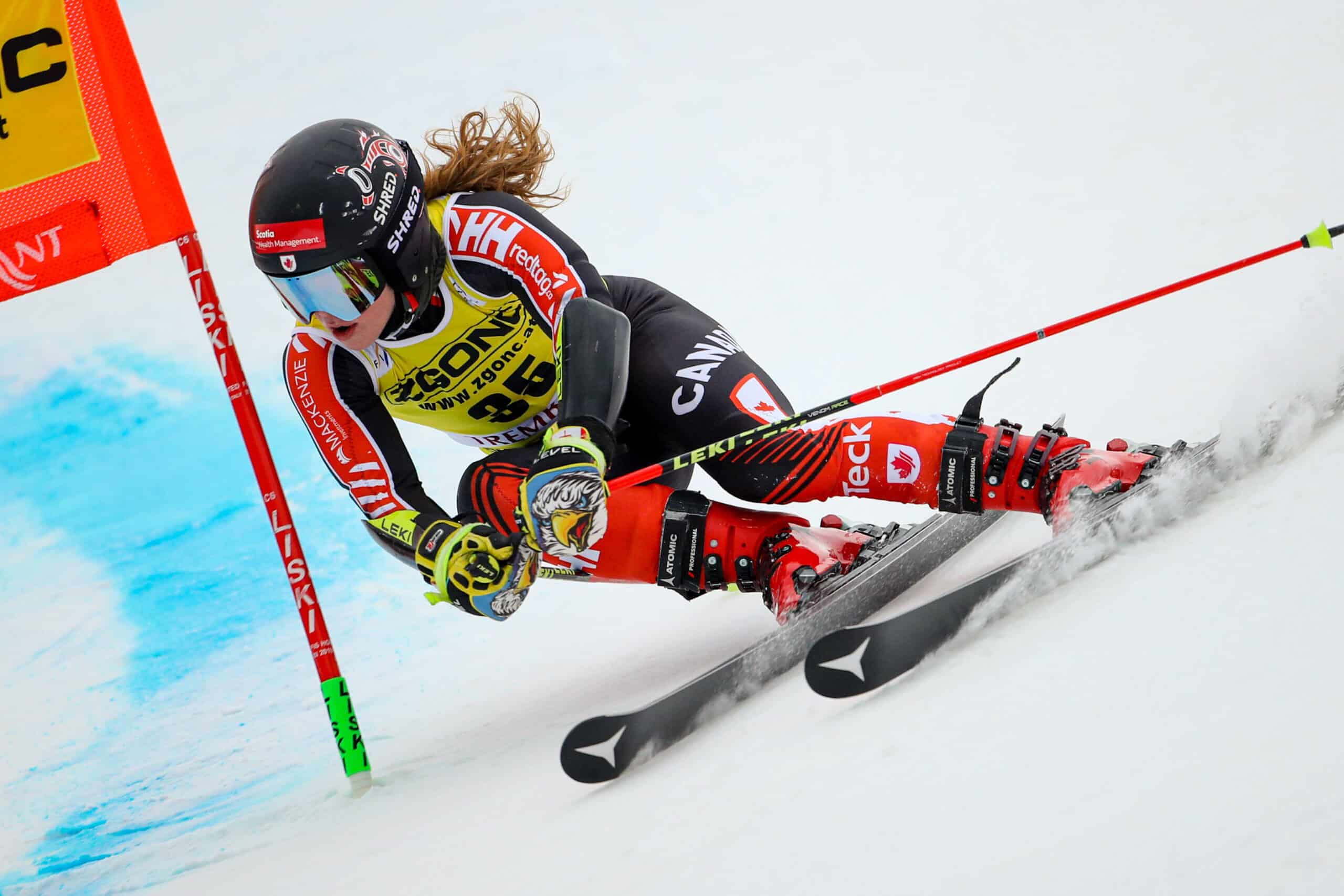
Just like in Killington, the Tremblant crowd stole the show. They cheered for everyone, fueled their home team, and turned the event into something truly extraordinary!
Results of the December 3d Tremblant World Cup GS & analysis of the fastest three and other North Americans

Analysis of the fastest three and other North Americans


About the Author: Peter Lange