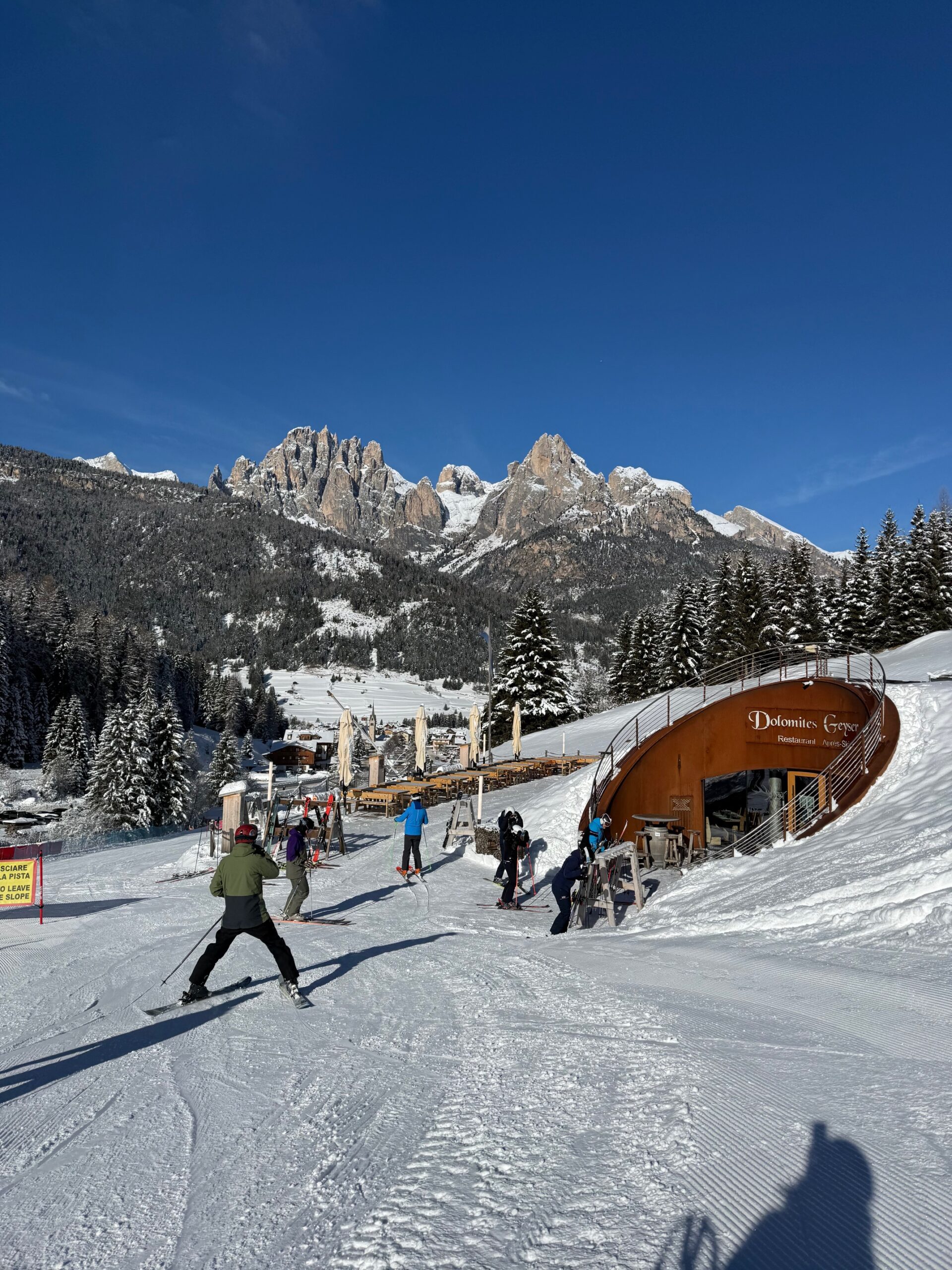
Dolomites / Photo: Shauna Farnell
The glitzy and unquestionably gorgeous Cortina d’Ampezzo calls itself the “Queen of the Dolomites” for good reason. The Olympia delle Tofane women’s downhill course ranks among the most majestic on the World Cup, with the top of the slope framed by towering, craggy cliffs. During the Olympics, however, the resort will close to public skiing. That matters less than it sounds, because Cortina represents only a small slice of the sprawling Dolomiti Superski system, which spans more than 750 miles of slopes across 12 resorts and 46 villages.
Skiing outside of Cortina d’Ampezzo
Ask any local in this UNESCO World Heritage–stamped corner of Italy, and they’ll point you beyond Cortina. They’ll say the region’s most authentic experiences unfold in the surrounding villages and ski areas, while Cortina — since hosting the 1956 Games — has shifted toward vacation homes and a shrinking year-round population.
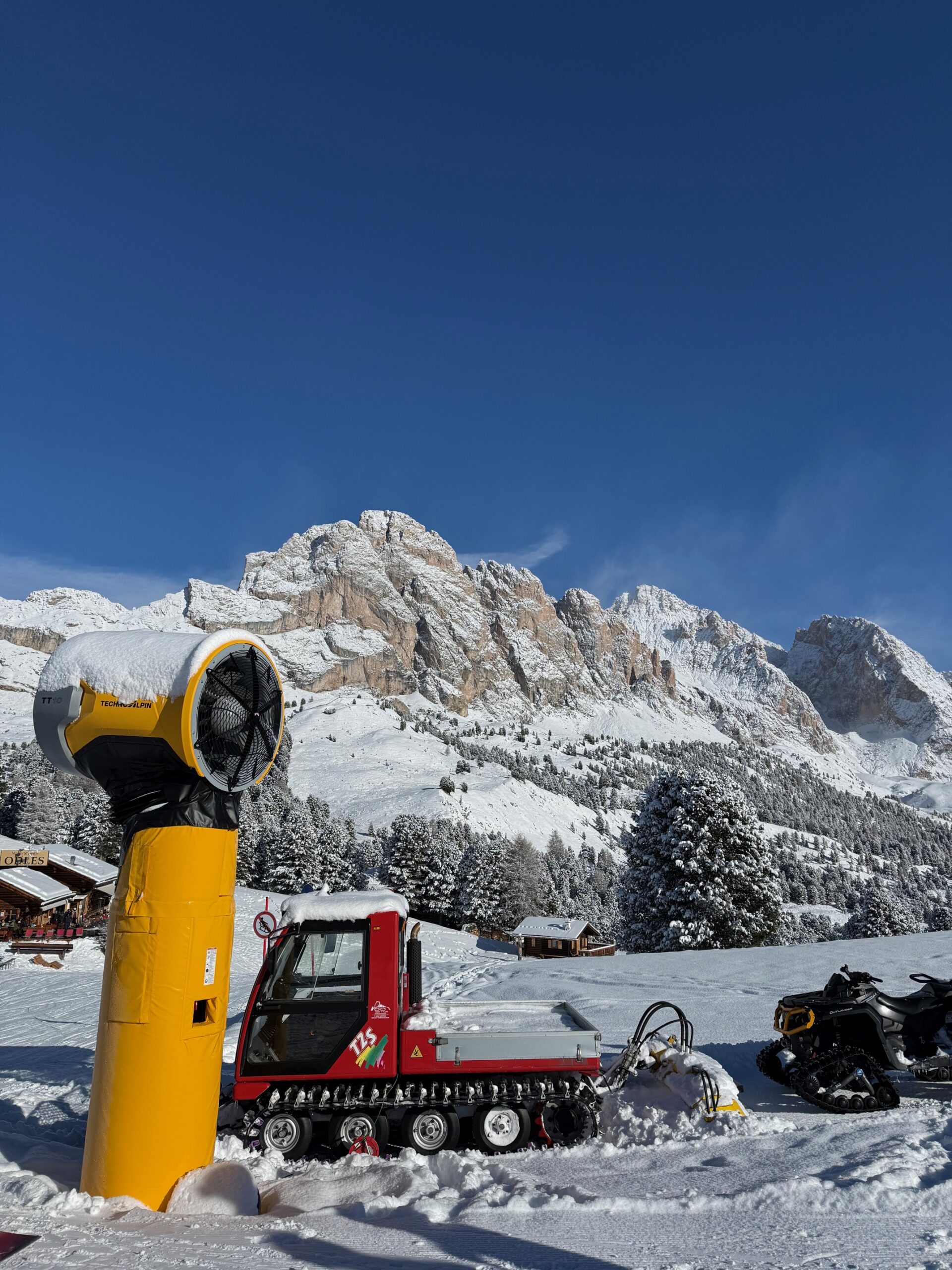
One defining feature of skiing in the Dolomites is remarkably consistent snow. Even when Mother Nature falls short (though she has delivered just in time for the Olympics), a massive snowmaking network keeps conditions reliable. Powered by roughly 7,000 TechnoAlpin and Demaclenko machines, the system prepares nearly 750 miles of slopes for the entire winter with as little as 130 hours of operation.
“It’s the best quality of snow, and we can produce the same quality on the entire track,” says Dolomiti Superski President Andy Varallo. “It allows us to confirm the start and end of the season.”
Click images to enlarge
Get to love groomers
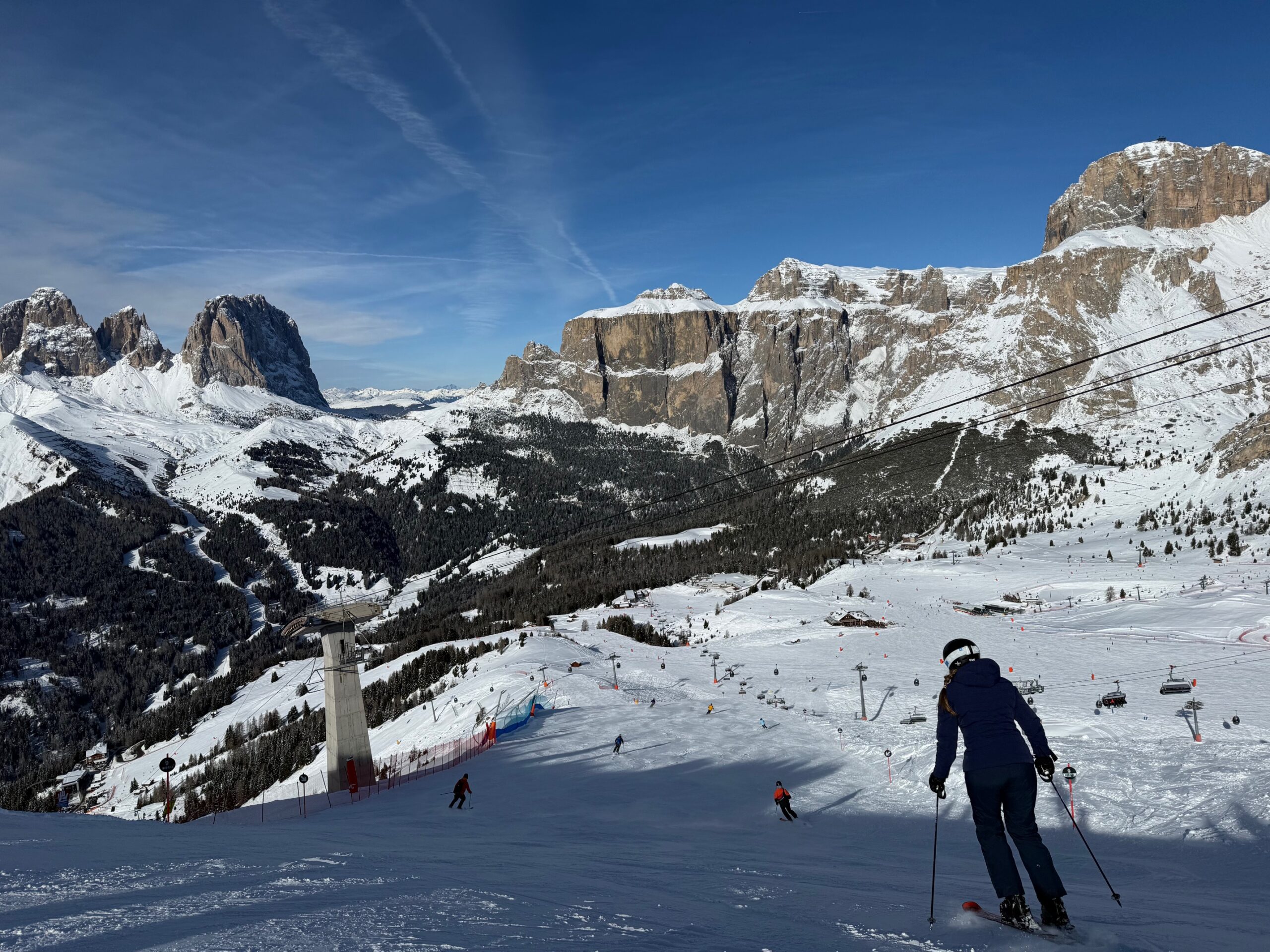
Every open slope in the Dolomites is groomed. Like most ski areas in Europe, venturing off groomed trails means skiing “off-piste” — which is done at one’s own risk in Italy and subject to hefty fines. Ungroomed terrain brings real danger: skiers enter areas without control or monitoring, where cables, fences and avalanche hazards lurk, sometimes directly under chairlifts.
That doesn’t mean fresh snow is off-limits. After recent storms blanketed South Tyrol in white, skiers can still access untouched lines safely by hiring a certified Dolomites Mountain guide.
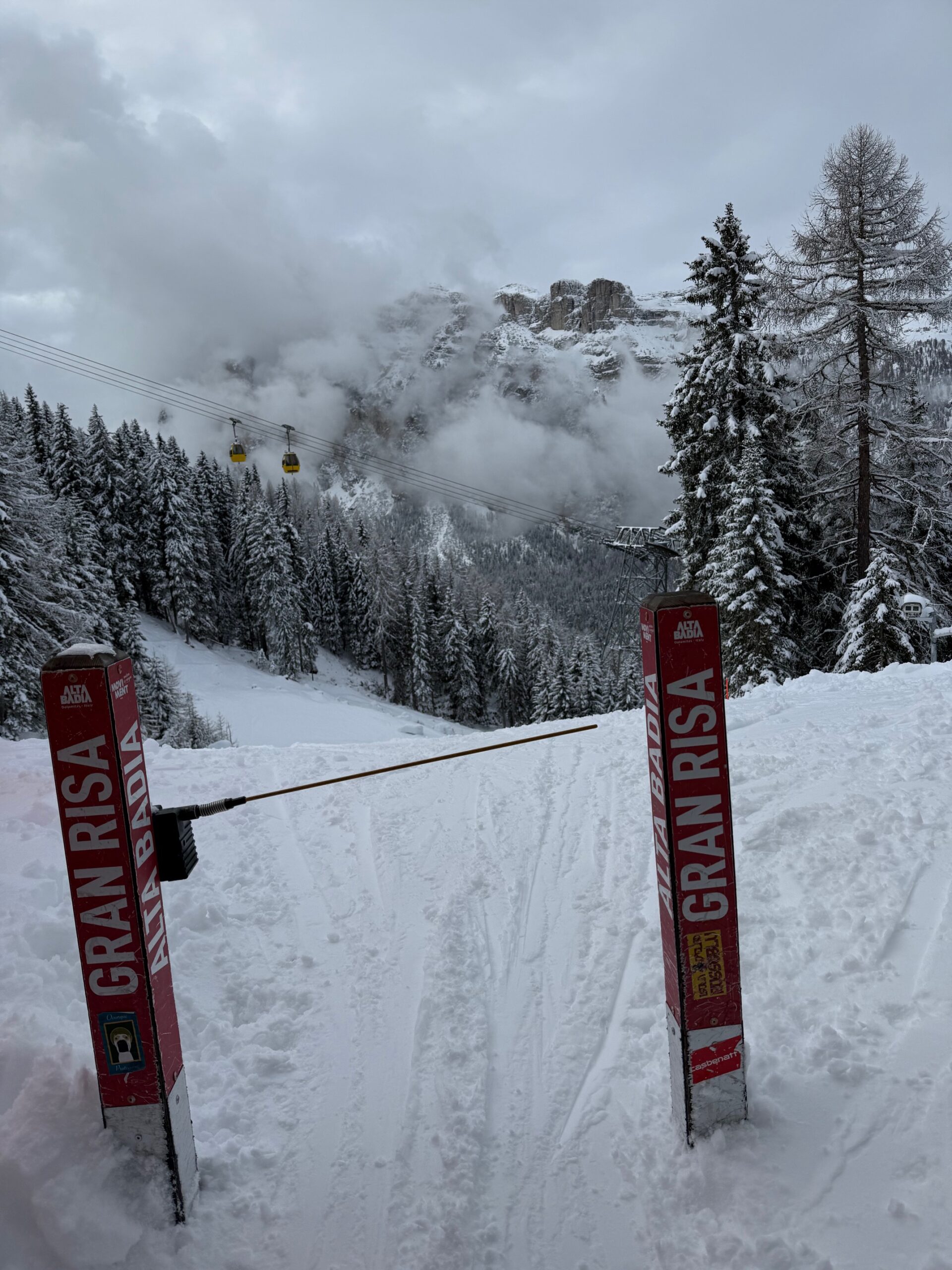
Groomed does not mean easy. While most Dolomite slopes fall into the intermediate (red) category, nearly 75 miles qualify as black runs. These include the Erta women’s World Cup giant slalom course in Kronplatz, the Saslong men’s World Cup downhill in Val Gardena and the iconic Gran Risa giant slalom course in Alta Badia — all open to the public after racing wraps up.
The true queen
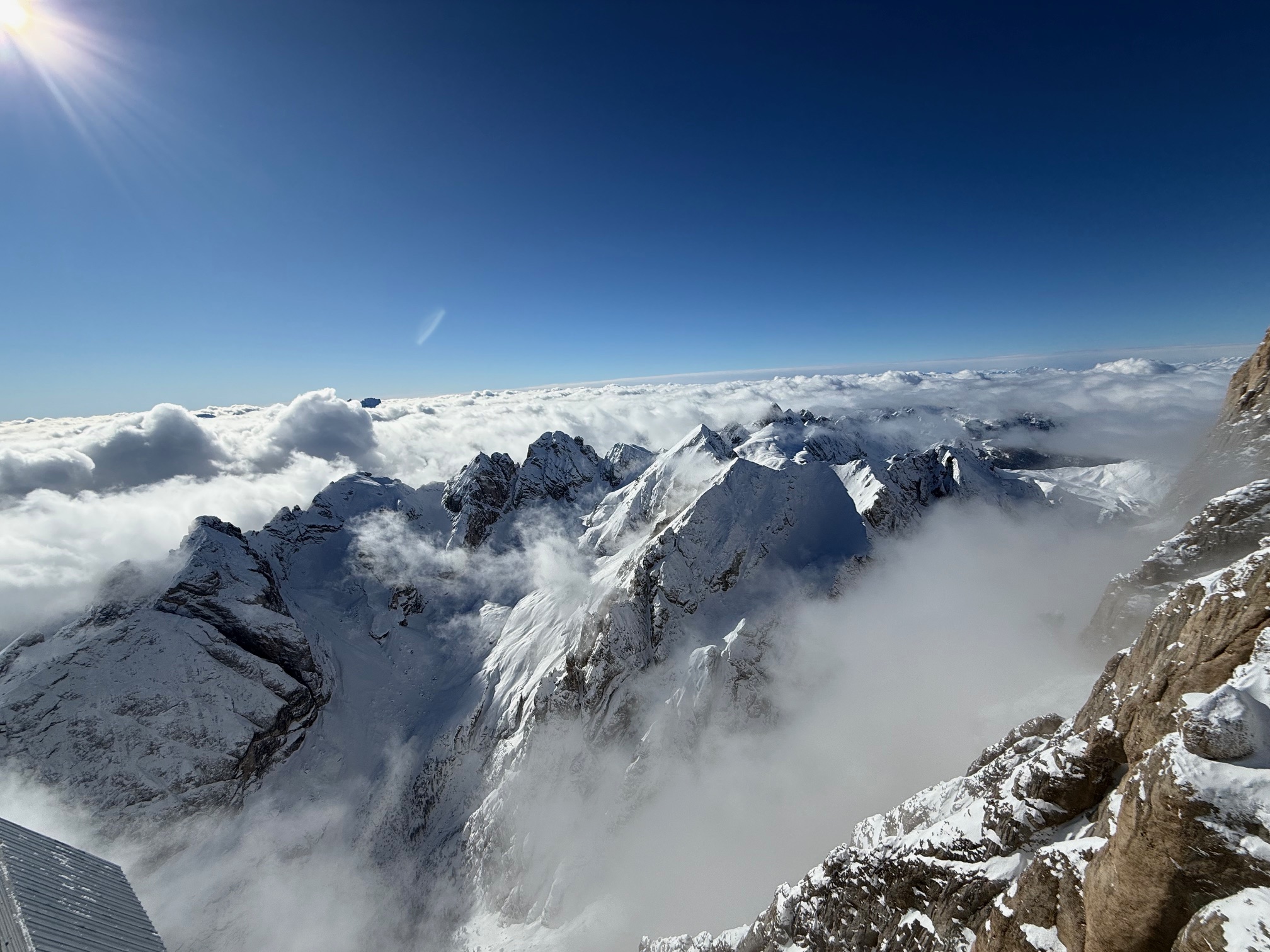
The highest point in the ski system rises atop the Marmolada Glacier, also known as the “Queen of the Dolomites.” Unlike the surrounding peaks, Marmolada is composed of marmolada limestone, giving it a distinct look and feel. At 3,400 meters (11,154 feet), the summit towers above the clouds.
From the top, skiers can spot the Tofane Olympic course and other peaks piercing the cloud layer like a miniature topographic map, creating the sensation of standing above the world — almost Everest-like in scale.
Village to village
Skiing village to village delivers one of the Dolomites’ greatest thrills. Along the way, culinary traditions shift and first languages change between Italian, German and Ladin. The route between Cortina and Val Gardena passes a frozen waterfall and even includes a horse tow, while the famed Sella Ronda circuit in Alta Badia and Val di Fassa loops skiers over four mountain passes through roughly 18 runs and countless lift and gondola rides.
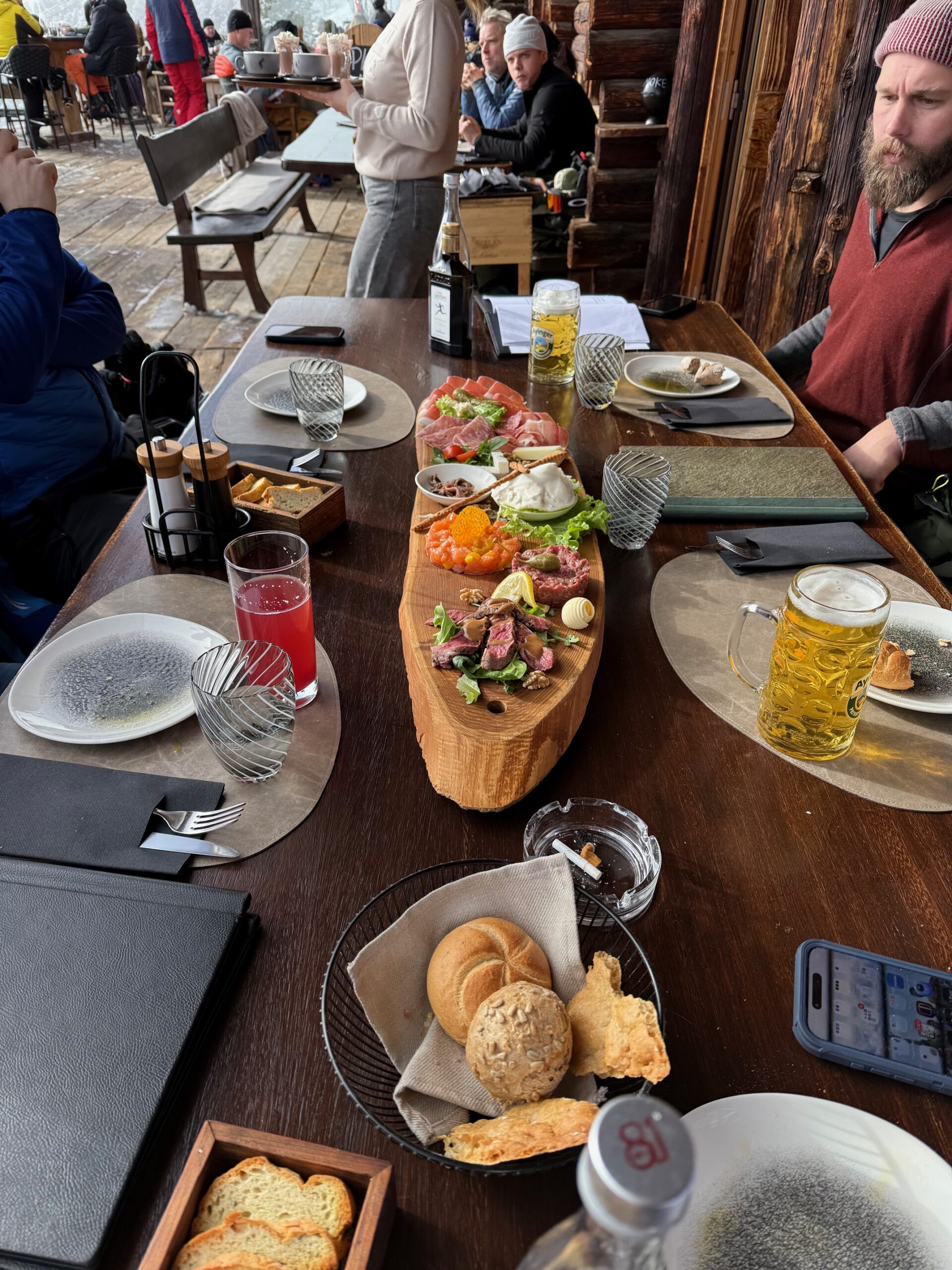
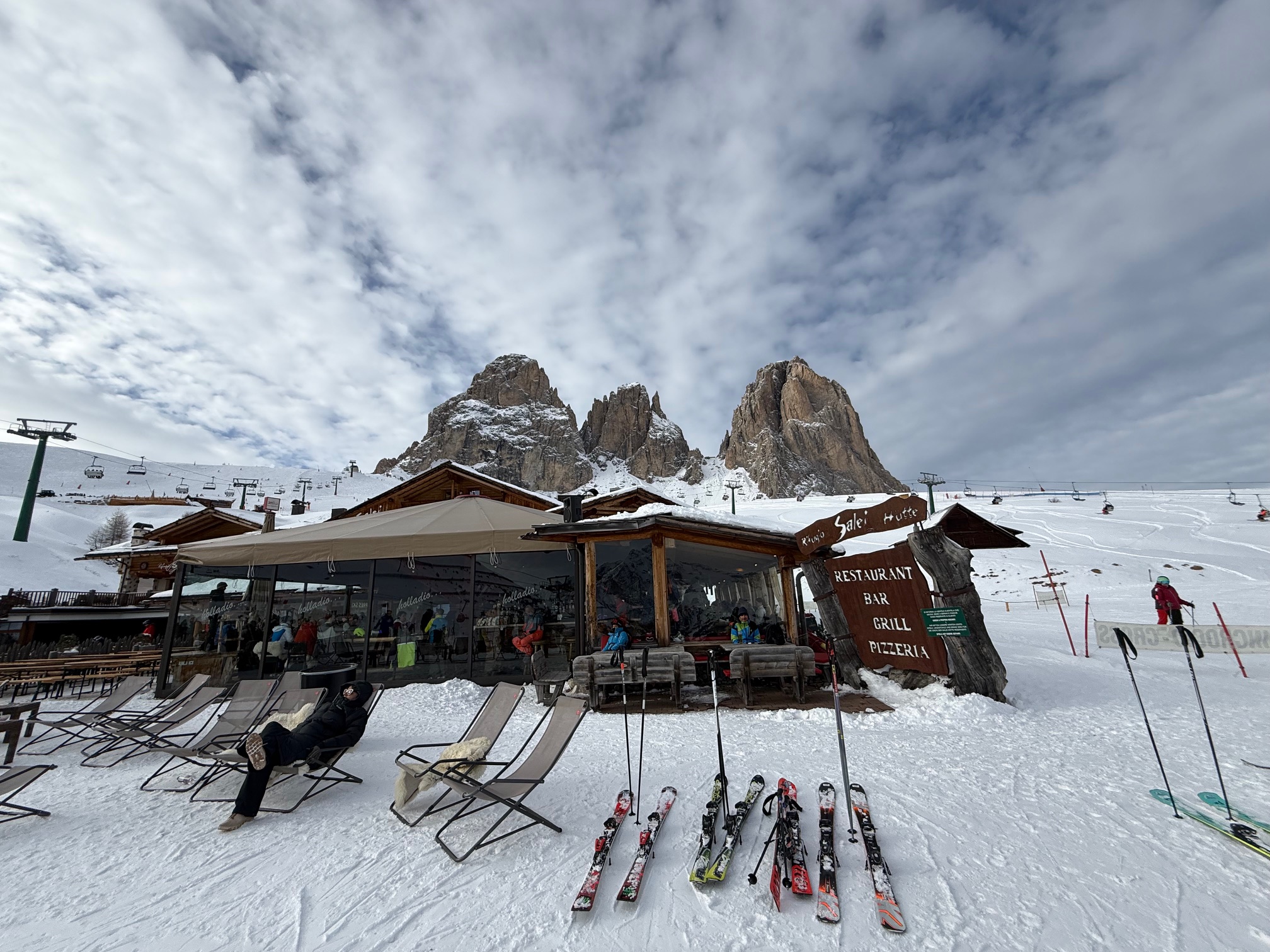
No matter the route, skiers quickly learn the Italian approach works best. Pause midmorning for an espresso or cappuccino, then settle in for a long lunch at a mountaintop rifugio — nearly all independently owned, often by the same family for generations.
Eating well at mountaintop
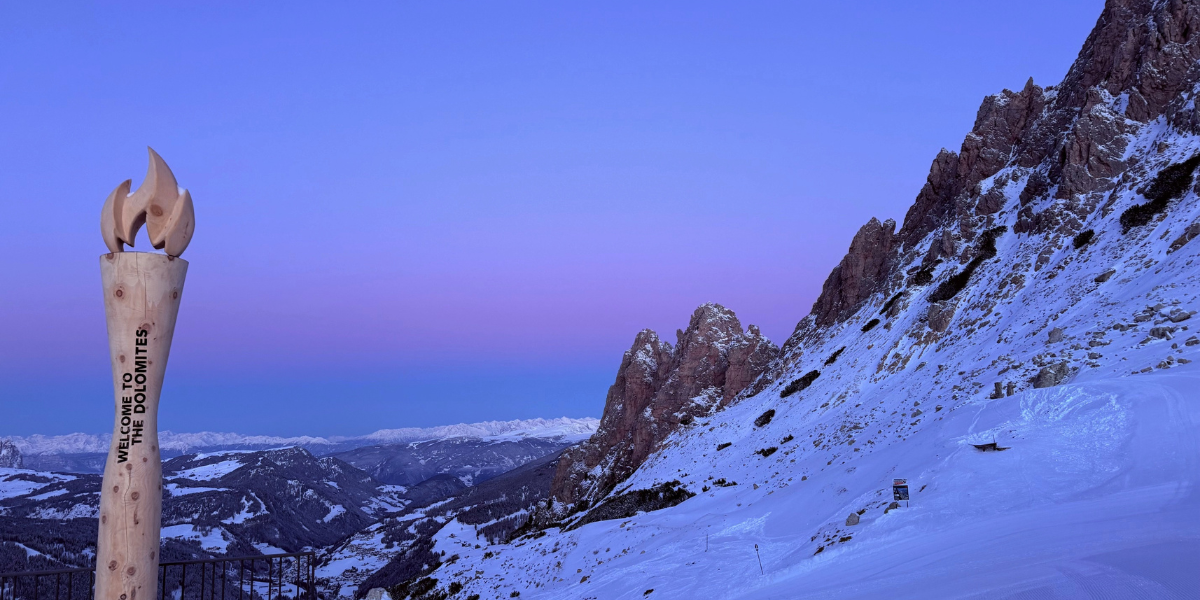
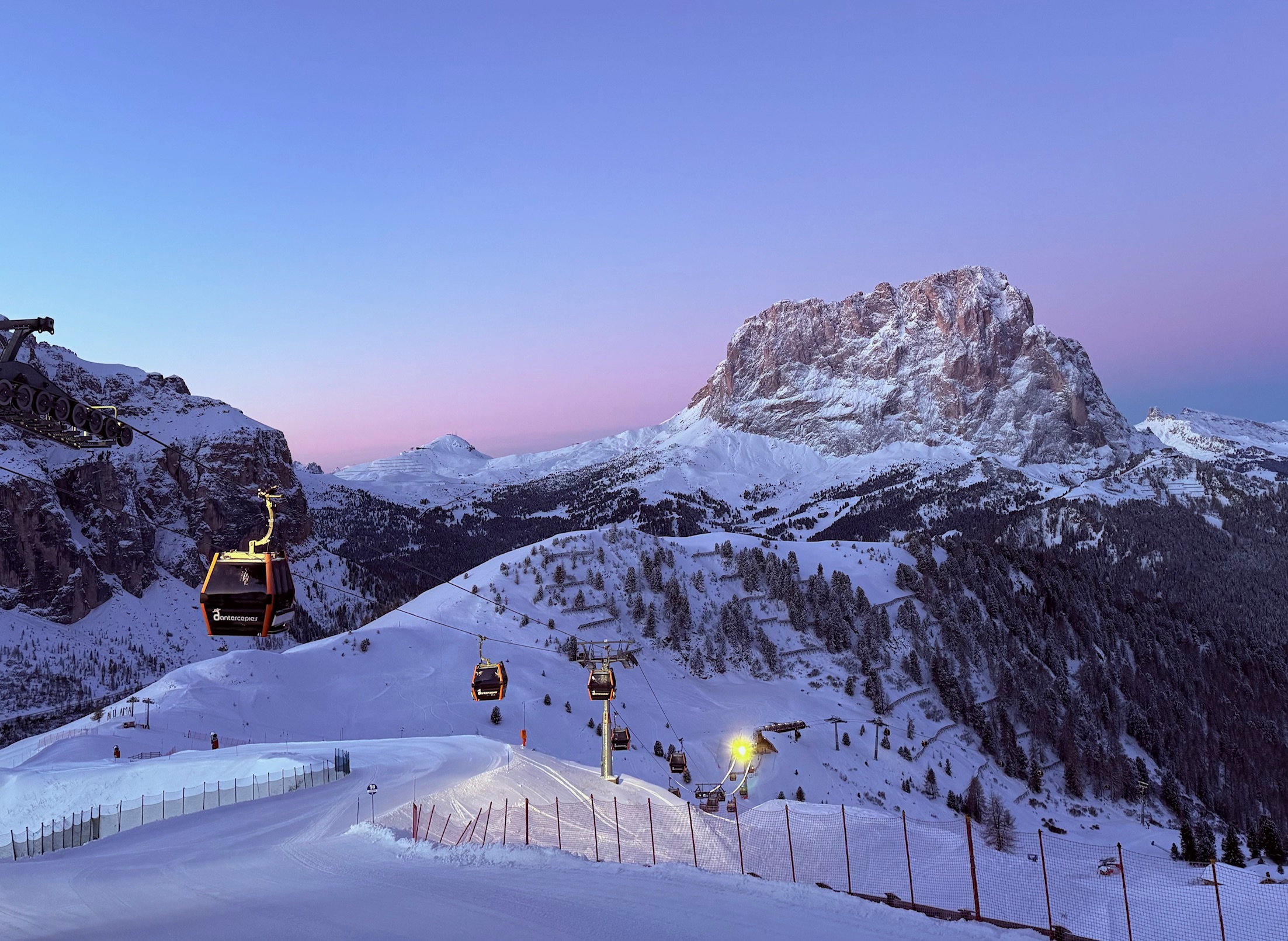
In Val Gardena, the Sunrise Dantercepies experience offers one of the best starts to the day. Skiers watch first light strike the Dolomites as a hand-carved wooden Olympic torch — a nod to the region’s woodcarving heritage — glows in the foreground, before they carve pristine corduroy ahead of the crowds.
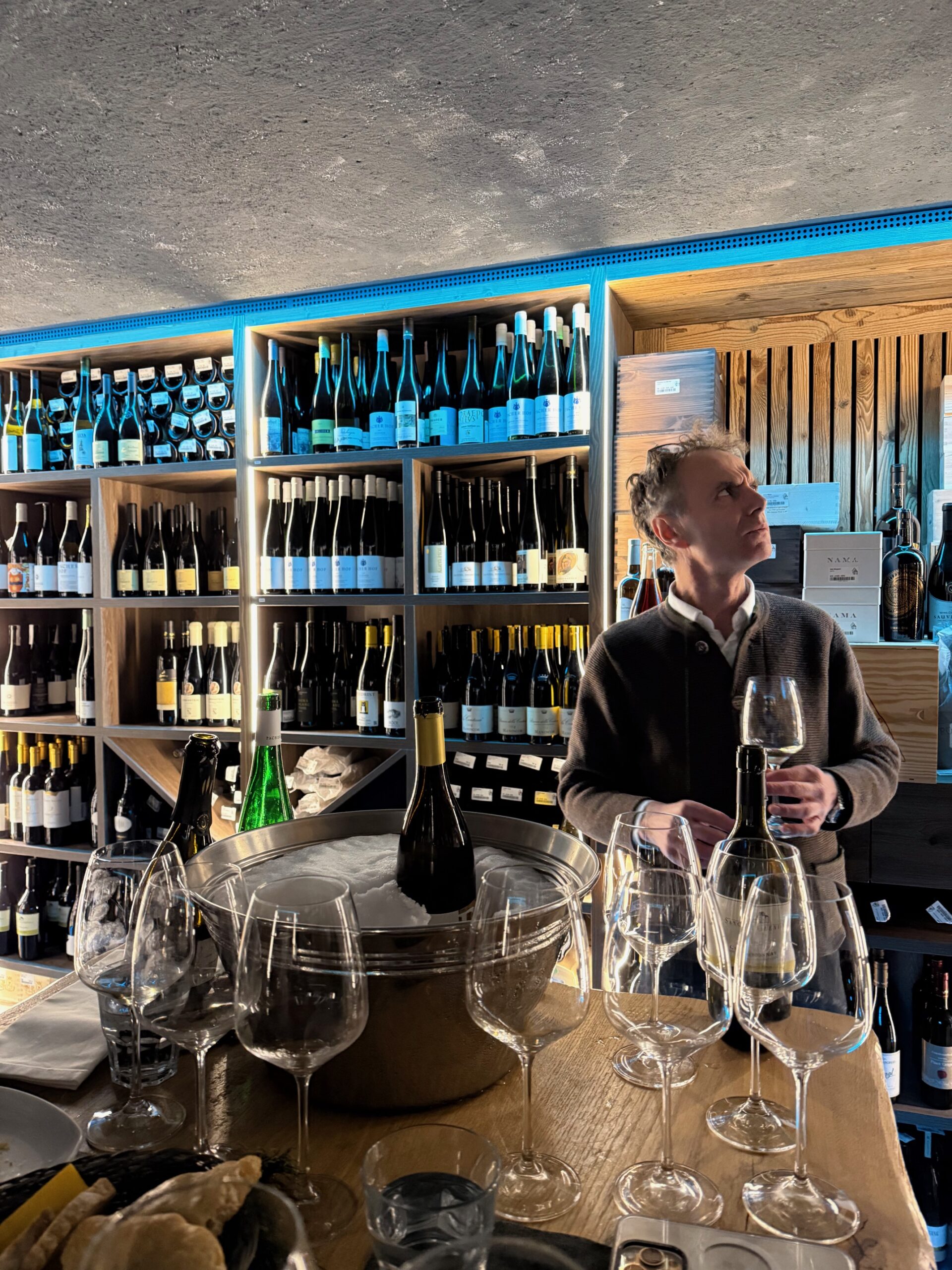
At lunchtime, Rifugio Utia Bioch above Alta Badia serves Michelin-recommended Ladin specialties, including spinach- and cheese-stuffed tutras, locally cured speck and ricotta, alongside one of the region’s most impressive wine cellars. Daniel Baita Hütte at Seceda Val Gardena plates fresh meat, cheese and salmon boards, plus daily-made goulash and standout Kaiserschmarrn. On the Sella Ronda, Rifugio Burz draws skiers in with massive cuts of grilled local pork and beef.
Across the Dolomiti Superski network, operators replace chairlifts and cable cars every few years. New models feature heated seats and ski slots beneath riders’ feet. At Drei Zinnen, east of Cortina, the brand-new Helmjet gondola showcases locally made upholstery — and even offers a VIP aperitivo dining experience in the sky.
Lift etiquette
Lift loading in the Dolomites feels far more chaotic than in North America. Forget orderly lines. Skiers crowd forward at once, jostling for position. Once seated, expect the bar to drop immediately — often automatically. Oh yes, and helmets are mandatory.
Olympic ski mountaineering may spark interest in uphill travel, but resort access remains limited in the Dolomites. Most areas prohibit uphill travel even outside operating hours. Sexten/Drei Zinnen stands as a notable exception, offering South Tyrol’s first official ski touring trail. The route starts in the forest near the Drei Zinnen cable car and climbs to groomed resort terrain, with educational signage covering local flora, fauna and kick-turn technique.
A fraction of the North American ticket price
Compared with North America, skiing here costs far less. A day pass covering the entire Dolomiti Superski system costs 86 euros, and multi-day passes drive the price down further.
So if the women’s Olympic events bring you to Cortina d’Ampezzo, don’t stop there. Venture outward on your skis. You could spend weeks exploring the Dolomites and still never ski the same run twice.
About the Author: Shauna Farnell