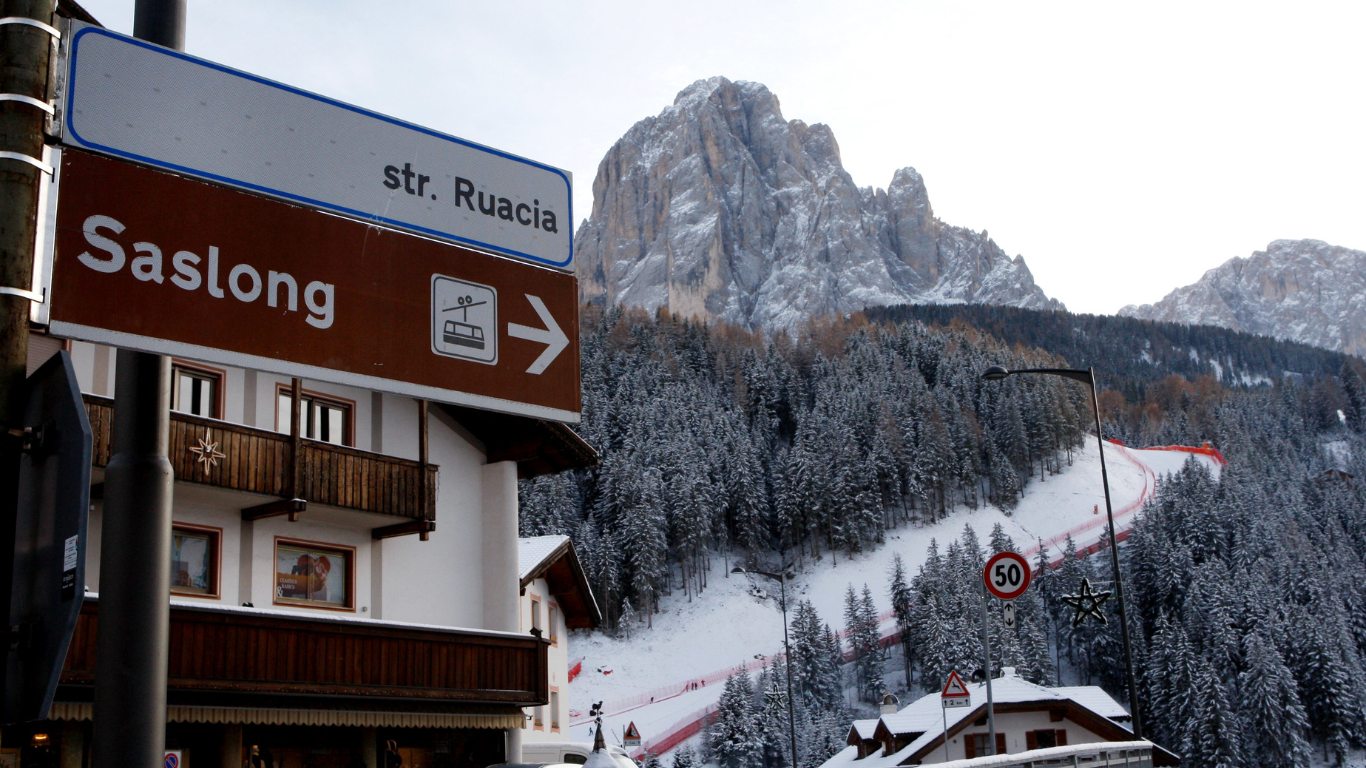
Saslong Mountain Val Gardena / Gröden: GEPA pictures
Information for this story was sourced from an article in The Telegraph, written by Abigail Butcher.
Italy Makes Helmets Mandatory
Italy has become the first country in the world to require ski helmets for everyone. Beginning Nov. 1, 2025, every skier, snowboarder, and even tobogganer must wear a CE-certified helmet.
Police can issue an on-the-spot €200 fine or suspend lift passes for up to three days if a skier rides without one. The Italian government introduced the rule to cut down on serious injuries.
“We are communicating this widely,” said Diego Clara, spokesman for Dolomiti Superski, which includes Cortina d’Ampezzo, the 2026 Winter Olympic host. “We believe 95 percent of people already wear helmets when skiing.”
The rule expanded gradually—from children under 14 in 2021, to under 18 in 2022, and now to all ages. Ski instructor Lizzie Russell of WOW Ski Tours in Alta Badia said, “Skiers need to use what’s inside their heads—their brain—to understand why helmets matter.”
Liability Insurance Required in Italy
Every skier and snowboarder in Italy must also carry public-liability insurance. The law, active since January 2022, ensures coverage if a skier causes an accident.
Insurance isn’t built into lift passes, so resorts urge visitors to confirm their policy before skiing. Those without proof of coverage can face fines or lose lift privileges.
France Expands Its Smoking Ban
France’s new nationwide smoking ban took effect July 1, 2025, outlawing smoking in nearly all outdoor public spaces—including sports venues. Ski resorts expect the rule to cover lifts and pistes this winter.
Les Gets pioneered a similar ban in 2022 after volunteers collected 3,000 cigarette butts during a single cleanup. “The number of butts we collect each season has dropped by two-thirds,” said resort spokesman Cyril Tardieu. “Guests tell us they enjoy a cleaner mountain.”
The French lift association, Domaines Skiables de France, is finalizing how to apply the law across resorts.
Alcohol and Drug Rules on the Slopes
Italy enforces a blood-alcohol limit of 0.50 percent, the same as for driving, and maintains zero tolerance for drugs on the slopes.
Other Alpine nations don’t set formal limits, but being intoxicated can still carry severe penalties. In France, endangering others while drunk—by crashing or triggering an avalanche—can bring a €15,000 fine or a year in jail.
In Colorado, skiing or riding a lift while drunk can cost $1,000, and most insurance policies deny coverage for alcohol-related accidents anywhere in the world.
Other Resort Rules to Remember
Italy bans eating or drinking on ski lifts or boarding zones and climbing slopes with snowshoes except during emergencies.
In Austria’s Ischgl, wearing ski boots between 8 p.m. and 6 a.m. violates local regulations and can result in a €2,000 fine.
These lesser-known rules show how seriously Europe now treats mountain safety and etiquette.
The New European Standard
From mandatory helmets and liability insurance in Italy to expanded smoking bans in France, Europe’s resorts are tightening regulations ahead of the 2026 Winter Olympics. The new message is clear: be insured, be equipped, and be responsible.
Before hitting the slopes this winter, make sure your gear—and your paperwork—are in order. Ski smart, ski safe, and enjoy Europe’s mountains responsibly.
The original, well-written Telegraph article is available with a subscription.
About the Author: SR Staff Report