Mary & Elisabeth Bocock / GEPA pictures
Ski racing is an individual sport. At the start gate, there is one athlete, one course and one clock.
For eight athletes connected to the Stifel U.S. Ski Team program, however, the journey toward that start gate includes someone unusually close: a sibling chasing many of the same goals.
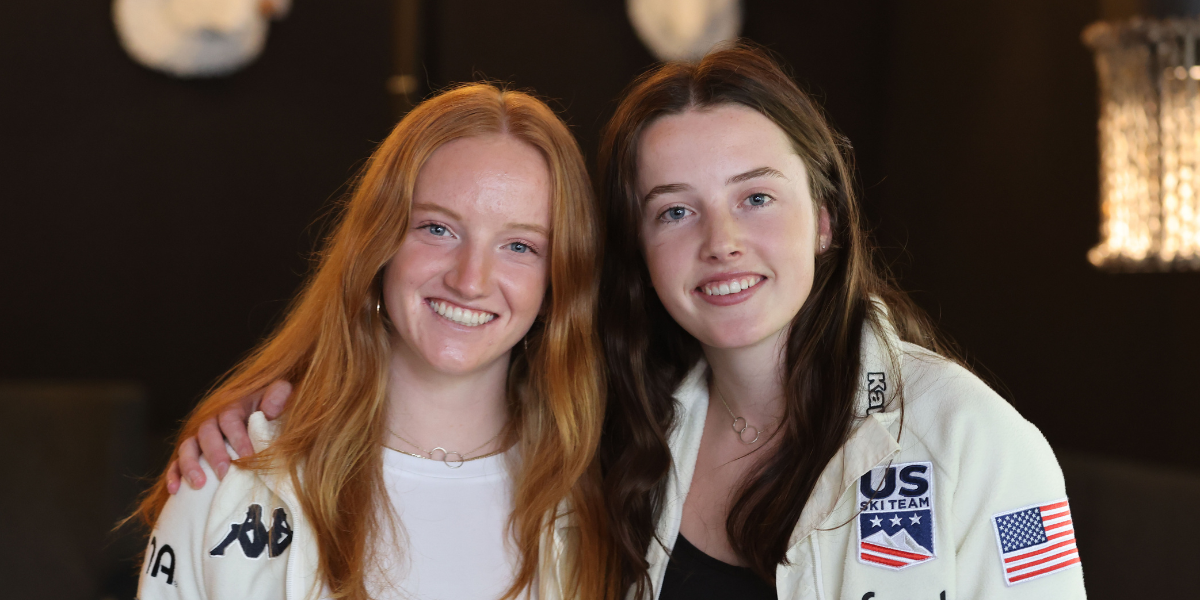
Twins Liv and Kjersti Moritz grew up racing in Colorado’s Eagle County with Ski & Snowboard Club Vail. Older sister Mary and younger sister Elisabeth Bocock grew up in Park City, Utah, and developed at nearby Rowmark Ski Academy in Salt Lake City. Older sister Tatum and younger sister Logan Grosdidier came from Washington before continuing their development with Steamboat Springs Winter Sports Club in Colorado. Older brother Camden and younger brother Jevin Palmquist started at Buck Hill in Minnesota before their family moved to Colorado and the brothers joined Team Summit.
Three pairs are sisters. The Palmquists are the only brothers. All four are same-gender sibling pairings.
Their results have already placed them among the country’s most accomplished young alpine racers. But their relationships reveal something a results sheet cannot: What happens when one of the people you most want to succeed is also capable of beating you?

The teammate who already knows
Liv Moritz never needs to tell Kjersti when something is wrong.
“The greatest gift of sharing elite ski racing with Kjersti is having someone who pushes me to be my best while also knowing the struggle and challenge that comes along with it,” Liv said. “I don’t have to tell her how I’m feeling for her to know, which is a unique type of support.”
Kjersti describes Liv not simply as her twin, but as her best friend.
“It’s really special to have my best friend there, someone who supports me but also pushes me to be the best version of myself,” Kjersti said.
Mary Bocock tells a strikingly similar story about Elisabeth.
During the 2025-26 season, calling her younger sister became part of Mary’s World Cup routine — even before speed races.
“I would call Elisabeth before every single one of my races, typically before the speed races telling her how scared I was for the jumps, and she always knew exactly what to say to make me feel better,” Mary said.
Sometimes Mary was less than 15 minutes from starting.
“People would be confused because she’d get off the phone and they’d say, ‘Isn’t she starting in less than 15 minutes?’” Mary said. “And typically I was, but calling her became part of my routine.”
That is something even a close teammate may not be able to provide.
Making an individual sport feel like a team sport
Elisabeth sees the same relationship from the other side.
Months on the road can become lonely, she said, and having Mary there gives her a connection to home that teammates cannot completely replace.
“She also is my best friend and knows exactly what to say or do when I am down without me having to say anything,” Elisabeth said.
It changes how she experiences Mary’s races, too.
“It sort of makes ski racing feel like a team sport because of how invested I also am in Mary’s races,” she said.
The Bococks are currently the most established World Cup pair among the four sibling families.
Mary enjoyed a breakout 2025-26 season, qualified for the U.S. Olympic team and reached her first World Cup Finals in super-G. Her best World Cup result was 11th in the Soldeu super-G, and she has also scored World Cup points in downhill.
Elisabeth has scored World Cup points in six giant slaloms and one slalom. Three of those GS results were inside the top 15, led by a 12th-place finish at Kronplatz.
Their results do more than advance their own careers. Mary ranks inside the top 60 of the World Cup Start List in downhill and super-G, while Elisabeth is inside the top 60 in giant slalom, creating additional U.S. nation quota positions in those disciplines.
A national championship neither wanted to trade
At the 2026 U.S. Alpine Championships presented by Stifel in Vail, Elisabeth won the giant slalom. Mary finished second.
For Mary, the result surpassed even some of the biggest milestones of her breakthrough season.
“That day was honestly my highlight of the year, including my Olympic selection and making it to World Cup Finals,” Mary said.
She was pleased with her own skiing and equally happy to see Elisabeth win.
“Doing well at that race with Elisabeth winning felt so fulfilling,” Mary said. “And of course also so fun that my parents were able to watch it in person.”
Elisabeth remembers the same result in much the same way.
“To have a result that I was proud of, while Mary simultaneously had a result that she and I were proud of, was super special,” she said.
Again, Elisabeth returned to the same thought.
It made an individual sport feel like a team sport.
Love does not remove competition
These siblings support each other. They are also elite athletes.
Competition matters.
Liv said comparison has been the most difficult part of sharing a career with her twin.
“Kjersti and I were compared throughout our whole childhoods being twins and it is hard when you have someone so close to you as a gauge for where and how you should be performing competition-wise,” Liv said.
Mary remembers a period when Elisabeth began consistently beating her early in their World Cup careers.
“That was a hard pill to swallow,” Mary said.
Yet Mary also remembers how Elisabeth handled it.
“I got over it pretty quickly because she was so gracious and very cognizant of how I would feel,” she said.
Logan Grosdidier is equally open about racing her older sister.
“We’re both very competitive people, so naturally we will compete against each other, which can be challenging,” Logan said. “But that competition is what has driven us to improve.”
Then there are the Palmquist brothers.
Both are slalom specialists. They frequently train and race in the same discipline, leaving little room to avoid direct comparison.
Camden admits one thought occasionally follows him into the start.
“I can’t let him beat me.”
The Palmquists turn brotherly competition into an advantage
Camden and Jevin Palmquist may provide the clearest example of sibling competition becoming a training tool.
“The last couple years have been great skiing with Jevin,” Camden said. “It brings another level to the competition in almost everything we do related to skiing.”
Camden believes they can push each other harder than ordinary teammates.
Jevin agrees.
“The most valuable thing is that we both push each other quite hard in training,” he said. “That is what prepares both of us for what’s ahead.”
Jevin does not find racing against his older brother uncomfortable.
“If anything, it makes it more fun to compete,” he said.
Camden has made three World Cup slalom starts and built several seasons of Europa Cup experience. Jevin, entering his third FIS season, earned a personal World Cup slalom start position for 2026-27.
Camden’s reaction captured both sides of the relationship.
“It was awesome to see,” he said. “He’s always been chasing me, and it was a little nudge for me to put some more work in. I was super stoked that he was the one that got it.”
Pride and motivation can occupy the same space.
Click on the images to enlarge
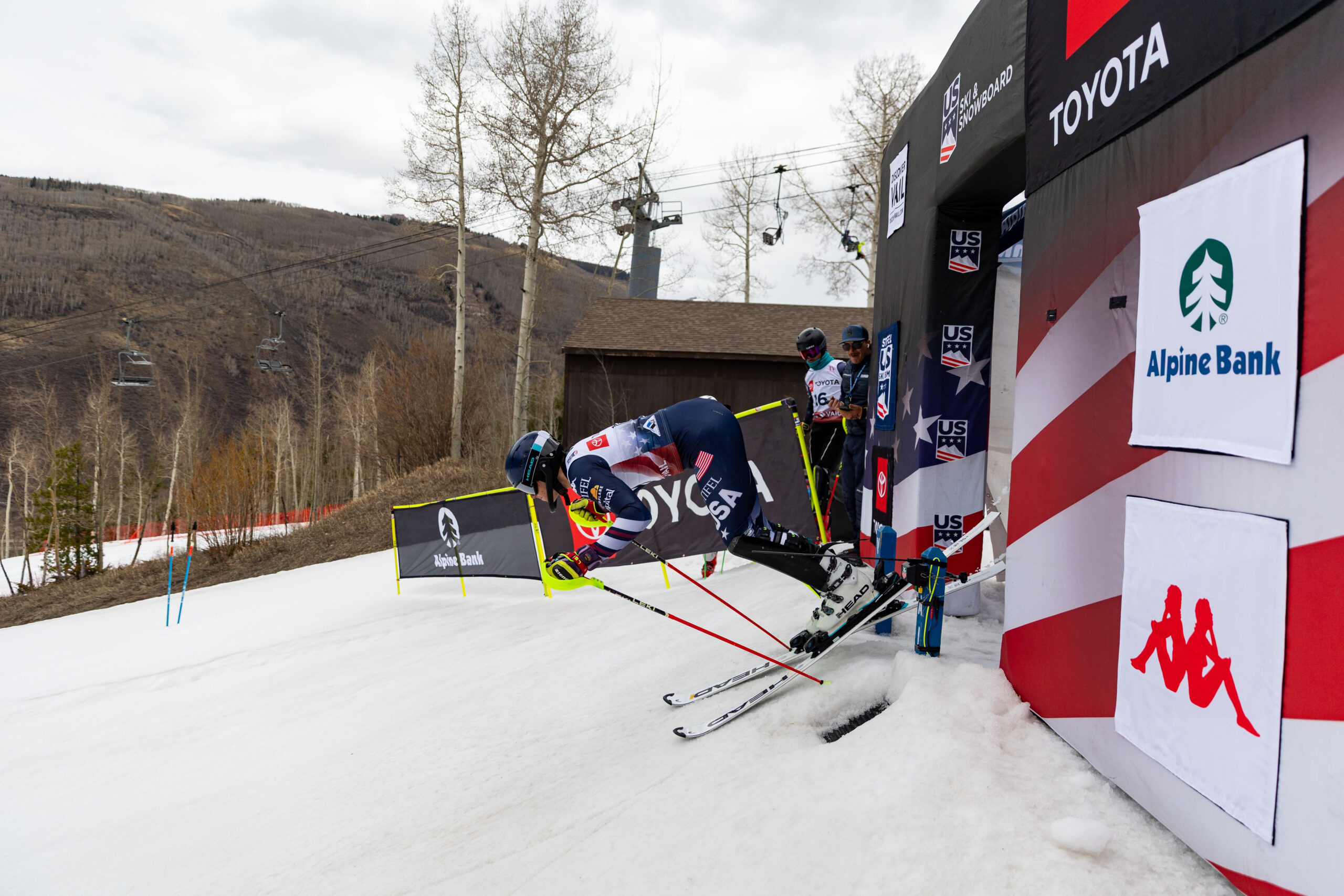
Vail, Colorado.
Photo: Matan Coll // U.S. Ski Team @matancoll // @usskiteam
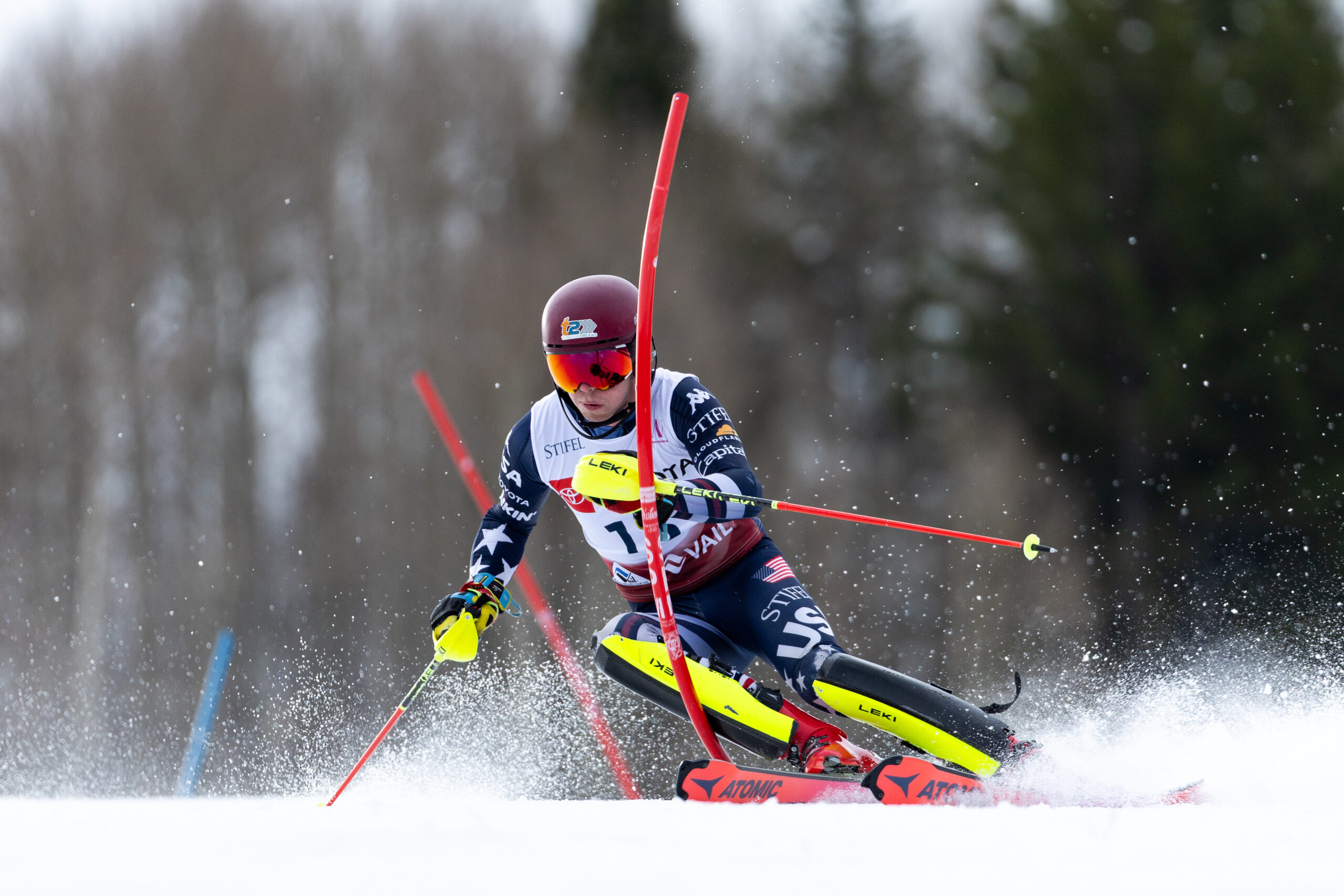
Vail, Colorado.
Photo: Matan Coll // U.S. Ski Team @matancoll // @usskiteam
The Grosdidiers know when to talk — and when not to
Tatum and Logan Grosdidier share several disciplines and have followed each other into international racing.
Tatum, the older sister, has competed at three Junior World Championships and accumulated significant Europa Cup experience. She earned a personal World Cup super-G position through the NorAm circuit for the 2025 season, although she did not use it. Last winter, she produced a career-best seventh-place Europa Cup giant slalom result in Oppdal, Norway.
Logan’s recent rise has included a World Cup debut at 17, a Junior World Championships silver medal in super-G and the 2026 NorAm super-G title. She also finished second in the NorAm overall standings and, as the top North American, earned the overall NorAm World Cup start position. That gives her personal start rights in all four World Cup disciplines — downhill, super-G, giant slalom and slalom — for the 2026-27 season, should she and the team choose to use them.
Logan says Tatum’s international experience has helped prepare her for those opportunities.
“Tatum has helped me mentally prepare for the level of competition because she can tell me honestly what the nerves and pressure feel like at that level,” Logan said.
Their relationship matters just as much after difficult races.
“We know when to give each other space while still supporting the other,” Logan said. “We love to see one another succeed because we know how much work goes into every result.”
There is no manual required.
“We know each other best, and we know the best way to support one another.”
Click on the images to enlarge
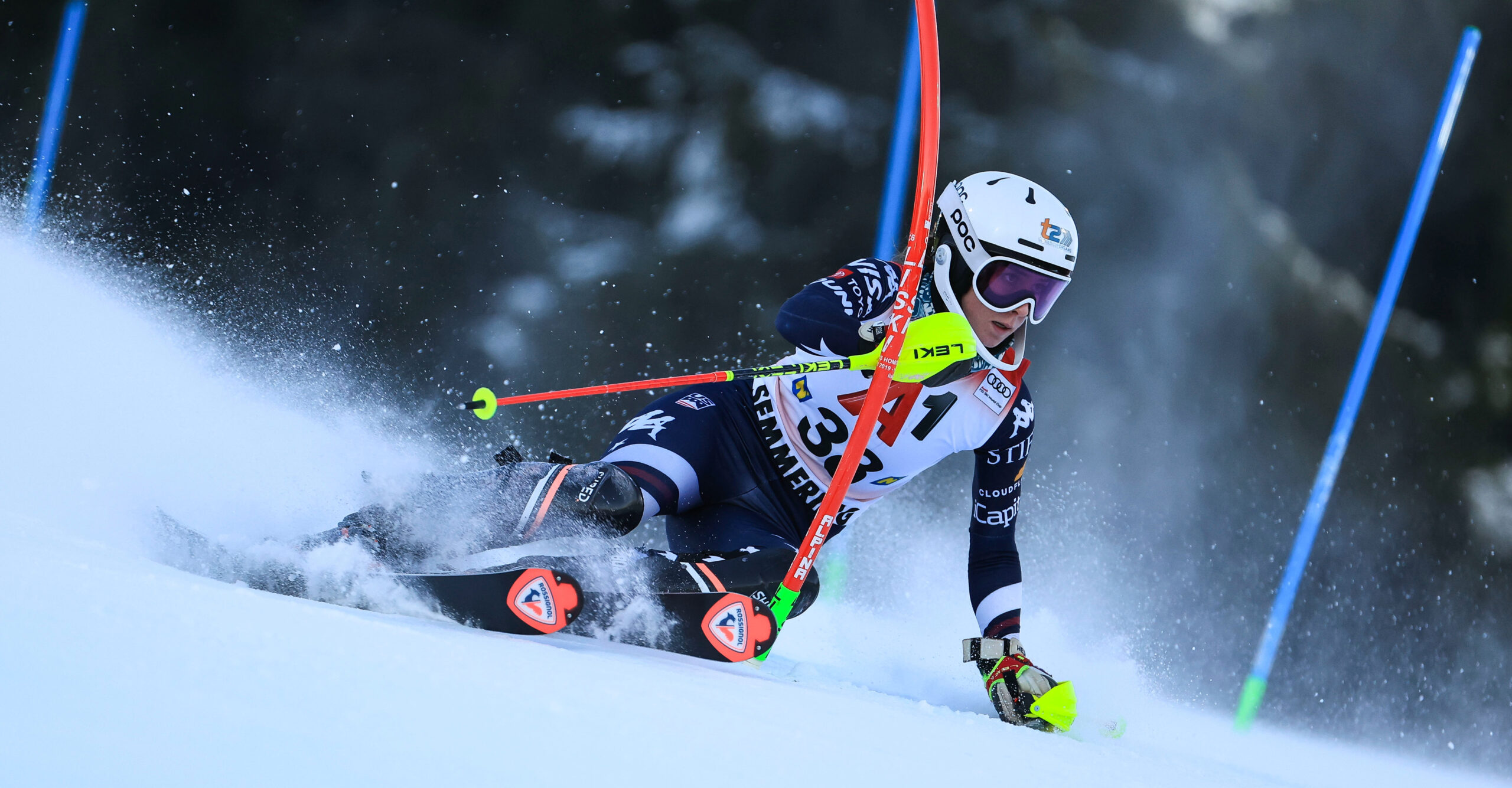
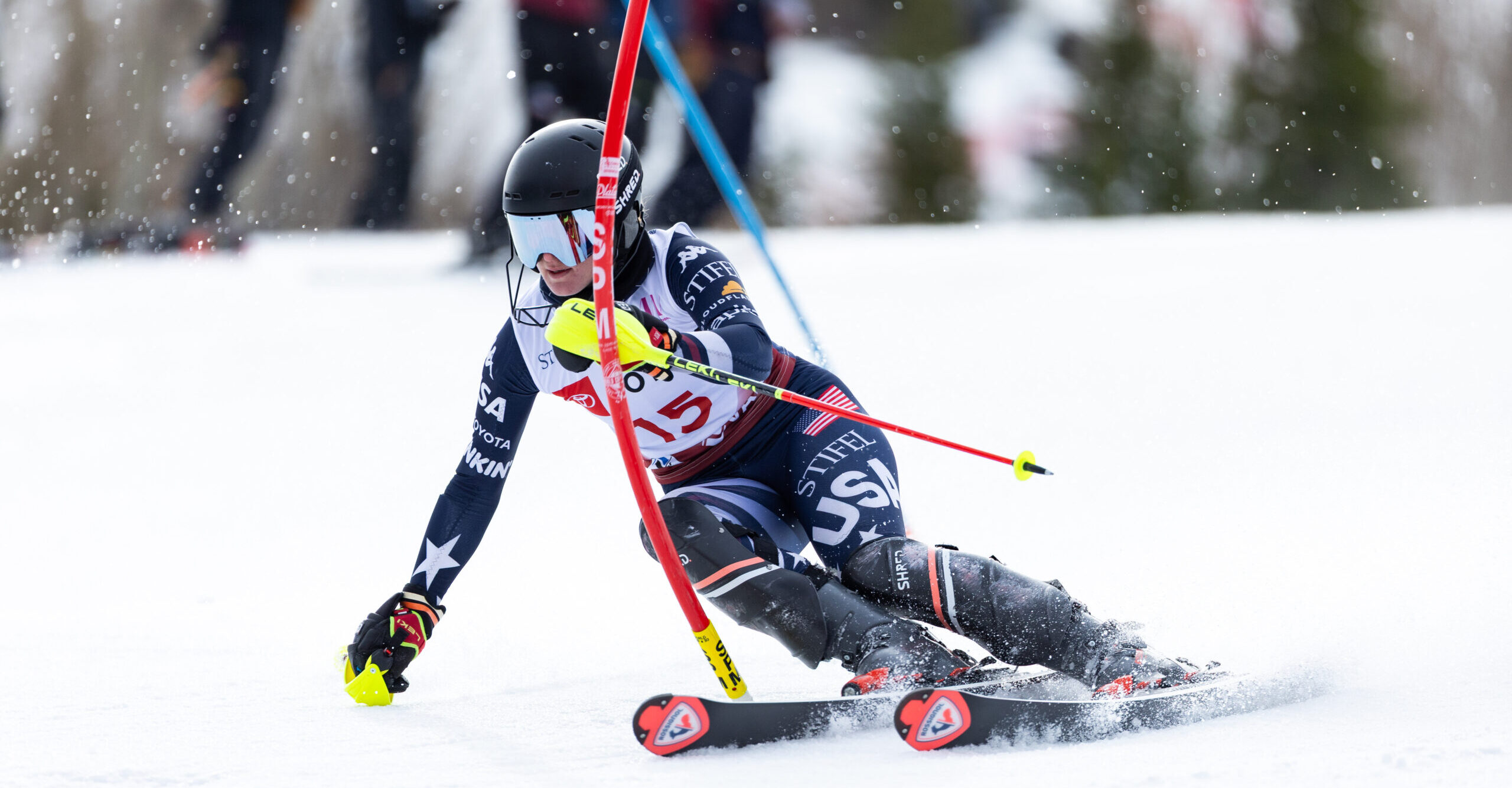
Vail, Colorado.
Photo: Matan Coll // U.S. Ski Team @matancoll // @usskiteam
The Moritz twins learned to become individuals
Few athletes offer a more obvious comparison than Liv and Kjersti Moritz.
They were born Nov. 28, 2004. They learned to ski together, progressed through Ski & Snowboard Club Vail and became NCAA skiers and college soccer players.
Liv competed in soccer at the University of Denver. Kjersti played at Middlebury College.
Both also became NCAA skiing All-Americans. Liv earned first-team giant slalom honors in 2024, while Kjersti earned second-team GS honors in 2026.
Their paths might have remained even more parallel if Kjersti had not lost nearly a year to a knee injury.
The interruption forced both twins to recognize something important.
“We’ve learned to recognize that we are different people and are on our own paths that are going to look different,” Liv said.
Kjersti used part of her injury period to recharge mentally. Yet one thing helped pull her toward competition again.
“One of the things that kept me hungry and excited to come back was knowing that I would get to ski and travel with my sister again,” she said.
Click on the images to enlarge
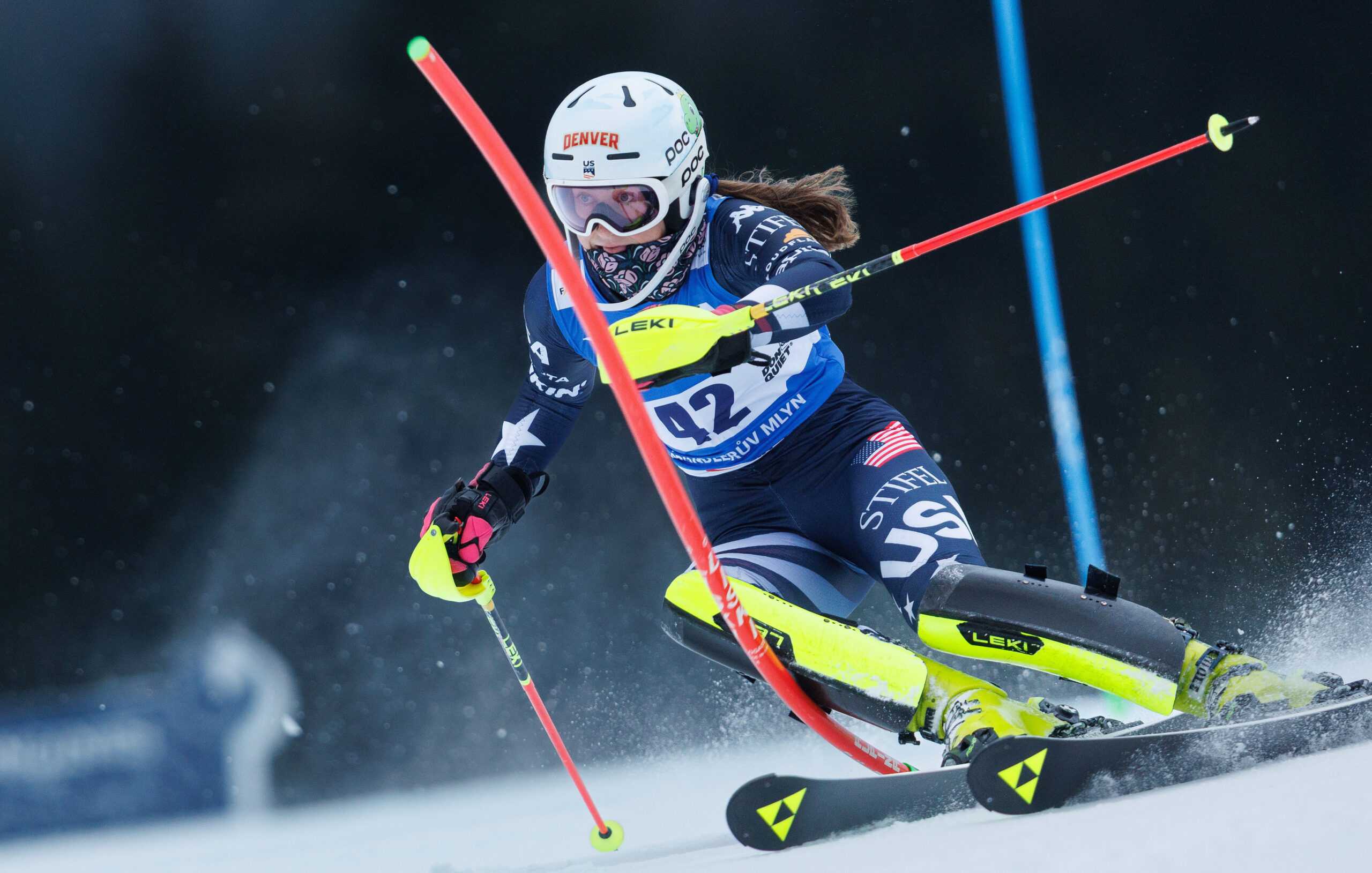
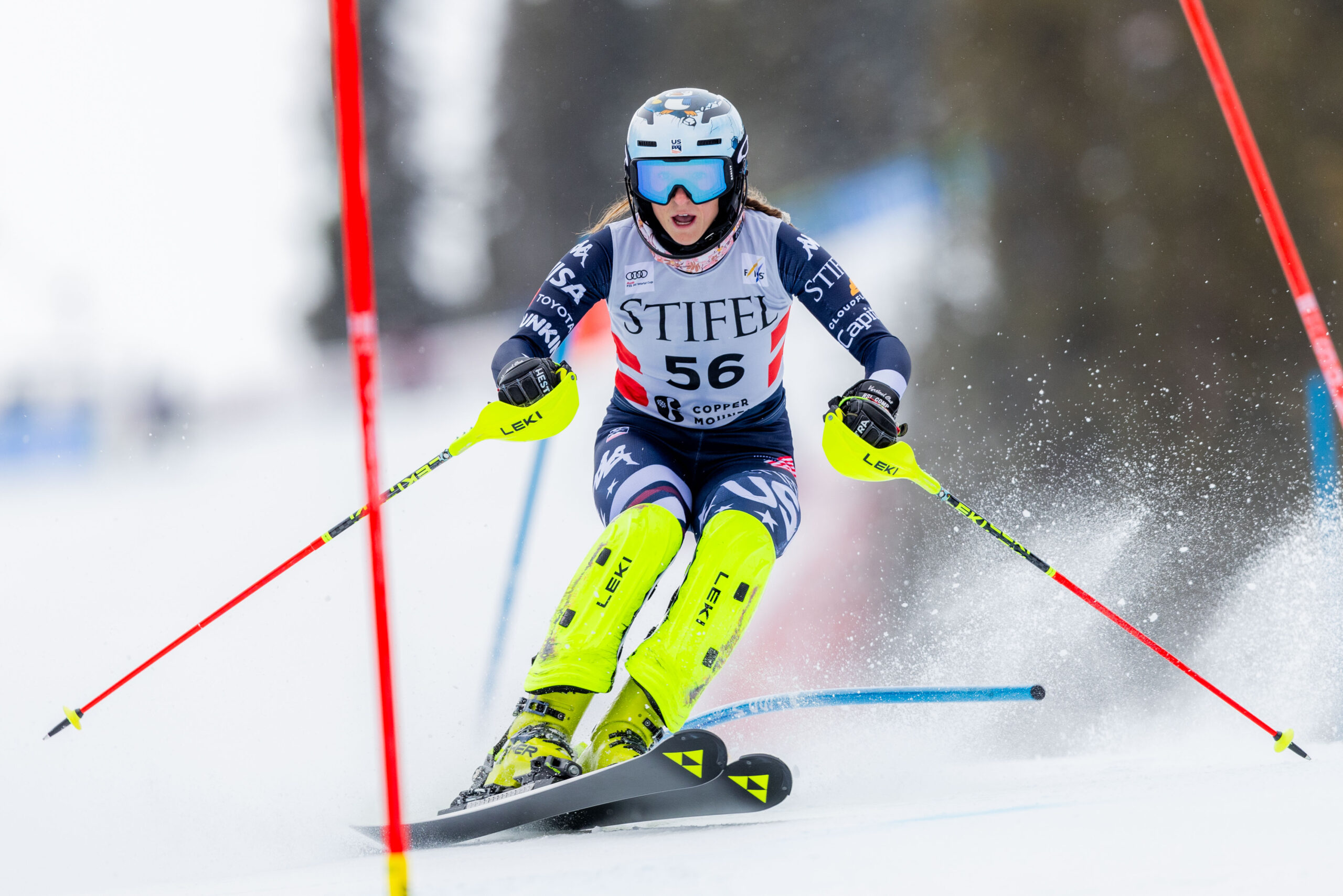
From learning to ski together to starting a World Cup together
Their shared journey produced an extraordinary moment last November.
Liv and Kjersti learned to ski at age 3 near their Vail home. More than 17 years later, both started the Nov. 30, 2025, World Cup slalom at Copper Mountain.
For Kjersti, it was part of her first World Cup experience.
“That series was my first World Cup races, with my twin sister, and in front of my family,” she said. “I felt like everything came together at once.”
Liv remembers the people surrounding them.
Extended family came. So did childhood friends, teachers and coaches who had influenced their careers.
“These people in particular have been following along in our journeys from a distance, so it was really special to have such a large support crew cheering us on in person,” Liv said.
The twins shared another World Cup slalom start at Semmering, Austria, on Dec. 28.
Later in the season, Liv broke through with a 13th-place slalom finish at Špindlerův Mlýn, scoring her first World Cup points.
Kjersti’s reaction captures much of what this sibling story is about.
“I was so proud of her,” she said. “She had been skiing so well and missing the flip by inches, and seeing her achieve that made me hopeful that my time might be coming soon.”
Siblings can become technical resources
Their relationships extend beyond emotional support.
Logan and Tatum compare sections of the course, terrain and line. They watch video together and discuss mistakes.
“We talk through what one portion of the course looks like compared to another, or what line we think would work best over a certain piece of terrain,” Logan said.
Kjersti and Liv share mental and technical strategies.
“I can learn a lot from her technique and her ability to finish a course in tough conditions,” Kjersti said of Liv.
Yet when race time arrives, the twins separate again.
“We share what we notice and learn from each other, but when it comes time to race, we each stay focused on our own performance,” Kjersti said.
The Palmquists also exchange technical ideas despite developing distinct slalom styles.
“We talk quite a bit about technique and will often run ideas by each other,” Camden said.
Their relationship allows unusual candor.
“We are able to be very critical of each other, but the underlying support is always there,” he said.
Jevin credits Camden with teaching him something less technical but equally important: patience.
“He has taught me the most about how to stay patient when things don’t go my way,” Jevin said.
The Bococks found room to succeed differently
The Bocock sisters now spend much of the World Cup season on different sides of the circuit.
Mary’s strongest discipline is super-G. Elisabeth’s is giant slalom.
Elisabeth believes that difference has helped.
“We have both been able to thrive in our own disciplines while still spending time together but not always being as directly compared to one another,” she said.
Their skiing styles also differ, which gives each another perspective when they discuss technique.
The separation is not complete, however.
Mary wants to continue racing World Cup giant slalom. Elisabeth hopes to add more super-G.
Mary jokingly questions who would actually be teaching whom.
“She is a national champion in super-G, so I would say I mostly get the tips from her in both,” Mary said.
For Elisabeth, sharing more races does not require sacrificing their individual identities.
“It would be awesome to still have our own separate successes, but have more consistent crossover success on the World Cup,” she said.
Click on the images to enlarge
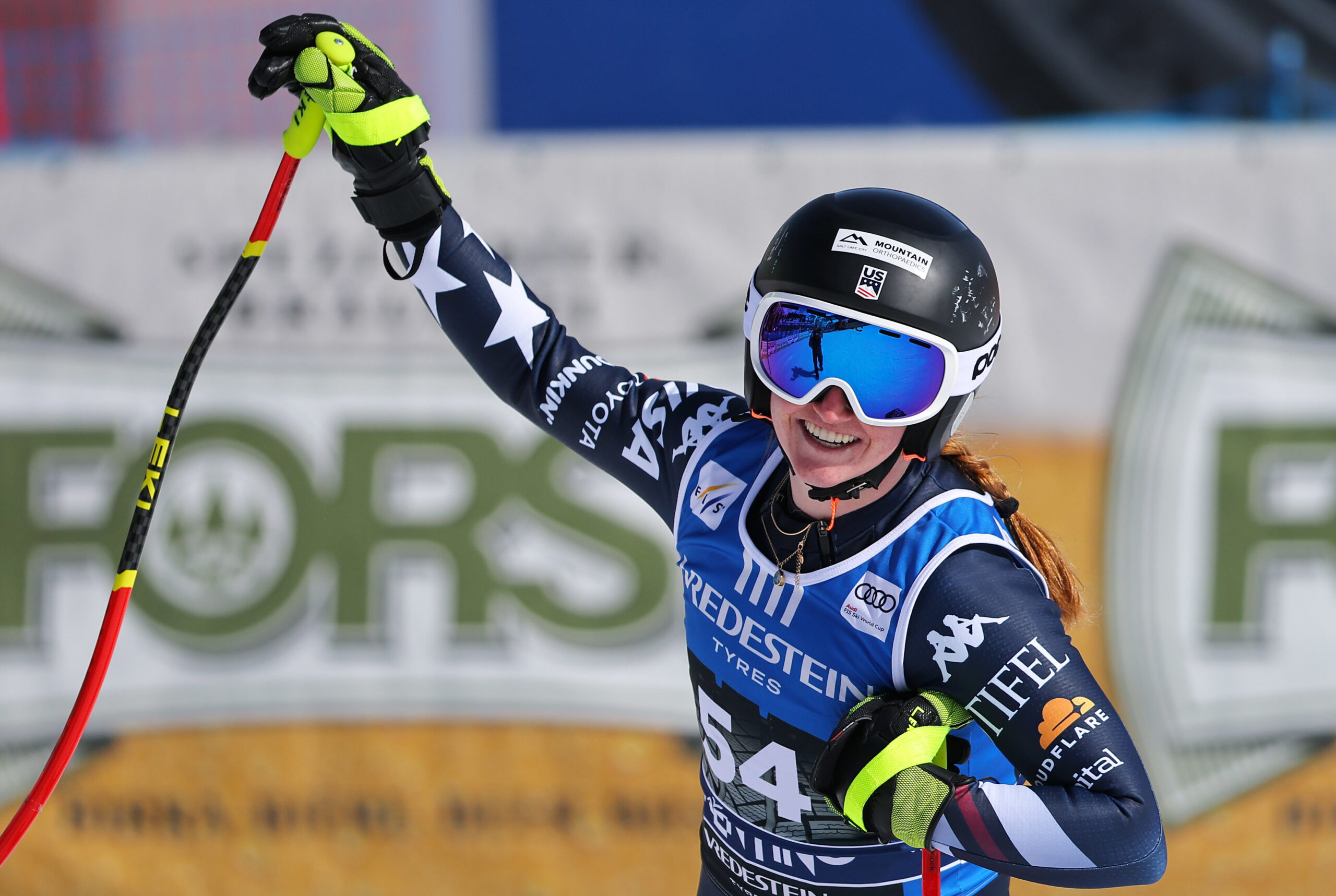
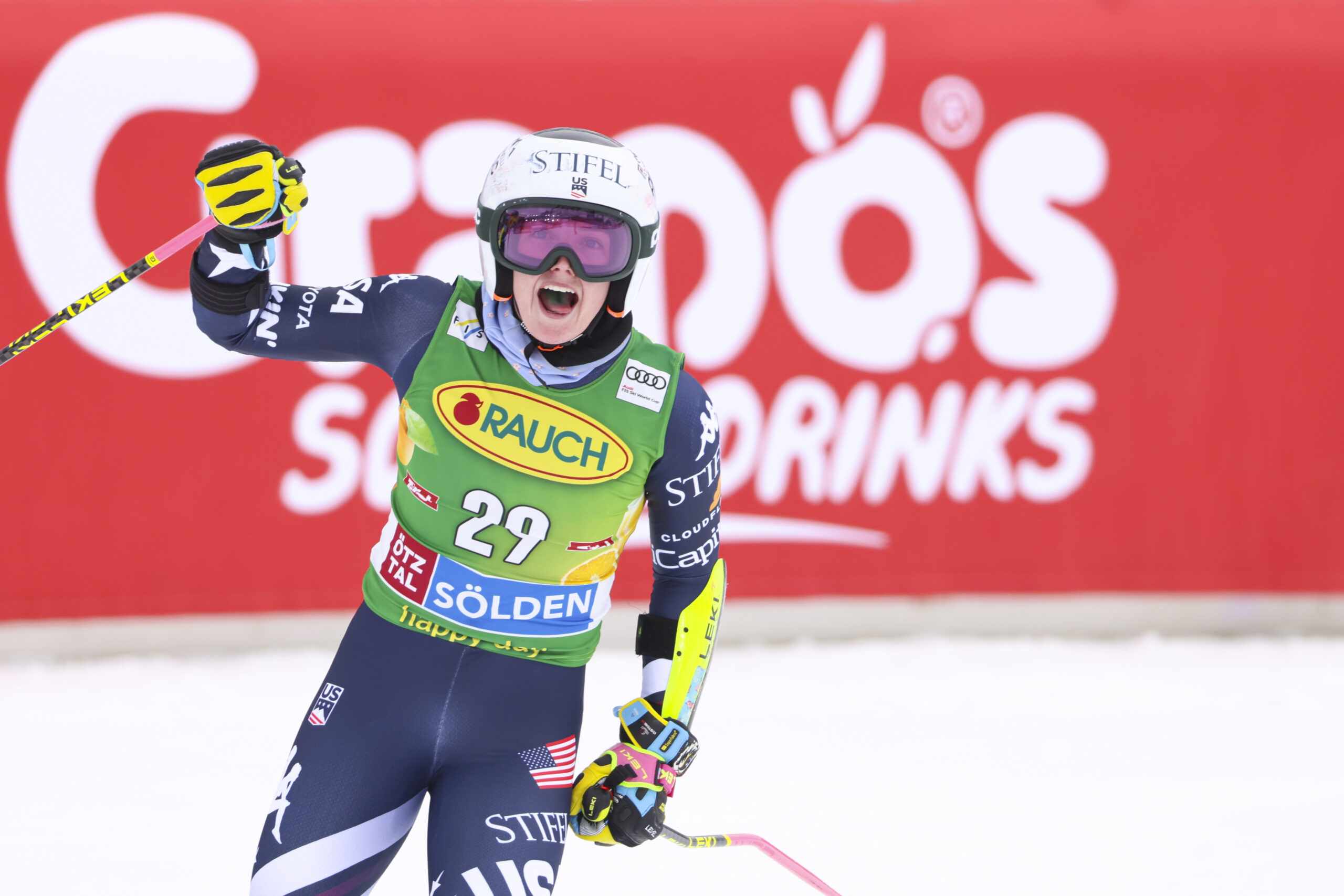
An older sibling can become the first role model
Sibling influence began long before national-team jackets and World Cup starts.
Logan admits that Tatum shaped many of her early choices.
“Whoever Tatum liked, I ended up liking too,” Logan said. “She’s influenced a lot of my skiing, from the racers I looked up to as a kid to the way I approach the sport now.”
The Moritz twins largely shared a hero: Mikaela Shiffrin.
Growing up in the Vail Valley made that connection particularly strong. Some coaches who worked with the twins had also coached Shiffrin when she was young.
Kjersti remembers admiring Shiffrin’s “technique, consistency and ability to perform under pressure.”
The Bococks chose different racers.
Mary admired Tessa Worley, in part because the French star shared her smaller stature and raced on Rossignol.
Elisabeth gravitated toward Marta Bassino.
“I loved Marta Bassino, mostly because she was small but aggressive, which I tried to emulate as well,” Elisabeth said.
Years later, Elisabeth now competes against a racer she once watched from afar.
The Palmquists spent more time skiing than watching
Camden remembers childhood differently.
“We didn’t watch a ton of World Cup, and we skied a ton,” he said.
Jevin still had favorites.
He admired Bode Miller for skiing at the limit and Ted Ligety for looking smooth while moving fast.
Camden also revealed another source of competition inside the Palmquist family.
There is a third brother.
Their younger brother, Trevor, helped push both Camden and Jevin, Camden said.
The family that produced the only brother-brother pairing in this group apparently had another competitor close behind.
Click on the image to enlarge
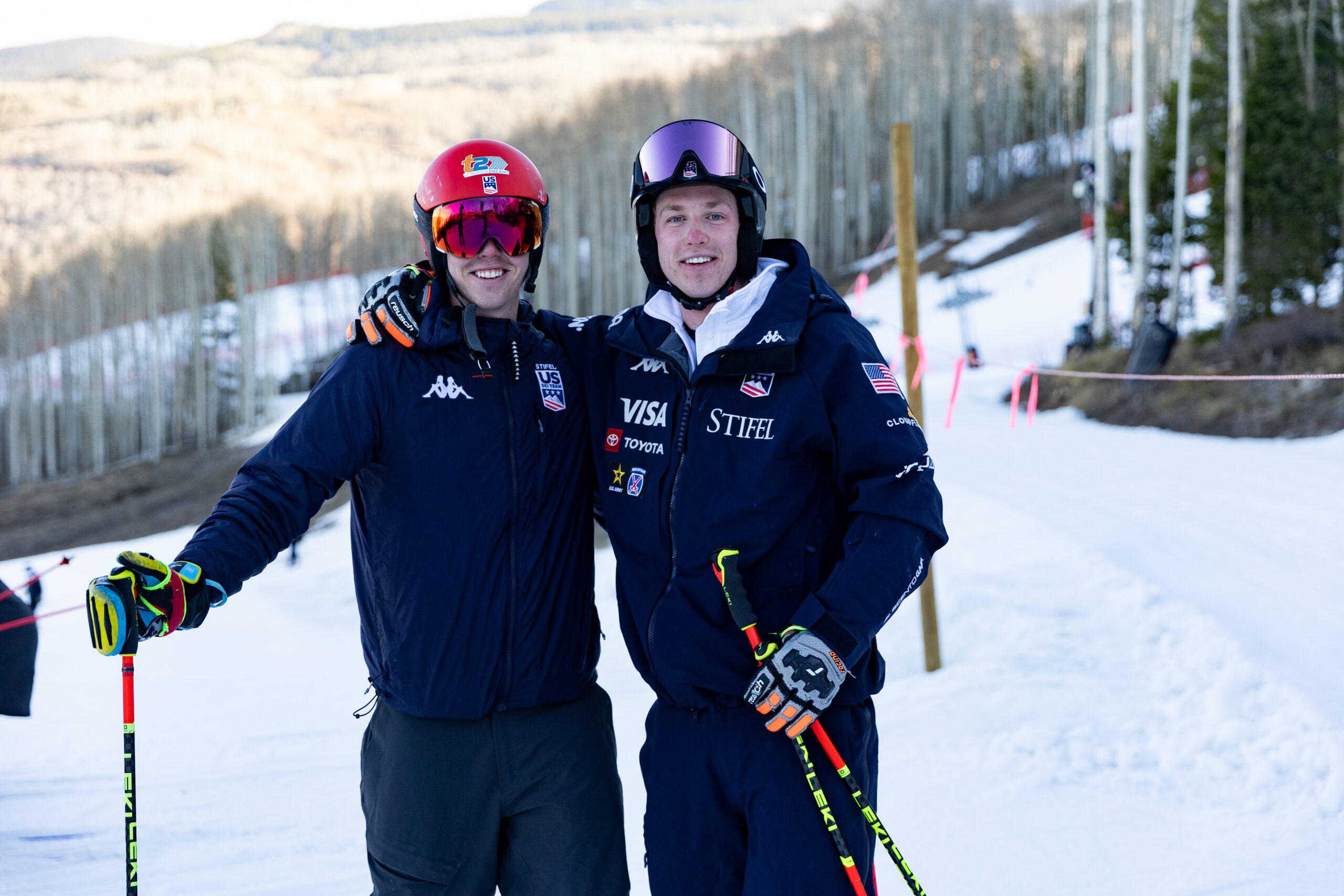
Photo: Matan Coll // U.S. Ski Team @matancoll // @usskiteam
Mary’s Olympic moment belonged to Elisabeth, too
Perhaps no exchange explains the sibling relationship better than the Bococks discussing Mary’s Olympic selection.
Mary qualified for the 2026 U.S. Olympic team during her breakout season.
Elisabeth immediately called.
“When I qualified for the Olympics, she immediately FaceTimed me and was tearing up,” Mary said. “She was more excited than I was!”
Elisabeth remembers why.
“It felt like everything we had dreamed about for so long, and something that seemed at one point like such a far-fetched goal had actually come true,” she said.
For Elisabeth, Mary’s Olympic achievement also gave their family and friends outside skiing a way to understand what her sister had accomplished.
“The Olympics are such a big deal,” she said. “For everyone that we care about outside of the skiing community to be able to see and understand the extent of Mary’s success was a super rewarding feeling as her sister.”
Mary was the Olympian.
But that moment belonged to both sisters.
Eight athletes, four families and something teammates cannot reproduce
The relationships are not identical.
Liv and Kjersti are twins who spent much of their childhood being compared before learning to recognize their separate paths.
Mary and Elisabeth have become established World Cup racers whose strongest disciplines give them room to build individual careers while remaining deeply invested in each other.
Logan says competition with Tatum has helped drive both sisters to improve, while Tatum’s experience gives her younger sister a trusted reference as she encounters new levels of international racing.
Camden and Jevin turn brotherly competition into training motivation, technical discussion and, occasionally, the simple determination not to let the other win.
All eight compete in a sport that ultimately records one name beside one time.
Yet their experiences suggest that reaching that finish line can be anything but individual.
A teammate can understand the race.
A sibling may understand everything that came before it.
About the Author: Peter Lange