Photo: Jackson Rabello
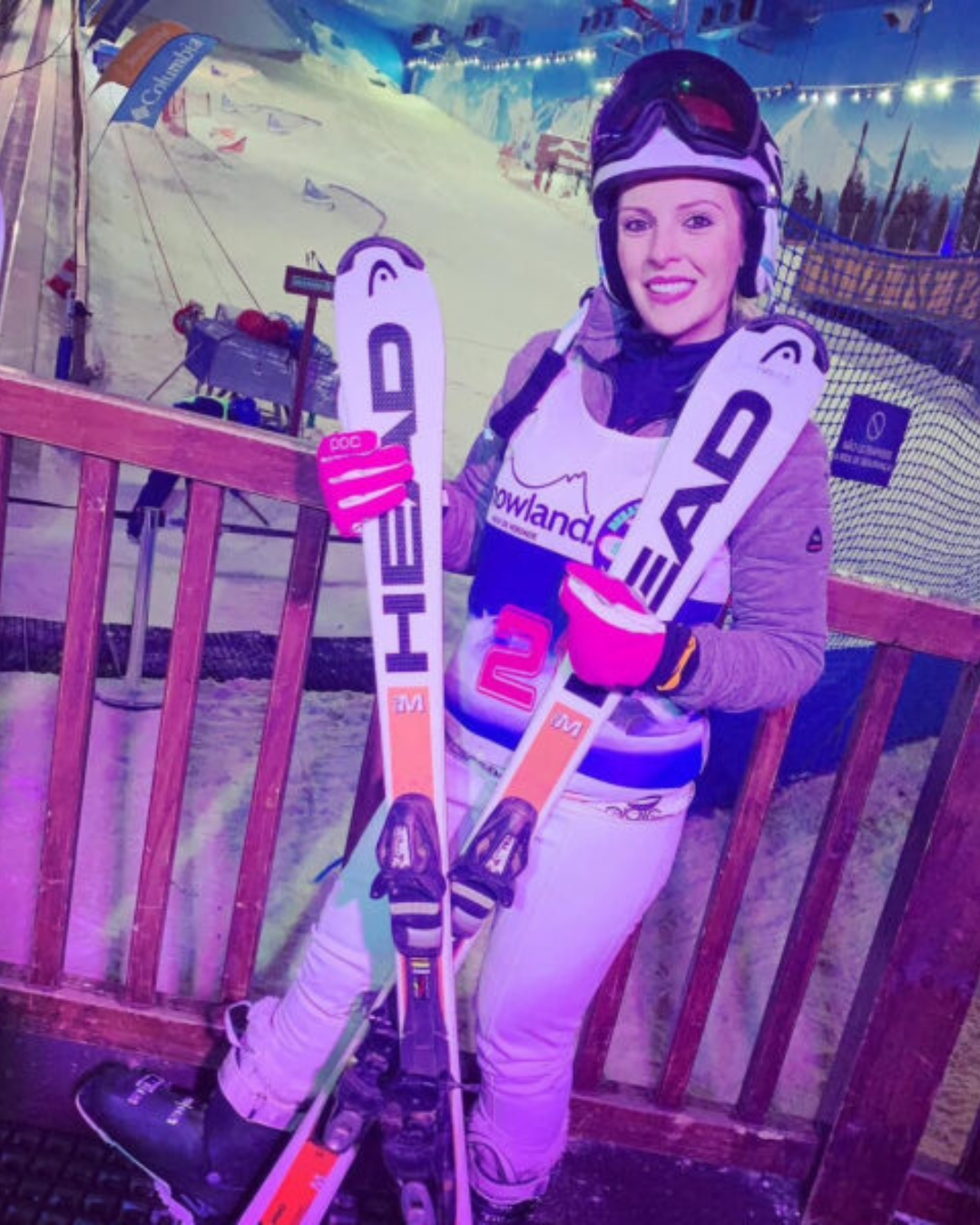
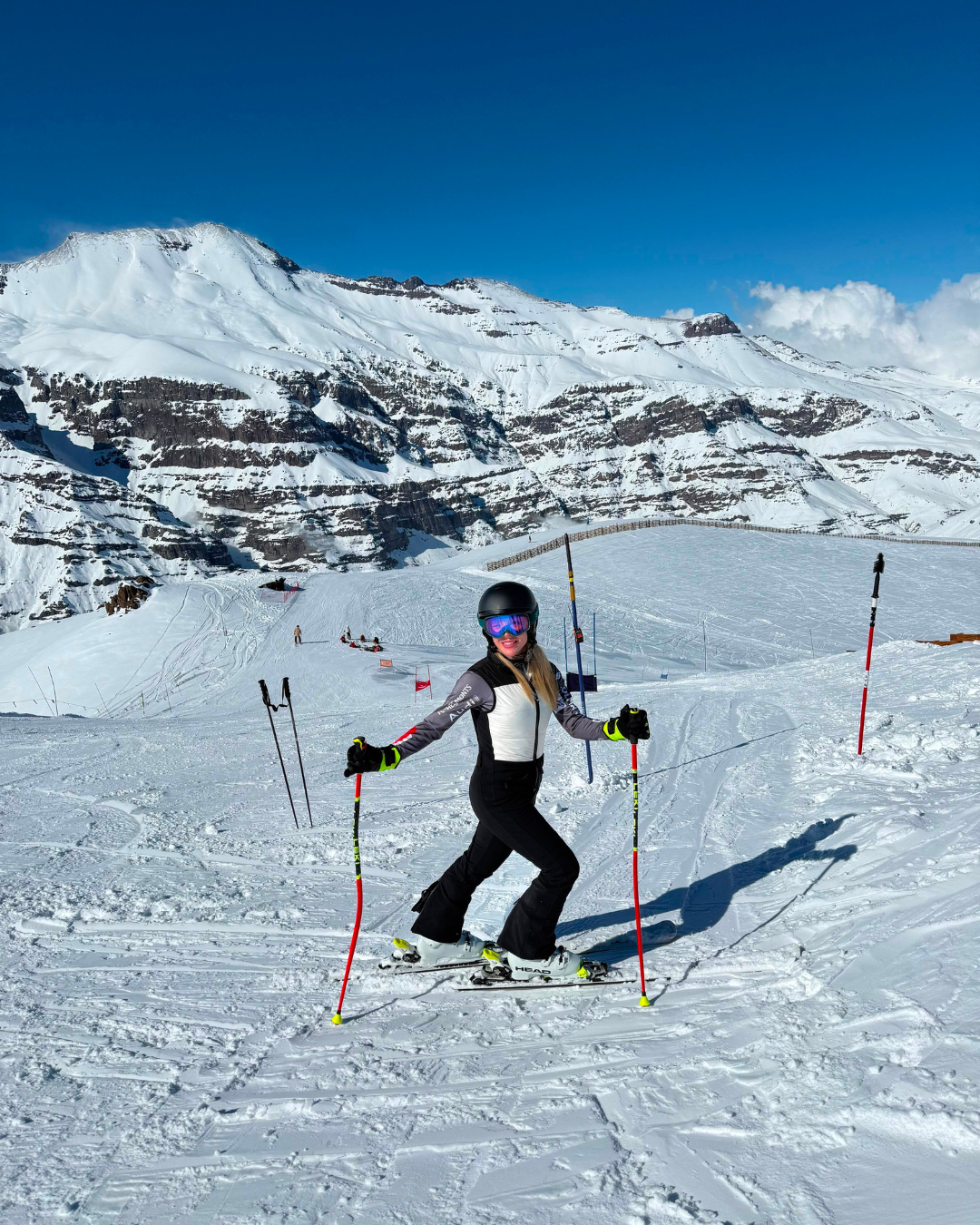
For Dr. Grazielle “Grazi” Lorenzini Bertucci, skiing has never been an obvious passion — at least geographically.
She grew up in São Paulo, Brazil, thousands of miles from the traditional heartland of alpine skiing. But winter sports were never entirely foreign to her family. Her father is from Vienna, Austria, and her mother is from Bolzano in northern Italy. Grazi first clicked into ski bindings at age 9.
Today, she brings together two sides of her life that rarely intersect so naturally. She is a physician with a special interest in sports medicine and rehabilitation. She is also a passionate skier.
That combination gives her a distinctive perspective on a technology finding a role beyond conventional ski training: the indoor ski simulator.
“The ski simulator has allowed me to combine my medical knowledge with my passion for skiing in a very practical way,” Bertucci said.
In São Paulo, that intersection between medicine, rehabilitation and skiing has produced an unusual approach. It helps prepare people to return to the slopes in a country without traditional ski resorts.
Click on images to enlarge or play videos
A Brazilian problem looking for a solution
The story did not begin with the idea of opening a ski training center.
It began with injured skiers.
Movitta, a São Paulo physiotherapy and rehabilitation clinic that has operated for about a decade, repeatedly encountered the same pattern: Brazilian patients returning home injured after ski vacations abroad.
Unlike skiers living near the Alps or other major mountain regions, Brazilians may spend only a week each year on snow. After months away from the sport, experienced skiers can spend the first days rediscovering movement patterns and timing. Then comes another problem: They have few days available and naturally want to maximize every one of them.
Fatigue accumulates.
And injuries can follow.
“For years, Movitta repeatedly saw a similar type of patient: someone returning from a ski trip with an injury,” Slopes Ski & Snowboard Club founder Jackson Rabello explained.
Beginners face a different challenge. They may arrive at a resort without having experienced ski-specific movements. As a result, they must learn balance, pressure, edge control and weight transfer while adapting to snow and the mountain environment.
That clinical observation eventually led Movitta toward an unconventional solution.
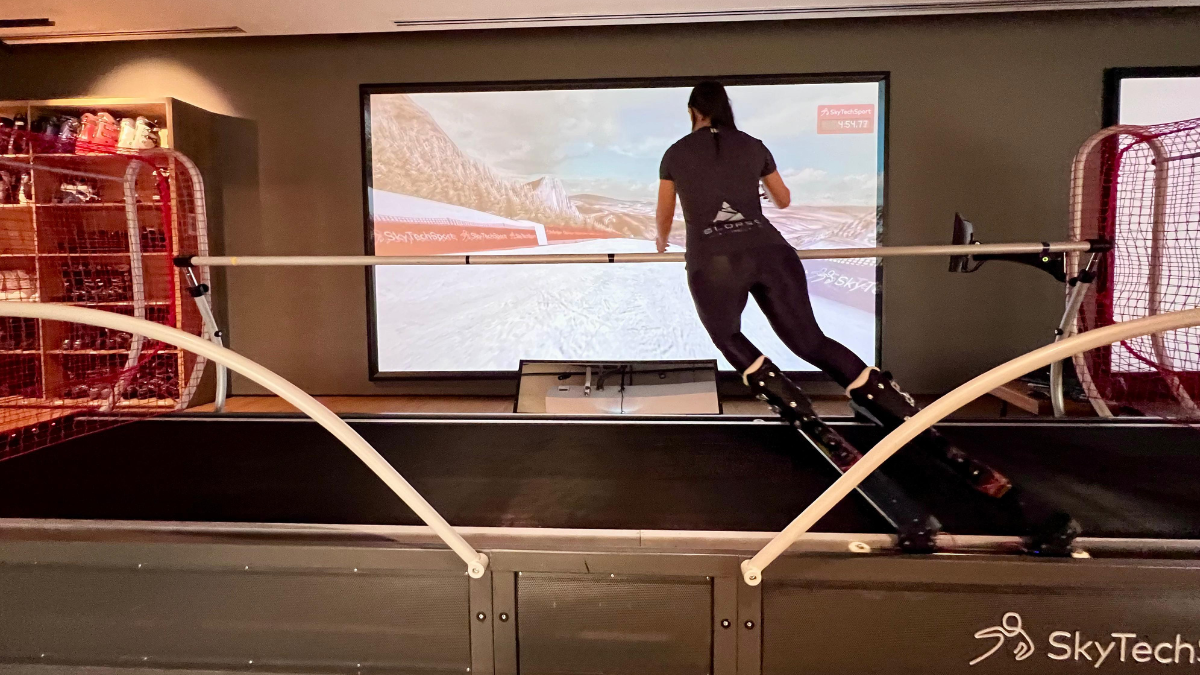
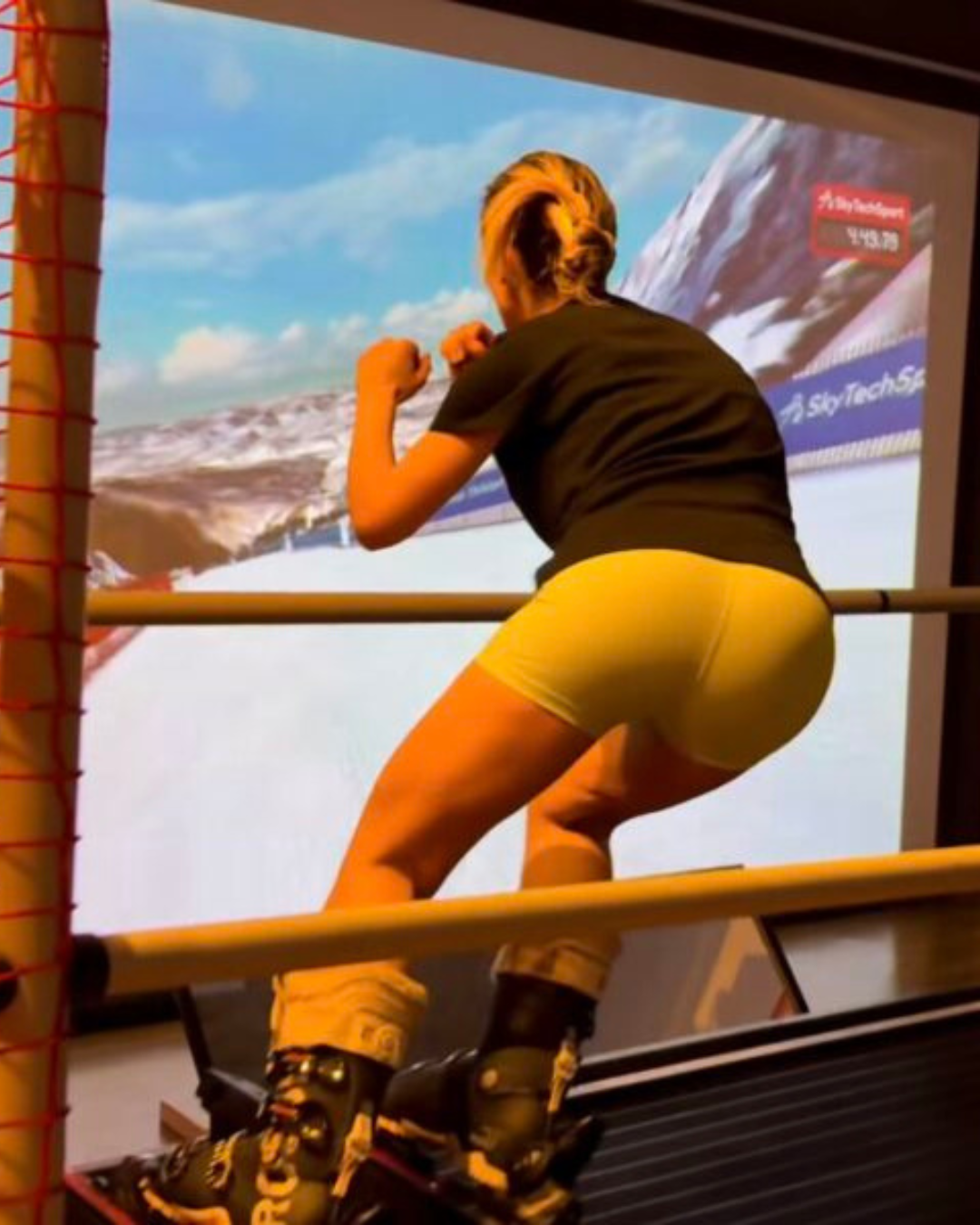
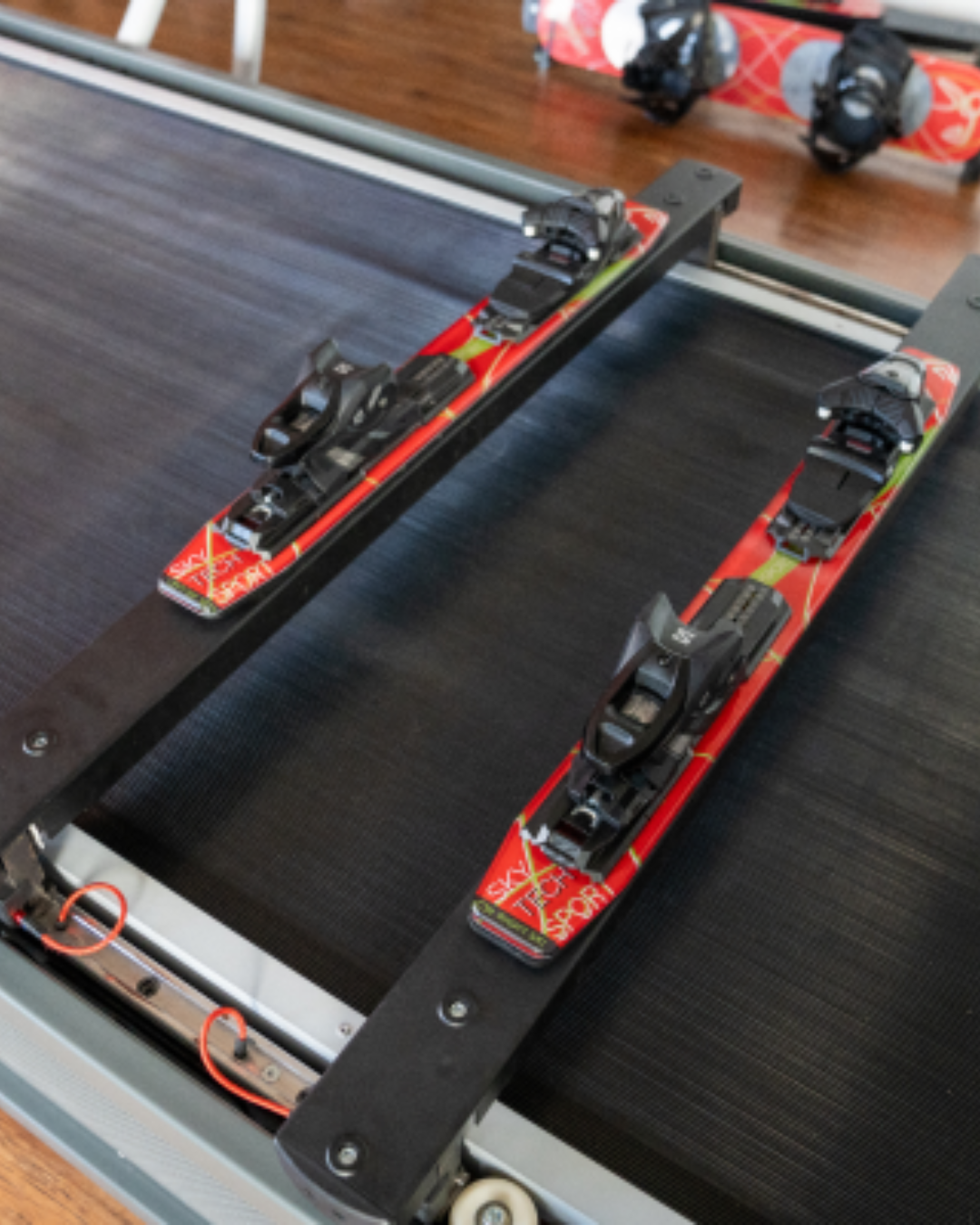
In 2024, the clinic brought two SkyTechSport simulators to Brazil and incorporated them into its work with skiers. What began in a physiotherapy and physical-preparation environment soon demonstrated potential well beyond rehabilitation.
Experienced skiers could maintain ski-specific movement patterns throughout the year. Beginners could learn fundamental movements before their first day on snow.
And patients returning from injury could have another step between conventional rehabilitation and the mountain.
The missing bridge back to skiing
For Bertucci, that controlled transition is one of the simulator’s most important advantages.
“From a medical perspective, one of the biggest advantages of a ski simulator is the ability to practice skiing-specific movements in a safe, controlled environment,” she explained. “It allows athletes to progressively rebuild confidence, coordination, balance and strength before returning to the slopes.”
That distinction matters.
A gym can restore strength, mobility and stability following an injury. But eventually, a skier has to ski again.
On snow, that return immediately introduces variables that are difficult to control: changing conditions, terrain, speed, visibility, other skiers and fatigue. Indoors, clinicians can adjust the environment and gradually reintroduce ski-specific movement patterns.
Movitta therefore sees the simulator not as a replacement for conventional physical therapy, but as a bridge between rehabilitation and the sport itself.
A patient can begin with traditional rehabilitation to rebuild strength, mobility, stability and neuromuscular control. As recovery progresses, movements can become increasingly ski-specific. Clinicians can then introduce simulator training when appropriate.
Bertucci points particularly to rehabilitation following lower-limb injuries, including anterior cruciate ligament, or ACL, reconstruction, meniscus injuries and ankle injuries. Beyond strength, simulator training can address proprioception, core stability, weight transfer, edge control, posture, rhythm and coordination.
“Every rehabilitation program should be individualized and supervised by qualified professionals,” she emphasized, “but the simulator can be an excellent complement to conventional physical therapy.”
How can simulator training support recovery?
That principle is echoed by SkyTechSport.
“Rehab wasn’t our original design goal, but the biomechanics of ski-specific training translate directly to recovery work,” SkyTechSport said. “We’ve watched physical therapists and coaches use our simulators to safely rebuild balance, edge control, and confidence in a fully controlled environment — including with elite athletes like Breezy Johnson during her return to World Cup racing.”
According to SkyTechSport, Stifel U.S. Ski Team athlete Breezy Johnson used one of its simulators at the team’s Center of Excellence in Park City during her rehabilitation before returning to World Cup competition.
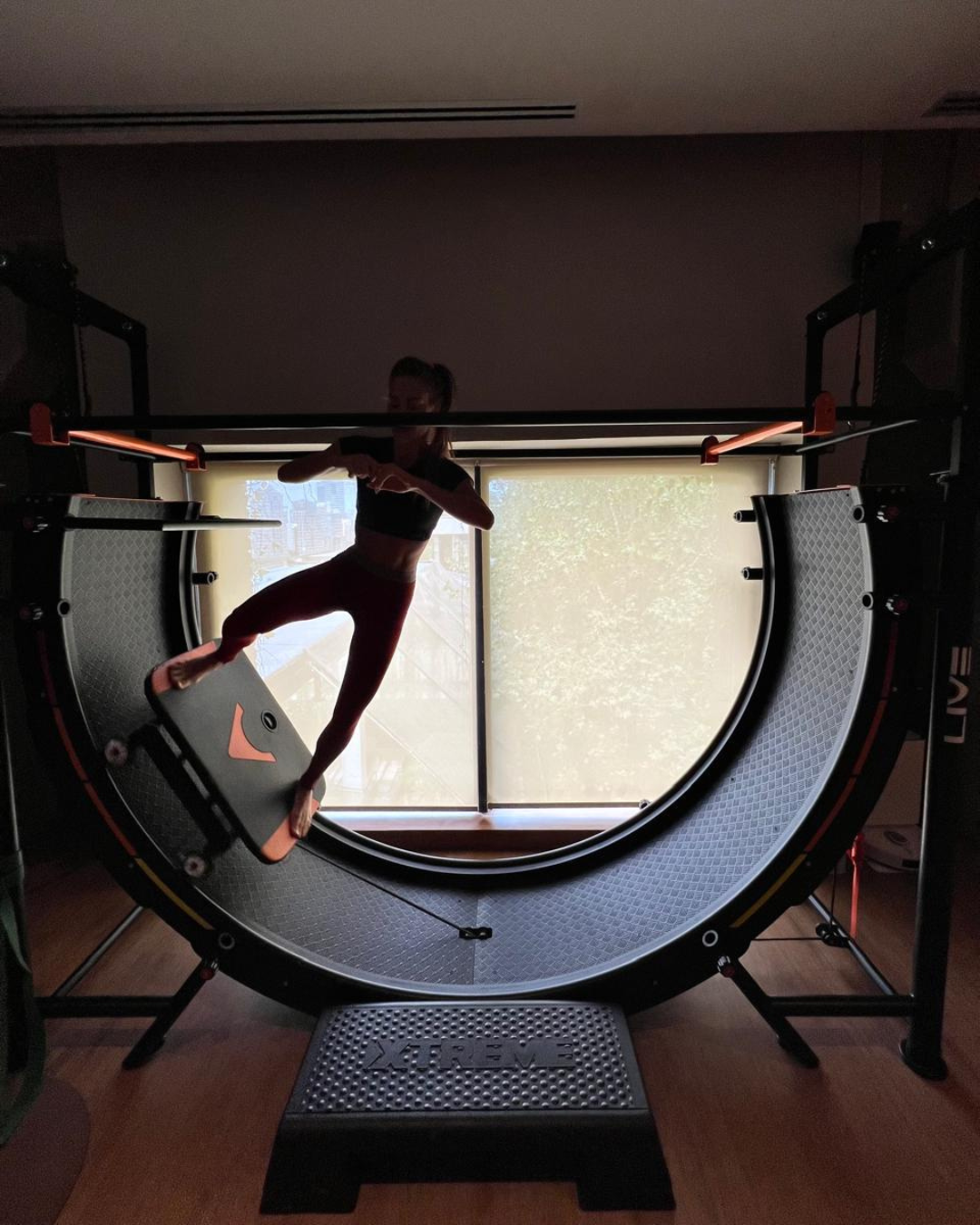
The company also says its simulators can reproduce movements that are difficult to recreate through conventional gym exercises. These include edging, weight transfer, fore-aft balance, rotary control and dynamic balance. Professionals can also configure the systems for single-ski drills and sit-ski training, extending their potential use to adaptive skiers.
From Movitta to Slopes
But something else happened after the simulators arrived in Brazil.
The team realized that the technology could address more than rehabilitation.
There was demand for skiing itself.
“What initially began in a physiotherapy and physical-preparation setting soon revealed a much broader opportunity,” Rabello said.
Brazil has no traditional ski resorts, yet it has an active community of skiers who regularly travel to South America, North America and Europe. Until recently, practicing the sport generally meant getting on an airplane.
The simulator changed that equation.
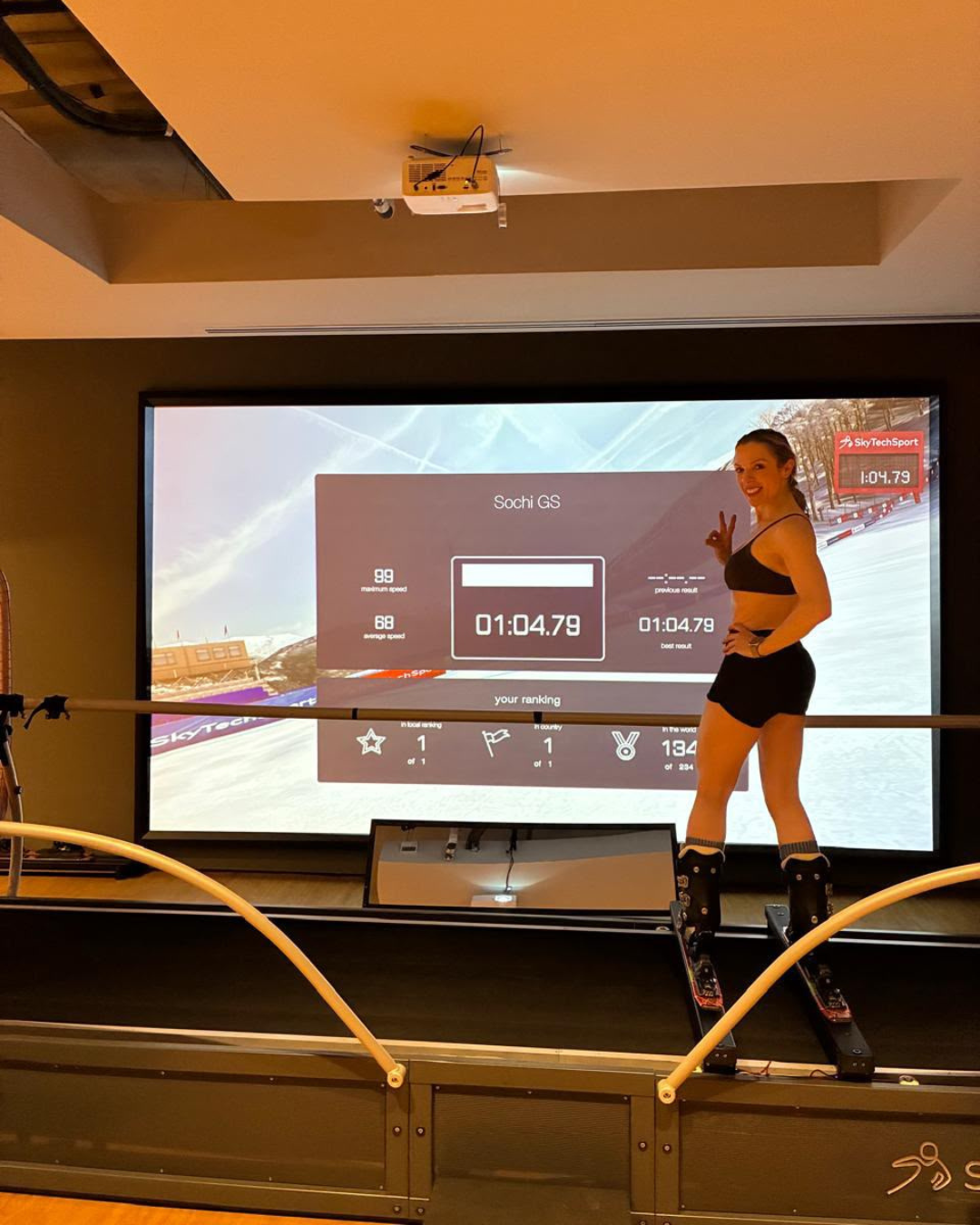
The experience at Movitta eventually led Rabello to create Slopes Ski & Snowboard Club, which opened in July 2025 as a São Paulo training center entirely dedicated to snow sports.
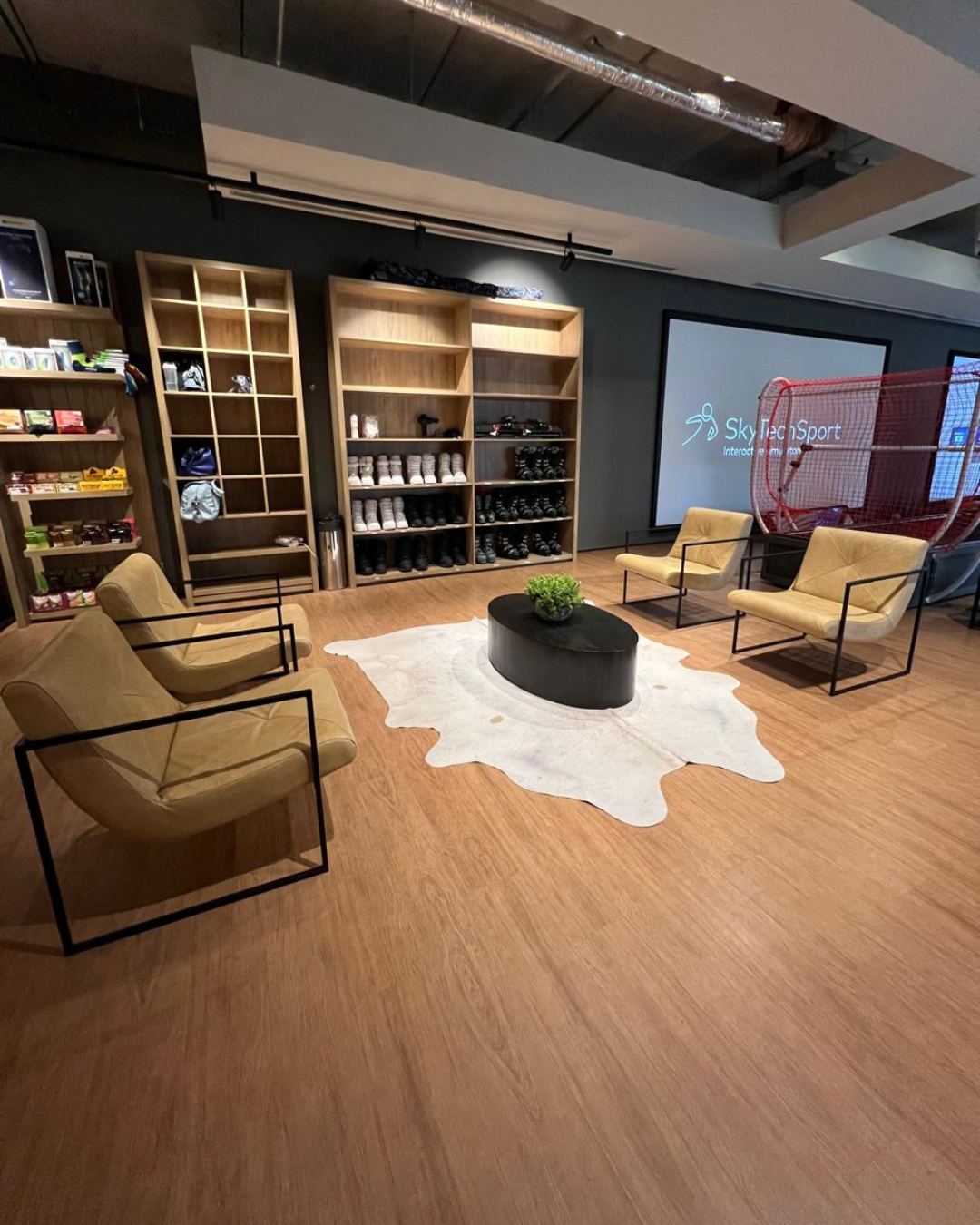
Today, the two independent operations have four SkyTechSport simulators between them — two at Movitta and two at Slopes.
Their origins and emphasis are different.
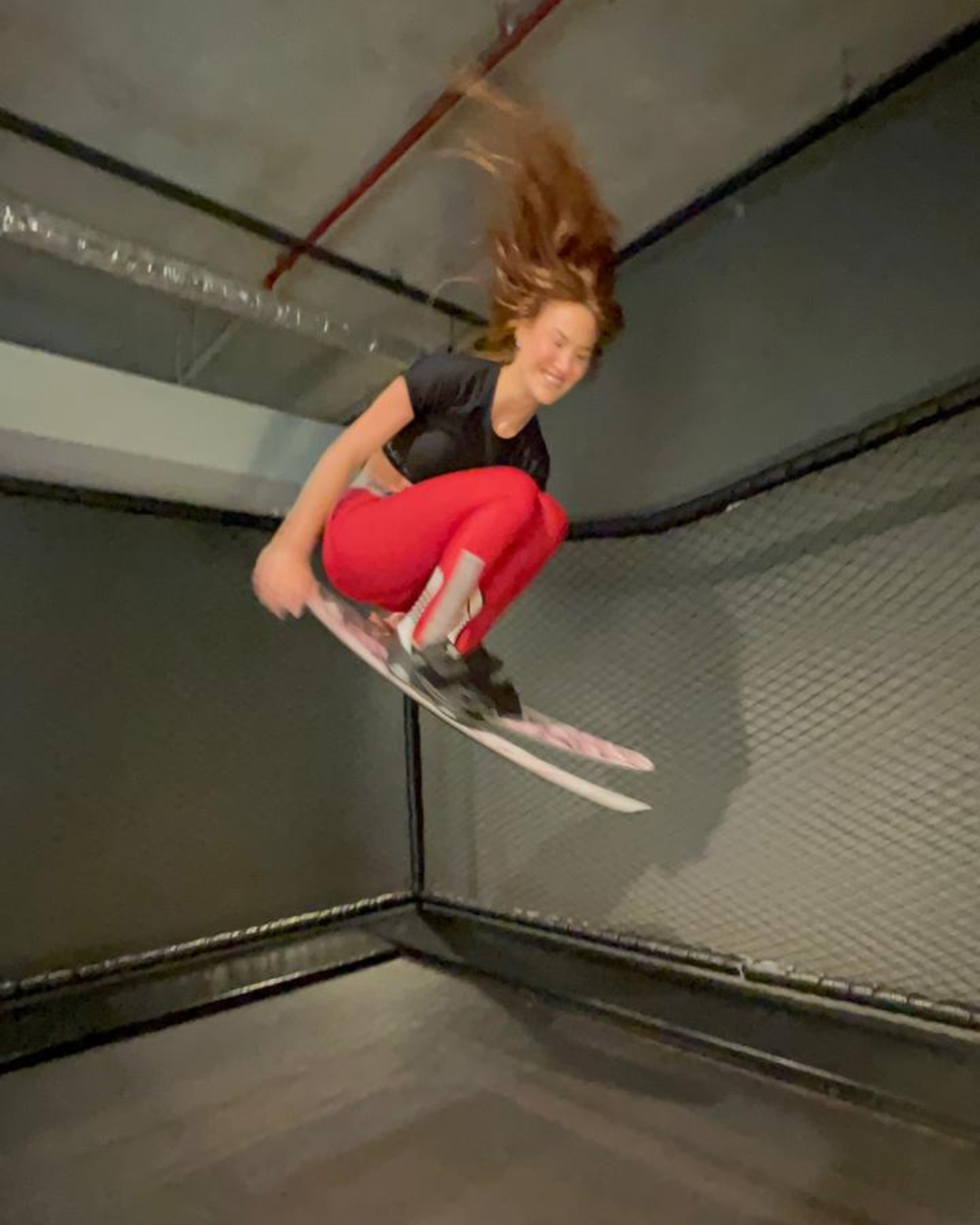
Movitta brings its background in physiotherapy, rehabilitation, biomechanics, injury prevention and return-to-sport work. Slopes takes that knowledge further into technical ski and snowboard development and performance. Its training environment also includes functional physical preparation. Trampoline work helps develop balance, coordination and body awareness.
The connection between the two, however, remains clear.
Movitta brought skiing into a clinical environment.
Slopes built a training environment around what that experience revealed.
Training for snow — without snow
For Brazilian skiers, this creates an unusual opportunity.
A beginner can learn fundamental movements in São Paulo before ever standing at the top of a ski slope. A recreational skier can prepare for an annual vacation. An advanced skier can continue working on technique between trips. Someone returning from injury can also reconnect rehabilitation exercises with movements that more closely resemble skiing. That progression can happen gradually.
There is another group, too.
Some clients simply use skiing as exercise.
“They don’t count reps. They ski,” Rabello said.
It is a simple phrase, but it captures how the simulator has changed skiing’s role in a country like Brazil. Instead of limiting ski-specific training to a seven-day vacation, clients can make it part of a weekly routine.
Bertucci has watched uncertain beginners gradually become comfortable with unfamiliar movements. She has also seen experienced skiers use repeated simulator runs to focus on technical details. Those details may be difficult to isolate during a short vacation on snow.
For rehabilitation, that repetition has another value: control.
SkyTechSport says the indoor environment removes many variables that complicate on-snow return-to-sport work. That control allows professionals to manage intensity and progression more carefully.
The company also says simulator training can reproduce some of skiing’s physical demands. According to SkyTechSport, coaches at U.S. Ski & Snowboard’s Center of Excellence conducted blood lactate testing during simulated slalom sessions. The company said the resulting lactate profile closely matched on-snow slalom skiing. SkyTechSport says that comparison suggests simulator training can reproduce technical movements and elements of the sport’s cardiovascular and metabolic demands.
Bringing the mountain into the routine
None of those involved see the technology as a replacement for snow.
The mountain remains the goal.
Instead, the idea is to help people arrive better prepared and make their days on snow more productive and enjoyable.
For a physician and skier like Bertucci, that is perhaps where the technology makes the most sense.
“I believe ski simulators have enormous potential, especially in countries without snow,” she said. “They make skiing more accessible, help people prepare before their trips, support rehabilitation after injuries, and encourage a healthier, more active lifestyle.”
Her perspective reflects the broader story developing in São Paulo.
A physiotherapy clinic began seeing injured skiers returning from the mountains. That clinical problem led to the introduction of ski simulation. The technology created new possibilities for rehabilitation and physical preparation. Ultimately, those possibilities helped inspire an entire training center dedicated to a sport that cannot naturally be practiced outside its doors.
There is an obvious paradox in building a ski culture in one of the world’s largest tropical cities.
But perhaps that is exactly the point.
The mountain may still be thousands of miles away.
The movements no longer have to be.
About the Author: Darka Sefcik Starnova