Photo: Žampa team
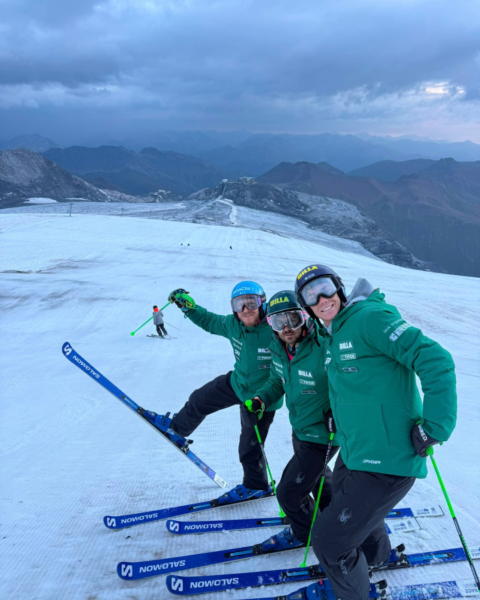
Long before Adam and Andreas Žampa raced on the World Cup circuit, competed at the Olympic Games and World Championships, and helped build an international youth race bearing their family name, skiing was already part of the Žampa family story.
That story stretches back four generations.
Today, the Žampa Cup brings together young racers from several European countries. But behind the growing event is something more personal: a family that has spent generations on skis and eventually decided to pass its experience and love of the sport to the next generation.

A family raised on skis
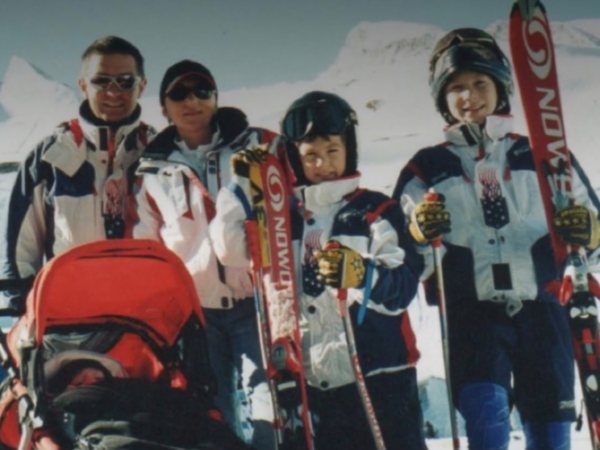
For Tomáš Žampa, father of Adam, Andreas and their younger brother Teo, the story began long before his sons were born.
“Skiing is a beautiful sport,” he says.
His own connection came through a family of competitive skiers, including his grandfather Karol Bruk and his mother, Oľga Bruková. His father, František Žampa, was also a competitive skier who eventually made the High Tatras his home.
Skiing became a natural part of Tomáš’s life and later helped shape how he and his wife, Slávka, raised their sons.
“We are already the fourth generation of skiers in our family,” Adam says. “We have always approached skiing with our hearts and trained a lot. I think that is what made us successful.”
The High Tatras were both home and training ground.
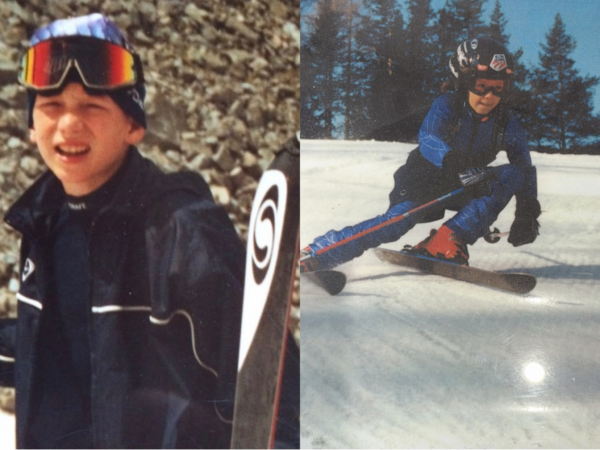
Adam started skiing at age 5. Andreas, three years younger, wanted to follow him and started even earlier, sometimes skiing around their apartment in summer on small wooden skis.
Tomáš remembers quietly taking Adam out of kindergarten for a couple of hours to ski at Jakubkova lúka, making sure they returned before Andreas woke up.
Neither brother immediately dominated youth racing. Their father remembers them as average competitors but with strong technique, something the family prioritized over early results. That foundation became increasingly valuable as the courses grew more difficult.
Then came Teo.
With their parents working in the family business over the Christmas holidays, Adam and Andreas were once left in charge of their brother, 12 years their junior. They went sledding and decided to bring skis for Teo, too.
They returned with an announcement:
“Dad, Dad, Teo can ski!”
“Well, thank you very much. So soon?” Tomáš replied.
Teo was 2 years and 2 months old.
Three brothers, three different paths
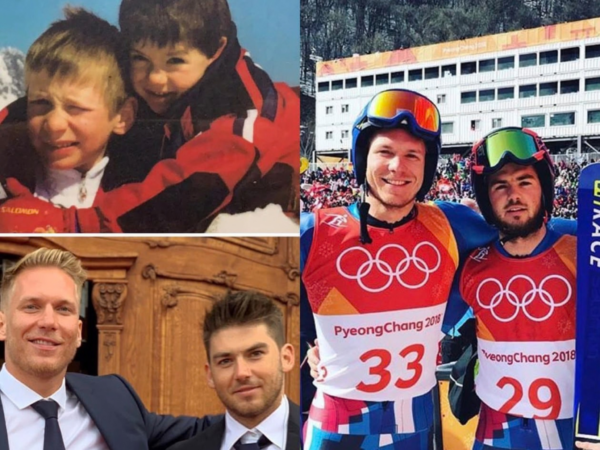
Sharing the same family and mountains did not mean the three brothers approached skiing in the same way — something all three spoke about in much greater detail on the Skiing is Believing podcast more than a year ago.
Tomáš remembers Adam as physically well prepared, with his motivation growing particularly strongly in his junior years as better results began reinforcing his belief in what was possible.
Andreas was the detail-oriented one from childhood.
If the family planned to leave for the mountain at 6:30 a.m., he would be fully prepared beside the car at 6:15 — a characteristic that would later become important well beyond his own racing.
Teo had a different childhood again. His brothers were already racing internationally, so he grew up at training camps and World Cup venues, often free skiing with his family in places such as Alta Badia and Val Gardena. By the time he started racing between gates, much of the technique was already in place.
The family behind the racers
Three sons pursuing high-level skiing required much more than talent.
When Tomáš talks about what made it possible, he points directly to his wife.
“If I hadn’t had the wife I have, and the boys hadn’t had the mother they have, they would never have skied — certainly not at this level.”
Slávka managed the family business while helping create the conditions that allowed the boys to pursue skiing. Tomáš used to joke that his wife worked so the rest of them could ski.
A major turning point came with Adam’s results at the 2013 World Championships in Schladming and his fifth- and sixth-place finishes at the 2014 Olympic Games in Sochi. Those performances helped bring sponsorship support that allowed the family to continue competing at the highest level.
Their journey also showed them the realities of reaching the World Cup from a small skiing nation.
Tomáš remains critical of how previous Slovak skiing organizations operated, arguing that high-performance sport requires professional structures and transparent criteria. At the same time, he sees progress today.
“With this third federation, it is finally starting to work,” he says, while acknowledging the gap that remains between Slovakia and major skiing nations such as Austria and Switzerland.
Adam and Andreas know the other side of that reality: A small team can be flexible and cooperate with international teams, but gaining access to the best training conditions can be difficult. Andreas compares it to Formula 1 — when you are the smaller team on paper, you have to make the most of every opportunity available.
That experience also helped shape what came next.
Success that created something bigger
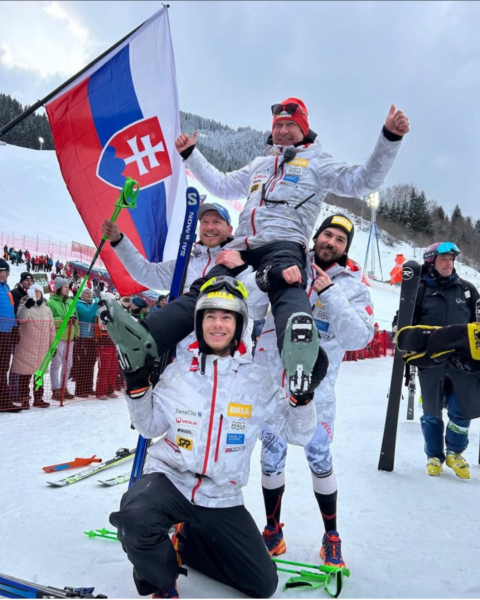
“Žampa Cup was created after my big results at the World Championships in Schladming and then at the Olympics in Sochi, where I finished fifth and sixth,” Adam explains. “Those results convinced us that we should start thinking about the next generation, be accessible to children on skis and give them as much advice as possible.”
The idea also grew through coach Tomáš Kmeť, a friend of Tomáš Žampa who wanted young skiers and their parents to see how the family approached training and development.
The first edition was actually the Žampa Camp, with a race on its final day.
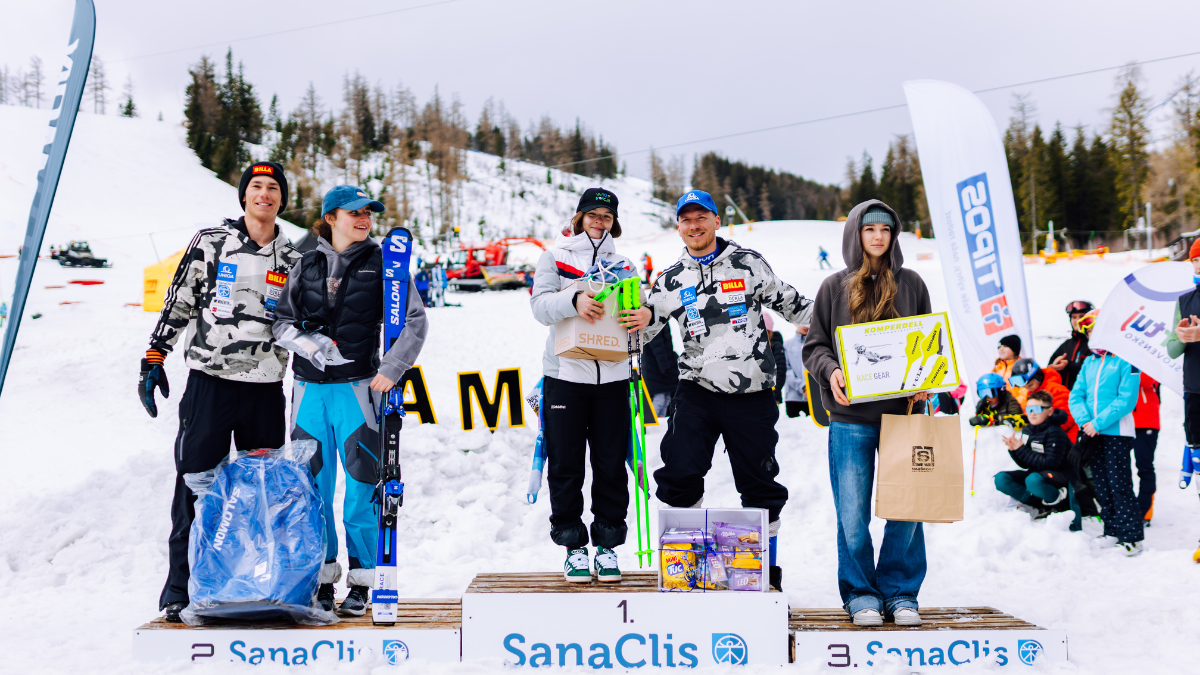
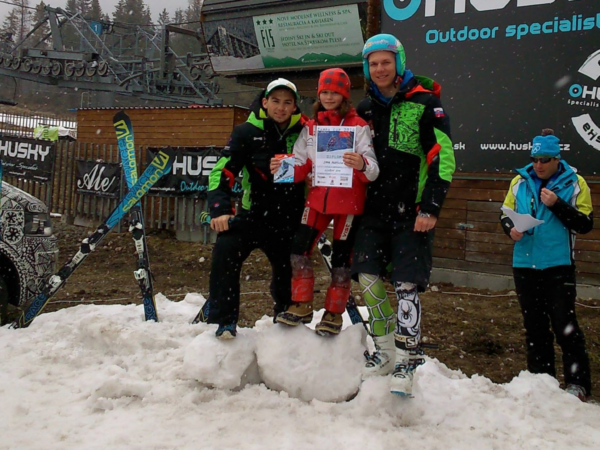
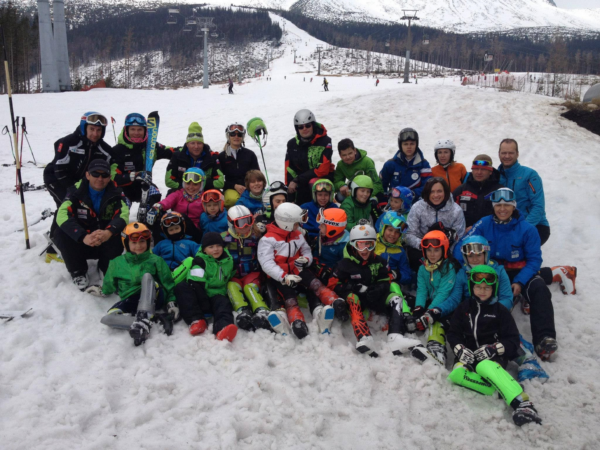
Eleven editions later, Žampa Cup has expanded from Slovakia to the Czech Republic, Poland and Austria. According to Adam, the event reached four countries and drew more than 1,600 children across its 2026 races.
And Andreas’s childhood obsession with details found a new purpose.
“Andy is the detail-oriented one and he enjoys organizing the event,” Adam says. “It is thanks to Andy that today we are already in four countries, and more to come!”
More than finding the next champion
For the brothers, however, the Žampa Cup is not simply about discovering future World Cup racers.
“We often meet younger athletes who give up too early,” Andreas says. “We are here to support them, so they can meet us and realize that all skiers are people — and that if these young athletes set themselves the goal of becoming World Cup racers, it is possible.”
The events are open to children ages 6 to 16, from experienced racers to beginners. Andreas emphasizes that the project also welcomes amateurs, children with disabilities and those from socially disadvantaged backgrounds.
“We don’t care only about winners and future World Cup racers,” he says. “What matters to us is the love for sport that children can build at these events.”
It is a philosophy that brings the story back to its beginning.
Tomáš remembers putting his sons into a ski club not only to race, but also to grow up as part of a community of other young skiers. Sport, he says, taught them to balance training, school, rest and fun — and to learn both how to win and how to lose.
It also gave them friendships around the world.
Some of those friendships are now coming full circle at the children’s race in the Tatras. Read more about the latest edition here.
When the World Cup comes back to the children
Croatian World Cup star Zrinka Ljutić experienced the Žampa Cup herself at Štrbské Pleso in April 2025.
“It was really nice to see how much passion and care there is for skiing at every level, especially for the next generation,” she says. “It reminded me in many ways of Croatia — we may be smaller countries, but we have a very strong skiing mentality, close family support and people who are willing to invest years of hard work into the sport.”
Her words could almost describe the Žampa story itself.
Four generations. Parents creating opportunities for their children. Brothers teaching a 2-year-old to ski. Years in the High Tatras, World Championships and Olympic Games — and friendships built across borders.
Now, another generation of children is standing in the start gate.
Ljutić says she has felt that same sense of community from Slovak fans.
“I’m especially grateful that this support is not only for Slovak skiers. Slovak fans have been incredibly generous towards me and my family as well. I really appreciate how warmly they have welcomed me and how much support they show me personally.”
Not every child at the Žampa Cup will become a World Cup racer. Some may simply fall in love with skiing, make friends and learn how to win — and how to lose.
That may be the most meaningful continuation of a family story that began generations ago.
As Tomáš puts it:
“When you have your health, you can do anything. Appreciate it.”
About the Author: Darka Sefcik Starnova