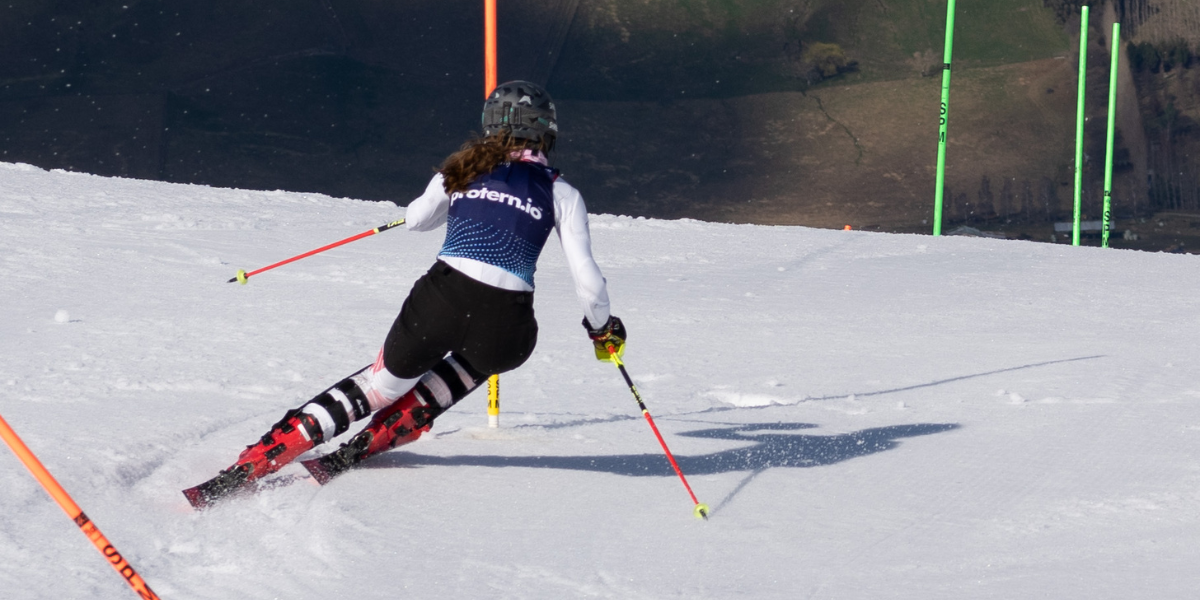
Featured Image: Canadian alpine racer Eleri Smart incorporates Protern into her training. Photo: Alec Jackson.
By combining GPS-based timing, speed data and video in one platform, Protern is trying to solve one of coaching’s most persistent problems: turning more information into better feedback without creating more work.
There is a lot happening during a ski training session that has very little to do with coaching.
Courses need to be set. Timing equipment has to be carried up the lift, installed and tested. Video must be filmed, labeled, sorted and eventually shared. If a timing wand gets knocked over or a battery decides it has had enough, someone has to leave the course and fix it. Meanwhile, the athletes are still skiing, and the coach is trying to watch, communicate and make decisions.
I have been that coach. With the Ontario provincial team, I was often the only coach working with five athletes. I would set the course, circle back to install the timing and then try to get into position before training started. Later, while coaching with the U.S. women’s team, there were days when I felt more like the timing person than a coach.
That is the problem Protern is trying to solve.
The company is often understood as a GPS timing product, but founder Alastair Smith says that description no longer captures what the platform has become. Protern now connects virtual timing, speed analysis and video in a single workflow designed to make feedback faster and the coach’s job easier.
“We’re not just a GPS product,” Smith said. “It’s a full end-to-end tool from timing to data analysis to video.”
From Nordic Power Meter to Alpine Training Tool
Protern began in 2019, but its roots were in cross-country skiing. Smith, whose background is in computer science, swimming and mountain biking, initially helped develop what was essentially a power meter for Nordic skiing. The company worked with several federations, including Swiss-Ski and Norway, but eventually reached an important realization: Technically interesting data is only valuable if coaches know how to use it.
Through Swiss-Ski, the team saw early experiments with GPS in alpine skiing and began exploring how the technology could be used for on-hill timing and speed analysis.
That outside perspective became one of Protern’s advantages. Because its founders did not come from the traditional alpine coaching pathway, they were willing to question practices the sport had long accepted simply because that was how they had always been done.
How could coaches add timing splits without placing physical equipment at every interval? How could hours of training video be organized and shared more efficiently? And how could timing, video and speed data work together to provide a more complete picture of each run?
Protern has continued to develop by working directly with coaches and athletes. According to the company, national ski teams from more than 25 countries now use Protern, while clubs, academies and national teams across more than 30 countries use the platform.
“We’re building it based on what the coaches and athletes want to see, rather than saying, ‘This is what I want as a training tool,’” Smith explained.
The Data Tells You Where to Look
Protern’s first iteration allowed coaches to create virtual timing splits anywhere on a course without setting up physical timing eyes at each point. As coaches began using it, however, the platform’s larger value became clearer.
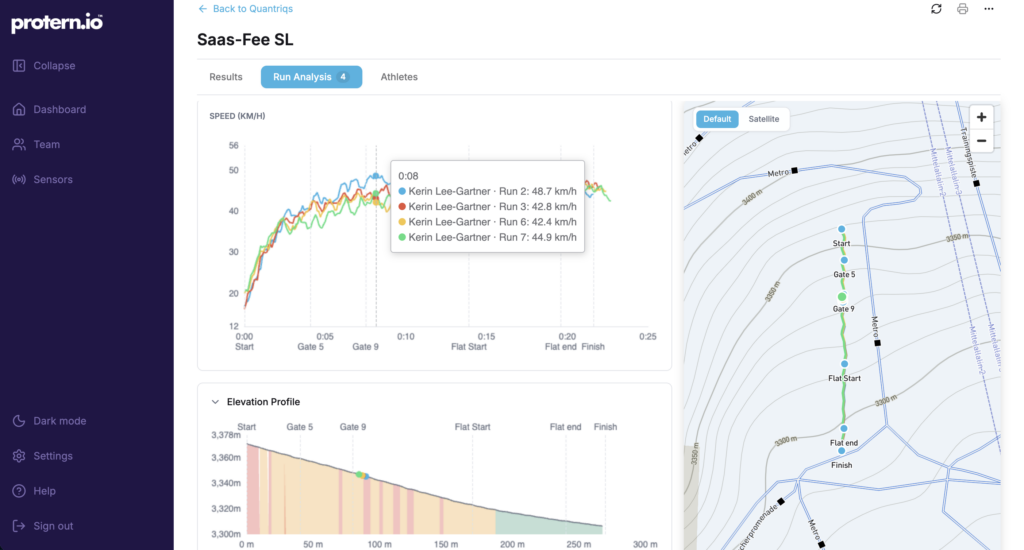
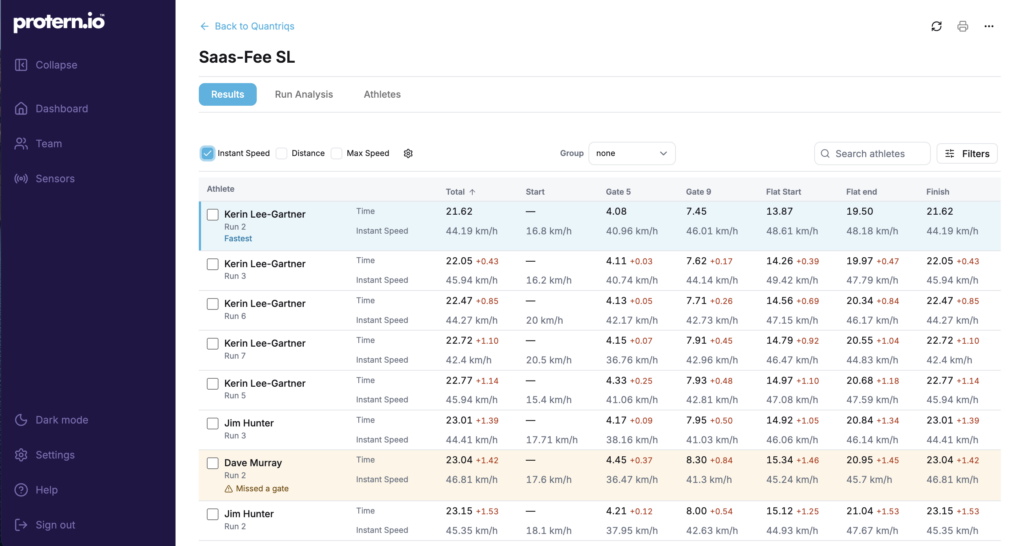
GPS is not only a timing tool. It can show where an athlete gains speed, where that speed begins to fall away and how one section compares with another. According to Protern, its sensors measure speed to within 0.13 kilometers per hour, while training timing is accurate to approximately 0.02 to 0.03 seconds.
That is not a replacement for official race timing, but it is more than sufficient to identify meaningful changes in most training environments.
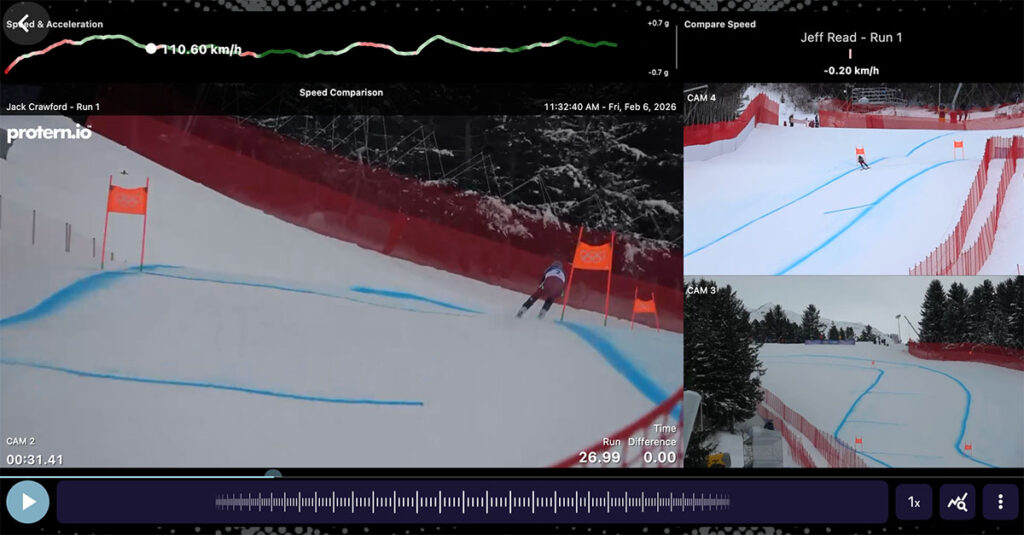
The data can narrow a problem down to a few gates. The video can then show the coach and athlete what actually happened in those gates.
That connection matters because data without context can be difficult to interpret, while video on its own remains subjective. A coach may see an athlete lose pressure, get late or scrub speed, but the athlete does not always see or feel the same thing. Coaches have spent years developing their eye. A young athlete has watched only a fraction of the skiing their coach has seen.
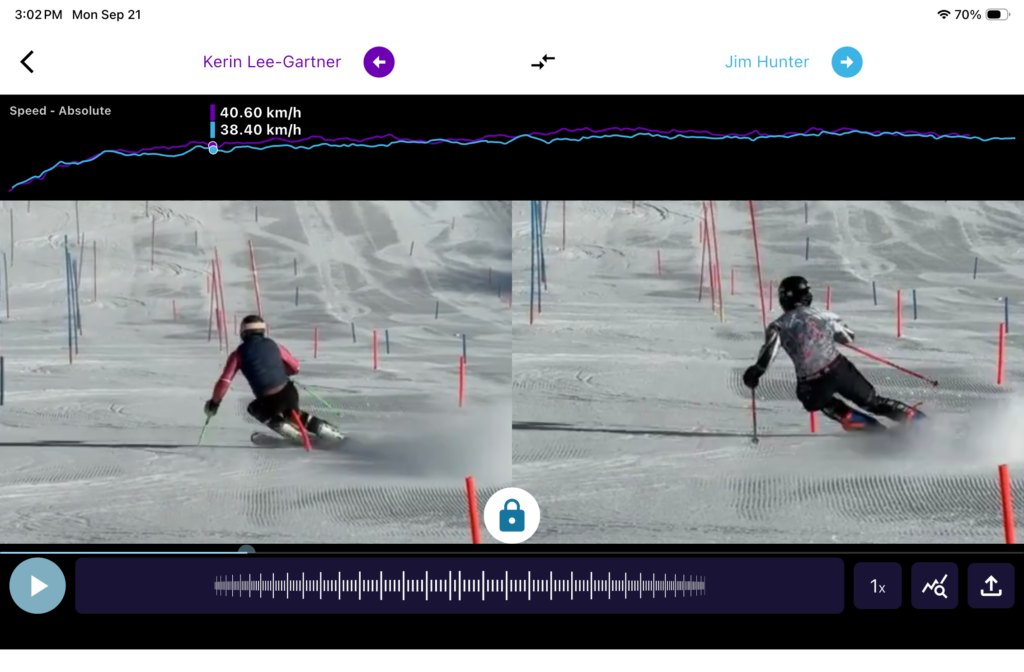
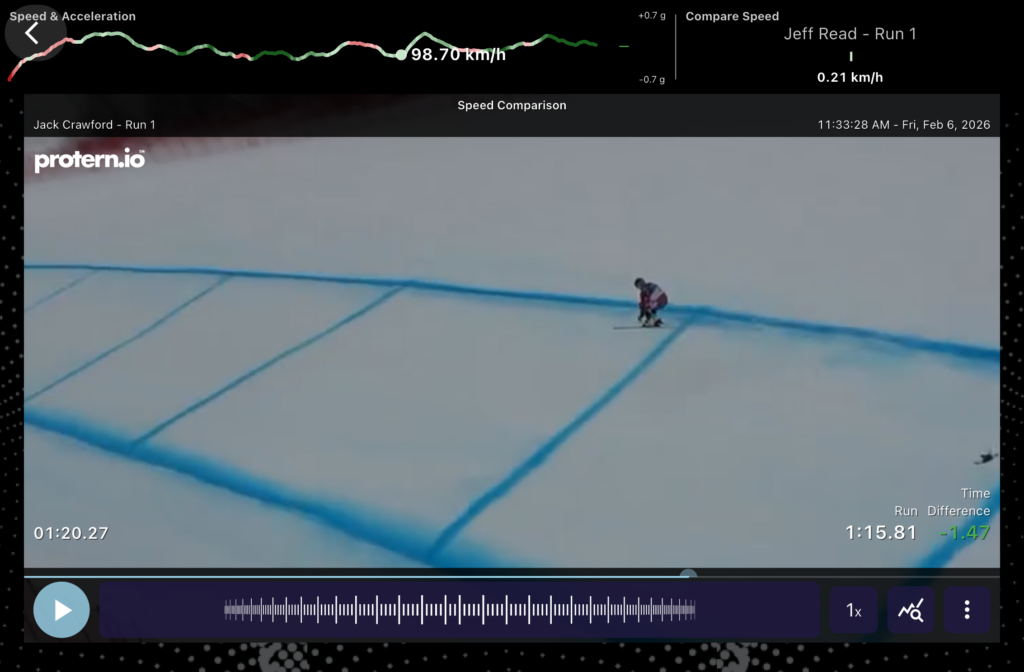
When speed data is layered onto video, the athlete can see the result of the movement as it happens. A visible dip in speed makes “that was slow” more concrete. If a technical change feels awkward but removes that loss of speed, the athlete has objective evidence that the adjustment is beginning to work.
For me, that is where the technology becomes most valuable. It does not replace the coach’s eye or the conversation with the athlete. It gives both people a clearer starting point for that conversation.
Making Video Less Cumbersome
Video has always been one of ski racing’s most useful coaching tools. It is also one of its most time-consuming.
A training session can produce hundreds of clips. Someone has to identify the athlete in each one, organize the runs, upload the files and distribute them. Athletes want their video quickly, and they should. Feedback is most useful while the run is still fresh and the athlete can apply it on the next lap.
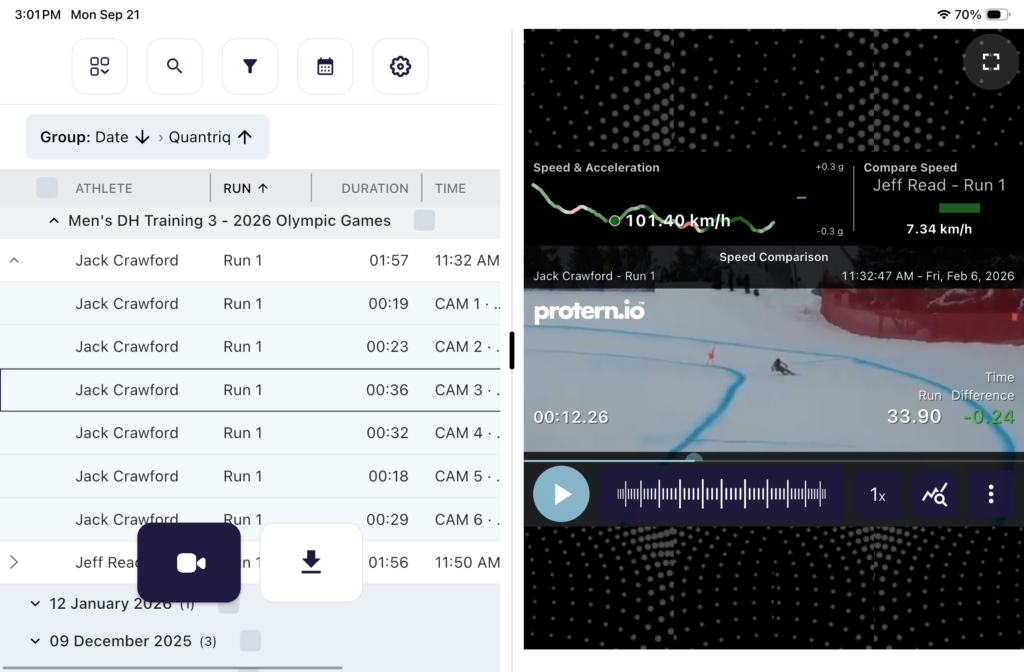
Protern uses the timing information recorded by its sensors to match video with the athlete who was on course at that moment. Coaches can import a large batch of clips and have the platform identify and organize them automatically. Uploads can continue in the background, and the video becomes available without coaches manually exporting or sending individual files.
Coaches can also click on a dip in an athlete’s speed graph and move directly to that moment in the video instead of scrubbing through the entire run.
Smith said one national team told Protern that it had previously filmed only two or three of six training runs because processing more video created too much additional work. Once the workflow was simplified, the coaches began asking a different question: Why not film all six?
The point is not to give coaches more video to watch. It is to let them capture more information without adding hours of administration, then quickly find the moments that deserve their attention.
Virtual Timing Changes the Morning
Protern’s Live sensor can send run data over cellular networks while training is still underway. According to the company, time, splits, speed and other performance data can reach a coach’s phone within two to three seconds of an athlete crossing the finish.
The sensor is worn in Protern’s bib and records the athlete’s movement throughout the session. With Live connectivity enabled, its built-in modem connects automatically to available mobile networks without requiring a separate SIM card or roaming setup.
A coach can define the start, finish and any desired splits on a phone, even while riding the lift. Because those splits are virtual, they can be adjusted after training if the coach wants to analyze a different section. Multiple courses, parallel sets and course resets can also be separated within the system.
Virtual timing gives coaches another option for collecting and analyzing training data. Physical timing systems remain an important and familiar part of alpine training, while Protern allows coaches to add splits and examine different sections of a course without placing hardware at every point. This flexibility can be especially useful when staffing, terrain or the goals of a session make a lighter setup valuable.
The immediate benefit is greater flexibility and less equipment to manage during certain training sessions. That can give a coach more time to watch athletes and provide feedback while still collecting detailed timing and speed information.
That matters at every level. A national team may have several staff members on one hill, but it also has an enormous amount of performance work to manage. A club coach may have 10 or 12 athletes and only a volunteer parent helping. No matter the size of the program, there is almost always more work than time.
Useful Beyond the Race Course
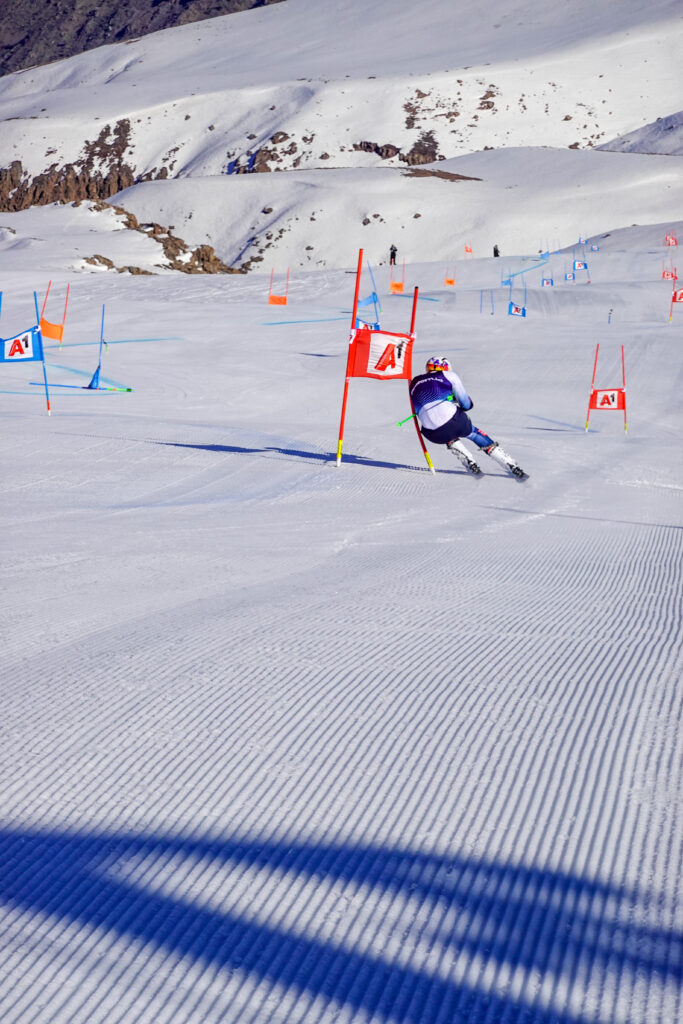
Protern can also collect information outside a set course, opening up applications in free skiing, workload management and return-to-snow progressions.
Smith described one return-to-snow example involving a Canadian athlete who skied repeated carved turns on a consistent slope. According to Smith, the data showed a recurring loss of speed every time the athlete moved onto the previously injured side. The difference was subtle enough that it might not have been obvious from video alone, but the pattern appeared clearly in the speed data.
That does not make Protern a medical clearance tool, and it should not replace the judgment of medical and performance staff. It does show how objective on-snow information can add another layer to a return-to-sport process after an athlete has already been cleared to ski.
The sensor also records the work that happens between courses: free-skiing turns, time at speed, lift time and time spent standing. Ski racing can involve a surprisingly small amount of actual time in gates. Once free skiing is counted, an athlete’s total time on task may increase significantly.
Coaches already understand that free skiing matters. The data can show how much an athlete is doing and provide information programs can consider alongside perceived exertion and other workload measures. Rather than prescribing one formula for alpine training load, Protern provides the underlying data for coaches and performance staff to interpret.
The Same Tool Does Not Have to Mean the Same Coaching
One understandable concern is whether this type of platform suits younger athletes or only elite teams. The answer depends less on the amount of data available than on how a coach chooses to use it.
An elite coach may examine small differences in acceleration, speed or tactics through a specific section. A U14 coach may simply show an athlete that the second run carried more speed out of a flush than the first. Coaches can create individualized splits for one athlete while the rest of the group continues to ski the same course.
The sharing can also be controlled. A coach may allow athletes to see a full team timing sheet or limit each athlete to their individual times and video. Protern’s current system allows coaches to restrict an athlete’s view to only that athlete’s results. For younger athletes, comparing a skier against their own previous run can keep feedback focused on improvement rather than comparing every run to the fastest athlete in the group.
Athletes can also build a personal training history around the sensor. Protern says athletes own their sensor, bib and account, allowing their data and video history to move with them as they change teams or programs.
An Assistant Coach, Not the Coach
The most important point in this conversation is that Protern is not trying to automate coaching.
A graph does not know that an athlete is returning from an injury and is nervous in their ski boots. It does not know that course conditions changed after the sun reached one section of the hill, that the surface broke down after the third run or that an athlete arrived at training after a difficult morning.
The coach understands those things. The coach still decides what matters, what the athlete needs to hear and when to say it.
“We just want to be a really enthusiastic assistant coach,” Smith said. “It’s there to help and to point: ‘This is what I’ve seen.’ It’s up to you whether that is something of value.”
That may be the best way to understand Protern. The technology does not need to replace the coach or produce more numbers simply because it can. Its value comes from helping coaches find useful information faster and reducing some of the repetitive work surrounding training.
I know what I would have wanted during those mornings with the Ontario provincial team when I was setting the course, installing timing and trying to coach five athletes on my own: fewer jobs competing for my attention.
If Protern can do that consistently, the most important thing it gives a program may not be better data. It may be more coaching.
About the Author: Katie Twible