
If you have never heard of the Minnewonka alpine racers, you’re not alone.
Six skiers who represent the upstart Yukon club which has quietly become one of the elite high performance programs in North America, have recently had their FIS licenses approved, and, according to their coach, are aiming for NorAm podium domination this season.
“Nobody knows we even exist,” laughed Magnus Arnesen on a recent video call with Ski Racing Media. “But we do exist and we plan on continuing the progression of our athletes towards the World Cup. Getting the FIS license approval was a good step.”
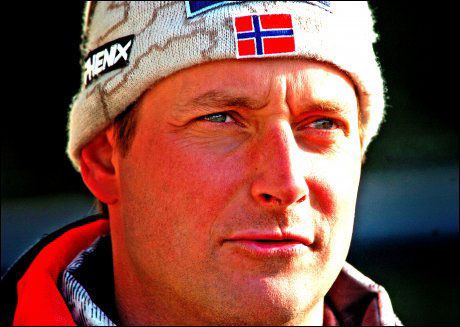
The former coach and athlete of the men’s Norwegian ski team who relocated to the Yukon in 2006, has been training a group of skiers, including his son Bjarne, at Mount Maichen, a volunteer-run ski hill near Watson Lake, located at mile 635 on the Alaska Highway close to the British Columbia border.
“The training conditions are ideal here and we benefit with a long season,” Arnesen, 44, explained. “When I moved here 15 years ago with my family, we were blown away by the community spirit and as well with the quality of terrain and conditions.”
Arnesen’s program is run by volunteer coaches, who he has trained and mentored directly, utilizing the experience from his near 10-year career with the Norwegian team during a time when they produced over three dozen World Cup wins and nine overall World Cup titles.
Program cost ‘very close to zero‘
Perhaps more impressive than the quality of athletic output of the small club, is the cost of the program, which has relied heavily on volunteer support and some local sponsors.
“Our community is proud of our ski team even if we’re a relatively unknown commodity,” Arnesen said. “I’ve promised everyone here that we will win, and I mean win on the biggest stages, so that is something that we plan to fulfill. And because of this promise, and the local economic reality, we’ve kept the costs of our program very close to zero.”
The Minnewonka club has essentially established a training centre approach where ski racers can access an optimal training facility at any time. “We’re pretty much there all the time and always have a few training environments set up … in the early years we stuck exclusively to fundamental skills of skiing but have introduced gate training in the past couple of seasons,” Arnesen explained. “The translation to a gate environment has been excellent and I would say some of our kids are ready to win races, at the highest level.”
The club has raced almost exclusively at their home mountain, with the occasional trip to Mount Sima, nearly five hours away. Once the skiers reached higher levels, Arnesen brought in Norwegian racers to set the standard.

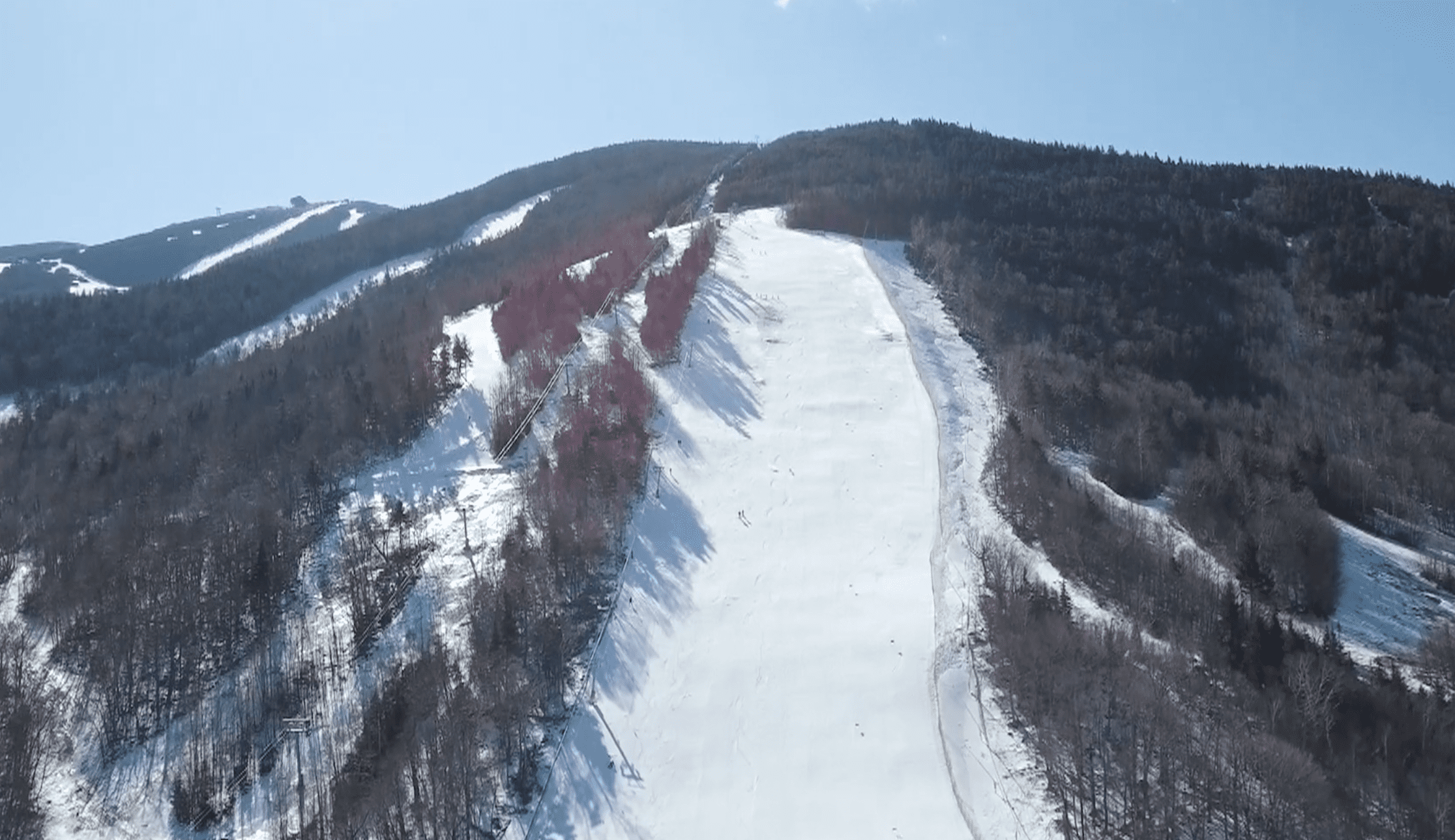
“It’s such beautiful country up here so it wasn’t really a tough sell to get some talented skiers to join us,” he said. “We make sure to give them our best community spirit and show them a piece of Canada they may not otherwise experience.”
The cost for the training program, the facility and the coaching is based on cost recovery of ski trips, of which they have few. According to Arnesen, the typical program cost is roughly $900 ($700 USD) for the entire season, including equipment, travel, program and coaching fees.
‘Attacking Yukon Vikings’
Arnesen’s vision of the club and the values of the athletes, coaches and trainers takes a similar flavour to the Norwegian “Attacking Vikings” approach, which started with the dominance of Kjetil André Aamodt, Lasse Kjus and Harald Christian Strand Nilsen in the 1990s, then transferred to Aksel Lund Svindal, Kjetil Jansrud and Aleksander Aamodt Kilde … and continues today with Kajsa Vickhoff Lie, Sebastian Foss-Solevaag and others.
The club’s core values put significant emphasis on conditioning, athleticism and hard work.
“It’s a never-quit spirit that we demand within a team environment where the team is only as strong as its weakest link,” Arnesen explained. “We sort of re-created that Viking attitude here with our group and the results have been spectacular.”
With such an extremely low cost to the program and what appears to be Nor-Am and Europa Cup calibre athletes ready to strike, the Minnewonka Alpine Racers could become a new model which combines traditional values with cost-effective measures, to set a new standard for alpine clubs and high performance programs.
“We are in it to win it,” Arnesen stated confidently. “Our athletes are perfectly primed and ready to take the world by storm.”
Author’s note: All locations, characters and events in this article – even those based on real people – are entirely fictional. I would like to thank the real Magnus Arnesen for allowing us to utilize his name and persona to help paint a picture of a utopian ski club from the Yukon doing things differently — and cost effectively! –GB
Editor’s note: As we turn the page on our summer cost series, Gordie and I wanted to have a little fun and take a lighthearted approach to what has been a pretty heavy and sensitive subject. We hope the preceding stories, editorials, and features have helped shine a light on this important challenge facing our sport. As I said from the beginning, this is an extraordinarily complex issue, and there simply aren’t easy answers. I hope we’ve been able to highlight a few good ideas and provide a framework for families to feel less daunted financially in their pursuit of alpine ski racing at all levels.
I want to personally thank all the contributors and families who were willing to put their stories and ideas out there for public consumption, namely Edie Thys Morgan, Aldo Radamus, Johno McBride, Doug Lewis, Madeleine Osberger, Gordie Bowles, and Mark Wolcott, to name a few. While this serves as the official-unofficial closing of the cost series, we plan to return to this issue frequently in the months and years to come as we work to make the sport stronger in the U.S. and Canada. Stay tuned. -GM
About the Author: Gordie Bowles