
Ursula, Erich, Martina, Lulu and Greta Sailer, photo Martina Sailer
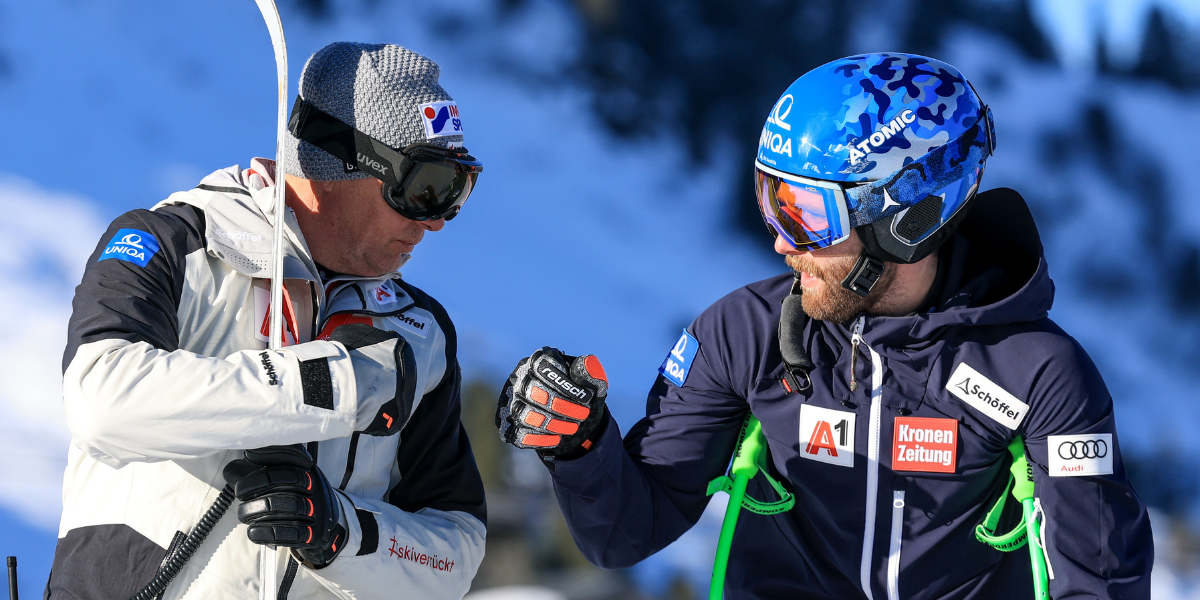
Erich Sailer, who transformed a tiny rope-tow hill in Minnesota into a launching pad for Olympians and World Cup champions, has died at 99. His passing marks the end of a remarkable era in U.S. ski racing.
Sailer’s career spanned across the decades. He founded one of the first summer ski camps at Mt. Hood in 1956, taught fundamentals at Telemark in Wisconsin and later Buck Hill, and mentored generations of racers that included Olympians, world champions and national titleholders. Yet those who knew him best say his real legacy lies not only in medals, but in the confidence, resilience and love he instilled in thousands of young skiers.
A Visionary Pioneer
Alan Kildow, one of Sailer’s earliest athletes and the father of Olympic champion Lindsey Vonn, first met him in 1963 as a 10-year-old at Sailer’s pioneering Mt. Hood summer ski camp.
“I had no prior ski racing experience, was equipped with hopelessly dysfunctional bindings, no sunglasses, and—coming from Wisconsin—no idea why anyone would need suntan lotion to go skiing,” Kildow recalled. Sailer noticed him immediately, nicknamed him “skinny,” and offered a few tips to ease his blistered lips and sunburn. When it came time to say goodbye, Kildow broke down in tears. That was the beginning of a 62-year friendship rooted in skiing, coaching, and family.
Kildow returned year after year, following Sailer from Mt. Hood to Red Lodge, Montana, and later from Telemark in Wisconsin and Buck Hill in Minnesota. Under his tutelage, Kildow won championships and eventually coached alongside him for nearly 15 years. He said what set Sailer apart was not just technique, but vision.
Something else made Sailer a pioneer—he brought in Olympic and World Cup champions such as Billy Kidd, Jimmie Heuga, Barbara Ann Cochran, Sarah Schleper, Egon Zimmermann, and Christian Pravda to train with his young campers. “No other coach was doing that,” Kildow said. “His strategy was to instill in kids a sense of what it takes to be a champion.”
“Erich was unmatched in his love for skiing and ski racing,” Kildow said. “He was a motivator who sometimes frightened his students deliberately, but then lifted them to achieve results they never thought possible. The ‘Erich Sailer System’ worked. Dozens of Olympians, U.S. Ski Team members, national and NCAA champions came out of it. His life should stand as a touchstone of greatness.”
For Kildow, Sailer’s lessons reached far beyond skiing. “His lessons were discipline, hard work, teamwork and self-confidence,” he said. “And above all, he was about love. There wouldn’t have been a Lindsey Vonn as an Olympic champion had Erich Sailer not been such a motivating and loving part of her life. Every student who had the privilege of his guidance would say the same.”
Raising Champions—and People
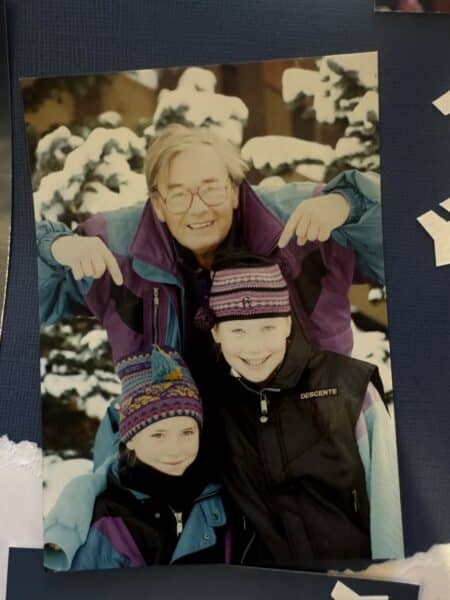
No name is more synonymous with Sailer’s influence than Lindsey Vonn, one of the most successful alpine ski racers in history. Vonn grew up training nightly under the Buck Hill lights while Sailer barked encouragement from the timing hut. She is the most successful skier ever in the speed disciplines, but also part of the sport’s most exclusive club—those who have won in every individual World Cup discipline. It shows that truly great multi-discipline skiers could emerge from the ‘Erich Sailer System.’
“He got everyone around him excited and to enjoy the process of learning,” Vonn said. “You couldn’t help but love him, even when he was critical of your skiing, because you knew he was always trying to make you better.”
The best advice she ever received came from Sailer: “Always be true to myself. Never change because I was fast just as I was. I used that for many different applications in life, not just skiing, and he was absolutely right. We are all special in our own way. That is what makes each of us great. He saw the best in his athletes and found a way to draw it out of us. I felt that if Erich believed in me that much, I should believe in myself too.”
She also recalled the foundation of her training—attending Sailer’s Mt. Hood camps at age 7, traveling to Europe with him at 9, and training at Buck Hill after school. “Erich would often sit up in the timing hut and come on the loudspeaker with tips or enthusiastic words of encouragement… along with my time, which told me how fast I was.”
“In all of my years of racing, he never lost faith in me,” Vonn said, “although he also never stopped telling me I’m too far on my inside ski, ha ha. I’m so thankful I saw him this summer. He still believes I can win, and I will do my best not to let him down. I know he will be watching.”
Now, as the soon-to-be 41-year-old Vonn prepares for the Cortina Olympics, she carries his belief in her into one more chapter of her career
A Family That Never Ends
Tasha Nelson McCrank, a two-time Olympian, grew up in a family deeply tied to Sailer’s program and family. For her, the defining quality was his ability to make every athlete feel like family.
“He thought every kid he coached was his kid,” she said. “I recently told Martina, his daughter, your dad lives on every day through every kid he taught. His legacy is going to live on forever. What I teach my kids came from him, and that’s true for every athlete he touched.”
She also remembered how Erich knew exactly what each skier needed in the moment. As a young racer, she often got nervous in the start gate. Erich, knowing how much she loved her horse, Shadow, would lean in with a smile: “Think of your horse.” The image made her laugh and relax, and then she would push out of the gate with her best runs.
That, she said, was Erich’s gift—he understood his athletes so well that he could always find the right words to bring out their best..
Her words capture what many feel—that Sailer’s impact will ripple through generations, carried on not only in ski results but in the confidence and love he instilled in every athlete he coached.

The First Breakthrough
Kristina Koznick, the first of Sailer’s protégés to win a World Cup and the first athlete to emerge from Buck Hill onto the sport’s biggest stage, remembers more than ski drills. At camps in Austria, Ursula Sailer, Erich’s wife, led German lessons and etiquette classes.
“We didn’t just train,” Koznick said. “We learned culture, history and even how to place our fork and knife. He cared about us as people, not just as racers.”
On the hill, his genius was clear. He never forced one style. Instead, he coached to each athlete’s strengths. “He believed in you so much you couldn’t doubt yourself,” she said. “That confidence was contagious.”
She laughed recalling one drill that wouldn’t fly today. “He’d swing a bamboo pole behind us at the start,” she said. “If it smacked your backside, you were too slow out of the gate. We loved it—it made it a game.”
When she was a teenager, Koznick had the chance to leave for a ski academy. Her parents left the choice to her, but she never hesitated. She wanted to stay in Minnesota, under the lights of Buck Hill, with Erich. “I didn’t want to go anywhere else,” she later said. “I wanted to stay with him.”
Even after she rose to the World Cup, she often called Erich from Europe. Sometimes it was for advice, sometimes just to hear his voice. He remained a steady presence in her career.
A Son Beyond Blood
Cory Carlson met Sailer on his first day with the Buck Hill Ski Team at age nine, the same day Erich began coaching there. “Little did I know that day would mark the beginning of a lifelong bond with one of the greatest coaches and human beings I would ever know,” Carlson said.
Sailer quickly became more than a coach. “He was my mentor, my friend, and in so many ways, a father to me,” Carlson wrote. “He raised me, guided me, and shaped not only my ski career but also my character.”
Carlson spent nine years on the U.S. Ski Team and later raced on the Pro Tour, yet his bond with Sailer extended far beyond competition. “We played tennis together, worked summer ski camps side by side, traveled the world, and spoke often about life, careers, challenges, and endless investing discussions, which were passions,” he said.
When Carlson’s racing career ended, Sailer pushed him to think beyond coaching. “At the time, I was upset—we didn’t speak for nearly a year,” Carlson admitted. “But as always, he was right. His push set me on a course toward a career in hospitality that has brought me fulfillment, growth, and opportunities I never could have imagined.”
“For me, he was family,” Carlson said. “He raised me like a son, and I will always carry his voice, his lessons, and his love with me. I am deeply grateful to have been one of the many lucky ones to call him coach, mentor and friend.”
Shaping Coaches Too
Tony Olin first encountered Sailer as an 11-year-old red-headed kid who had never raced. He wasn’t even a member of the Buck Hill team yet—just tagging along with a neighbor. His very first dryland session with Erich was brutal. The kids were told to run miles through the neighborhoods, and half of them got lost while parents circled in cars trying to find them. Then, on the hill, Erich set up long bamboo courses for the kids to run, hammering home his belief in discipline and repetition even before they put on skis.
Olin came home exhausted but told his mother, “I have to do this.” He joined the team and never looked back.
“He included us like family,” Olin said. “We spent holidays at his home, eating Austrian food. Erich transcended generations. He could connect with 10-year-olds as easily as with college athletes. And when we reconnected years later, he told me, ‘You are my friend. We have to stay together because I need someone to carry my casket.’”
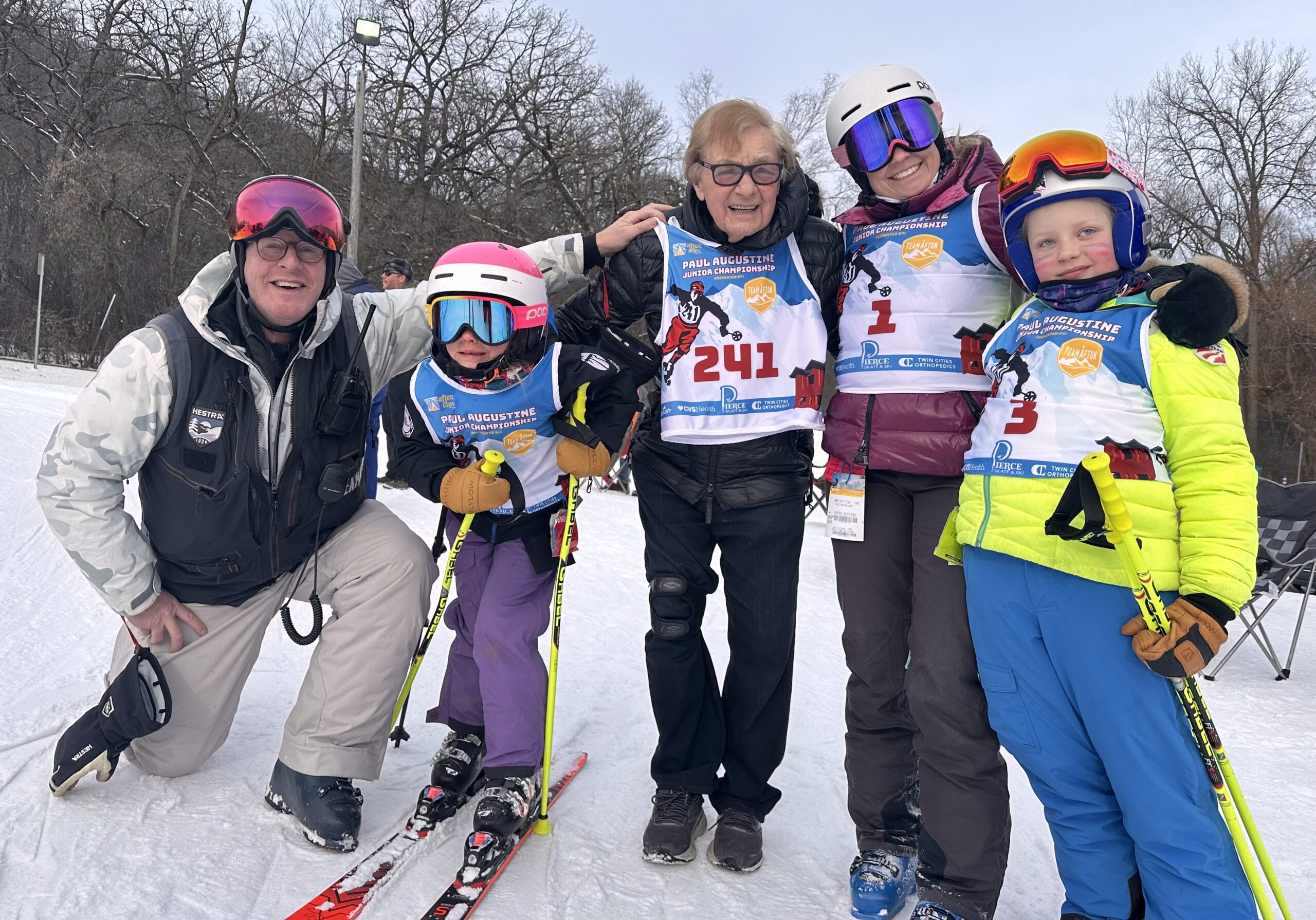
Olin eventually became a coach alongside Sailer at Buck Hill, and today he runs his own program at Afton Alps. He credits Sailer with giving him the confidence to take on the challenge of leading. “The lessons I learned from Erich stay with me every day,” he said. “He shaped how I coach and how I connect with athletes. That’s his gift—he didn’t just create racers; he created coaches too.”
The Newest Star
Paula Moltzan, who podiumed at the 2025 World Championships, represents the next chapter of Sailer’s influence.
“Erich believed in me from day one and supported me through every step,” she said. “Even this season, he texted after races with congratulations or motivation. He was bold and honest, never saying you were good unless he meant it. Behind that honesty, though, he did everything in his power to make you the best you could be.”
Moltzan said she will carry his lessons throughout her career. “I’ll carry the lessons and skills Erich taught with me through the rest of my ski career,” she said, “and hopefully find a way to instill them in the next generation of racers.”
More Than Ski Racing
Sailer’s reach stretched far beyond the hill. He taught discipline, hard work, teamwork and, above all, love. For thousands of athletes, he was more than a coach—he was family, motivator and lifelong mentor.
I personally witnessed Erich’s love for his daughter Martina when they, working independently, joined my group for training in Vail. I saw them again at races, always together. That bond was unshakable. And in recent years, even from photos, it was clear how deeply he cherished Martina’s two daughters as well. His family, like his athletes, was always at the center of his heart.
I usually don’t write articles this long, but after speaking with the athletes he influenced, I felt compelled to represent the thoughts and love they shared. I have been around Erich since the 1970s, but now I have a better understanding of why my heart told me to write this tribute.
It was a pleasure to do so, and Ski Racing Media is proud to shine even a small light on such a deserving member of our community.
As someone who spent 38 years coaching at every level, I was struck by how deeply his athletes cherished him. Many no longer live in Minnesota, yet they made the effort to visit him in his final year. If I had half the influence on the athletes I worked with that Erich Sailer had, I would die proud. I have no doubt Erich passed knowing exactly how much he meant to so many.
Erich Sailer lived nearly a century, but his legacy is timeless. He shaped Olympians, world champions and gold medalists, but also thousands of kids who never raced beyond their local hills and parents who trusted him to guide their children. His greatest triumph was not only in producing champions but in shaping lives and communities. That victory will never fade
Thanks to all those who agreed to contribute to this article, it is greatly appreciated.
—Peter Lange, Publisher, Ski Racing Media
About the Author: Peter Lange