
Adjusting to the Weather
Have you ever tuned your skis for a race thinking you had the weather figured out, only to be proven wrong? That’s exactly what happened to me recently. My name is Abishai Corey, and I’m a freshman on the University of New Hampshire’s alpine ski team. Over Christmas break, three of us traveled to Whiteface, New York, for an E-Cup series.
After checking the forecast, I expected a warm, soft GS and a cold, icy slalom. Based on that assumption, my dad machine-tuned my slalom skis using our Snowglide and I hand-tuned my GS skis so they wouldn’t feel too sharp. I waxed each pair for the anticipated air and snow temperatures, then jet-sprayed my GS skis to help them glide smoothly over wet snow.
Everything felt dialed in—until Friday’s races were canceled. Temperatures hit 47 degrees, and rain fell nonstop. Overnight, the forecast flipped again. A hard freeze moved in, and the GS surface would no longer be soft. Instead, it would be a solid sheet of ice.
By then, I was already on campus and scheduled to leave the next day, which limited my tuning supplies. If you’ve ever faced a situation like this, keep reading for a practical approach to adjusting skis when conditions change unexpectedly.
Rechecking the Setup
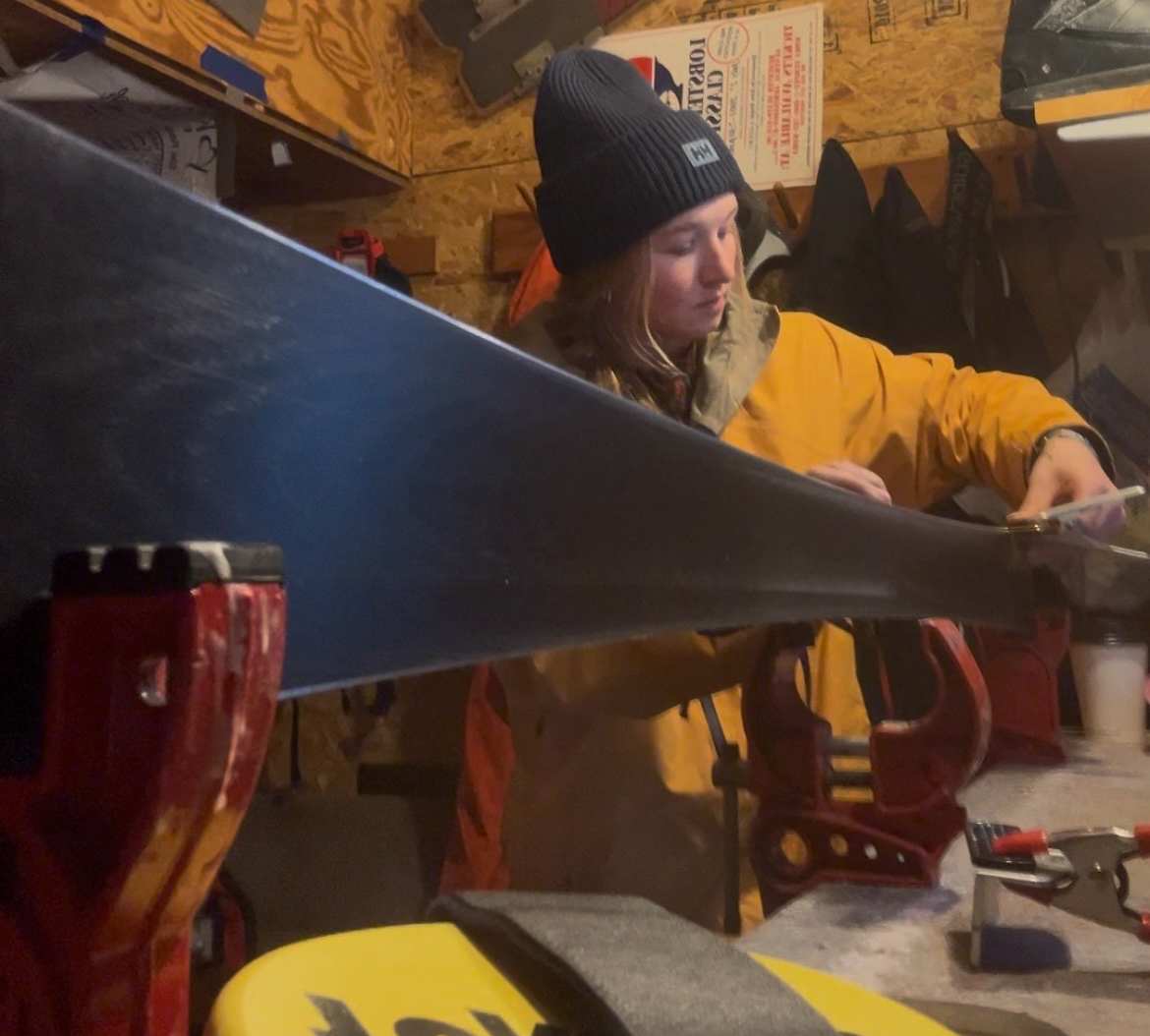
The evening before leaving for New York, I returned to the tuning room to reassess my setup. I started by checking my slalom skis to confirm they were ready to race. Anytime you machine a pair of skis, you should follow up by stoning the edges with a diamond stone to remove any burrs created during the process.
I also checked for hangers, which can form during machining or stoning. To find the hanger, I lightly ran my fingernails across the width of the ski. When your nails catch just as they pass over the edge and off the ski, a hanger is present. I removed it by hand with a fine stone along the base side of the edge, since this step doesn’t work with a file guide.
After finishing the edges, I waxed a red-and-blue mix and chose to wait to scrape my slalom skis until after the GS races.
Last-Minute GS Ski Adjustments
My GS skis needed more work. Once officials canceled the first race, they shifted both GS events, which meant racing in completely different conditions. Other collegiate athletes shared updates from the area, including flooded streets and continued rain around Whiteface. Overnight temperatures were expected to drop to 14°F, with a daytime high of just 24°F.
That deep freeze all but guaranteed the snow wouldn’t soften. With limited options, I pulled files and stones using my file guide on my GS skis to make them much sharper.
I started with short file pulls down the ski, followed by three longer pulls, then finished with one full ski pass to connect everything. After checking the edge, I noticed the underfoot section still felt duller, so I added several targeted file passes in that zone.
From there, I used a coarse (200) diamond stone in the file guide for 5–7 passes, finishing with extra work underfoot to even out sharpness. I followed with a medium (400) stone for 3–5 passes and wrapped up with 3–5 passes using a fine (600) stone. A final hanger check confirmed the edges were clean, so I strapped the skis together and loaded them into the van.
Final Takeaway
Situations like this can trigger panic, but it’s important to stay calm. When conditions change fast, regroup, recheck the forecast, and make the best adjustments possible with the tools you haveThis experience reinforced the importance of always carrying a few stones, guides, rubber bands, and a sharp file in your bag for last-minute tuning changes.
About the Author: Abishai Corey