Alpine Ski World Cup Reform: Revisiting My 2016 Top 10
Ten years ago, I poked fun at the Alpine World Cup for its slow pace of modernization in my article “The Top 10 Ways to Save the World Cup.”
The title was deliberately provocative. The question behind it was serious: How could ski racing become more compelling for fans, more valuable to sponsors, more sustainable for athletes and more inviting to newcomers?
Since then, Americans have voted in three presidential elections, a global pandemic upended daily life, new wars have erupted, and artificial intelligence has worked its way into almost everything. The world has hardly been standing still.
A decade later, new stars have risen, records have fallen, and familiar champions have retired and returned. Equipment and broadcast technology have advanced. Safety has demanded renewed attention.
Yet much of the World Cup still looks familiar. The world has found plenty of ways to reinvent itself. Ski racing seems rather attached to the way it has always done things.
Following is a point-by-point assessment of 2016’s top 10 list:
10. Roll back the GS ski regulations
Status: Partial progress.
In 2016, I argued that giant slalom skis had become too specialized and that equipment rules should support the athleticism and artistry of the discipline.
FIS subsequently reduced the minimum men’s GS ski radius from 35 meters to 30 meters for the 2017-18 season. That was a welcome course correction.
Equipment development has continued. In my view, today’s racers can ski with greater stability and carry speed through turns in ways that reflect advances in both equipment and technique.
But World Cup equipment remains highly specialized, with a narrow direct retail market compared with the broader ski market.
Manufacturers need to profit from their involvement in the sport. Racing should do more to connect the equipment and clothing fans see on television with products they want to buy.
9. Invite parallel and ski cross to the party
Status: Not adopted.
Head-to-head formats are easy for the layperson to understand and provide an unusual amount of drama and excitement. My proposal was to bring ski cross into the Alpine World Cup and make greater use of parallel racing.
That has not happened. The published 2026-27 alpine calendars contain no parallel races, and mixed team parallel disappeared from the Olympic alpine program for the 2026 Games.
Ski cross, however, has made progress on its own. A mixed team competition has been approved for the 2030 Olympics. That deserves recognition, even though it does not fulfill my original proposal.
Traditional alpine disciplines have their own appeal. But head-to-head racing offers another way to draw people in: The athletes race one another, and the winner crosses the line first.
Why shouldn’t that help bring more people into the sport?
8. Innovate broadcast technology
Status: Partial progress.
The 2015 World Championships set a new standard for ski racing broadcasts with unique camera positions, cable cams and editing. I wanted the sport to build on that with live data, wearable technology and better explanations of what athletes do.
There have been wins. Drones provide some of the most exciting perspectives in ski racing broadcasts. Drone footage illustrates the speed of the athletes in a way that fixed cameras cannot. Section-by-section, color-coded analysis helps viewers see where racers gain and lose time.
The opportunity goes much further.
Show the forces athletes manage. Explain their tactical choices. Use GPS analysis and clear graphics to connect speed, line and terrain. Where rules and safety permit, bring viewers closer through athlete and coach audio.
Fans of other sports follow statistics because those numbers help tell the story. Ski racing has plenty of stories hidden in its data.
Bring the viewers into the action!
7. Entertain the sponsors and fans
Status: Too little progress.
Sport is entertainment, plain and simple. Fans and sponsors help make professional sport possible. They should feel connected to the athletes who make it worth watching.
Athletes need space to prepare and recover. Race organizers must protect safety and competition. Neither requirement means every interaction has to happen at a distance.
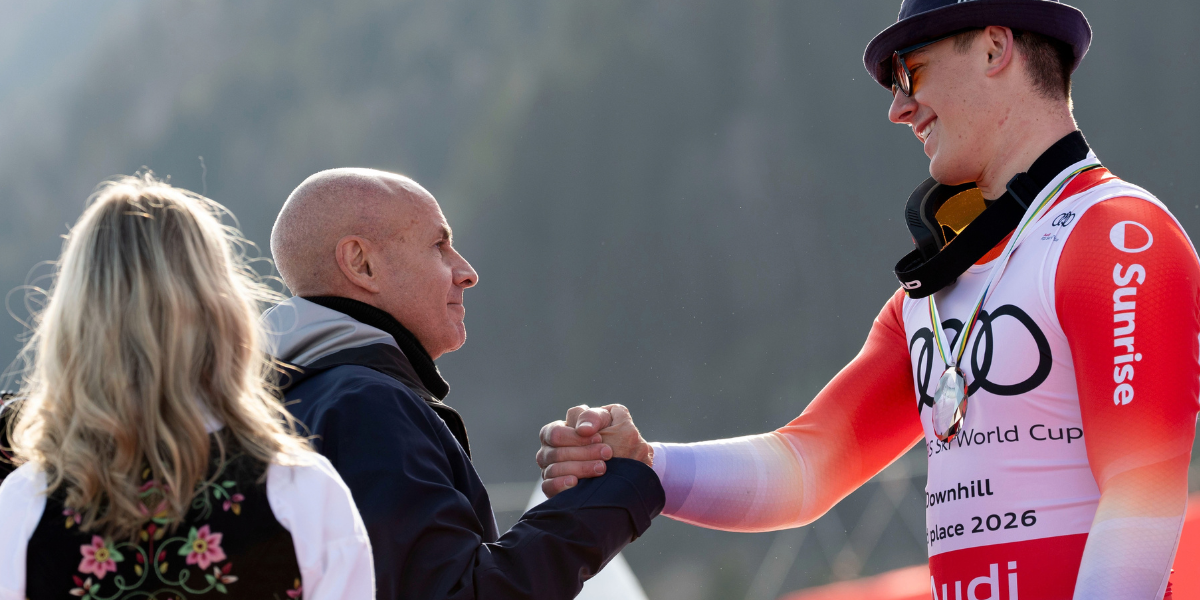
Other sports build scheduled opportunities for access into their events. Ski racing could do more with athlete appearances, sponsor gatherings, fan conversations and podium celebrations that bring people closer.
The answer is not to interrupt a racer moments before a start. It is to plan meaningful interaction around the competition.
We can’t afford to play our sport in a bubble. Make every effort to expose the athletes to their fans and sponsors.
6. Modernize the format
Status: Limited progress.
My original proposal was to make technical races more compact: smaller fields, a qualification opportunity and a shorter break between runs. Give committed fans more racing while presenting the main competition in a manageable broadcast window.
The World Cup has not adopted that package.
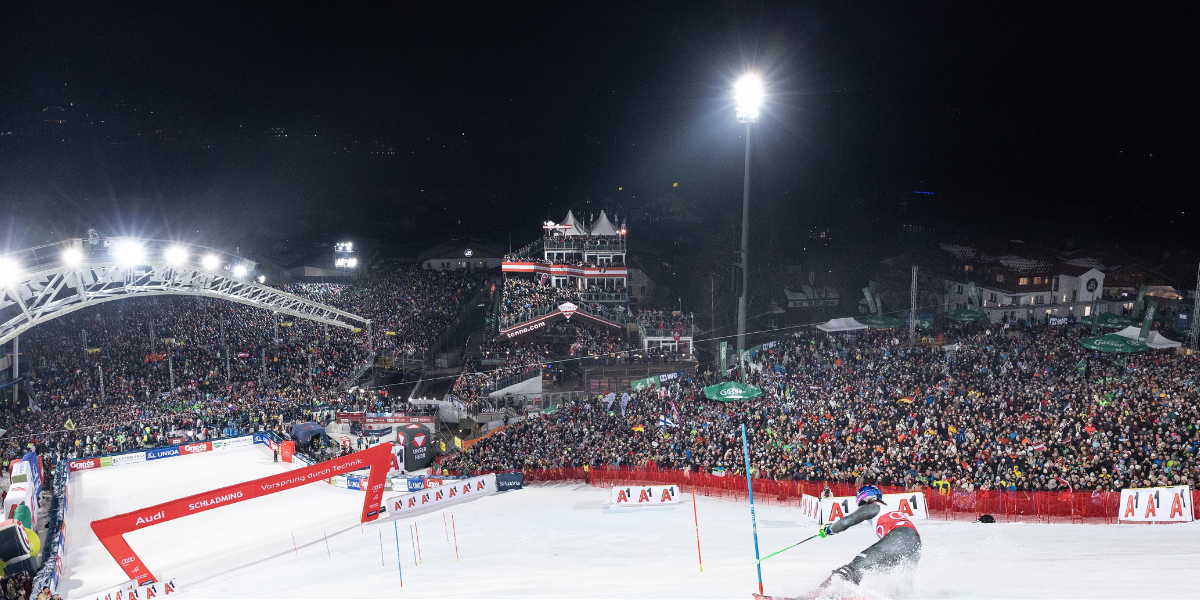
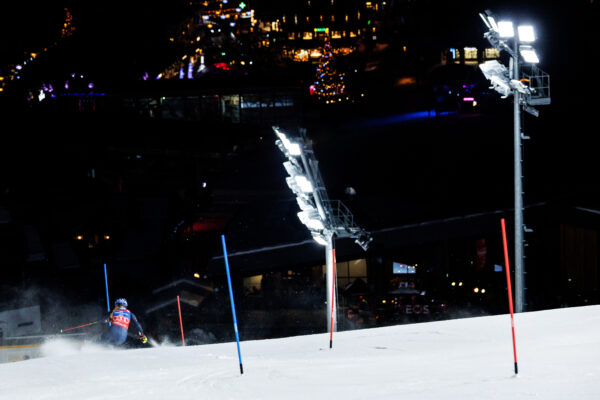
There has been movement in scheduling. The published 2026-27 calendars include additional night racing, with a men’s slalom at Alta Badia and a women’s giant slalom at Flachau.
That is worth building on. Why not test a regular midweek slalom event that viewers can plan on throughout the winter? Could men’s and women’s races share more venues and create a fuller evening of competition?
Shortening a race day requires workable plans for course preparation, inspection, athlete recovery and fair conditions. Those are reasons to design careful trials.
Let’s think in new ways.
5. Identify and reward majors and classics
Status: Not adopted.
Not every World Cup is or should be the same. A win in Kitzbühel or Adelboden is not the same as a win in Hinterstoder. The history and public attention surrounding those races differ.
In 2016, I proposed recognizing majors with four times the usual World Cup points and a second tier of classics with twice the points.
There is still no such system. The standard victory remains worth 100 points, regardless of a venue’s prestige.
My larger concern is how the calendar and scoring system shape an athlete’s season. Pursuing several disciplines demands difficult choices about racing, travel, training and recovery.
There are few golf or tennis pros who compete in every tournament. Their leading athletes can build seasons around selected tournaments and major championships.
Weighted points would change the title race and deserve debate. But so does the assumption that more racing is always the best way to build the sport.
4. Tilt the playing field
Status: Not adopted.
The most successful sports look for ways to keep outcomes in question and create opportunities for new contenders.
My proposal was to reverse the starting order for a larger group in first runs and speed races, giving rising athletes a better opportunity before course conditions deteriorate.
The World Cup has not adopted that approach. Rankings still shape the starting groups, while the second run of slalom and GS reverses the fastest 30 qualifiers.
Reversing a field would create its own fairness questions. Weather and snow do not always change predictably, and athletes earn their rankings through performance.
Still, the sport should be willing to test whether different start formats can produce fair racing and more opportunities for emerging contenders.
The sport needs more winners from all corners of the globe.
3. Embrace new venues
Status: Partial progress.
I wanted the World Cup to make room for organizers with the resources and imagination to expand its reach.
Killington has shown the value of bringing elite racing to an enthusiastic North American audience. Sun Valley’s return has reconnected the World Cup with a historic American venue. Both are Ikon Pass destinations.
Those are meaningful gains. They also show that familiar ski communities can offer fresh opportunities for the tour.
Other experiments have proved difficult. Weather prevented the proposed Zermatt-Cervinia cross-border races in both scheduled seasons. FIS, Swiss-Ski and the Italian federation subsequently agreed to leave them off the 2024-25 calendar.
That experience illustrates the challenge of innovation. It should not end the search.
What about suitable Southern Hemisphere venues? Regular stops in Asia? A $1 million parallel shootout in Dubai?
Each idea would need credible answers on snow, safety, financing and logistics. But new markets and formats deserve serious consideration.
2. Increase athlete prize money
Status: Progress, with more to do.
Here, the scorecard needs an update.
The 2026-27 World Cup rules require a minimum purse of €168,000 per race, distributed among the top 30 in standard individual competitions. That is the total purse, not the winner’s payment.
Prize money has increased. FIS also approved a guaranteed 10% increase for 2025-26, with organizers invited to contribute an additional 10% voluntarily.
By November 2016, FIS rules required a minimum purse of 120,000 Swiss francs per race, distributed among the top 30 finishers. The purse has since increased, while that payout depth remains unchanged.
Inflation and exchange rates complicate comparisons across a decade, especially because the minimum purse has moved from Swiss francs to euros. We should not assume that individual racers are better off simply because the total purse is larger.
The real question is whether racers can sustain a career, including those developing toward podium contention. How far do earnings go toward travel, training, coaching and equipment support?
FIS publishes prize-money standings. Put those earnings in context, give the athletes credit for what they earn and keep working to make the profession more sustainable.
1. Host more World Cups beyond the Alpine heartland
Status: Partial progress.
The World Cup isn’t fully global if most of its racing remains concentrated in a handful of neighboring countries.
North America has gained important opportunities. The current 2026-27 calendars schedule 10 men’s races in the United States and 11 women’s races across the United States and Canada.
Yet Austria, Italy and Switzerland still account for 21 of the 43 men’s races, about 49%, and 17 of the 40 women’s races, about 43%. Add France and Germany, and those shares become about 60% and 50%, respectively.
Those totals include the World Cup Finals and exclude the World Championships. The women’s schedule includes two races in Narvik, Norway, that remain subject to confirmation.
The Alpine heartland has earned its place through expertise, infrastructure and generations of support. Expanding the tour should build on those strengths.
My original vision of 30 nations over 30 weeks was ambitious. The underlying question remains: How will the World Cup reach markets that rarely get to see its stars in person?
Bonus: Make more room for professional teams
Status: The national-team model remains dominant.
Imagine the competition that could ensue among Red Bull, Qatar Airways and Audi to field the best team. That could mean more support for athletes and more room for national federations to concentrate resources on development.
Independent and multinational training programs have shown that athletes can prepare outside the traditional national-team structure. Those arrangements do not remove federations’ authority over World Cup entries.
National governing bodies carry responsibilities across the pipeline, from supporting clubs and welcoming beginners to funding and training elite athletes. With so much attention devoted to winning at the top, is growing participation getting the attention it needs?
Commercial investment is another part of the discussion. CVC’s 2024 proposal concerned investment in a joint venture managing commercial rights across FIS sports. It was not a plan to replace national teams with professional racing teams.
The distinction matters. Selling commercial rights, organizing a tour and training athletes are different responsibilities.
Could a different division of those responsibilities attract investment, support elite athletes and give federations more resources to bring people into the sport and keep them there?
That deserves an open discussion, with athlete interests and the long-term health of the sport at its center.
What happens next?
Ski racing is one of the most extreme and demanding action sports. Its athletes deserve a stage that shows people what they can do. A more compelling World Cup can attract fans and sponsors, inspire young racers and strengthen the wider snowsports industry.
But inspiration needs somewhere to go. If a child watches a race and wants to try the sport, how easy have we made that next step? Who is responsible for opening the door?
U.S. Ski & Snowboard’s vision and mission emphasize excellence. Its current bylaws also explicitly include encouraging participation among competitive and recreational athletes. The responsibility is there. Is it getting the leadership, resources and visibility it deserves?
The U.S. Tennis Association puts growth at the center of its mission: “Growing tennis to inspire healthier people and communities everywhere.” USA Gymnastics’ strategic plan pairs competitive success with expanding participation. Why shouldn’t growing our sport be just as prominent in how we describe our mission and measure our success?
We know how to count medals. We should be just as serious about counting new participants, keeping them in the sport and understanding why others leave. National federations cannot do it alone. Clubs, resorts, equipment companies, sponsors and those of us in the media all have a part to play. Someone still has to lead.
Ten years after the original list, there has been progress. There should be more. Which ideas will we test, who will take responsibility, and how will we know whether they work?
It’s our job to make this sport inviting and grow the number of people who take part. What are we going to do about it?

About the Author: Aldo Radamus