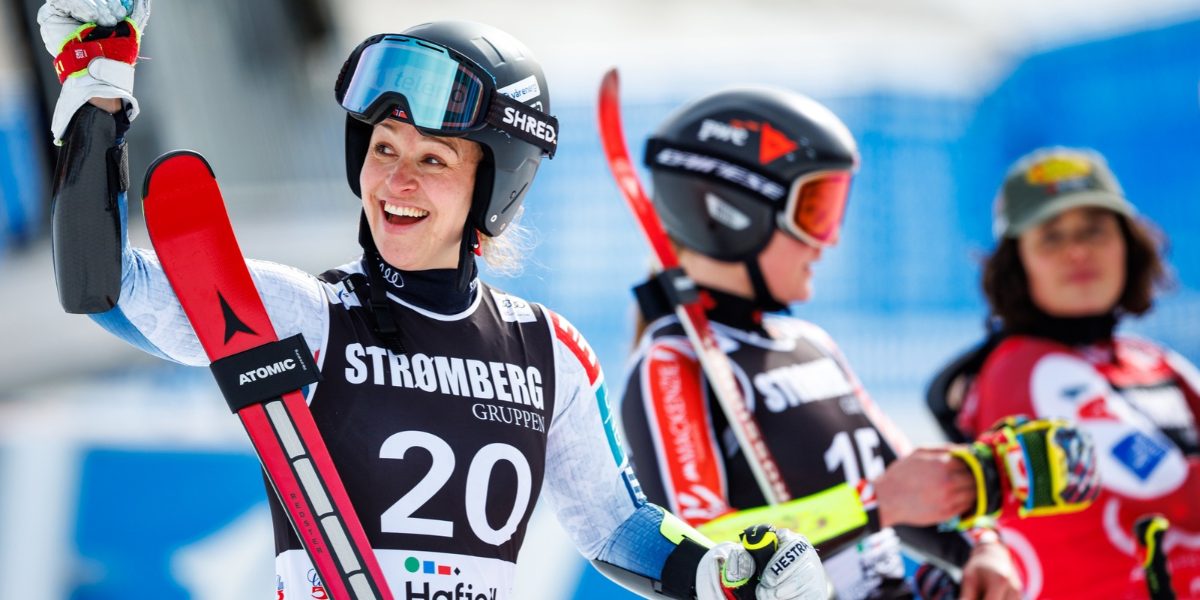
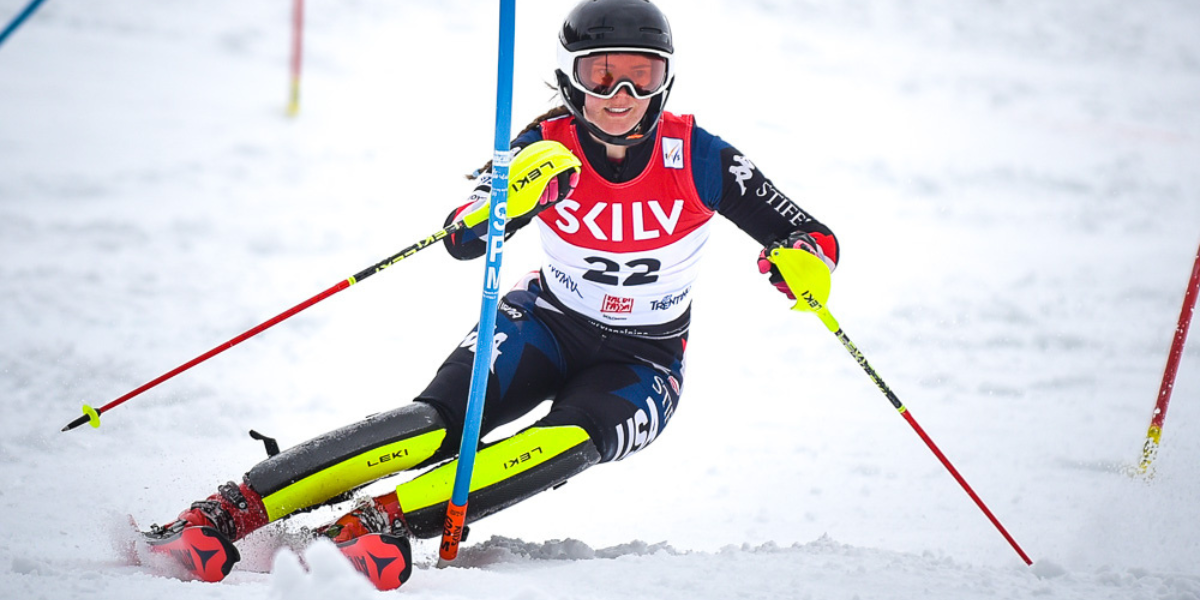
Annika Johansson / Val Di Fassa / photo: @emilslukso
When Ski Racing Media spoke with Annika Johansson, one of the newest members of the Stifel U.S. Ski Team, she was not in Aspen, Colorado, where she spent much of her childhood, or in Italy, where she has been developing for the past five years.
She was in Stockholm.
Johansson was there for prep season conditioning with renowned Swedish trainer Andreas Ögren, whose client list includes NHL players and elite alpine skiers. It was another reminder that almost every part of Johansson’s development has looked different from the traditional American pathway.
Most American ski racers pursue a familiar progression through regional competition, NorAms and eventually Europa Cup opportunities.
Annika Johansson chose something far less conventional.
At just 14 years old, Johansson moved to Europe and pursued her development almost entirely overseas, immersing herself in the culture and competition of Northern Italy while chasing the deepest international fields she could find.
Now, after years of racing abroad, overcoming devastating injuries and earning her way through a far narrower pathway than most American athletes, Johansson has arrived at the strongest women’s alpine program in the world: the Stifel U.S. Ski Team.
“It feels great,” Johansson said. “I’m really looking forward to having their support in the next year and trying to … I’m going to keep doing what I always do.”
From Vermont and Aspen to Northern Italy
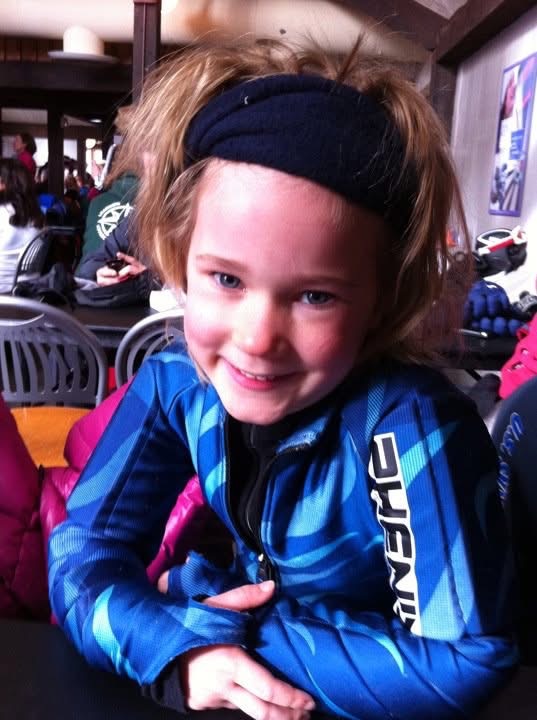
Johansson’s skiing roots began long before Europe entered the picture.
She was born into a ski racing family, first skiing in Vermont while growing up in Connecticut before moving to Aspen at age eight. Her father, Per Johansson, is Swedish. Her mother is American and grew up in London.
“My father had me on skis when I was 20 months old,” Johansson said. “I was always with the family chasing after my sisters.”
While many young American racers idolized Mikaela Shiffrin, Lindsey Vonn, Ted Ligety or Bode Miller, Johansson said her real inspirations were closer to home.
“My skiing heroes and my skiing inspirations were my sisters,” she said.
Older sisters Isabella and Stella Johansson even introduced her to her earliest skiing lessons through what they jokingly called “butt turns.”
“They said when you want to turn, you just have to put your butt in the opposite direction and your skis will automatically go,” Johansson said with a laugh.
The family’s move to Europe initially centered around Stella’s Europa Cup career. The plan was simple: spend one year overseas supporting Stella before returning to the United States.
That changed quickly.
Near the end of that first season abroad, Johansson’s parents asked whether she wanted to return home or remain in Europe.
She chose to stay.
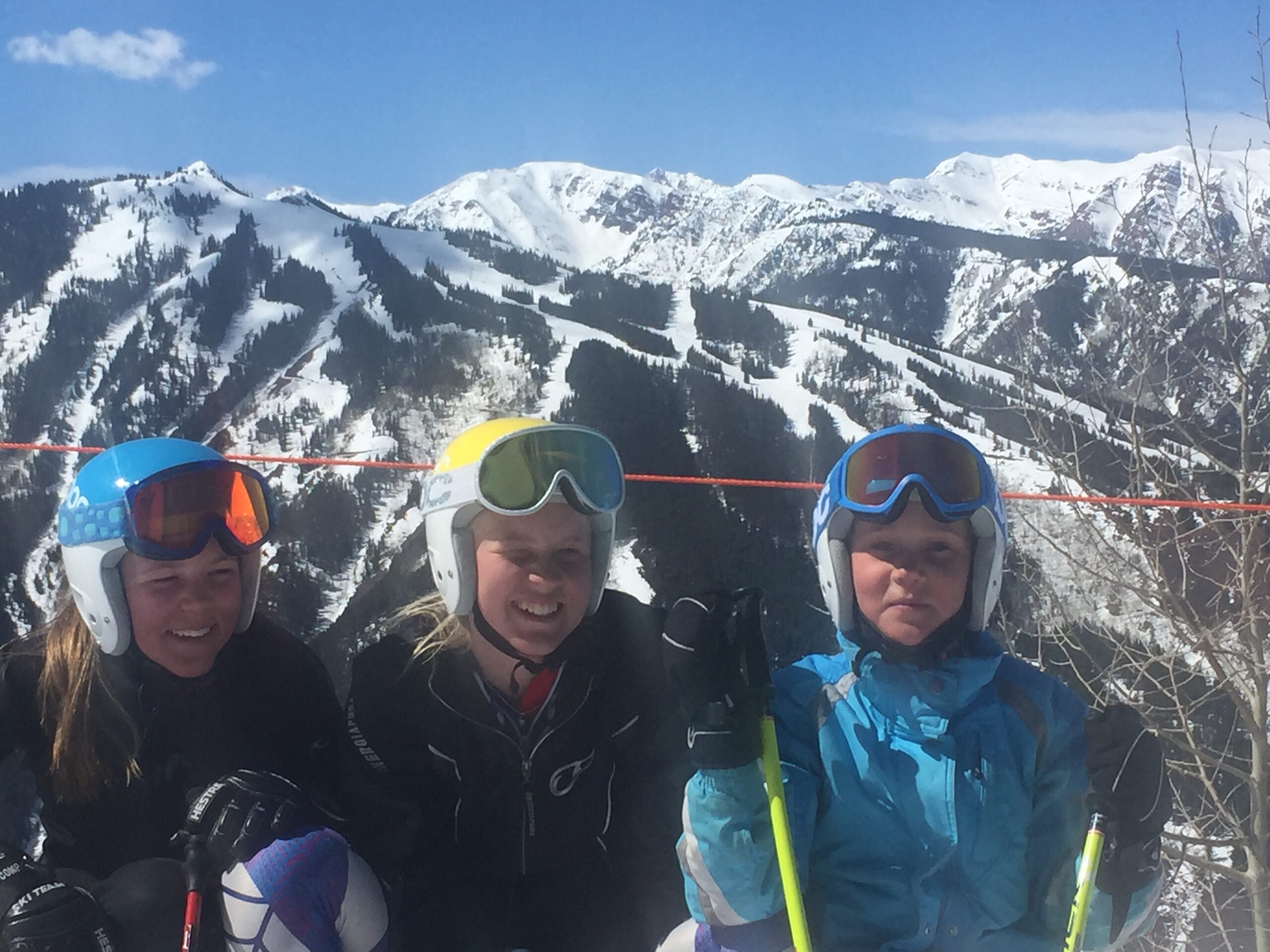
Why Europe became home
Johansson’s decision was shaped by much more than ski racing.
Initially, she entered a small school in Italy’s Dolomite region, where students spoke Italian, German and Ladin, an ancient Rhaeto-Romance language still spoken in a handful of valleys across the Dolomites.
“I was kind of plopped into the school there speaking only English and Swedish,” Johansson said. “It was really tough, but because it was so tough, I grew so much in that one year.”
The challenge accelerated her growth both personally and athletically.
“I believe that it made me such a stronger skier, such a stronger person,” Johansson said.
The cultural adjustment extended well beyond the classroom.
At one of her first training camps in Val Senales, Johansson arrived three minutes late to dinner. Her coaches responded with humor, asking the team to decide on an appropriate response for the newcomer: 30 push-ups for every minute she was late. Johansson dropped to the dining room floor, smiling, and slowly completed all 90 push-ups while the rest of the team watched, laughed, and cheered her on.
“After that, I was never late again,” Johansson said.
But Johansson speaks about those experiences with appreciation, not resentment. She embraced the discipline, language barriers and cultural differences that came with living full time in Europe.
“I really did enjoy my time there,” Johansson said. “Despite all of our differences, I think we learned a lot from each other.”
A very different development path
Johansson’s commitment to Europe also dramatically changed her competitive pathway as an American athlete.
Instead of primarily pursuing NorAm racing and the traditional domestic route, Johansson focused on European FIS races and eventually Europa Cup opportunities, regularly competing in very robust international fields.
For Johansson, the decision centered on development.
“A large reason why I went to Europe and why I decided to stay in Europe is because the competition is much deeper in Europe,” Johansson said. “That’s what pushed me a lot.”
She viewed Europa Cup as the strongest continental cup competition in the world and believed those fields offered the best opportunity to improve.
“That was the best way to grow as a skier,” Johansson said. “To go against the greatest depth of competition.”
At the same time, Johansson was careful not to frame her decision as criticism of American skiing or the U.S. development system. In fact, she repeatedly emphasized how valuable both experiences were for her growth.
“I got the best of both worlds,” Johansson said. “I got to ski in the U.S. and race against the girls in the U.S., and then I got to go to Europe and race against the rest of the world there.”
Still, her decision undeniably narrowed her pathway toward major U.S. team opportunities.
Without regular NorAm racing and direct domestic comparison opportunities, Johansson largely relied on European results to validate her level. That reduced margin for error and made consistency critical while pursuing criteria.
Eventually, those performances earned her a spot on the Stifel U.S. Ski Team.
The injury that changed everything
Johansson’s career nearly changed forever at 16.
Training giant slalom in Val Senales, she suffered a catastrophic crash that tore both ACLs along with her LCLs, MCLs and PCLs. She also tore one meniscus and suffered severe fractures in both tibial plateaus that took 18 months to heal.
“I basically did the whole thing,” Johansson said.
Both knees required surgery on the same day. Recovery left her in a wheelchair.
Oddly enough, Johansson said the injury clarified her love for the sport more than any success ever had.
“All I wanted to do was just get back on skis,” Johansson said. “That’s really the moment when I decided, ‘Okay, this is what I want to do.’”
The experience fundamentally changed her perspective.
“It made me appreciate skiing,” Johansson said. “You’re able to get up every day and your office is outside in nature and you’re able to do these crazy things with your body.”
Setbacks, concussions and a breakthrough in Pozza di Fassa
Johansson’s resilience faced another major test this past season.
After a difficult stretch of races, she crashed in giant slalom in Austria, suffering a concussion, fractured cheekbone, a perforated sinus and a dislocated jaw. Soon afterward, she learned she would not be selected for the U.S. World Junior Championships team.
“It was a bit of a beat down after a beat down,” Johansson said.
Still, Johansson refused to let the season unravel.
“I haven’t given up before, so why would I give up now?” she said.
Her response was simple: keep pushing.
By season’s end, Johansson arrived at the national championships in Pozza di Fassa facing a stacked field that included World Cup and top Europa Cup athletes. Starting 22nd in slalom, she believed her odds of winning were minimal.
“I thought, ‘I don’t have a chance to win this race,’” Johansson recalled. “So all I’m going to do is try my best.”
Then she won.
“There was no better feeling in the world,” Johansson said.
Learning from Stella Johansson, Mitja Kunc and Mitja Dragšič
Although Stella Johansson has had a major influence on Annika’s skiing career, injuries and their age difference meant the sisters rarely trained together extensively.
Still, Stella has remained one of Annika’s most trusted voices.
“She’s like my coach away from coaching,” Johansson said.
This past season, Johansson also worked closely with former Slovenian World Cup star Mitja Kunc, a World Cup slalom winner and six-time World Cup podium finisher in slalom and giant slalom, along with ski technician Mitja Dragšič, who recorded eight World Cup top-10 slalom finishes during his own racing career, including two fourth-place results.
Together, Kunc and Dragšič helped Johansson continue developing within the demanding European environment she had embraced since moving overseas.
“They really pushed me to a higher level,” Johansson said of her support staff.
Johansson, an Atomic athlete since her early teenage years after following sister Stella onto the brand, now moves into Miha Kurner’s group with the Stifel U.S. Ski Team as she prepares for her first official camp in Ushuaia later this summer.
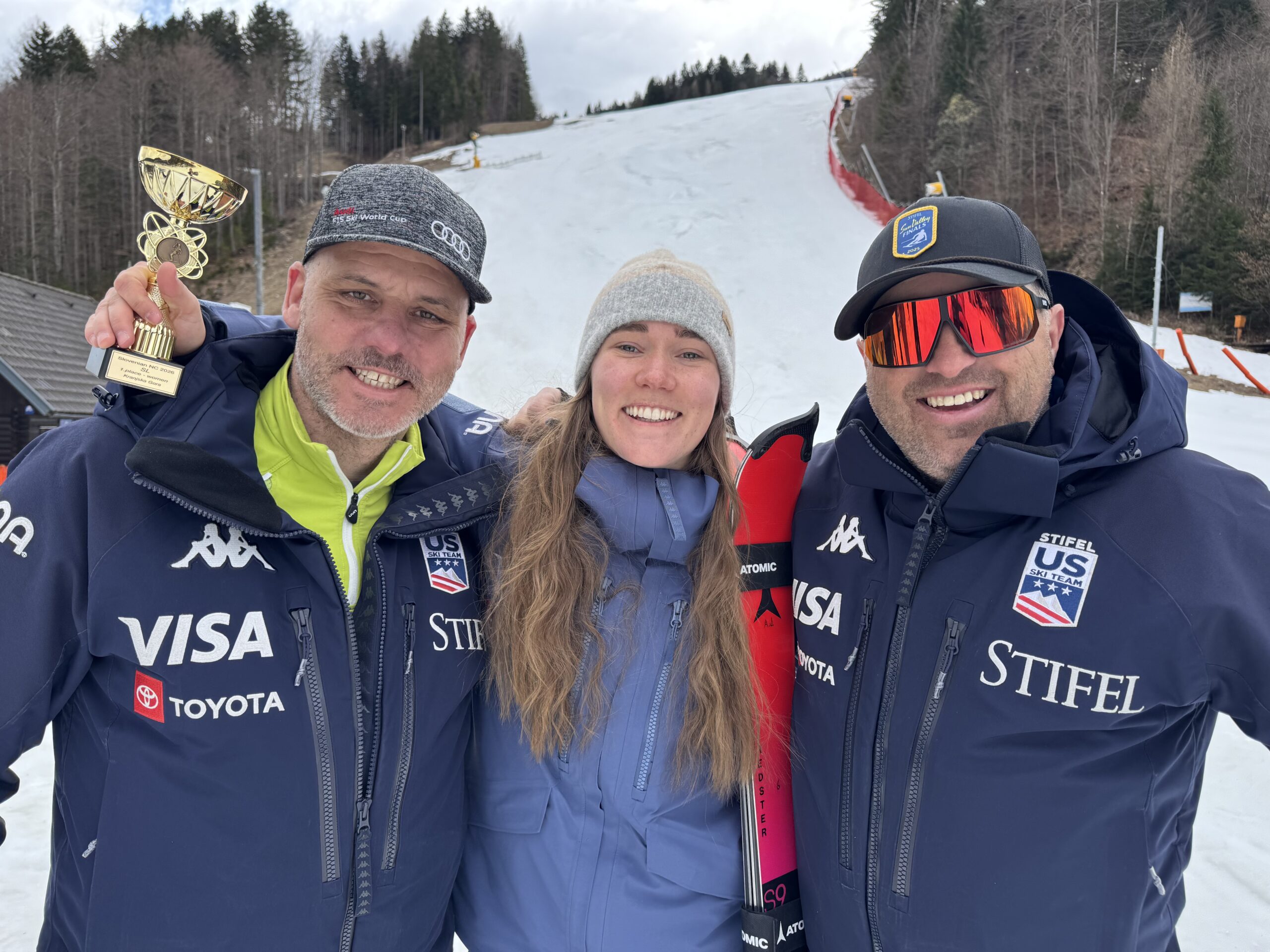
“There’s no better feeling in the world”
Johansson arrives on the Stifel U.S. Ski Team carrying an unusually broad perspective for a 19-year-old American skier.
She has lived in multiple countries, learned new languages, adapted to unfamiliar cultures, rebuilt herself after devastating injuries and pursued one of the most unconventional development paths of any American athlete entering the program.
Through it all, her motivation remains remarkably simple.
“I really am just in love with the process of it all,” Johansson said, “having something that I can go to every single day and put all of my effort into.”
For Johansson, that process has already taken her from Vermont to Aspen, from Stockholm to the Dolomites and now onto the Stifel U.S. Ski Team.
It was never the conventional route.
But it was hers.
About the Author: Peter Lange