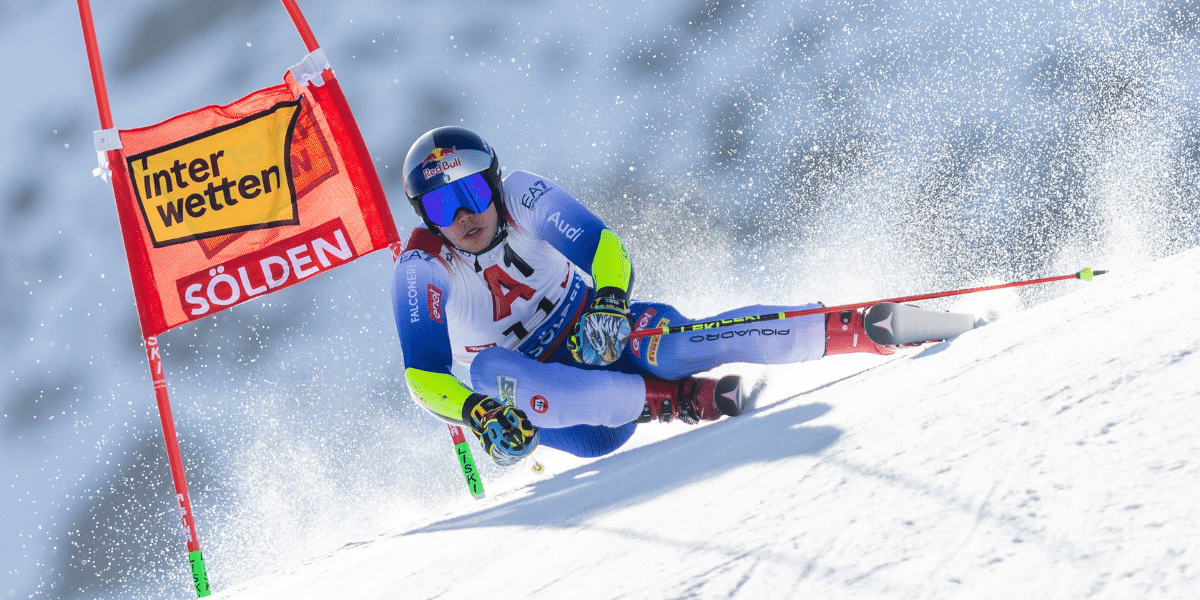
Alex Vinatzer Sölden GEPA picutures
In the fall of 2020, Lucas Pinheiro Braathen launched his World Cup season at the Sölden opener with a unique Atomic ski. To keep its Revoshock technology—a type of shock absorber for skis—under wraps, Atomic covered it with an oversized “bandage.” However, skinews.ch quickly uncovered the innovation and reported on it, bringing attention to Atomic’s latest technological developments.
This season, skinews.ch observed other noteworthy shifts in equipment choices at the Sölden races. Several Fischer and Rossignol athletes chose Marker bindings over their brands’ usual in-house options. Some athletes reportedly favor Marker bindings in warm snow conditions, which are becoming more frequent throughout the season. Once again, skinews.ch noted these subtle yet impactful equipment adjustments, capturing the latest in alpine racing gear trends.
Atomic Introduces the “Cross Lace” Boot Prototype
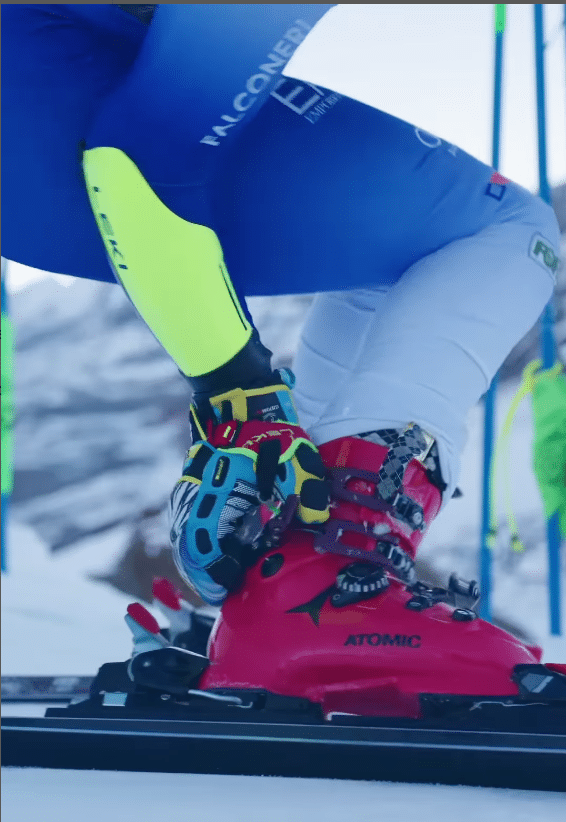
Atomic also introduced a cutting-edge prototype boot in Sölden. Alex Vinatzer, who matched his best Giant Slalom World Cup result with a fifth-place finish, raced in a unique boot prototype. Earlier this October, skinews.ch reported on the increasing popularity of the BOA® FIT quick-lacing system in alpine racing. In Sölden, Vinatzer wore an Atomic prototype, internally labeled “Cross Lace,” featuring a shell closure system combining a cable pull and a buckle. While Atomic has used a cable system in its touring ski boots for years, the brand adapted and refined it specifically for alpine racing.
Vinatzer Praises the Cross Lace System
Vinatzer highlighted the boot’s improved precision fit, noting how well the design encloses the foot. “The advantage is that you can fasten the ski boot much more precisely, and the foot is better enclosed by the boot,” he told skinews.ch. The dual system—using both a cable pull and a buckle—allows for a tighter, more secure fit than the BOA system, according to Vinatzer. He emphasized this point, saying, “The big advantage is that, in addition to the cable pull, a buckle is used, allowing you to fasten the boot more tightly than with the BOA system.” When asked about his satisfaction with the new boot’s race debut, Vinatzer confidently responded, “Definitely.”

Testing and Future Plans for Cross Lace
Atomic’s racing manager, Christian Höflehner, confirmed that the Cross Lace system is still in its “prototype phase.” Vinatzer, along with other athletes, has tested it in training, and Sölden marked its first competitive appearance. Höflehner noted that “Cross Lace” is a working title, and Atomic has yet to decide on the final product name. With development moving forward, Atomic envisions future applications of Cross Lace technology in speed events.
As alpine racing technology continues to advance, these personalized and performance-driven gear innovations show strong potential to reshape the sport.
Information: Skinews.ch
About the Author: Peter Gerber Plech