The U.S. Ski Team starts a full squad of four racers returning to ‘The Rock’ with a second consecutive day of medals at stake in the men’s Olympic super-G on Tuesday morning.
The Beijing 2022 super-G runs 2.27-kilometers with a 645-meter vertical drop. Swiss Stefan Rogentin kicks off the action at 11 a.m. local time with 47 starters in the field.
Travis Ganong leads off the U.S foursome, fifth out of the gate, followed by Ryan Cochran-Siegle (#14), Bryce Bennett (#22) and River Radamus (#33), who makes his Olympic debut. Cochran-Siegle posted the top U.S. result in the downhill, finishing 14th, 1.22 seconds off Beat Feuz’s winning time.
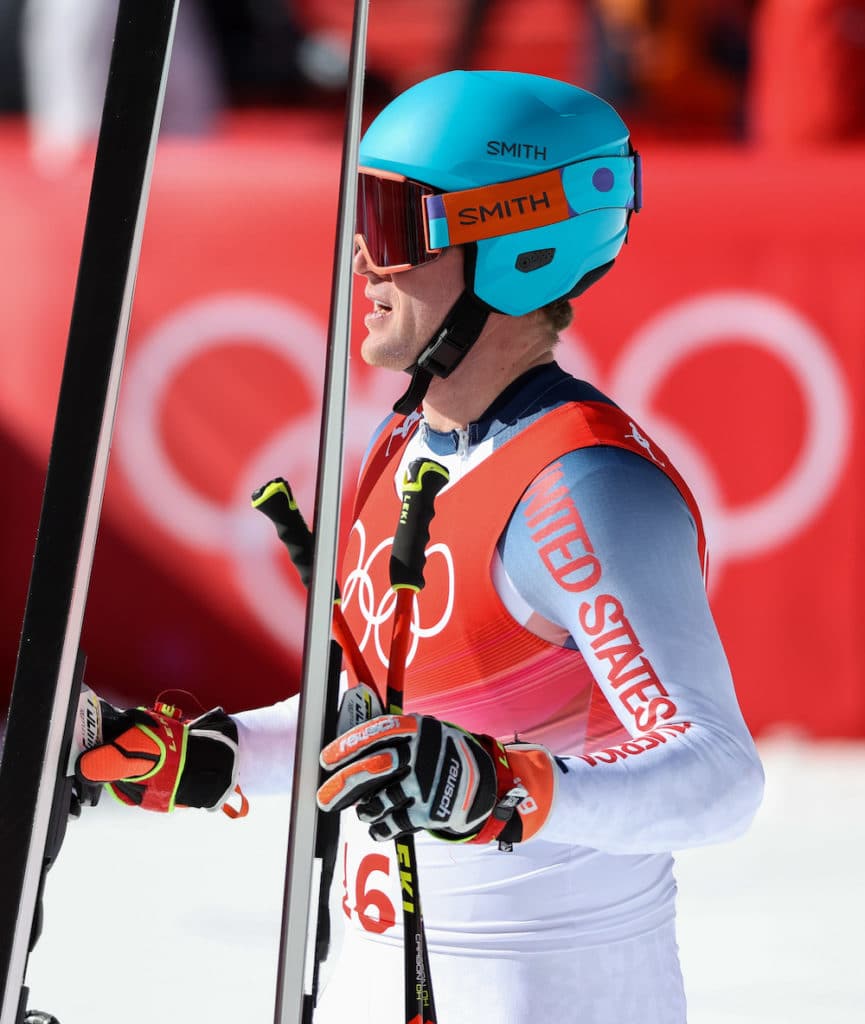
U.S. men’s head coach Forest Carey offered perspective regarding the potential of his racers in Tuesday’s second men’s Olympic race.
Ganong enters the gate for his second Olympic super-G, having raced and finished 23rd in Sochi 2014. His one podium finish this season came in a Beaver super-G.
“Travis obviously has good success in super-G over the last two years and he has benefited from inspecting and being on the course and figuring out where the speed is so that will be a great event for him,” Carey said.
Bennett makes his Olympic super-G debut, having skied the downhill and combined in PyeongChang 2018.
“You wouldn’t consider Bryce a contender in a super-G, but on the profile on this hill with the amount of terrain, it does bode decently for him,” Carey said.
Carey notes that Cochran-Siegle will be racing super-G, giant slalom and possibly the combined in China, although he notes that he has never skied slalom on HEAD skis. On Cochran-Siegle’s versatility, the first-year head coach says: “He’s a great skier and because of that you always give him a chance”
Contenders
One need not be Nostradamus to consider Matthias Mayer and Beat Feuz as favorites, considering their Olympic downhill execution and success on Monday. The newly crowned 2022 Olympic downhill champion Feuz hopes to turn the tables on downhill bronze-medalist Mayer in response to their Olympic results in the event four years ago.
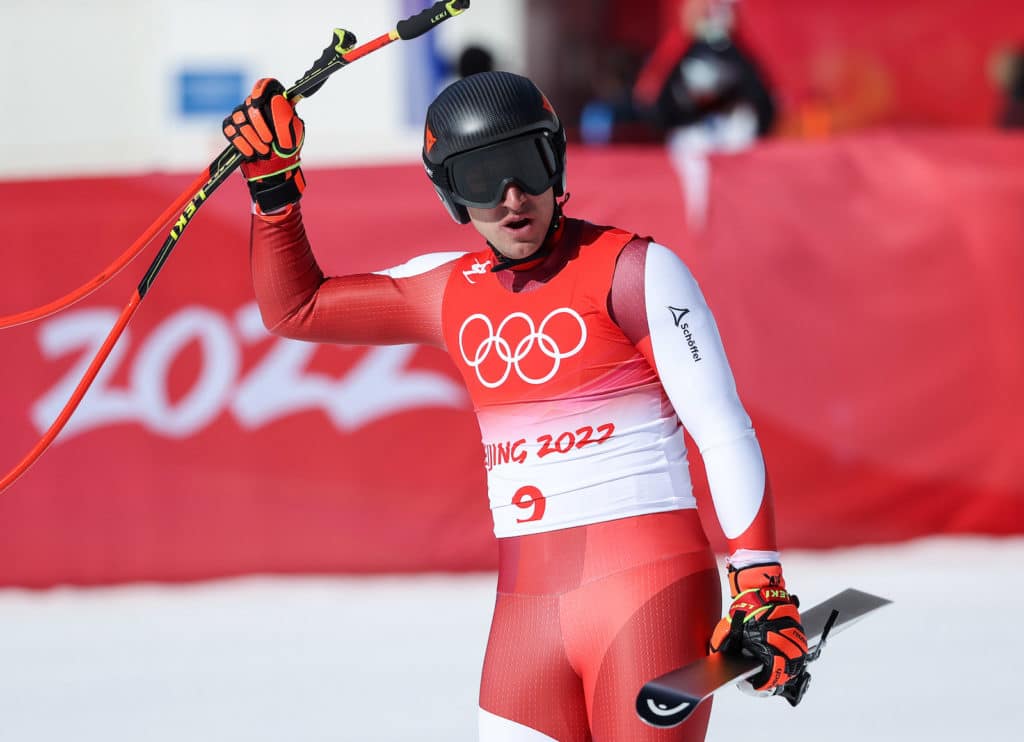
The 31-year-old Austrian has proven to be the mark of consistency at big-time events, having has now medaled in speed races at three consecutive Games. He strives to defend his Olympic super-G title from PyeongChang 2018, a race in which he defeated his rival Feuz by 0.13 seconds.
“I hope the weather and also the wind is once again like today because it was a really good decision by the FIS to make the race today and yes, I am ready for the super-G,” Mayer said, asked for his thoughts on the super-G.
After his highly-inspiring and emotional silver medal downhill performance, no one is looking past Johan Clarey, who became the oldest alpine skier to ever win an Olympic medal. The 41-year-old Frenchman – after seeing the green light at four intermediate splits – relinquished a tad of time in the lower Canyon section of the course and narrowly missed overtaking Feuz, finishing a mere tenth off the Swiss gold-medal winning time.
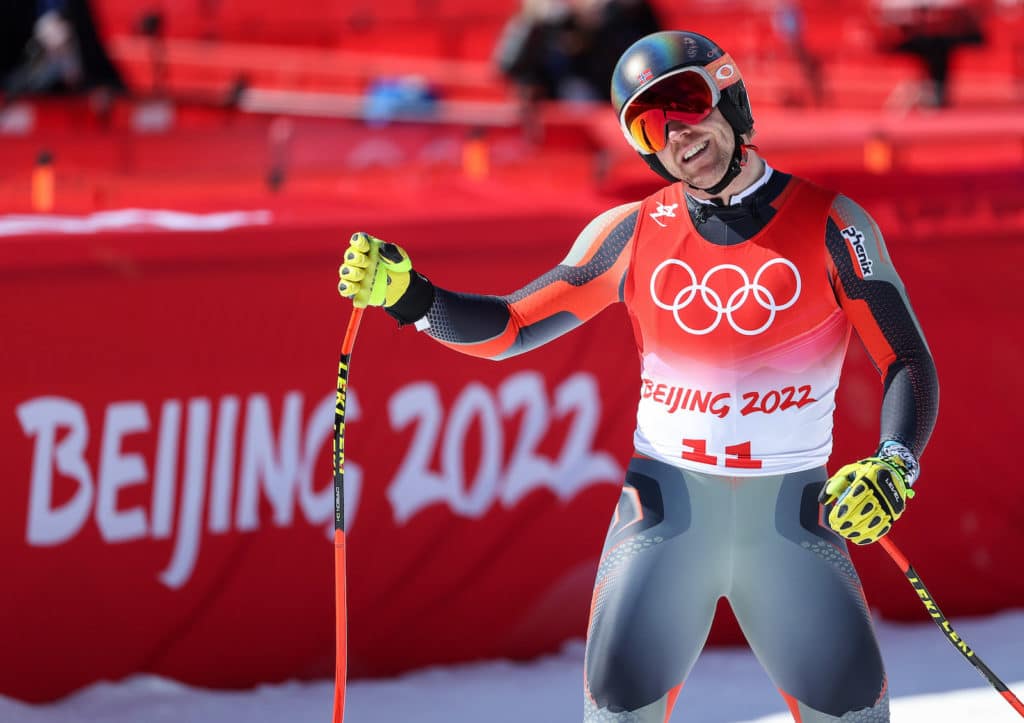
Alexander Aamodt Kilde, who entered the downhill as the favorite, laid down a solid, but not spectacular run and could manage no better than fifth, 0.51 off Feuz’s pace. Expect the current World Cup super-G leader to bounce back and land on the podium. The 29-year-old Norwegian has dominated the event this season with four victories and six podiums in nine races, including three consecutive wins in December. He has an 81-point lead in the discipline standings ahead of Marco Odermatt.
The sport’s two biggest stars Odermatt and Kilde can be expected to battle for super-G gold, following a downhill podium that was dominated by the 30-plus year old veterans Feuz, Clarey and Mayer.
Alexis Pinturault makes his official Beijing 2022 debut and despite his absence from the downhill, following training runs of 27th and 34th, should be considered a legitimate threat. The 2021 world championship super-G bronze medalist has a pair of top tens in four World Cup races this season, both sixth-place showings in Beaver Creek in mid-December.
Kjetil Jansrud was the bronze medalist behind Mayer and Feuz in PyeongChang, adding to a Sochi 2014 gold medal. He deciding to withdraw from the Beijing downhill and fumed about three racers receiving an extra training run before its cancellation on Saturday. The Attacking Viking is the most decorated active Olympic skier with five Olympic medals, but he has struggled with injuries following a Dec. 3 crash in Beaver Creek. He has to be considered a long-shot despite his vast accomplishments.
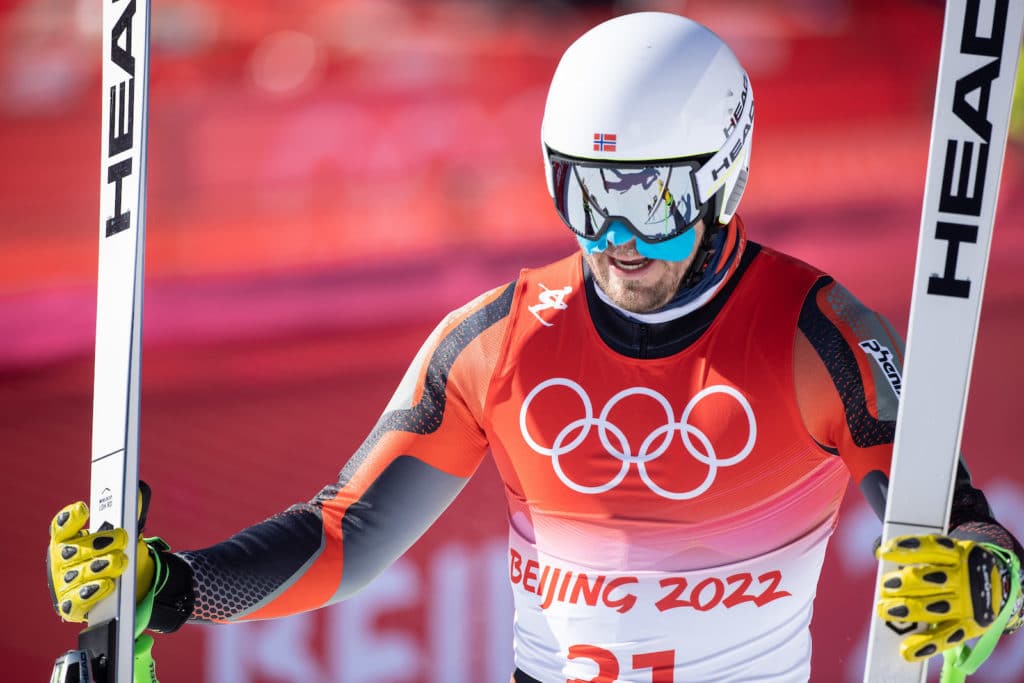
Jansrud extended a streak of Norwegian Olympic super-G dominance in Sochi 2014, following consecutive gold victories by Kjetil Andre Aamod in 2002 and 2006, carried on by Aksel Lund Svindal in 2010.
Mayer finally broke the Norwegian stronghold with his Olympic victory in 2018.
Historically, the U.S. has tremendous success in the event since it debuted on the Olympic program in Calgary 1988. Tommy Moe won silver in Lillehammer 1994 to add to his Olympic downhill gold.
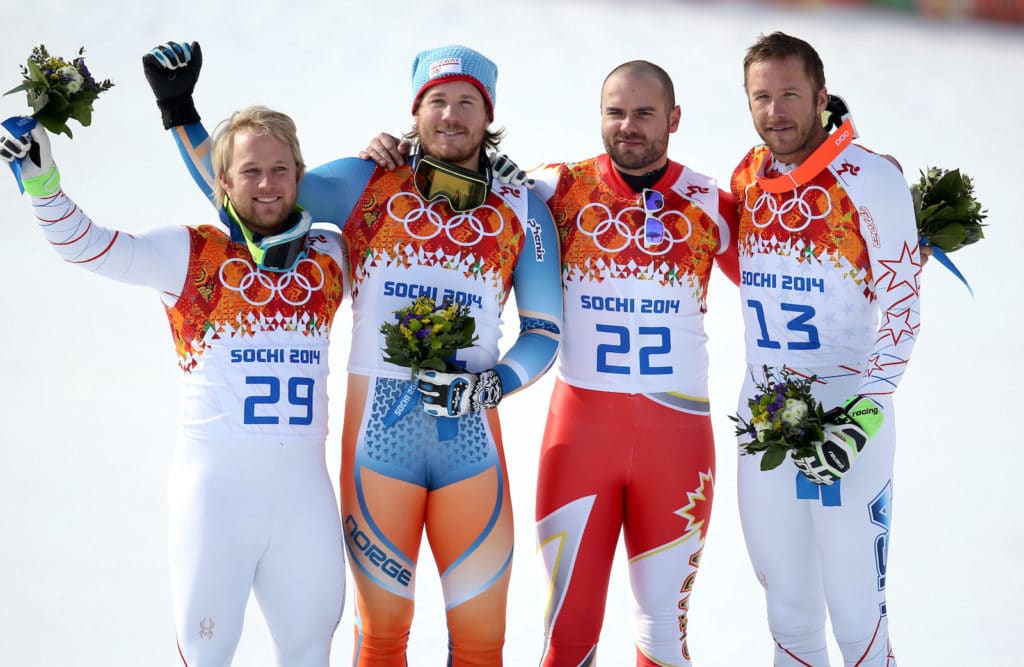
Bode Miller and Andrew Weibrecht flip-flopped silver and bronze medal performances in Vancouver 2010 and Sochi 2014, with Miller winning silver in Whistler, while Weibrecht one-upped Miller in Rosa Khutor.
Following partly cloudy skies above the Chinese Olympic race hills on Monday, it appears that it will once again be bright and sunny, with similar cold and crisp temperatures for Tuesday’s Olympic super-G.
Follow Brian on Twitter – @Brian_Pinelli
About the Author: Brian Pinelli