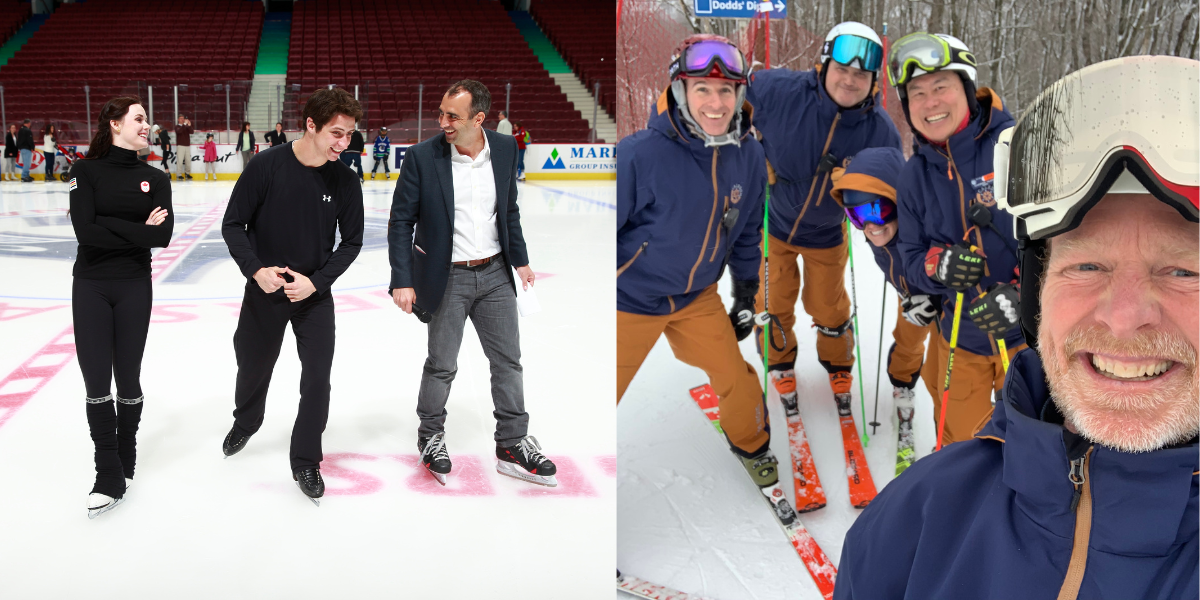
Featured Image: Steve Ilkiw with Olympic gold medalists Tessa Virtue and Scott Moir at the 2018 Olympic Winter Games, and Michael Colley coaching on the slopes.
At first glance, the Athlete Action Plan might seem like another performance planning tool. In reality, it is the product of two very different perspectives coming together with a shared goal. Academic and business/sport strategic planner Steve Ilkiw and marketer, coach, and sport consultant Michael Colley have developed a framework that helps athletes think beyond results, preparing them for success both during their competitive careers and long after they step away from sport.
In ski racing, development is often measured by results.
Athletes chase lower FIS points, team nominations, podium finishes, and personal best performances. Coaches build training plans designed to maximize every opportunity for improvement, while athletes dedicate countless hours to refining technical skills, physical preparation, and mental toughness.
But what if some of the biggest factors influencing performance are not happening on the hill at all?
Academic pressure, family dynamics, social relationships, mental health, career aspirations, and increasingly, the demands of social media all play a role in an athlete’s ability to succeed. While coaches and sport organizations have become increasingly sophisticated in how they approach performance, many athletes are still left to navigate these challenges on their own.
Recognizing that gap led Ilkiw and Colley to develop the Athlete Action Plan, a framework designed to help athletes take a more holistic approach to development while building skills that will serve them long after their competitive careers end.
The concept emerged from years of experience working within business, athlete development pathways, and high performance sport, with each bringing a distinct perspective to the project.
Ilkiw’s path to the Athlete Action Plan began through both business and research.
As an academic and business/sport strategic planner, he became fascinated by what separated high performers from their peers, not only in elite sport but also in business and entrepreneurship. His work with Olympic athletes through corporate partnerships at PwC sparked that interest, which has continued through his ongoing research at York University and Toronto Metropolitan University. Across both his professional experience and academic work, one pattern consistently emerged. High performers were intentional. They had a clear plan, understood where they wanted to go, and knew how to adapt when circumstances changed. Rather than simply reacting to obstacles, they approached their development strategically.
Colley brought a complementary perspective shaped by decades of working directly within sport. As a marketer, coach, and sport consultant, he has helped organizations develop strategic plans, strengthen athlete pathways, and create long-term visions for success. Through that work, he repeatedly encountered the same challenge. Athletes often received exceptional sport-specific support but very little guidance around personal development, life planning, and preparing for the realities that extend beyond competition.
Together, Ilkiw and Colley recognized an opportunity to combine their expertise. Ilkiw’s research and strategic planning background, paired with Colley’s experience working with athletes, coaches, and sport organizations, led to the development of the Athlete Action Plan. The framework applies proven strategic planning principles to athlete development, encouraging athletes to take ownership of every aspect of their journey, both in sport and in life.
From Boardrooms to Locker Rooms
The origins of the Athlete Action Plan can be traced back to conversations that began during the COVID-19 pandemic.
Like many professionals working within sport, Ilkiw and Colley were exploring new ways to support athletes and organizations during a period of uncertainty. One idea involved creating conferences and educational events aimed at helping young athletes better understand the opportunities and challenges that accompany high performance sport.
The challenge quickly became apparent.
Even the best conference presentations often leave participants with only a handful of memorable takeaways. Young athletes might hear valuable information, but translating those lessons into long term action was another matter entirely.
That realization sparked a different question.
What if athletes left with something tangible? What if they built a roadmap for themselves rather than simply listening to someone else’s advice?
Drawing on the strategic planning frameworks they used with businesses and sport organizations, Ilkiw and Colley adapted those tools specifically for athletes. The process evolved into a structured framework that encourages athletes to evaluate where they are today, identify where they want to go, and create meaningful action steps to help them get there.
What surprised them most was the response.
When they introduced the concept to national and provincial sport organizations, coaches and administrators consistently identified the same gap. While athletes often had training plans and performance goals, very few organizations were taking a truly holistic approach to helping athletes navigate every aspect of their development.

The Missing Piece in Athlete Development
For decades, athlete development systems have focused primarily on performance.
Technical coaching, strength and conditioning, sport psychology, nutrition, recovery, and race preparation remain essential components of success. Yet many athletes face challenges that extend well beyond those areas.
A difficult semester at school, challenges at home, uncertainty about the future, or struggles with confidence can have a profound impact on performance.
In ski racing, where races are often decided by fractions of a second, even small distractions can influence results.
Research into high performance consistently highlights the importance of factors outside the immediate training environment. Confidence, resilience, decision making, communication skills, and personal well-being all contribute to athletic success.
Yet these topics often receive less attention than technical development.
The Athlete Action Plan was designed to bridge that gap.
Rather than focusing solely on results, it encourages athletes to evaluate every aspect of their lives and understand how those factors influence performance.
Building Athlete Ownership
One of the core principles behind the Athlete Action Plan is ownership.
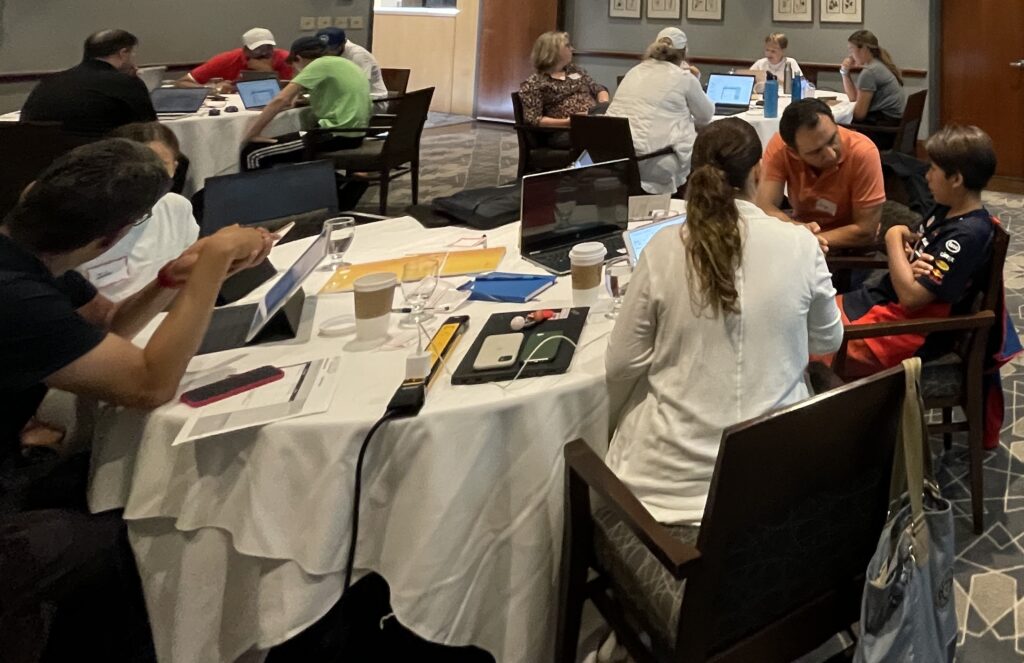
Instead of having coaches create plans for athletes, athletes become active participants in building their own roadmap. Through self assessments, goal setting exercises, and strategic planning tools, athletes are encouraged to take responsibility for their development and identify the areas that matter most to them.
The philosophy mirrors many of the same principles used in successful businesses and organizations.
People are more likely to commit to a plan when they help create it.
For young athletes, that process can be transformative.
Learning how to assess strengths and weaknesses, identify opportunities, set priorities, and create actionable goals develops skills that extend far beyond sport. Whether an athlete ultimately reaches the World Cup, NCAA, provincial, or club level, those lessons remain valuable.
The ability to think critically, make informed decisions, and execute a plan applies equally to education, careers, and personal relationships.
The Challenge of Coaching the Whole Athlete
The Athlete Action Plan also arrives at a time when coaching continues to evolve.
Across many sports, coaches are navigating increasingly complex responsibilities. SafeSport initiatives have introduced important protections and accountability measures throughout sport, helping create safer environments for athletes.
At the same time, many coaches acknowledge that discussions around personal development, relationships, mental health, and life outside sport can feel more complicated than they once did.
The challenge is finding ways to support athletes holistically while maintaining appropriate professional boundaries.
For Ilkiw and Colley, that reality reinforces the value of creating tools that empower athletes themselves.
Rather than placing all responsibility on coaches, the Athlete Action Plan encourages athletes to take greater ownership of their own development while creating opportunities for meaningful conversations with coaches, parents, and support networks.
Preparing Athletes for Life After Sport
Perhaps the most compelling aspect of the Athlete Action Plan is its focus on what comes next.
Every athlete eventually faces a transition away from competition.
For some, retirement arrives after a successful international career. For others, it comes unexpectedly through injury, deselection, changing priorities, or the realities of balancing sport with education and work.
Regardless of how it happens, the transition can be challenging.
Years of training, travel, competition, and identity become tied to a single pursuit. When that chapter ends, many athletes are left asking the same question:
Now what?
The answer often lies in recognizing the skills developed through sport.
High performance athletes learn discipline, resilience, leadership, time management, accountability, and the ability to accept feedback and improve. Those qualities are highly valuable in virtually every profession and industry.
The challenge is helping athletes recognize those strengths before they leave sport.
By encouraging athletes to think about life beyond competition while they are still competing, the Athlete Action Plan aims to create smoother transitions and stronger long term outcomes.
Looking Ahead
For Ilkiw and Colley, success is not measured solely by medals or podiums.
It is measured by athletes who feel confident in their direction, understand their strengths, and are prepared for whatever opportunities come next. It is measured by stronger mental well-being, greater self-awareness, and better outcomes both during and after sport.
For ski racing, the concept arrives at a time when conversations around athlete development are expanding beyond performance metrics and rankings.
Athletes are increasingly being asked to navigate a world that is more connected, more demanding, and more complex than ever before.
Helping them build a plan for that journey may prove just as important as any training session or race result.
Because while every athlete eventually crosses a finish line, the skills they develop along the way should last a lifetime.
About the Author: Katie Twible