Photo: Noah Wetzel

When ski races are often won by a single hundredth of a second, the right goggles make a difference. Just ask Bode Miller.
“I’ve spent a ton of time in goggles,” says Miller. “Vision is so important while you’re racing. There’s changing light conditions on every single run you ski on, from top to bottom. Throughout the day, light conditions change inherently because the sun moves. One of the critical features in goggles are lenses that change from light to dark with the conditions.”
The six-time Olympic medalist can’t count the number of times he needed such a goggle while navigating through changing light conditions at mach speed during his racing career. One standout memory is fighting through an extreme contrast of bright sun and dark shadows on the Saslong, the infamously hairy downhill course in Val Gardena-Groeden, Italy.
“In Groeden, the light is always so sketchy and the speed is really high from start to finish. If you can’t see exactly right, you’re just reacting,” Miller says. “And with every reaction, you’re hitting upslopes, you’re totally out of control. You’re not maintaining position.”
He recalls hitting the Saslong’s notoriously huge Kamelbuckel jump and flying through the air blinded by bright sun followed by shadows.
“The Kamel jump was huge. You come into that at 80, 85 mph and you go off one little riser where you can see sun. The dip in between that and the actual jump is dark. So you’re going 80, you can see sun, then you see all shadow. If you mess up there, you’re going 80 to 100 meters in the air, 20 meters off the ground. You need to be in position. To be in position, you have to see,” he says.
Revo has been blazing trails in eyewear technology since its inception in 1985, when the company employed a lens technology developed by NASA scientist, Dr. Mitch Ruda, for protecting satellites from solar damage. Skiers have gravitated to Revo sunglasses for decades — Steve and Phil Mahre were long-time Revo ambassadors and now Miller has joined the fold. Miller recently partnered with Revo to launch a SuperNova, photochromic goggle featuring state-of-the-art lens technology that automatically shifts from light to dark for maximum visibility in all conditions.
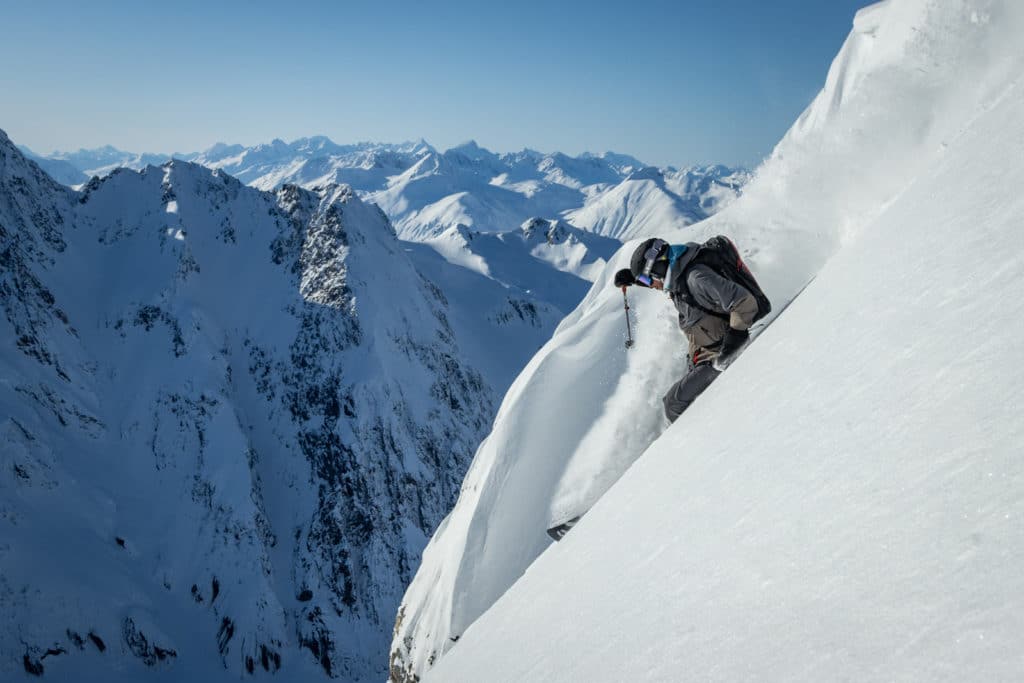
“Because I spent my entire life in them, more or less, there’s a lot of things about goggles that I always nit-picked,” Miller says. “I don’t like the gap on the side where it freezes your temple. Revo takes all of that seriously. They think through every detail and do it right.”
As of 2018, Revo’s new leadership is doubling down on the cutting edge technology that made the brand famous in the first place. Along with Miller’s expertise and input, Revo is bringing fresh innovation to the realm of ski goggles.
“We want someone to put on a lens and say, ‘wow, that’s better than anything else I’ve ever worn,” says Revo CEO Cliff Robinson, whose family history in the eyewear industry dates back to 1926. “With Bode’s help and all of our technology and know-how, we developed a SuperNova photochromic lens that changes based on light conditions. You’re in the trees, you’re on a groomer, all the light conditions are changing constantly. A lot of other companies offer a second or third lens, but we were able to develop one lens that will change with all conditions from early morning to late afternoon, so you don’t have to fumble through your pockets and backpacks to change lenses when the light changes.”
Revo does make a low light-specific lens, but the SuperNova goggle is the all-day go-to for any gamut of light conditions.
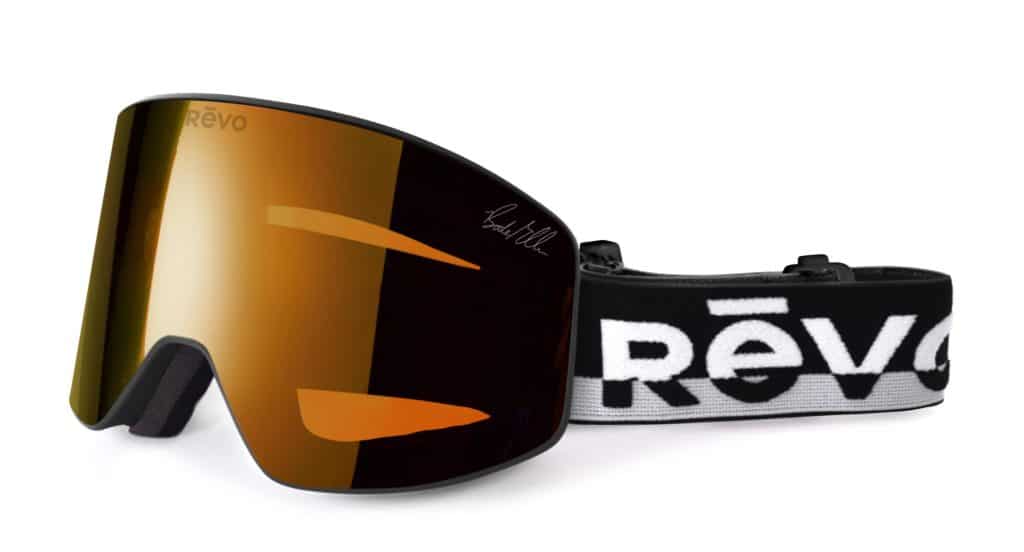
“Think of it as an equalizer for your eyes,” Robinson says. “Back in the days of stereos, everyone’s stereo had an equalizer where you could increase the bass, lower the treble and hear the music the way you wanted to hear it. With our lens, we set the dial, so whether it’s a sunny day, cloudy day, windy day, the spectral curves of the lens will adjust for optimal clarity.”
Miller points out that Revo, which is also the official eyewear of the 2021-22 World Pro Ski Tour, is not only a goggle for competitive racers, but a game-changer for skiers and snowboarders at every level.
“Skiing is all about what you can see. You’re moving down the hill and you need to perceive bumps and terrain. That’s what builds confidence, what allows you to adapt to terrain, to make your choices and execute your technique,” he says. “Regardless of your level, you need to see what you’re skiing on, what you’re about to hit, what you’re going over or going to land on. Visible perception is absolutely imperative to every aspect of skiing. When the light changes and you’re dealing with reflective light off snow, having a goggle that can adjust to that light and give you optimal conditions for your eyes is going to save you tons of time, make things safer and make things more fun.”
About the Author: SR Staff Report