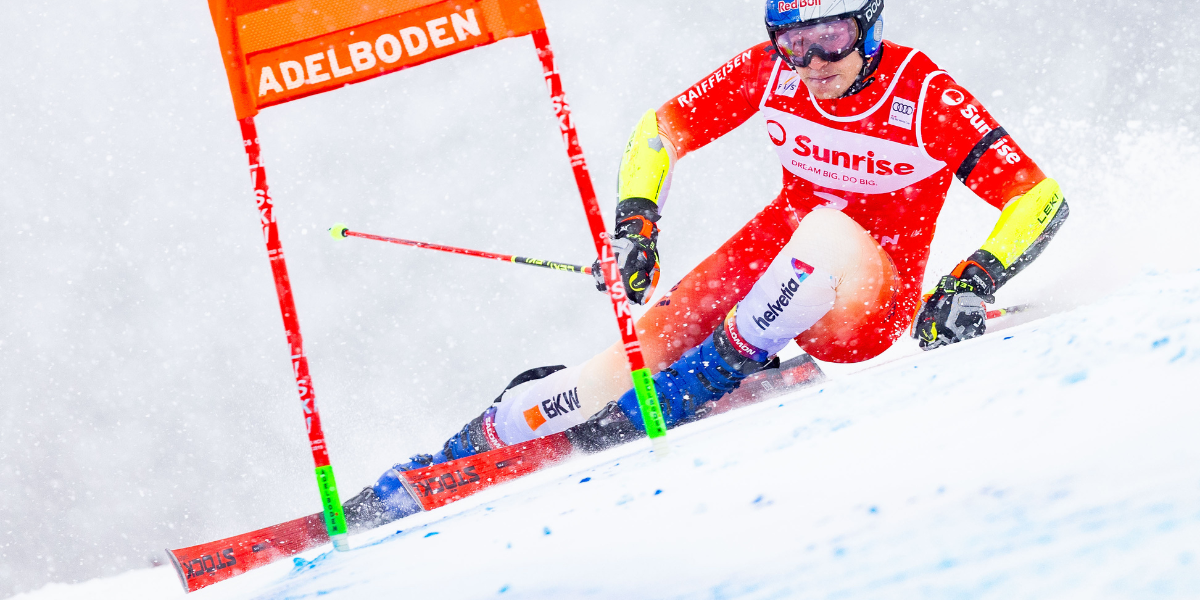

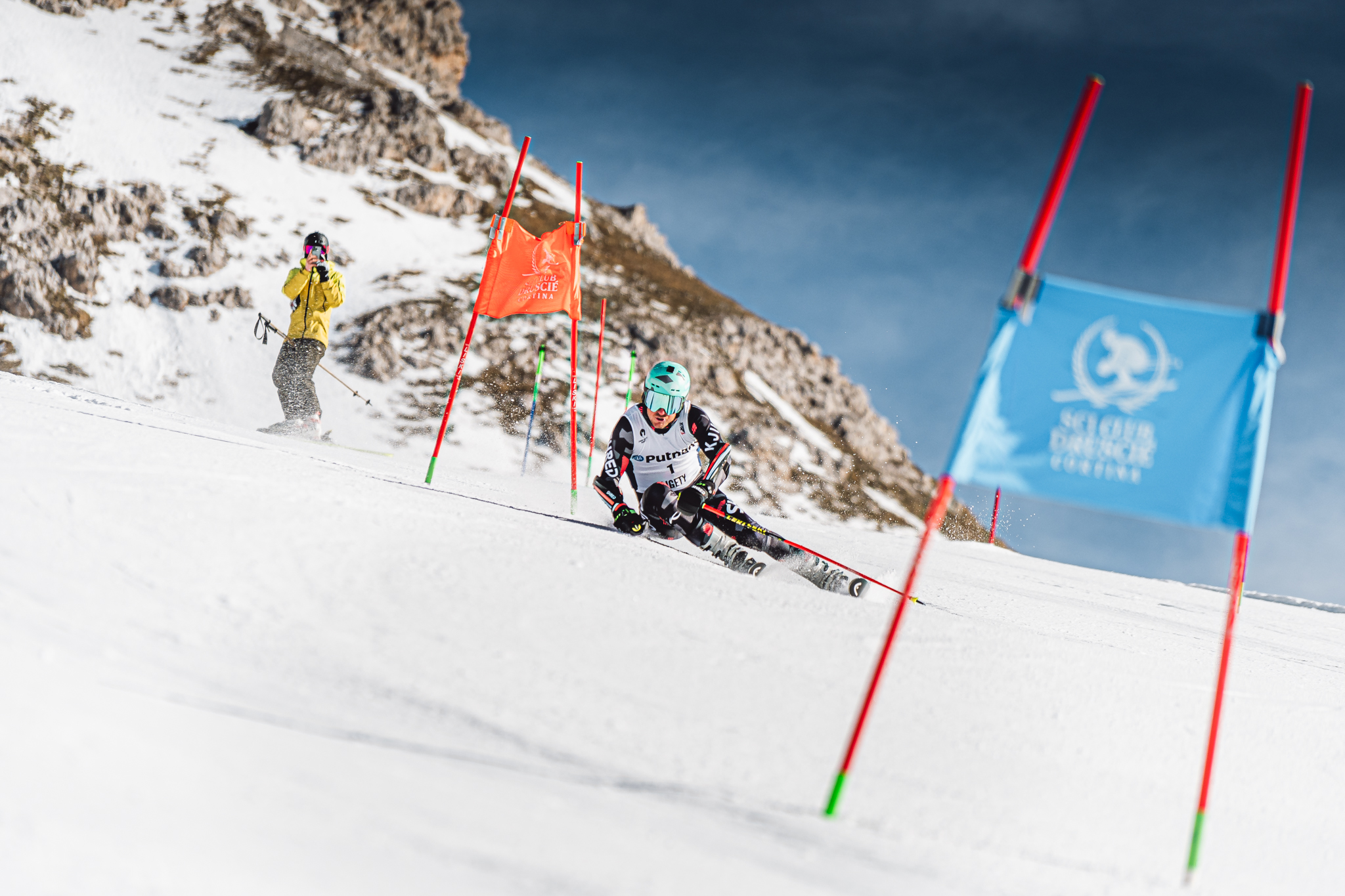
Featured Image: Ted Ligety wearing the Contrast Boosting Lens (CBL) 2.0. Credit: Sam Decout @samdecout
SHRED., a goggle, helmet, body protection, and eyewear company, is dedicated to boosting the confidence of athletes as they master the mountains. Recently, the company has been committed to the innovation and production of a revolutionary flat light lens, the Contrast Boosting Lens (CBL) 2.0.
Suboptimal conditions on the slopes can often lead to feelings of hesitation, anxiety, or diminished confidence among skiers, a phenomenon that many of us have encountered.
In response to this challenge, SHRED. has collaborated with the Massachusetts Institute of Technology (MIT) Sports Lab to develop a solution.
“The thing about flat light is that for a racer, it steals your confidence, but for the average skier, it makes skiing less fun and scary. So, if we could figure out a game-changing flat light lens, it would serve our mission of creating performance-enhancing products that allow more fun on the mountain,” Ted Ligety, retired 2x Olympian and 5x World Champion alpine racer and co-founder of SHRED., explained.
MIT Sports Lab and SHRED. got to work! They collaborated on an extensive science and engineering initiative to develop the Contrast Boosting Lens (CBL) and CBL 2.0 lenses.
This lens has proven to demonstrate success, especially amongst alpine ski racers: “Our racers place 11 places better in flat light than their average result.”
How Did The MIT Sports Lab and SHRED. Collaborate?
Co-founders Carlo Salmini and Ted Ligety knew that with this large undertaking it would require more science and engineering, so they would need to create a bigger team with more resources.
Good thing Carlo attended MIT and had a strong relationship with the Sports Lab.
In 2016, Carlo and Ted sat down at the MIT Sports Lab to present the problems of flat-light skiing, some different ideas, and various ways to test. After discussion, both entities agreed that their main goal was to transform their insights about the critical issues skiers face on the mountain into practical solutions.
Once both teams agreed, they ran with it and got started on a development that would take several years to complete. “The MIT Sports Lab offered the perfect environment to try and reach our goals, giving us access to leading faculty and students in engineering and science,” Ted explained.
What First Steps Did SHRED. and the MIT Sports Lab Take?
The MIT Sports Lab created a room with fake snow and diffused light to simulate an on-snow situation. In this room, they tested hundreds of ideas to enhance the contrast.
From that, they image-mapped the iterations’ contrast with AI and human feedback to plot the contrast levels.
These various lab tests allowed them to pinpoint the best ways to test the different theories on the slopes.
After various back and forth tests, the teams felt confident enough in finalizing their first flat light lens, the inaugural CBL. This CBL lens made its debut at the 2018 Olympics.
Ted stated, “People loved our original CBL, and it instantly received accolades, but we knew we could take lens technology further.”
“So, we continued our project with MIT and thought outside of the box for ways to enhance the capabilities, which led to the discoveries in our CBL 2.0 lenses.”
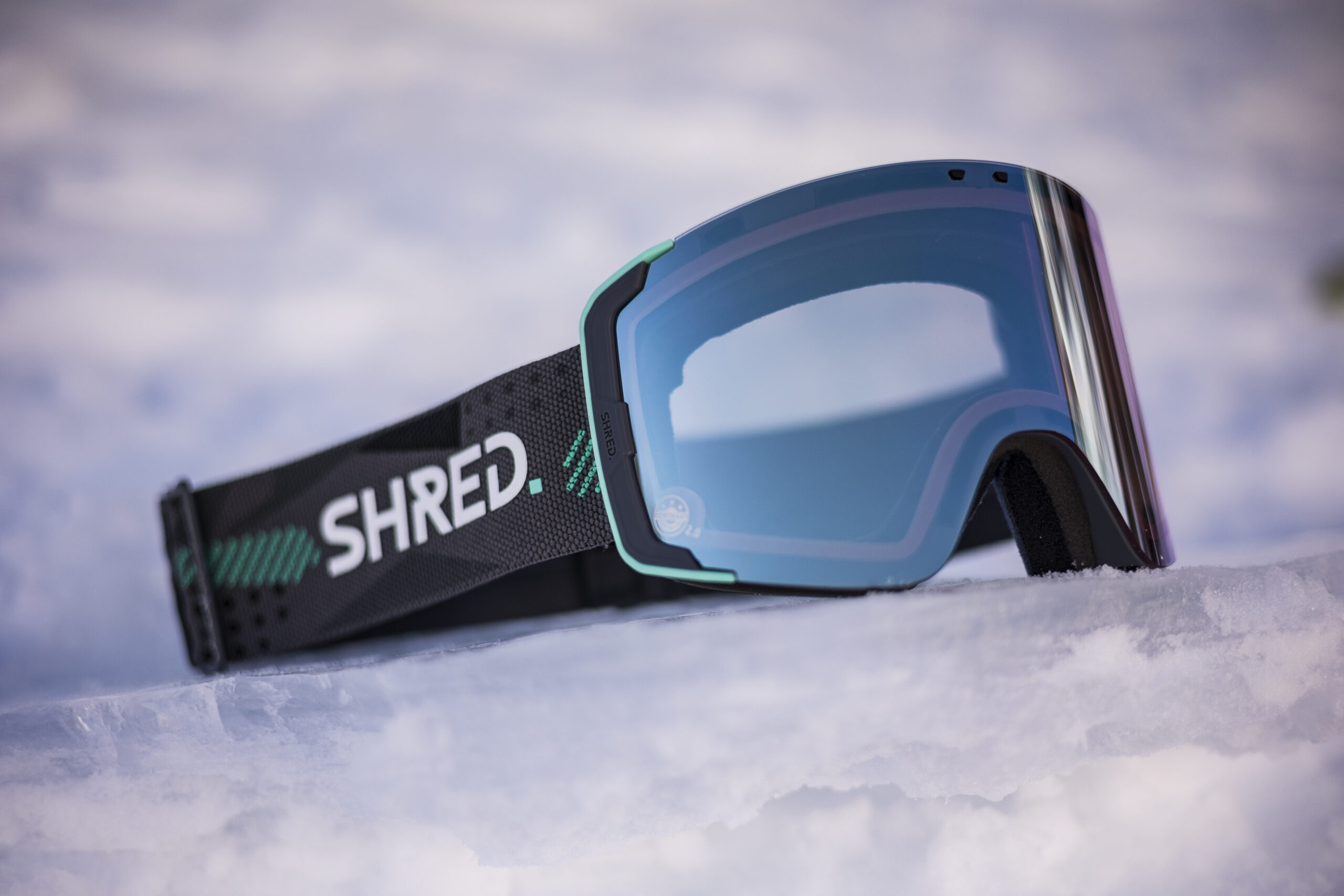
The Discoveries Found in Creating the CBL 2.0 Lens
In the innovation of the CBL 2.0 lens, they developed a new proprietary dye, which taught them critical aspects to the development of the lens.
They found that at a specific low level of polarization, at a certain angle, this dye will boost the contrast and definition. It will also take away the harsh feeling of bright light on sunny days, taking on dual protective measures. Dual protection makes the CBL 2.0 a one-lens solution.
This new innovation differentiated from the commonly used photochromatic lens, which has been a popular option for a one-lens solution.
“Photochromatic can work great in a lab, on the street, in dirt environments, and practically everywhere, except on snow. There is too much reflected light on snow, even in a snowstorm,” Ted explained.
This evolution created one of the best goggles on the market that is versatile and adds ease to any skier.
Katie Hensien, Stifel U.S. Ski Team World Cup athlete stated, “The CBL 2.0 lens not only adapts to variable lighting conditions but also features a frame and shape that provide excellent visibility and a wide field of view. This combination enhanced my confidence and performance when faced with challenging conditions on race day! “
“The CBL 2.0 is an experience that needs to be seen to be believed,” Ted stated.
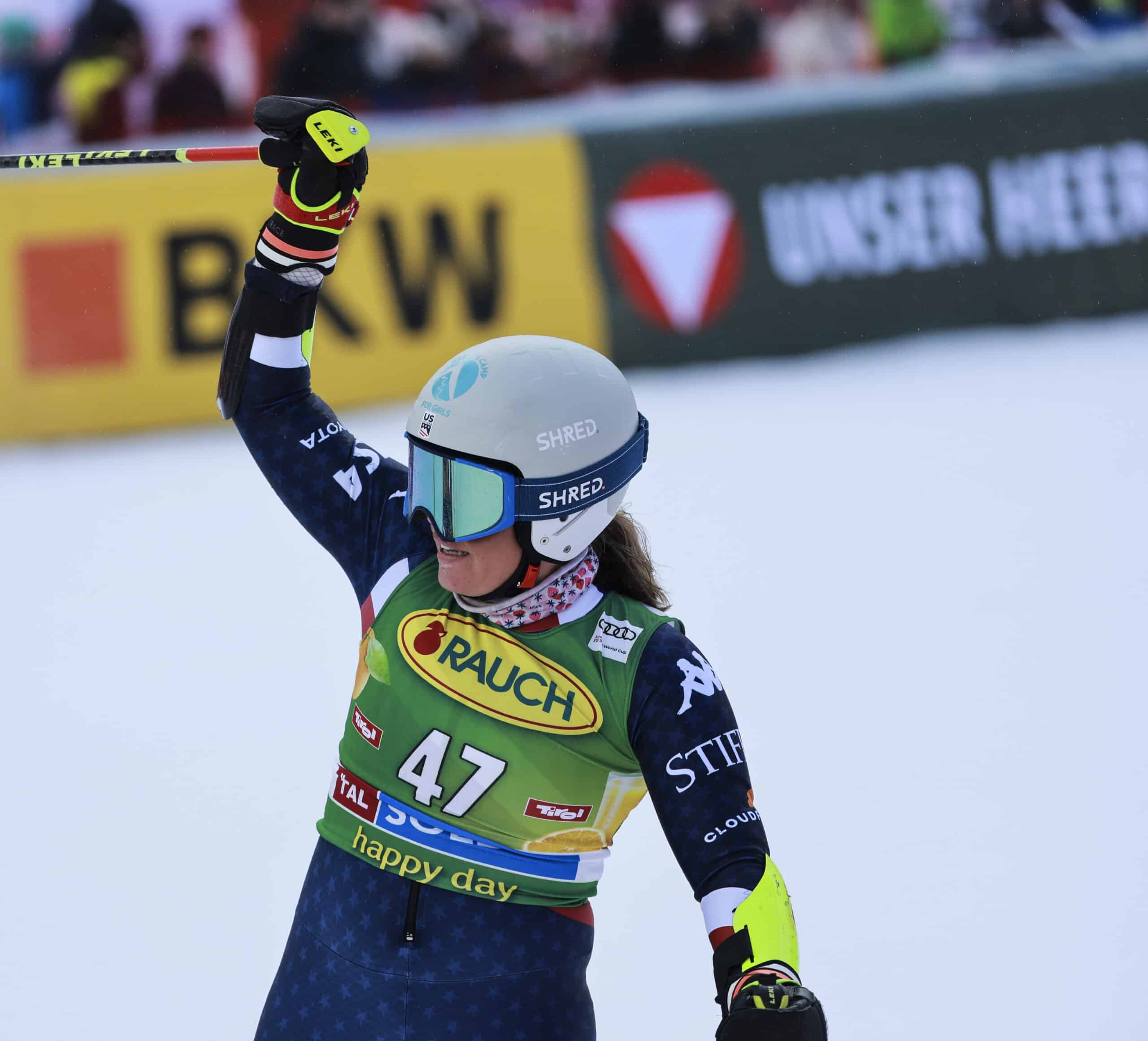
Athletes on the World Cup Wearing CBL 2.0
During the inaugural 2024/25 World Cup event in Sölden, there were multiple World Cup athletes wearing the CBL 2.0 lens. These lenses proved to be advantageous in the subpar light conditions.
In particular, during the women’s giant slalom race, the lighting conditions fluctuated significantly. For most racers, they experienced flat light on the steep pitch, causing them to ski that critical section more cautiously. This caused several competitors to lose the time needed to advance to the leaderboard.
Katie Hensien, was an athlete that shined during the race in Sölden wearing the CBL 2.0 lenses. Although she was battling different light conditions, she was able to put down her best World Cup giant slalom result. She achieved a fourth-place finish with the fastest second run for the women.
Hensien stated, “As any athlete knows, it’s super important to trust your equipment. The new Shred CBL 2.0 lens is ideal for any condition, which eases the stress of whether I have the right lens on. The conditions in Sölden were a perfect example of why this lens is exceptional—it truly performs well in varied lighting.”
Estelle Alphand, a French-born Swedish alpine ski racer, started bib-49 in Sölden. However, she did not let the late start and challenging conditions hold her back. She was able to put down a solid first run and was the highest bib number to qualify for the second run. Ultimately, she finished the day in 23rd place. This further proved that the CBL 2.0 lens boosts confidence on days when the conditions are not optimal.
About the Author: Ellie Hartman