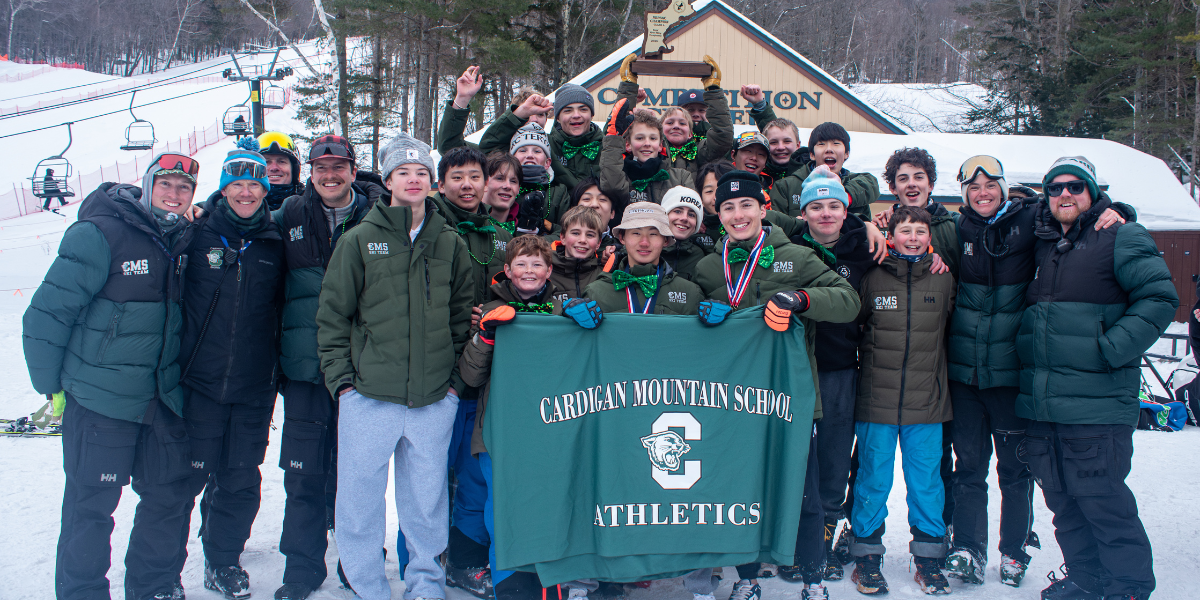
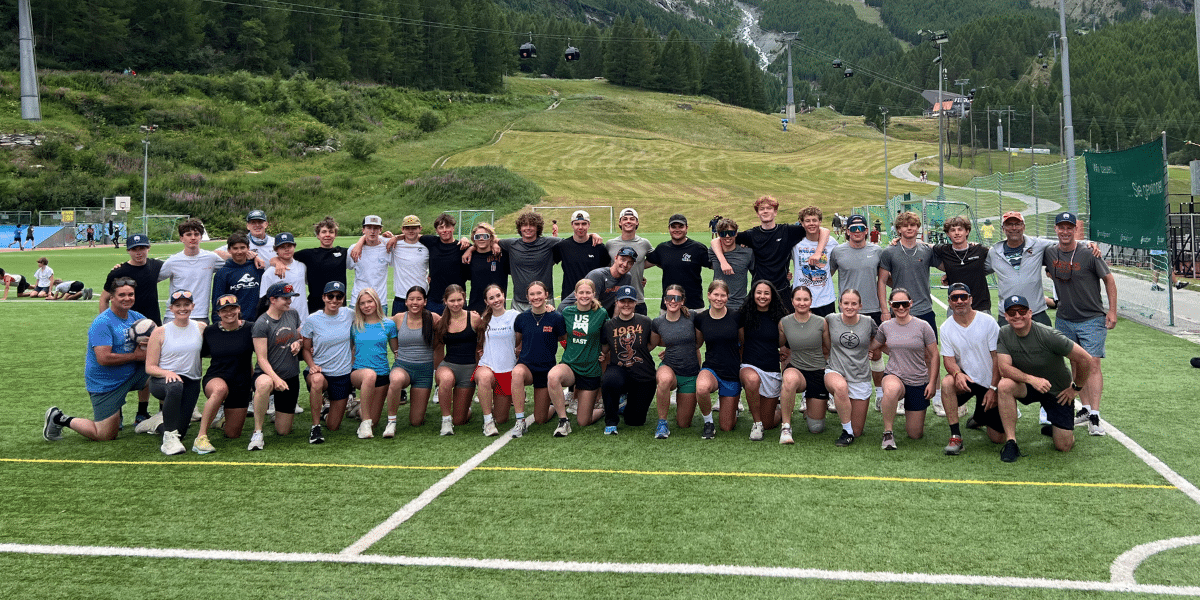
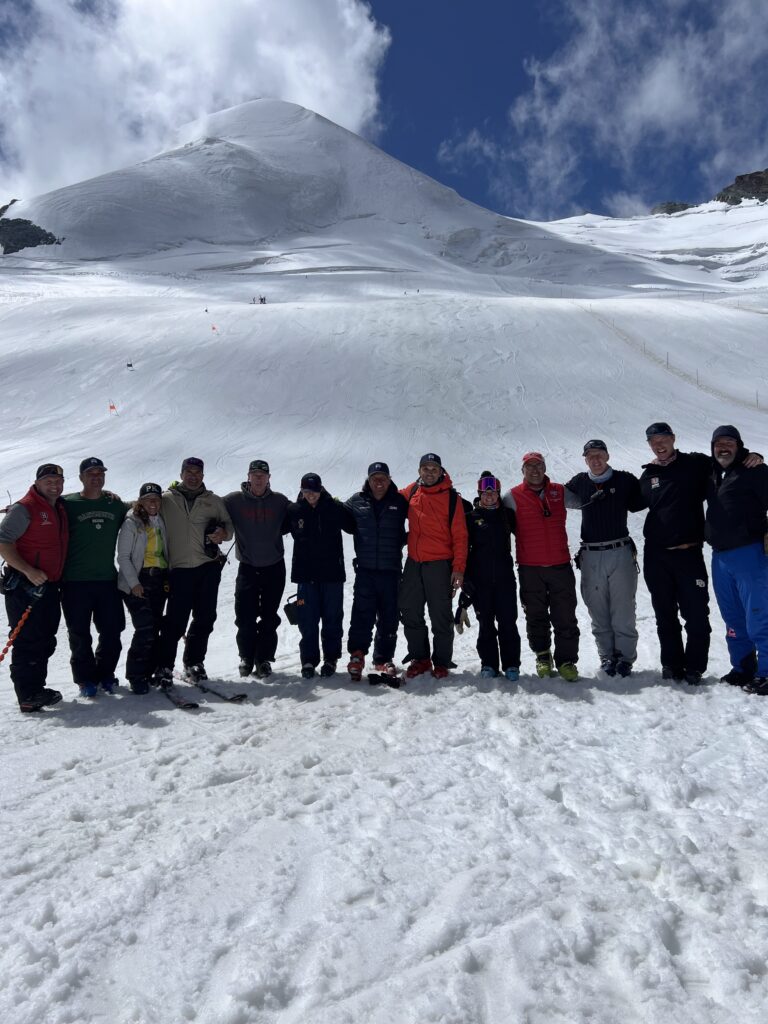
College Cup Camp coaches and athletes. Provided by Tommy Biesemeyer.
As the landscape of NCAA ski recruiting evolves, so do the tools and opportunities for athletes and their families navigating the path to collegiate competition. Tommy Biesemeyer and Mike Maher, co-directors of the innovative College Cup Camps, share insights on how this new camp model is reshaping the experience for athletes, parents, and coaches alike.
From vision to reality: The origins of College Cup Camps
The idea for College Cup Camps began with Head of Northwood School Maher and Biesemeyer, where every athlete’s goal was clear: ski at the NCAA level. Biesemeyer began reaching out to college coaches, seeking their advice on how to best prepare athletes.
Their feedback was eye-opening: Success at the NCAA level required more than strong grades and skiing skills; it demanded being an asset to the team and contributing to its culture.
This insight sparked a new approach: bring athletes, their parents and coaches together in one place to learn, experience and be inspired. The camp would go beyond traditional training, emphasizing education about the recruiting process, team dynamics and the realities of competing at the collegiate level.
As Coach John Dwyer from Dartmouth put it:
“This camp addressed an enormous gap in the NCAA ski racing world. The camp was able to give athletes and families a transparent, hands-on way to understand the process before they’re in the thick of it.”
An inclusive and professionalized experience
A key challenge was aligning the camp with NCAA recruiting rules. Because the camp is open to all and never selective, Biesemeyer worked closely with coaches and compliance officials to ensure the format adhered to regulations.
Despite initial pushback from clubs and academies wary of the new model, the camp’s professional approach and focus on education won over many skeptics.
Coach Eric Harlow from Colby summed it up simply:
“This was the most important thing to happen to American aspiring college ski racers in my career. I’ve been doing this for 25, 26 years, and I’ve never seen anything like it.”
Dwyer echoed that sentiment:
“The energy here is contagious. Kids leave not only with better skiing but with a plan — and that changes everything.”
Next year, College Cup Camps plans to expand its reach by including USCSA (United States Collegiate Ski and Snowboard Association) programs, such as Babson and University of Conneticut (UConn), further broadening opportunities for athletes.
What sets College Cup Camps apart
Unlike typical college ski camps that focus mainly on on-snow performance, College Cup Camps blend intense ski sessions with a comprehensive seminar series for both athletes and their parents.
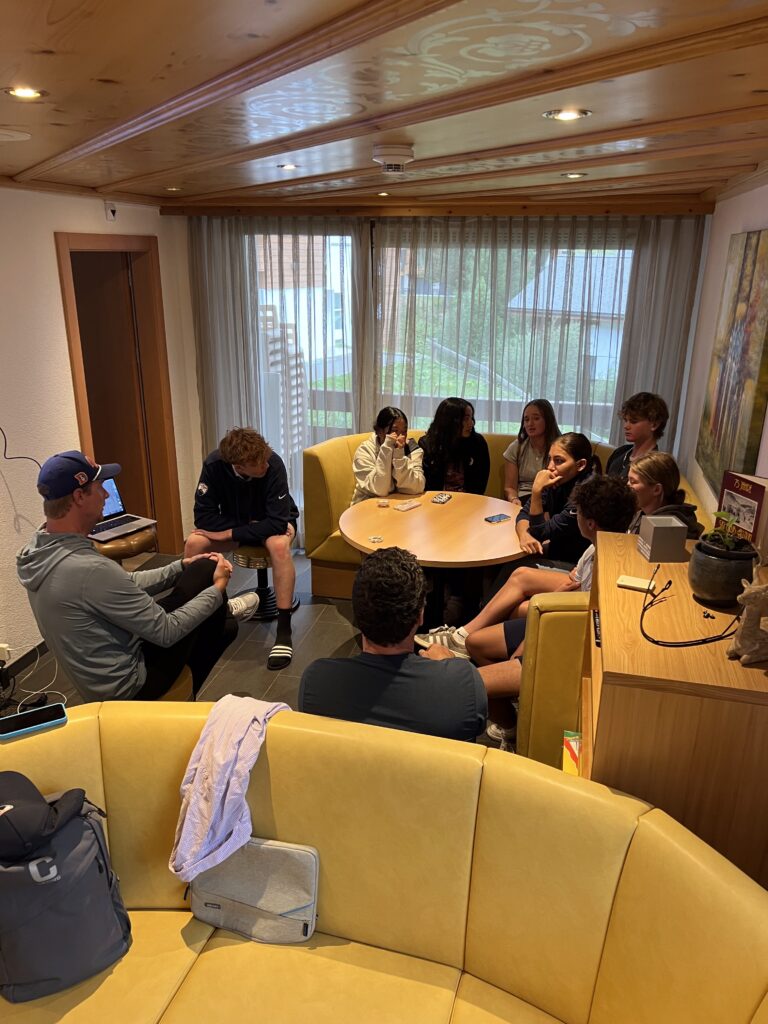
Over several days in Saas-Fee, athletes rotate between giant slalom and slalom training, timed team runs that build camaraderie, dryland sessions, video analysis, and in-depth discussions led by coaches and educational consultants.
This format provides athletes a rare opportunity to ask questions directly to college coaches and hear firsthand what it takes to join and succeed on an NCAA ski team.
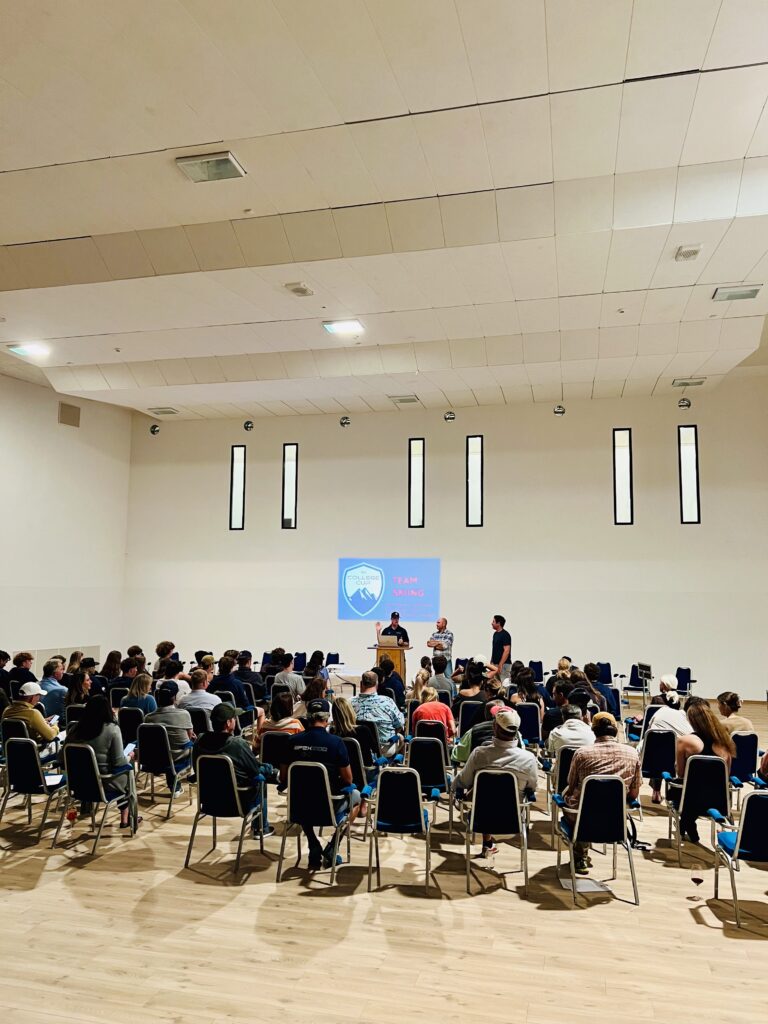
“One of the first nights, during the seminar, 15 out of 40 kids eagerly raised their hands with questions,” Biesemeyer recalled. “It was a powerful moment that showed how hungry these athletes are for authentic knowledge and connection.”
Harlow also emphasized the life-changing nature of those connections:
“This camp gives kids the kind of connection with coaches that can change their entire college ski racing journey.”
Dwyer noted the same, adding:
“It’s a perfect blend — athletes get pushed hard on the hill and then walk away understanding exactly what it takes to race in college.”
Bringing coaches together
A unique highlight of the camp was the early arrival of coaches, many of whom were flown in a day ahead, who bonded over the week, sharing expertise and building relationships rarely formed at other camps.
This collaboration benefits athletes by providing a more unified and supportive recruiting experience. Coaches also gain fresh perspectives, gaining visibility on athletes they might never see otherwise, especially those from the West Coast. By connecting names to faces and personalities, coaches can better identify talent and fit beyond traditional recruiting pipelines.
As Harlow put it:
“It’s just a one-of-a-kind experience — the likes of which does not come around in ski racing anymore. This has never been done.”
Key takeaways for athletes and families
Biesemeyer’s biggest hope is that families leave the camp with a clear, realistic understanding of what NCAA ski programs expect.
“Knowing your goal is one thing,” he said, “but understanding how to get there is another.”
The camp helps narrow down athletes’ ambitions and equips them with the knowledge needed to make informed decisions about their future.
For Harlow, the camp also shines a light on a bigger coaching philosophy:
“If you’re doing it right as a coach, you’re sitting down with your athletes, asking their goals, and if they say NCAA, you do everything you possibly can to give them all avenues to make that goal possible.”
Dwyer reinforced that long-term value:
“We’re not just teaching kids to be faster during the camp. We’re also giving them the mindset and map to succeed for the next four years and beyond.”
Looking ahead
With a capacity of 64 athletes, College Cup Camps aims to create a focused, motivated community where participants share common goals and leave ready to work toward them. Biesemeyer envisions continued growth, including more collaboration with organizations like USCSA and deeper educational programming.
His advice to athletes and their families navigating recruiting today is simple: have a clear goal and know exactly what it takes to reach it.
“If this camp sends one message to the recruiting world,” Biesemeyer said, “it’s that professionalizing and educating the process benefits everyone involved — athletes, parents and coaches alike.”
About the Author: Katie Twible