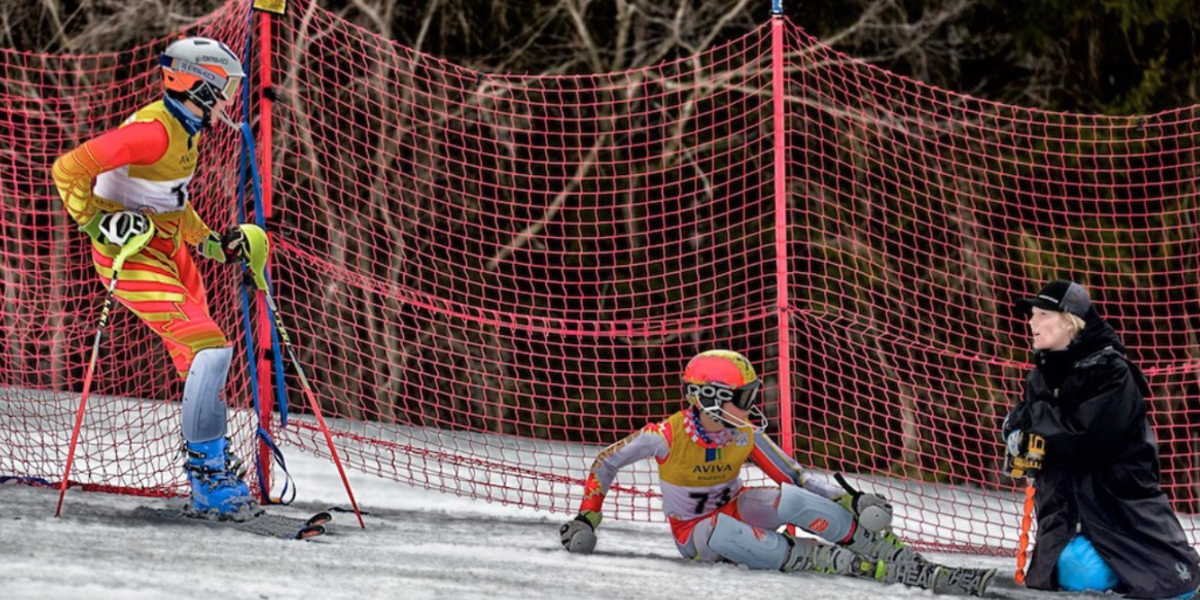
Featured Image: Katie Twible coaching athletes. Photo: Cam Powell
Commentary by Katie Twible
We Ask More Than Ever From Coaches
There was a point in my coaching career when I genuinely believed the sacrifices were temporary.
The early mornings, endless travel and weekends spent on snow instead of with family and friends felt like part of paying my dues. So did the late nights in wax rooms preparing skis for the next day’s training. I believed that if I kept learning, gained experience and dedicated myself to becoming the best coach I could be, the career would eventually become sustainable.
That was simply the path.
As the years passed, though, I started looking at the coaches I admired most. Some were coaching World Cup athletes. Others had helped develop Olympians. Many had shaped hundreds of young ski racers who would never stand on an international podium but would leave the sport with confidence, resilience and a lifelong love of skiing because one coach had made a lasting impact.
They were knowledgeable, passionate and completely committed to the athletes in front of them. They were exactly the kind of people every club says it wants to hire.
And yet, one by one, many of them left.
They did not leave because they had fallen out of love with ski racing. Quite the opposite. They left because they wanted something the profession often could not give them: stability, the ability to support a family and the chance to build a life beyond one winter after another.
That realization has stayed with me for years. It also raises the question I return to whenever our sport talks about athlete development: If we agree that coaches are essential, why have we created a system in which so many of the best eventually feel they have no choice but to leave?

Coaching Has Never Been More Demanding
The role of a ski racing coach looks very different from what it was 20 years ago.
Today’s coaches are expected to understand long-term athlete development, biomechanics, sport psychology, nutrition, strength and conditioning, concussion management and SafeSport. They analyze video and timing data. They communicate with parents, recruit athletes, mentor assistant coaches, organize travel, manage budgets and tune equipment.
They also often become one of the most trusted adults in a young athlete’s life.
The expectations have evolved, and in many ways that is a good thing. We know more about athlete development than ever before. We better understand the importance of communication, mental health and positive environments where athletes can thrive. Coaching has become more sophisticated, intentional and professional.
Organizations want educated coaches. They require certifications, encourage continuing education and expect coaches to stay current with best practices. Clubs, academies and national governing bodies all talk about building professional staffs capable of developing athletes for the highest levels of the sport.
Those expectations are completely reasonable. But professional expectations require professional investment. Too often, that is where the conversation stops.
Even the Highest Level Is Not Always Sustainable
For many coaches, working for a national team is the pinnacle of the profession. It is the job they spend years pursuing and where they hope the early mornings, endless travel and years of sacrifice will eventually lead.
Ironically, reaching the highest level does not always solve the challenges found throughout the profession.
Assistant coaches may still work on short-term or seasonal contracts. Funding is limited, and budgets must support an entire program. Yet the positions carrying enormous responsibility do not always offer long-term security. Some coaches are not employed year-round, even though high-performance coaching extends well beyond the winter.
The prestige of coaching a national team can become part of the compensation. Coaches are expected to value the experience, the resume and the opportunity to work at the highest level. Some remain long enough to move into leadership positions, and those opportunities do exist.
But many do not.
The travel, pressure to produce results, uncertainty surrounding contracts and time away from family eventually catch up with them. Some burn out. Others reach a point when they need a career around which they can build a life.
If we believe our highest-performing athletes deserve the best coaching possible, should we not create environments that encourage great coaches to stay?
Imagine what programs could accomplish if coaches were not constantly wondering whether one difficult season might cost them their jobs. Imagine if they felt secure enough to think beyond the next contract, invest in every athlete and build something that could last.
Great coaching is not built on uncertainty. It is built on relationships, consistency and time.
Seasonal Jobs Cannot Build Long-Term Careers
Across ski racing, many coaching positions remain seasonal. Coaches dedicate months to developing athletes and traveling across North America and beyond. Then spring arrives, contracts expire and many must find summer work before returning to the hill the following winter.
Meanwhile, the responsibilities continue. Coaches plan the next season, attend courses, recruit athletes and work to improve their craft—often without reliable offseason income or the benefits that make a long-term career possible.
Then we ask why experienced coaches leave.
Some move into education. Others find careers in construction, sales, business or entirely different industries. They do not leave because they stopped loving coaching. They leave because passion alone can no longer support the life they want to build.
This is not an argument that every ski coach should earn a six-figure salary. It is an argument that we must stop treating coaching as seasonal work while expecting year-round professionalism.
These are not the expectations we place on someone pursuing a winter hobby. They are the expectations we place on a professional.
Professional coaching careers require professional opportunities. That means stable positions, continuing education, opportunities for advancement and compensation that allows talented people to remain in the profession.
Passion has always been one of coaching’s greatest strengths. But passion was never meant to replace a paycheck.
It does not cover a mortgage, provide health benefits or create long-term security. Eventually, even coaches who deeply love the sport must make a decision that has nothing to do with skiing and everything to do with supporting their families.
The Cost of Replacing Experience
Ski racing has never lacked passionate people. Every season, new coaches enter the sport eager to make a difference. They bring energy, enthusiasm and fresh ideas. We need them.
But experience cannot be replaced overnight.
A coach who has spent 15 or 20 years on the hill has guided athletes through breakthroughs, injuries and disappointments. Most importantly, experienced coaches have learned that developing an athlete is measured in years, not weeks.
That knowledge does not come from a coaching manual or certification course. It comes from thousands of days on snow—making mistakes, learning from them and returning the next day better than before.
When experienced coaches leave, they do not simply create an open position. They take years of knowledge, perspective and instinct with them. Younger coaches lose mentors. Athletes lose experienced teachers. The sport loses something it cannot replace by hiring someone new.
We Invest in Everything Except the People
Every ski club, academy and national team wants faster athletes, more podiums, more World Cup starts and more national team selections.
To get there, we invest in nearly everything we can. We purchase timing systems and video analysis software. We build strength facilities, upgrade gyms, buy equipment, invest in snowmaking, book expensive training camps and spend thousands of dollars traveling to races. Coaches and administrators debate ski preparation, course sets, testing protocols and performance data in pursuit of one more advantage.
Many of those investments are essential.
But one investment has a greater effect than nearly all of them, and it is often the one we value least.
The coach.
Ask successful ski racers to look back on their careers, and few begin with a pair of skis or the perfect training venue. Eventually, the conversation comes back to a person.
It is the coach who believed in them before anyone else did. The one who recognized potential before the results showed it. The coach who knew when they needed a push and when they needed someone to remind them that one bad race did not define them.
Athletes remember the long drives home, early mornings loading the trailer, conversations on chairlifts and quiet confidence someone gave them when they needed it most. Years later, they may not remember every training drill. They remember how their coach made them feel and how that person shaped both the skier and the person they became.
If we truly believe coaches are the foundation of athlete development, why are they so often one of the first places we try to save money?
The Future of Ski Racing Depends on Its Coaches
One of the biggest conversations in ski racing revolves around athlete development. Conferences, coaching symposiums and high-performance meetings return to the same question: How do we develop better athletes?
It is an important question, but I cannot help wondering whether we have been looking at it from the wrong angle.
Athletes do not develop themselves. Behind every World Cup skier, NCAA athlete or club racer who reaches their potential is a coach who spent years laying the foundation—long before podiums or FIS points.
That work rarely makes headlines, but everything else is built on it.
Our investment in coaches should reflect what we say we believe—not only in annual meetings and strategic plans, but also in the careers we create, the opportunities we provide and the value we place on people doing the work every day.
The consequences of ignoring this issue will not be felt overnight. They will emerge over the next 5, 10 and 20 years as experienced coaches quietly leave and fewer young people see coaching as a career worth pursuing.
The next generation is paying attention. Young coaches are deciding whether the profession offers a sustainable future or whether their passion for the sport must remain only that—a passion.
If too many walk away, ski racing’s biggest challenge over the next decade will not be finding talented young athletes.
It will be finding talented coaches to help them become the athletes they could be.
About the Author: Katie Twible