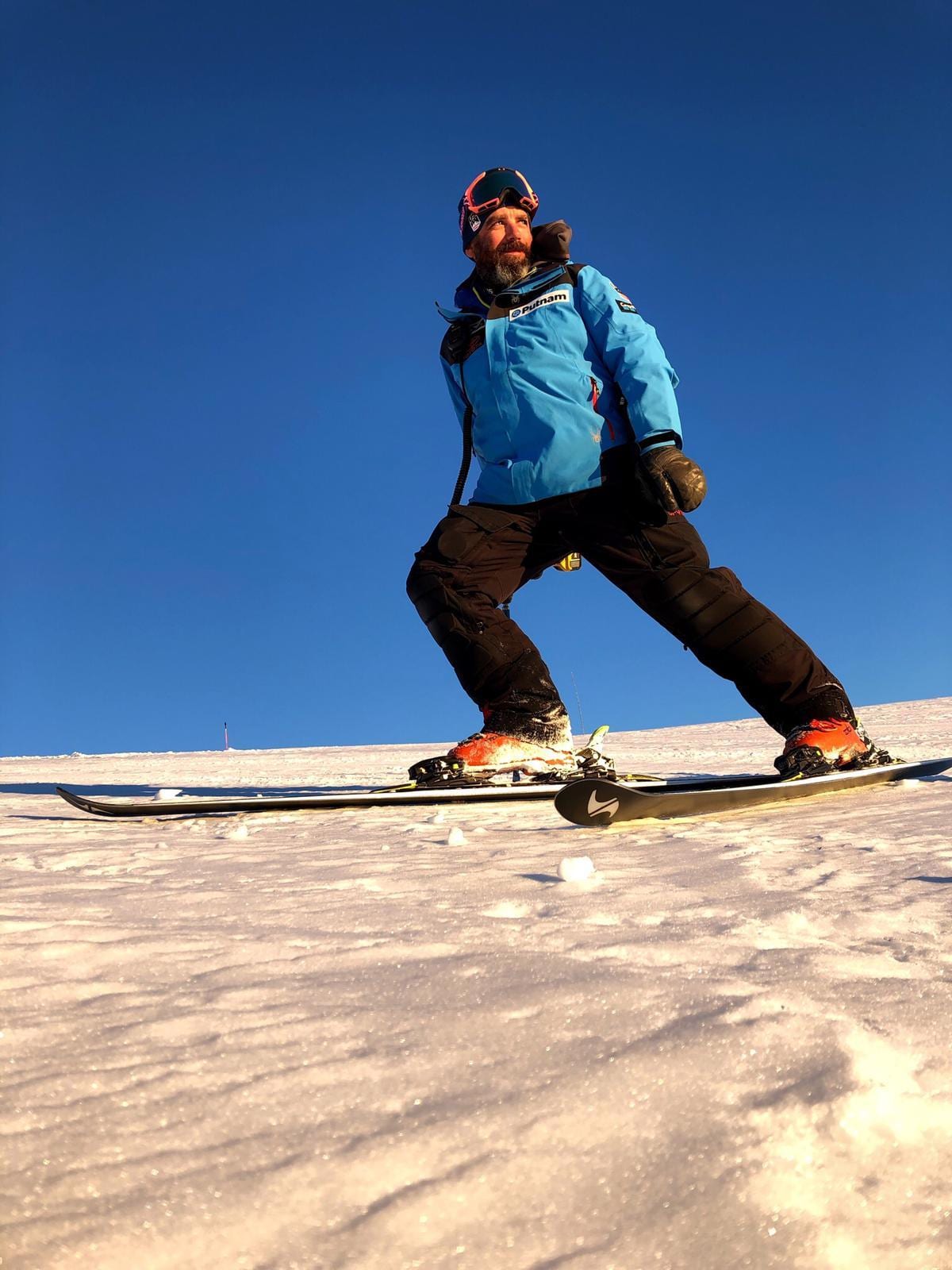
Author’s note: Join us in congratulating Ian Garner on becoming our new homegrown head men’s World Cup tech coach. An American with 30 years of U.S. ski racing experience, you likely already know his name. However, many of you might not personally know this capable leader because he is a quiet, humble man who has spent his career avoiding attention while working diligently on the international racing circuits. If you have ever been to Copper Mountain in November and thought you saw Dusty Hill, the bearded bass player from ZZ Top, it was most likely Garner. All kidding aside, I am honored to be trusted to tell some of Garner’s unique story.
In 1983, Ian Garner was born in Grand Junction, Colorado. His native Mesa county is well known for its contributions to the oil and gas industry but not for contributing members to the alpine ski racing community. However, Garner’s school-teacher mother, Demi, and ski-coach father, Tom, both loved skiing, and shortly after their firstborn began to walk, they put him on skis at the local Powderhorn Ski Area.
At the age of three, Garner’s family moved to Silverthorne, Colo., because his father accepted a position with a group of elite ski coaches at Team Summit. The family would thrive there for a decade. During that time, his father and his friend and colleague, John Leffler, founded Team Breck. It became like home to Garner, who trained and competed out of the club with the added bonus of being able to spend time with his dad. The family was living and breathing the sport. It was a good experience for the Garner clan, but eventually, the family desired a return to their home. hen Garner was 13, the family went back to Mesa. It was then he began splitting his time between training at the Powderhorn ski area and Breckenridge. Upon returning to Mesa, Tom continued his career in ski racing as the highly respected Rocky Central Development Director, and the family remained fixtures in U.S. ski racing. Life was good.
Unfortunately, Garner’s world was about to change forever: Tom contracted a rare form of Rheumatoid arthritis, Scleroderma, a devastating disease that attacked his lungs, heart, and kidneys. The family’s father fought the un-winnable battle but passed away when Garner was just 17. Garner knew his parents made significant sacrifices for his ski racing, and he had always spent his entire summer’s income pursuing ski racing. Now adding to the challenge, Garner had lost his dad, the dad who had always been his coach, his No. 1 supporter, and his ski racing wingman.
Understandably, his love for the sport dwindled. Garner responded positively by accepting an academic scholarship to study Environmental Science at the University of Denver. He never entirely abandoned ski racing, and during winter breaks, he would coach for the hometown Powderhorn Ski Team. Garner, however, focused on a life beyond the sport. Upon graduating from University, he took a job using his degree, joining an oil and gas company based in Parachute, Colorado. He was able to apply his knowledge of Environmental Science and earn a nice income. However, the world of oil and gas and Garner were only a temporary match.
Jon Kreamelmeyer, a Summit County family friend and Head Nordic Coach of the US Adaptive Ski Team, was aware that Garner was considering a job change. Kreamelmeyer informed Garner of a ski service position with the Alpine Adaptive Team. Garner accepted the job, and soon he was traveling the globe. He had successfully transitioned from trying to ski fast himself to fully dedicating himself to helping others ski fast. He had followed in his father’s footsteps. He had become a ski racing professional.
When asked what he learned coaching the adaptive team, Garner responded, “I would say the most significant thing is, I became convinced that skiing is skiing, and ski racing is ski racing. It doesn’t matter if you coach a single-leg skier, a skier using a prosthetic, a sit skier in a mono ski, or an able-body athlete; the same things make them fast. You are looking to accomplish the same things. … It is a lot of fun adapting your coaching to help athletes accomplish fundamental goals while working with their challenges. My time with the adaptive team was a lot of fun and brought back my passion for the sport.”
After the four seasons with the Adaptive team, USST Men’s Development Team coach Randy Pelkey offered Garner an assistant coaching position. Garner accepted and has never looked back. He has been a part of the coaching staff with the men’s U.S. Ski Team ever since. After three seasons of progressing with Pelkey, a new opportunity came his way. Bernd Brunner, men’s world cup tech head coach, offered Garner an assistant position. He accepted.
“It was a real challenge.” Garner explains. “We had 14 athletes with a wide range of ability and schedules. We had World Cup athletes who were getting top 10s and moving into the top 15 ranking, and we had guys who skied some World Cup but were more competitive at the Europa Cup and NorAm level.
“Fortunately, our relationship with the Development team was good, and we could trust them to take good care of the World Cup athletes attending the NorAms. That helped a lot. It felt like we had everyone but Ted and Bode because at that time those two had their own multi-team.”
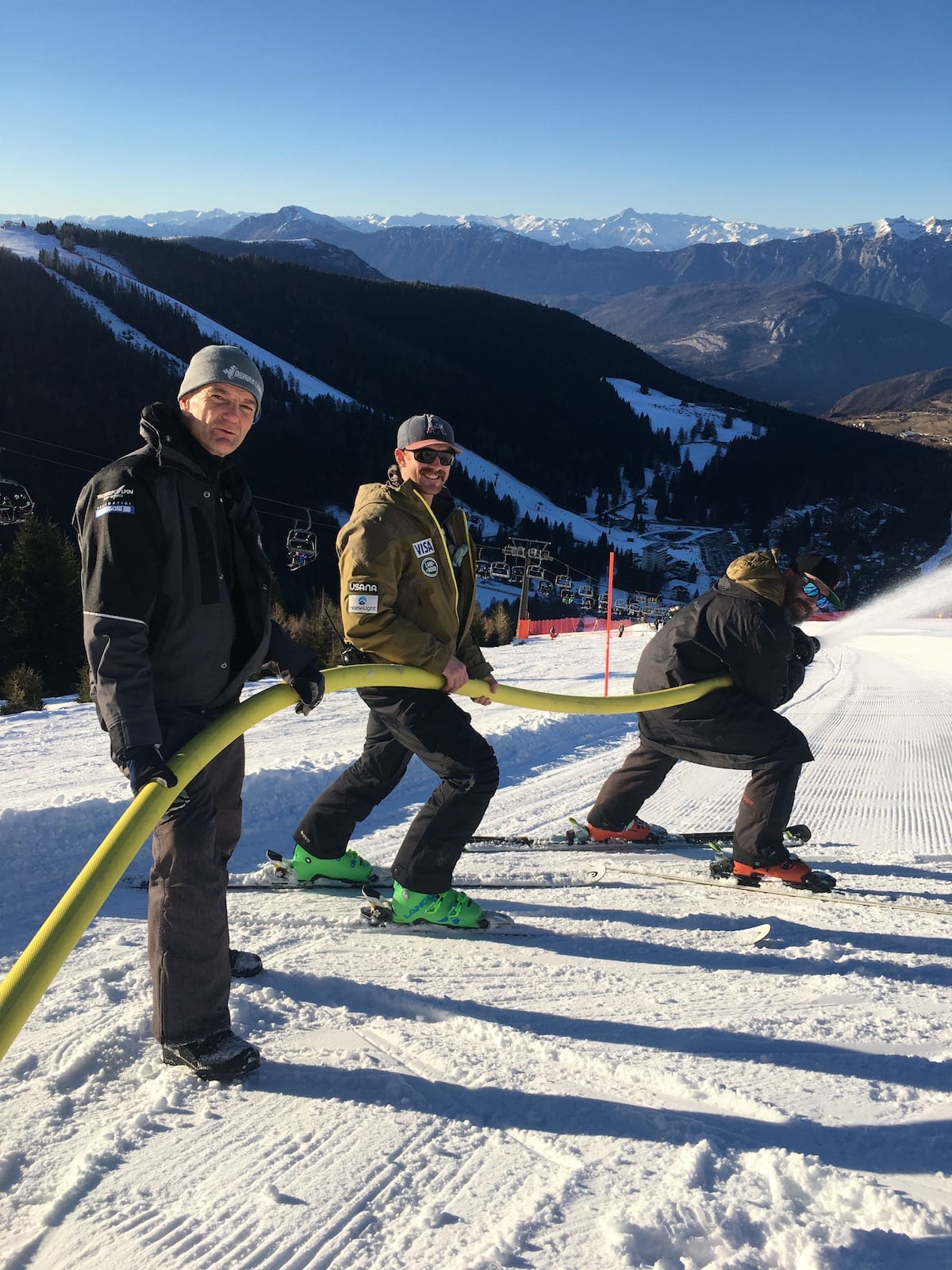
After Bernd left for Germany, Garner had an additional six seasons on the World Cup, working and learning as an assistant to Head Men’s Tech Coach Forest Carey. Carey was recently promoted to head men’s coach, allowing Carey to name the deserving Garner as the latest head men’s World Cup tech coach.
Asked who his essential mentors have been, Garner responds, “First, my Parents, getting me into skiing and making skiing our life. With my mom’s background as a teacher and my dad being a ski coach, I have teaching in my blood. My dad is my example of what a ski coach should be, so he is my biggest coaching mentor.”
Garner goes on, “Ray Watkins, who was the Head Coach of the adaptive team when I started with them — he encouraged me to be a coach and taught me a lot about being a coach on the road in Europe. Mostly he believed in me. Finally, Forest Carey, we have worked six seasons together. He has always shown confidence in me and showed it by trusting me with responsibilities. He taught me a lot and trusted me to apply what I learned.”
When asked what his best coaching attributes are, the modest Garner responded, “I always work to earn the athlete’s trust and make a connection with them. When I convince athletes that we have a common purpose, it becomes a very positive relationship. It is always my objective to create a fun and positive environment. When you are together as much as we are, we need to be a family. They need to trust that I will be professional, and I need to trust them to be professionals. It is important to me to get along with all team members.”
Ian has another special relationship in his world, his lady-friend, Sarah. The life of an American World Cup coach is life on the road. However, Garner splits time between Salt Lake and a cabin outside of Park City when he is home. Garner is an enthusiastic fly fisherman, camper, and hiker, and this summer is looking forward to spending time on his new gravel bike. Mostly, however, he loves spending time with Sarah. Before meeting Sarah, he was a coach who went to Europe and stayed all season; now, he does his best to get home when he can, in addition to having Sarah in Europe whenever their schedules allow. Garner says he is lucky because “Sarah was a ski racer, and she understands the job, but it is not easy.”
Although Garner is a young man, he has 30 years of experience in the sport. Asked if he could go back in time, what advice would he share with a 10-year-old Garner?
Without hesitation, he answers, “Love what you do; if it isn’t ski racing, find what it is, don’t be afraid to explore, but sometimes it will lead you back to where you began.”
Garner addressed another challenging part of his job. Although it is an absolute pleasure watching exceptional athletes every day, it is a professional sport, and none of the few skiers who get to the World Cup get to stay there very long as athletes. The higher the level of any sport, the less room there is at that level. As one might expect, there are only 30 athletes worldwide in the top 30 on the World Cup. Skiing World Cup is not a lifelong job, even for the very best. Many of the best skiers thrive for years but then wear, tear, and age catches up with them.
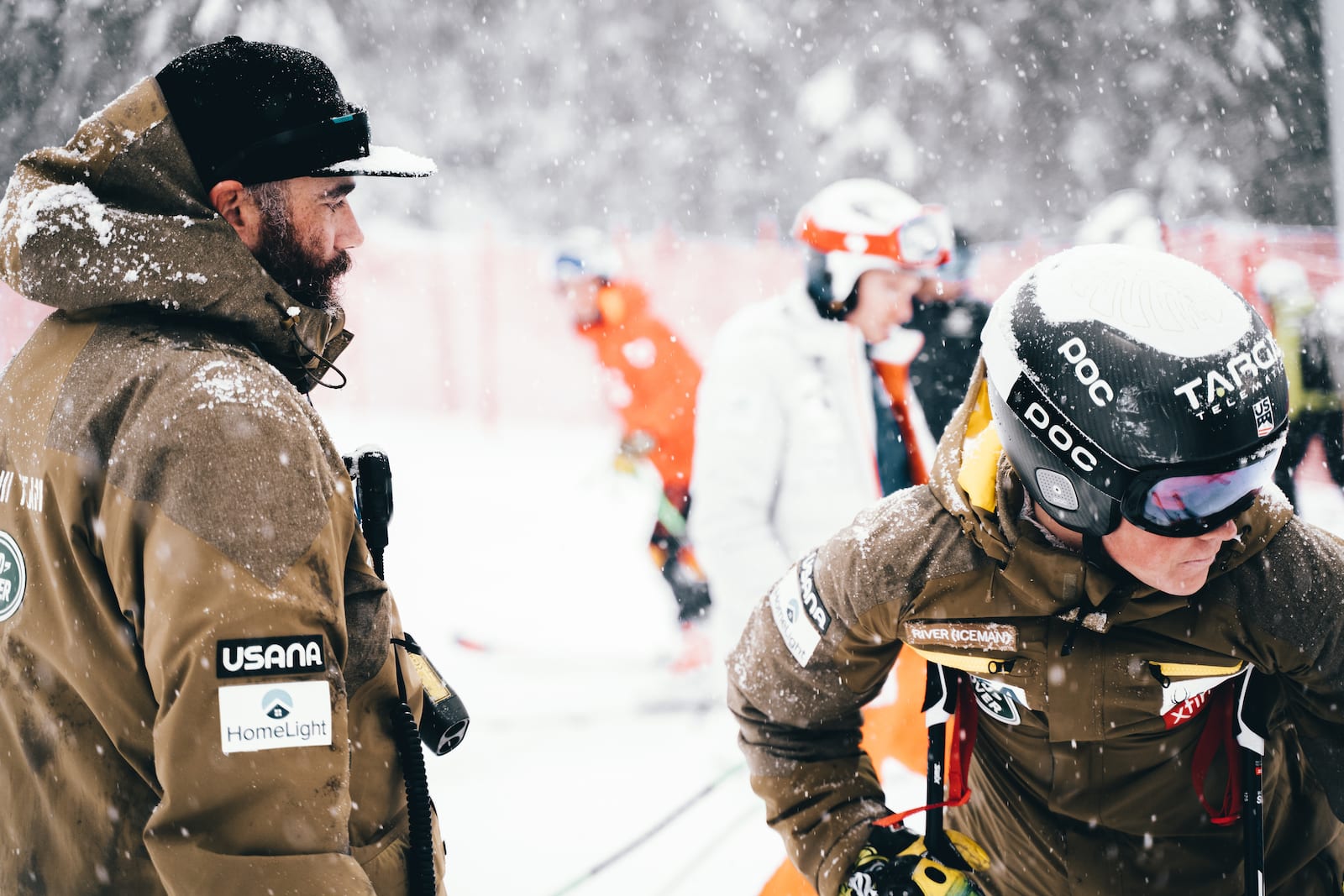
Because Garner is a person who values his relationships, this creates an inevitable challenge: “Being a part of the end of a national team athlete’s careers is not easy. It is never painless, and we deal with it every year. The individual athletes will always be a part of my life. They are very hard-working, good people. … If they still love the sport and have eligibility, I suggest exploring racing for a school. But, often I suggest they consider a school option. In the end, however, all I can do is make sure they know they are a welcomed part of my life, and I will support them in any way I can. It is not easy.”
Garner is excited and feels fortunate to work with the team he now leads. In addition, he feels lucky to have the continued leadership of the new head men’s coach Forest Carey. Garner didn’t think he would still be doing this job 10 years ago, but he follows his advice: doing something he loves.
Ski Racing Media wishes Garner all the best with his team and his new responsibilities.
About the Author: Peter Lange